Google I/O 2026 Review: Two Glasses, One System – Google Goes All-In on XR
 05/21 2026
 574
574
[Original article by VRAR Planet. Reproduction without permission is prohibited.]
As dawn broke on May 20, Google I/O 2026 kicked off precisely as planned.
While previous I/O events have primarily served as technology showcases, this year’s event was defined by a single, bold strategy: saturation attack. Particularly in the XR and smart glasses sectors, Google spared no effort, unveiling two smart glasses powered by Android XR and revealing its ambition to dominate the entire XR ecosystem.
We’ve carefully distilled all the essential information from the event to provide a clear picture of Google’s grand vision.
Two Glasses, Two Paths, One Ambition
This time, Google took a dual-pronged approach by unveiling two distinct glasses models, each with a clear purpose: one simplifies, the other enhances.
First Model: Audio Glasses, Launching This Fall
These glasses represent a classic “screen-free” design. Without a display or screen module, their core feature is the integration of Gemini AI. Communication occurs through a microphone and built-in speakers, effectively turning the glasses into an all-day AI assistant perched on your nose. Rather than focusing on visual experiences, these glasses prioritize auditory and verbal efficiency.
Live demonstrations showcased a variety of everyday use cases:
- While cooking, users received real-time advice from Gemini via voice commands.
- During walking navigation, the glasses not only planned routes but also recommended cafes based on the user’s historical preferences.
- Throughout the food-ordering process—from menu selection to tip confirmation—everything was handled via voice.
Although the glasses lack a screen, they smartly sync with smartwatches: after taking a voice-triggered photo, a preview is instantly sent to the connected smartwatch. This design cleverly avoids the weight and battery drain that would come with adding display modules to the lenses.
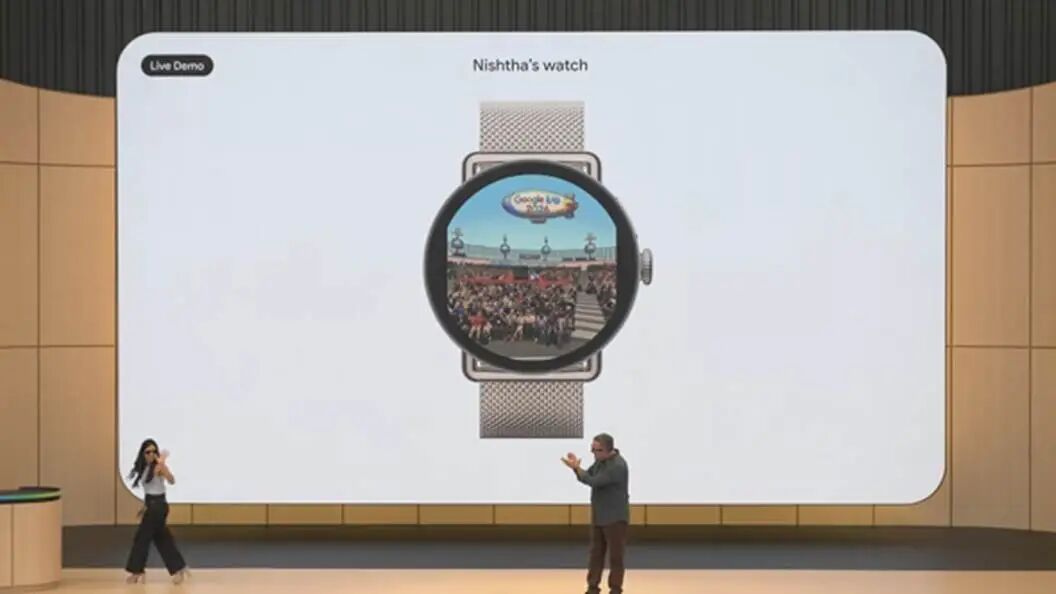
Another intriguing demo featured a user taking a photo of the audience through a voice command, with the glasses automatically adding “Google I/O 2026” balloons and color elements to the image. This wasn’t just a demonstration of features—it was an exploration of AI glasses’ potential in social scenarios.
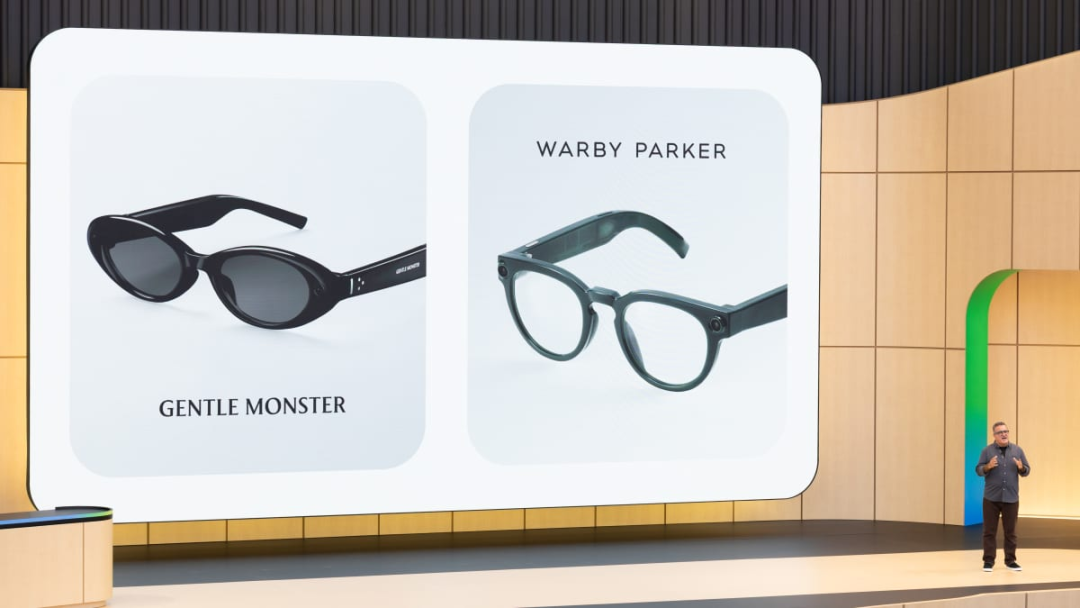
The design was entrusted to fashion brands Gentle Monster and Warby Parker, a strategy reminiscent of Meta’s partnership with Ray-Ban. By leveraging fashion logic, Google aims to make these glasses appealing to a broader audience.

While pricing hasn’t been officially announced, industry rumors suggest the screen-free version may retail for $379–499, clearly targeting Meta Ray-Ban’s stronghold in the market. Whether Google can successfully steal market share from Meta will depend on consumer adoption after launch.
Second Model: Display Glasses and Project Aura
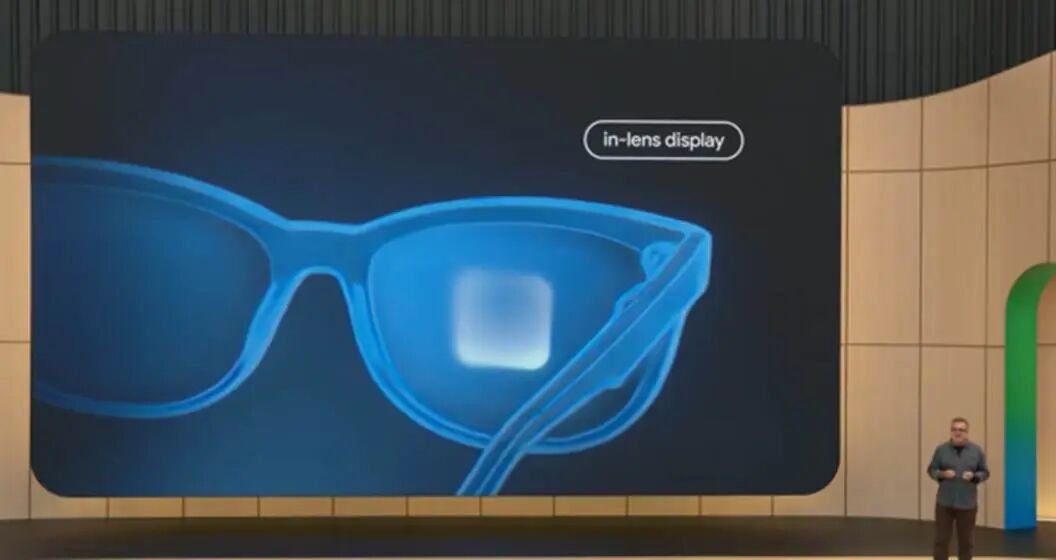
The second model, the “Display Glasses,” also integrates Gemini AI, accurately delivering needed information on demand and freeing users’ hands—simply speak, and AI takes care of the rest. Unfortunately, no specific release date has been announced for these display glasses.
Meanwhile, XREAL also showcased Project Aura at the event—the world’s first XR glasses running on the Android XR operating system. Featuring Micro-OLED screens with a 70-degree field of view and powered by a dual-chip design (X1S and Snapdragon), these glasses offer around 4 hours of battery life.
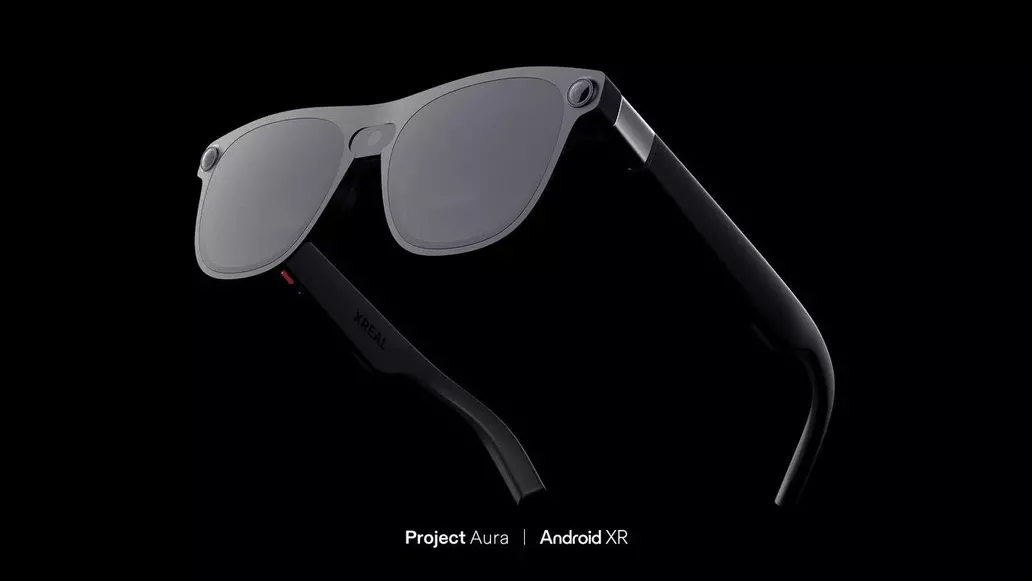
According to Wired’s hands-on experience, Project Aura feels more like Apple Vision Pro or Samsung Galaxy XR than traditional glasses. It provides a full Android XR interface, allowing access to hundreds of Android apps, dimming lenses to block distractions, and enabling interaction with all devices via gestures.
Google’s strategy is clear: one path emphasizes “invisibility,” seamlessly blending AI into daily conversations, while the other focuses on “display,” providing rich visual information when needed. One is lightweight, the other heavy; one is hidden, the other visible—much like Android’s approach with phone manufacturers: “I don’t define the final form; I provide the soil for you to grow.”
Android XR: Google’s Real Killer Move?
Whether it’s the audio glasses launching this fall or XREAL’s Project Aura, both run on Android XR.
Google’s new Android XR platform, co-developed with Samsung and optimized for Qualcomm Snapdragon chips, deeply integrates cutting-edge hardware with Gemini AI, enabling instant smart assistance without interruption.
What does this mean? Three key points:
- AI-native adaptation: Android XR is no longer just a screen-mirroring tool or a variant of an Android tablet—it’s a platform refined for AI interaction. It understands your environmental context, evolving from “you say, I do” to “I understand before you say.”
- Cross-device synergy: Whether it’s headsets or glasses, Samsung or XREAL, as long as they use Android XR, they share the same AI capabilities and app ecosystem.
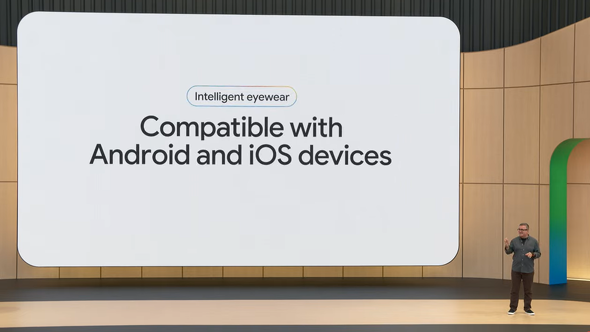
- Breaking down barriers: Reportedly, these audio smart glasses support both Android and iOS. Google has realized—in the early ecosystem stage, lowering barriers matters more than building moats. Only by getting more people to wear glasses can the ecosystem thrive.
The Market Won’t Wait, But Glasses Are a Tough Business
Google’s urgency in expanding the Android XR ecosystem stems from genuine market anxiety—and for good reason.
Consider the competition: Meta Ray-Ban has already sold millions, validating the mass-market feasibility of “audio + AI” glasses with a strong first-mover advantage. Apple remains quiet but has never stopped R&D—its entry would be a game-changer. Chinese players like Huawei, Xiaomi, Baidu, Alibaba, and Li Auto are all diving in.
Google knows no single hardware can dominate all scenarios.
So its strategy has shifted—no longer betting on one “perfect product” but using Android XR to let Samsung, XREAL, and future partners experiment with different forms.
This is a war of ecosystems against uncertainty.
Before AR/VR becomes the next computing platform, whoever first cracks the “useful and wearable” commercial loop holds the ticket to the future.
For Google, the choice is simple now:
Cast a wide net and wait for the bloom.
By Vivi
Uncredited images sourced from the internet.
-
Alibaba’s Earnings Soar with Triple Catalysts: Full-Stack AI Hits Maturity, Capital Efficiency Drives Sustainable Growth
-
![]()
Raking in Big Profits Overseas! Chery’s Overseas Revenue Makes Up 70% in H1, with Gross Margin Climbing to 16.1%
-
![]()
Alibaba’s New Fiscal Quarter: 45% Revenue Surge in Alibaba Cloud, Enhanced Profitability in AI Cloud, but Widening Losses in the Application Layer
-
![]()
The AI Version of 'PayPal Mafia' Has Arrived: 20 AI Startups Raise Over $4.6 Billion in Funding
-
![]()
Wang Jian's Vision: Paving a Pathway for Alibaba Through AI
-
![]()
Hyundai Motor Workers Strike Today, Fearing Job Losses to Robots
-
![]()
Embracing 'Light': O-film Unveils Its 'Illuminating the Future' Strategy
-
![]()
SenseTime’s SenseNova U1.5 Lite Goes Open Source: Ushering in a New Era of Predictable AI Image Generation