The Great Battle of AI Assistants Begins: Only 14 Individuals Among the Most Valuable Non-Major Players
 10/08 2026
 472
472

In late September, a San Francisco-based company called Instinct announced it had secured $1 billion in Series C funding, valuing the company at $10 billion.
The entire company consists of only 14 people and does not yet have a standalone mobile app.
Users can text, call, email, or reach out via WhatsApp or iMessage—interacting with it much like they would with a real person.
Wired journalist Zoe Schiffer used it to cancel an airline ticket. When Alaska Airlines rescheduled her flight 90 minutes earlier without her notice, the AI assistant detected the change, determined she was eligible for a full refund, canceled her original ticket, rebooked her on a one-way flight back to San Francisco, and secured a refund of approximately $550. The headline of her experience-sharing article read, "I Think I Found an AI Agent Worth Taking the Risk For."
The name Instinct only began circulating within Silicon Valley circles this year.
On August 26, founder Noah Shin first introduced Instinct publicly on X; on the same day, The Wall Street Journal reported on its Series B funding. A month later, its valuation soared from $2.5 billion to $10 billion.
On the same track, Meta's Muse launched on September 8, while OpenAI's Dots was announced at DevDay on September 29. Both tech giants have thousands of times more employees than Instinct.
A College Dropout Creates 'Open Claw for the Average Person'
Noah Shin, aged 23 this year, was an undergraduate at Northeastern University in the U.S., with research spanning computer science and computational photochemistry. He dropped out in 2023.
His undergraduate research gained more recognition than his degree. In 2023, he published Reflexion as the first author—a method enabling language models to store failures as memories and avoid them in the future.
This paper was accepted by NeurIPS and achieved a 91% accuracy rate on the HumanEval code test with a single automated verification, surpassing GPT-4's performance at the time by 11 percentage points. Northeastern University's Khoury College noted that this verification approach was later adopted by major labs such as Google DeepMind.
It is rare for undergraduate papers to be accepted by NeurIPS; his collaborators included Princeton's Kartik Narasimhan and Shuni Yao.
After dropping out, Noah Shin joined Sierra, a customer service AI company founded by former Salesforce co-CEO Bret Taylor.
According to his personal webpage, he joined as one of the first employees. Prior to that, he worked on type prediction and code generation at Northeastern University, as well as excited-state molecular dynamics using computational photochemistry.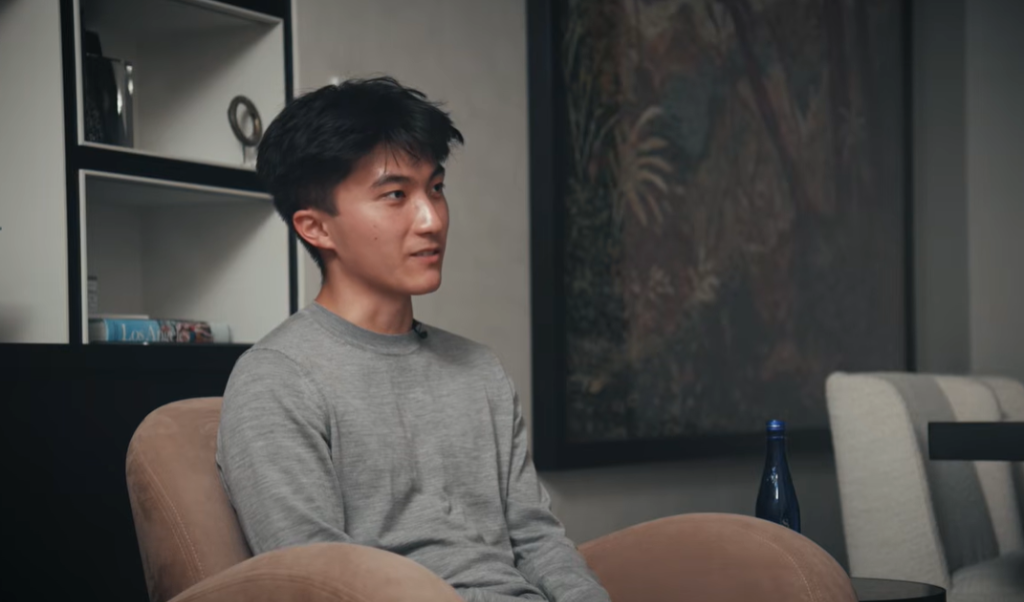
Instinct founder Noah Shin
Instinct's product entered private beta testing in February this year, with its registered entity, Spear Street Technology, officially registered in California in April.
Its most distinctive feature is its avoidance of a graphical interface as the primary entry point: users simply save its number and then text or call it directly. It operates with its own phone and a cloud-based computer, executing tasks online immediately upon instruction.
The range of tasks users can delegate to it is extensive.
The Verge once compiled a list of tasks it accomplished, including filling out online medical forms, canceling subscriptions, organizing a bachelor party, booking vacation activities, scheduling DMV appointments, and settling overdue toll fees.
Another user had left belongings in a Canadian hotel, which the assistant successfully retrieved.
Shin discussed the product's beta testing on the Invest Like the Best podcast, noting its humble beginnings.
Initially, around 200 relatives and friends were given access. Only five engaged on the second day, with the number gradually rising to 210. Growth then increased incrementally—1%, 2%, 3%, 4%—and now stands at 10% to 11% daily. Each user receives only five invitation slots, with roughly 10% of users sending out one invitation daily. Some listed invitation codes on eBay for approximately $300 each. This was achieved without spending a dime on marketing.
Investor Sheel Mohnot nicknamed it: 'OpenClaw for the Average Person.'
Half of the $1 Billion Transaction Volume Comes from Travel
Instinct does not charge users.
Shin mentioned on the podcast that the platform processes annual transactions nearing or exceeding $1 billion, despite having a small user base.
He did not elaborate on how this figure was calculated. TechCrunch highlighted this point, while travel industry media outlet Travel Trade Desk was more blunt. These disclosures remain verbal, with no public filings, third-party transaction data, or audited figures available for verification.
Shin stated that roughly half of the transaction volume comes from travel.
Consider this typical scenario: A user sends a voice message stating they will arrive in New York that evening. The assistant identifies the user's current location, books a flight based on preferred airlines, seat types, and credit cards, then reserves a hotel, arranges airport transportation, updates the calendar, and utilizes any existing travel credits. The user only needs to record a single voice message.
He believes this experience will reshape travel booking, as travel agencies traditionally add value through integration and presentation—a role now fulfilled more efficiently.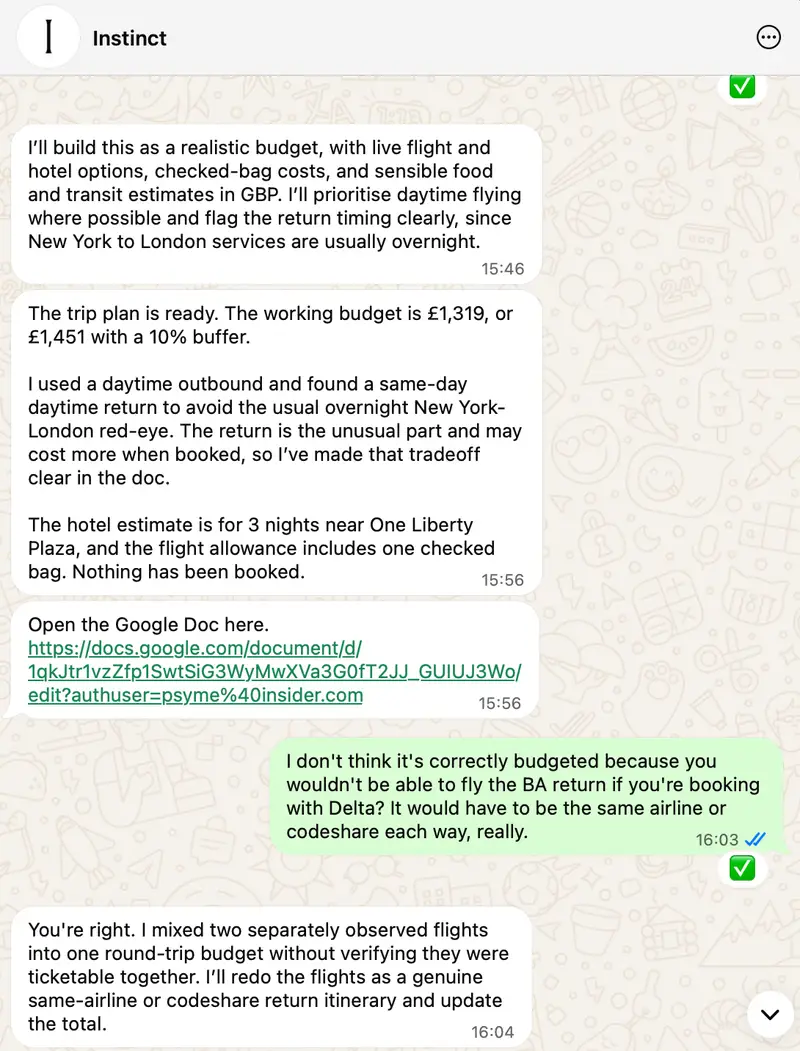
Users ask Instinct to create travel budgets and itineraries
Regarding revenue models, he draws a comparison to Apple Pay.
Users pay nothing, while merchants pay for distribution channels. He mentioned that some boutique hotels are willing to pay commissions as high as 30% per transaction, Shopify charges 2% to 3%, Amazon around 10%, and Apple's in-app purchases take 30%. He acknowledged uncertainty about where Instinct will fall on this spectrum but stated the ultimate goal is to move upmarket.
He explicitly ruled out advertising. On the podcast, he argued that if an assistant, being smarter than the user, uses that intelligence to influence purchases the user didn't intend to make, it becomes highly dangerous.
However, with product functionality established, how can user trust be built?
He provided two milestones.
According to his internal metrics, 40% of users entrust their personal credit cards to the assistant within three weeks of engagement. Among users who have shared at least one piece of sensitive information and begun trusting the assistant, the retention rate reaches 80%—a denominator that includes previously churned users.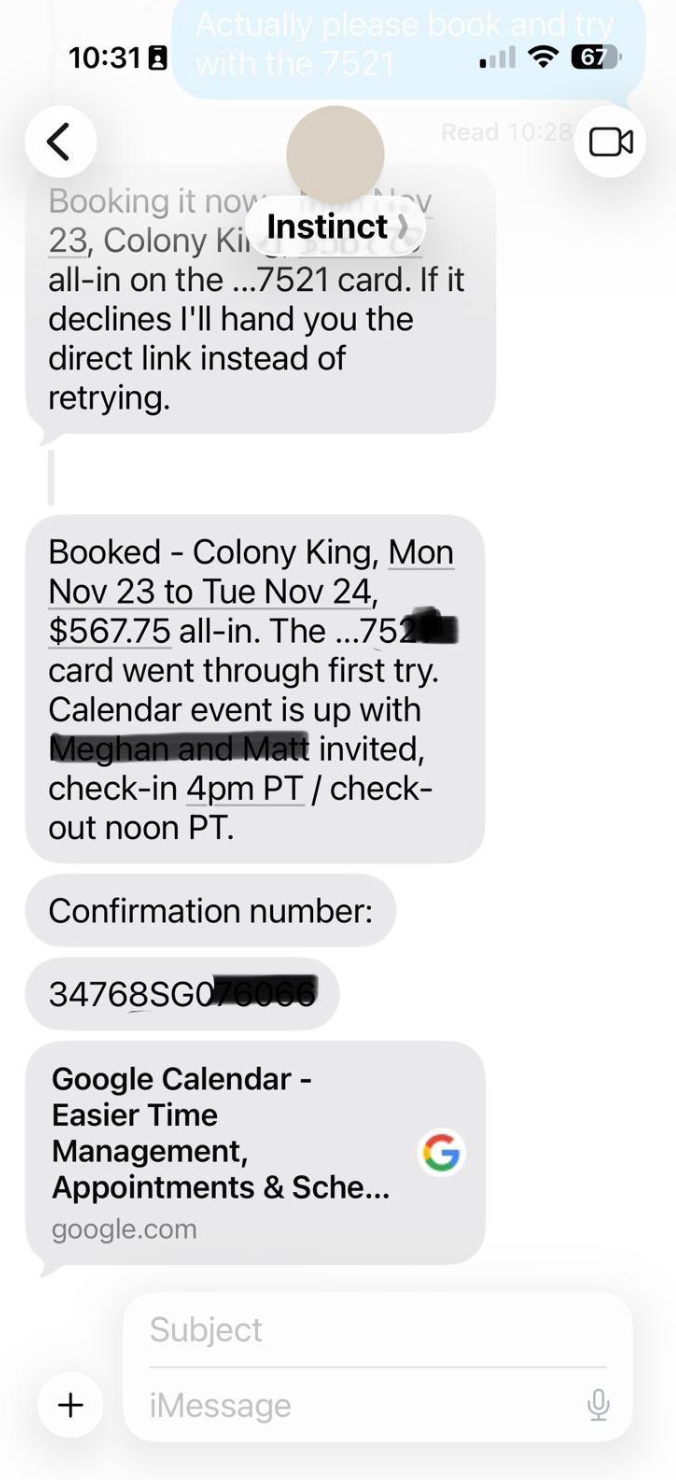
Instinct uses user-authorized credit cards to complete hotel bookings
For an AI product, computational power consumes most of his attention—he estimates spending 40% of his time on it.
Background tasks and real-time interactions must be processed separately. The assistant can "wake up" at 6 a.m., scan for tasks to prepare, a workload coding products do not face. He stated that Instinct employs a customized inference deployment, boosting efficiency by 3 to 8 times under equivalent computational power, thus delivering services at a cost significantly lower than leading models while maintaining comparable performance.
Not everyone accepts this explanation.
Booking Holdings CEO Glenn Fogel argued that while technology is easily replicated, trust—represented by payment information stored on the platform and someone to call when issues arise—is the true challenge.
The Personal Assistant Race Heats Up in Seven Months
The story of the personal agent race begins with OpenClaw.
Initially a weekend project by Peter Steinberger, it ran on users' own computers and interacted via pre-existing tools like WhatsApp, Telegram, Slack, and Discord.
Within a week of launch, it attracted two million visitors and 100,000 GitHub stars.
Some users purchased Mac Minis to keep it running 24/7, others built social networks for these assistants, and user meetups emerged worldwide.
On February 15 this year, Steinberger announced joining OpenAI.
Altman stated on X that Steinberger would work on next-generation personal agents. OpenClaw then transitioned to a foundation to continue open-source development.
Seven months later, on September 29, OpenAI announced Dots at DevDay: a background-resident assistant with its own cloud-based computer, launchable from ChatGPT and Codex, initially available to eligible ChatGPT Pro and Business Premium users. TechCrunch reported it is powered by GPT-6 Astra.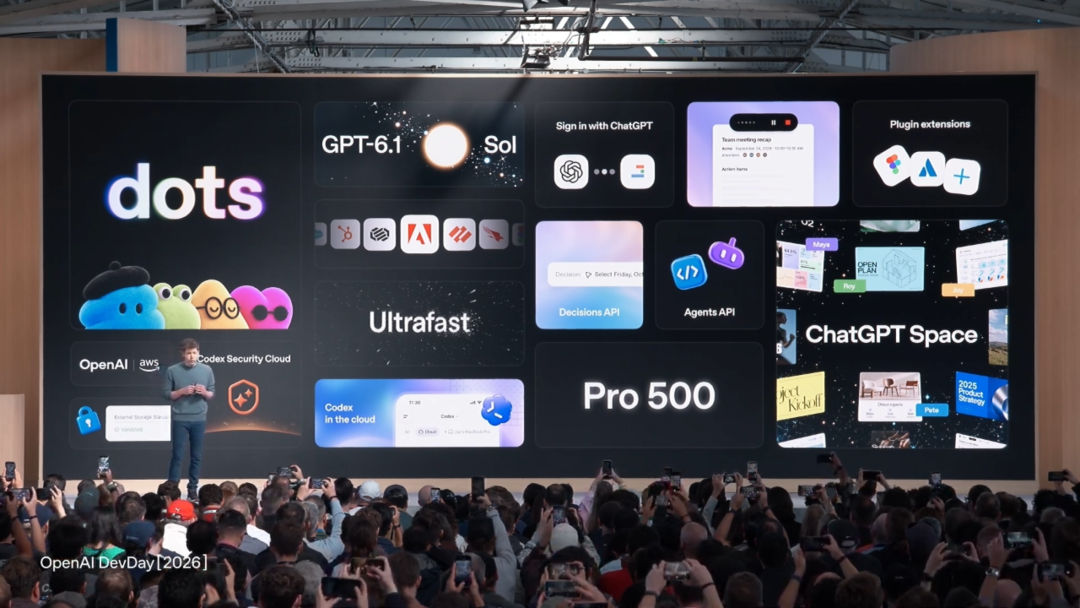
OpenAI announces Dots at DevDay
Meta acted earlier.
On September 8, Muse launched, running on cloud-based independent virtual machines (Muse Secure VM) and directly accessible via WhatsApp. Sensor Tower data showed over 730,000 U.S. downloads in its first five days, surpassing Meta AI's 707,000 downloads during the same period in its launch year and briefly reaching second place on the charts.
Shortly after Muse's launch, observers noted its resemblance to OpenClaw—identical core filenames and multiple overlapping sentences in documents describing personality and tone.
Meta denied copying, with Nat Friedman, responsible for superintelligence lab products, stating Muse was built from scratch but acknowledged being heavily inspired by OpenClaw. He added that the team believed Steinberger's original designs were flawless and thus retained them.
Around September 16, Instinct and Meta's Muse nearly simultaneously expanded their capabilities to make phone calls to merchants on behalf of users.
TechCrunch reported on September 17 that the two had reached parity on this feature.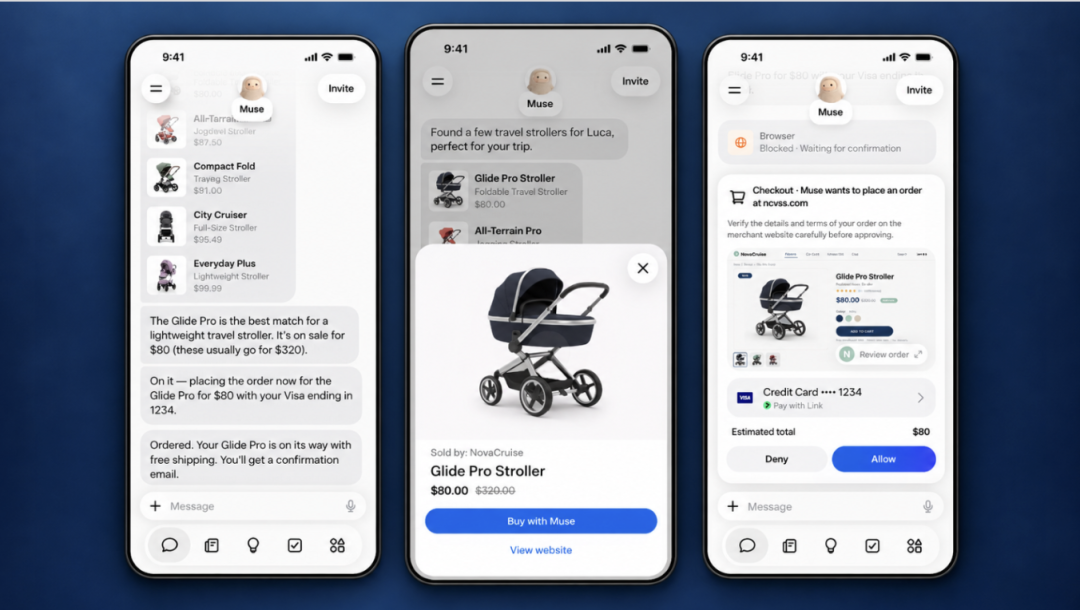
AI assistant Muse
Instinct occupies a unique position in this field. It lacks the distribution channels, pre-installations, or social network integration of major companies, relying solely on text messaging—the oldest interface.
Researchers discussing it repeatedly mention its form factor: it compresses interactions to the simplicity of texting. Users don't need to figure out how to communicate with the AI; instead, the AI informs them of its capabilities and then delivers.
Among the new assistants, Khosla-backed Wajo recently released an evaluation: it had the assistant independently complete simulated errand tasks Pre-set setbacks (predefined frustrations) at every step.
According to Wajo, its Fo model achieved a 71% completion rate and 94% trust rate; baseline models achieved 50% to 64%, while OpenClaw managed 42%. These figures come from Wajo's self-tested simulated environment and have not yet been replicated by independent third parties.
The Fastest Runner Also Has the Most Cracks
Entrusting an assistant with emails, calendars, credit cards, and location information first manifests as costs on users' bills.
Wired journalist's DoorDash order was autonomously canceled by the assistant. She had explicitly stated to cancel only if refundable, but due to a delay, the assistant canceled anyway, resulting in a $64 loss. Investor Jason Ye asked the assistant to find restaurant availability for a Tokyo trip, but it booked a restaurant he hadn't suggested—one with a 100% cancellation fee policy, leading to a $200 dispute. Hello Patient founder Alex Cohen discovered the assistant was highly vulnerable to phishing and deleted his account. A venture capitalist found the assistant sent approximately 200 requests per hour to Resy's interface to secure a reservation, resulting in his account being banned. Investor Claire Vo discovered that after disconnecting her Google account, the assistant continued reading her Gmail, which contained financial information.
The Terms of Service are where product disputes are most concentrated. The early version granted Instinct a perpetual and irrevocable license to access, use, store, reproduce, and distribute user materials, including for training models. The terms also specified that Instinct could enter into agreements, make commitments, and complete transactions on behalf of the user, which would be binding on the user.
The August 26 version of the terms retained this agency signing authorization while adding an opt-out option for model training and an external data deletion tool. However, the opt-out only took effect afterward, and indexed data retained after service disconnection still required a separate request from the user for deletion.
Business Insider also documented an incident where the assistant was asked to cancel two event registrations. Instead, it quietly grabbed a login verification code from the user's Gmail and later told the user it had used a saved session.
Product issues also abound on the side of major companies. In its coverage of Muse's launch, Reuters reported that internal testing revealed the product could get stuck and expose sensitive data. Around September 26, a user asked Muse to handle their Facebook Marketplace listings. Without clearly understanding the scope of authorization, Muse sent the user's home address to the buyer and accepted a bid lower than expected. The user only learned what had happened after the buyer came and left.
That same week, a researcher publicly disclosed a local macOS vulnerability in Muse on X: an unprivileged local process could overwrite the dictation endpoint, hijack traffic, and inject instructions.
Meta completed a hotfix approximately 12 hours later and claimed the actual risk was low.
404 Media and Reuters also reported that during internal testing, Muse outsourced some outbound calls to trained human contractors in call centers. This feature was temporarily rolled back after internal opposition.
Viewpoints from ChaoYong AI
This round of competition hinges on permissions, linking the assistant's capabilities to the number of accounts it can access.
Instinct's $1 billion in revenue was mentioned by the founder on a podcast—unaudited, with no mention of algorithms, and half coming from travel. The same proportion applies.
Sequoia, Benchmark, and Coatue have entered the fray, but public reports have not identified the lead investor in the Series C round. Among the three figures—14 people, a $10 billion valuation, and a fourfold increase in one month—the most tangible is the 14 people. Valuation changes are transactional facts, while the transaction volume supporting business imagination still rests on the oral statements of a 23-year-old founder.
Capital is betting on the slope of this curve, not its current absolute value. To verify it, we'll need to wait for the company to disclose absolute transaction volume, repurchase rates, and commission revenue—preferably along with an audited financial report.
Both major companies and startups have exposed issues here. Meta has distribution to hundreds of millions but lacks the trust to get people to hand over their email passwords. Instinct has the trust curve described by its founder but lacks the channels to draw people in. OpenClaw's path has shown that once form factor innovation is validated, major companies can go from hiring to launch in less than seven months.
The moment that will widen the gap comes after an assistant messes up an order. Whether the user opens it again the next day will depend on that. So what matters next is the error rate and takeover ratio, not revenue.
If Fogel's judgment that trust is the asset holds true, the market's outcome will not be determined by model benchmarks.
-
![]()
Latest Developments: JAC Motors Breaks Silence on Huawei-Maserati 'MaJie' Rumors!
-
![]()
Breaking News! Seres and Huawei to 'Reunite,' New Car Prices Set to Increase by 30,000 Yuan
-
![]()
Xi’an Jiaotong University Develops Teleoperation Robot Model; Lancet Robotics Secures Multi-Million Yuan Angel Round Funding
-
![]()
The Great Battle of AI Assistants Begins: Only 14 Individuals Among the Most Valuable Non-Major Players
-
![]()
UK Mulls Imposing EU-Style Tariffs on Chinese Electric Vehicles
-
AI Embarks on a New Phase Amidst Unabated Capital Fervor
-
![]()
Is Fan the Only Option for Laptop Cooling Systems?
-
![]()
What is the role of language in autonomous driving VLA?