Post-2000s Entrepreneur Builds $67 Billion AI Unicorn, Even Meta Takes Notice
 10/09 2026
 517
517
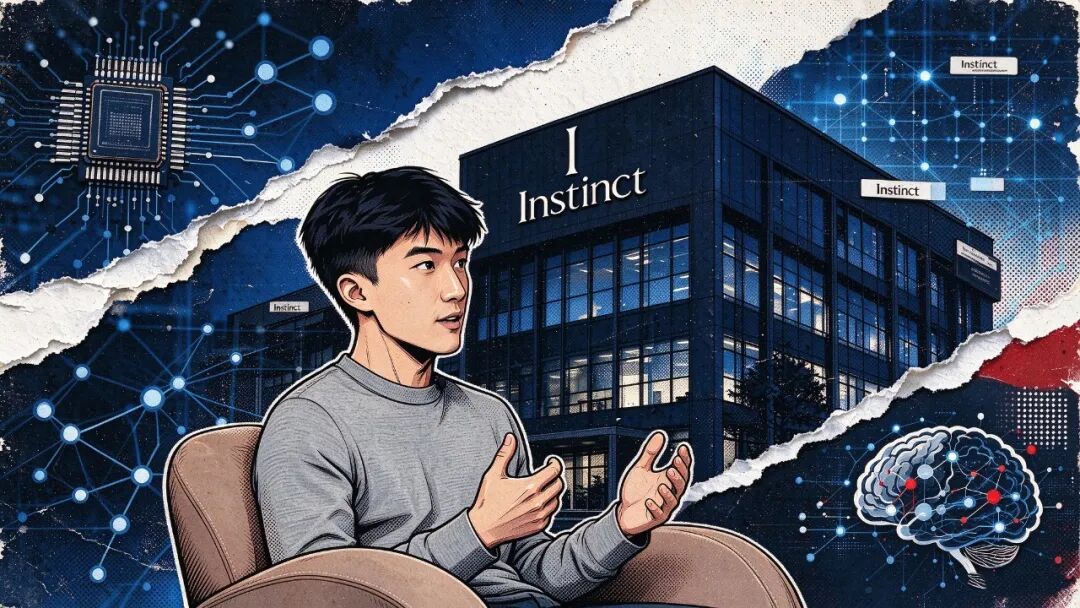
23-Year-Old Tech Whiz Leaves University to Launch Startup

Post-2000s Dropout Builds $67 Billion AI Unicorn
AI agent company Instinct has recently announced the successful completion of a $1 billion Series C funding round. This round was co-led by Sequoia Capital, Benchmark Capital, and Coatue, and has propelled the company to a post-money valuation of $10 billion, approximately RMB 67 billion.
In just one month, Instinct's valuation has tripled. On August 26, the company had completed a $250 million Series B funding round, which valued it at $2.5 billion.
What's even more remarkable is that the company has been in operation for less than a year and boasts a team of only 14 people.
Founder Noah Shinn, aged just 23, dropped out of Northeastern University in 2023. During his undergraduate studies, Shinn published a seminal paper in the field of AI agents. After leaving university to start his business, he began with a small group of beta users and relied on invitation codes to spread the word. His product quickly became a sought-after new favorite among Silicon Valley investors, with the platform's annualized transaction volume nearing $1 billion.
Noah Shinn is not alone in his success. Amid the wave of large language models, more and more post-2000s entrepreneurs are bypassing traditional growth paths and stepping directly onto the center stage of capital.

14-Person Team Reaches $10 Billion Valuation
A niche AI product, developed without an app by a team of only 14 people, has caught the attention of industry giant Meta, which has openly mocked it.
Meta's Chief AI Officer, Alexandr Wang, has repeatedly commented on and ridiculed Instinct on social media. In response to the attention from the tech behemoth, founder Shinn simply smiled and stated that he rarely focuses on competitors, choosing instead to concentrate on refining the product.
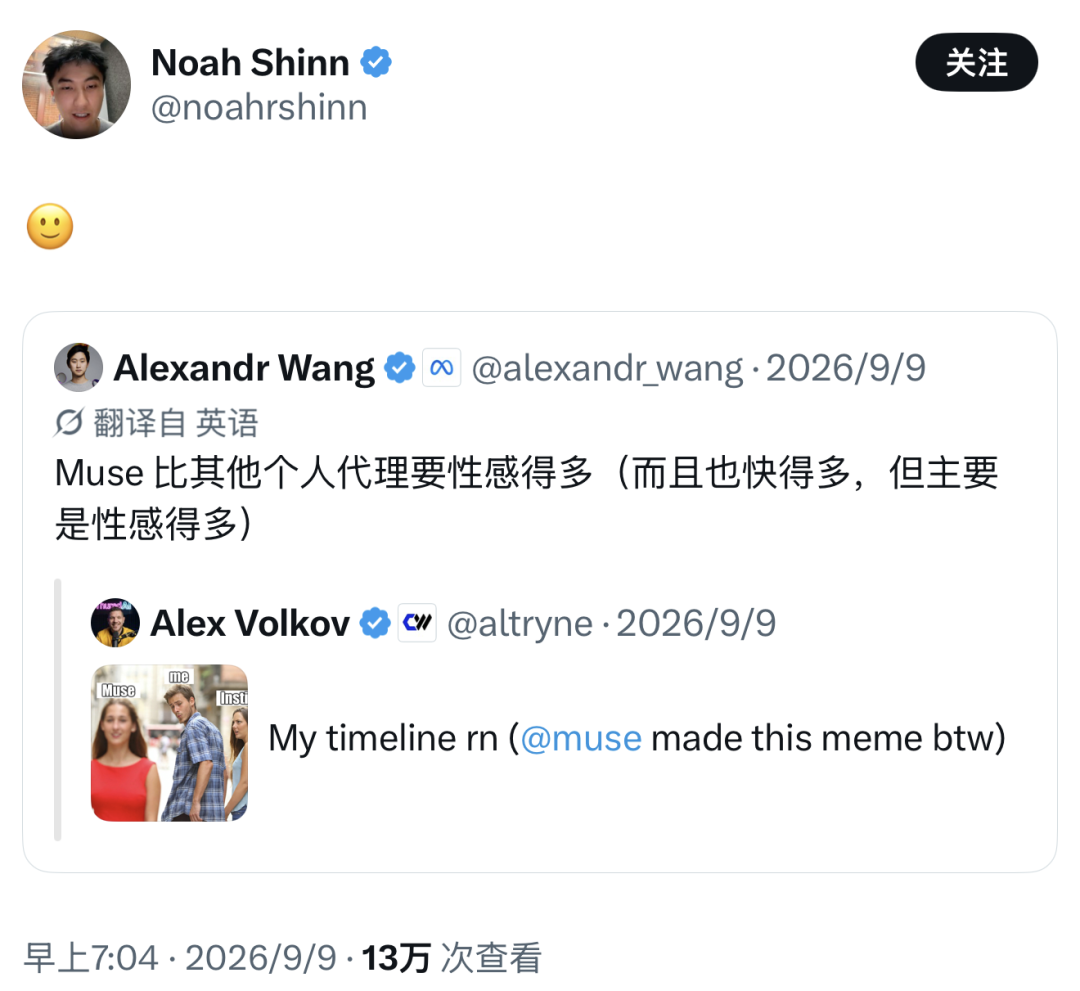
Image Source: X
The attention from Meta stems from Instinct's unique product form. Instinct's core product is a personal AI assistant that operates without a standalone app. Users can issue commands via text messages, phone calls, or email, and the assistant can fully automate tasks such as shopping, appointment scheduling, and email handling. In case of urgent matters, it will proactively call to remind users.
For example, a user can simply send a voice message saying, "I need to be in Shanghai tonight," and Instinct will automatically locate and match the user's preferred airline and seat, complete the flight booking, simultaneously book a hotel and airport pickup service, and write the entire itinerary into the calendar.
It is this new interaction logic of "directly executing tasks for users" that has allowed Instinct to achieve a 200-fold increase in valuation in just a few months.
At the beginning of this year, the seed round was led by Conviction and followed by Greenoaks, with a valuation of $50 million. In August, Instinct first completed a $75 million Series A round, valuing it at $500 million. Later that same month, it completed a $250 million Series B round at a $2.5 billion valuation, led by Index Ventures and Benchmark, raising a total of $350 million.
With this additional $1 billion Series C funding, the valuation has soared from $50 million to $10 billion, a 200-fold increase. From seed round to a $10 billion valuation, Instinct has taken less than a year, all while maintaining a team of only 14 people.
Even more astonishing is the growth rate. Shinn mentioned in a podcast interview that the product was initially only available to about 200 friends and family for testing, with each user having five invitation codes. The product's day-over-day growth rate stabilized at 10% to 11%, with almost no marketing investment.
The scarce invitation codes were even resold by users on eBay, with the highest price reaching $300. Despite the small user base, Shinn revealed that the platform's annualized transaction volume has exceeded $1 billion, with travel-related transactions accounting for about half.
In terms of the profit model, Shinn takes inspiration from Apple Pay: users can use the product for free, while merchants pay a service fee for each transaction. The core purpose of this design is to prevent AI from pushing unwanted products to users for advertising benefits.
Behind the high popularity, controversy also rages. For such personal agents to manage users' real-world affairs, they must deeply access sensitive privacy data such as email, calendars, personal accounts, and geographic locations, essentially entrusting users' personal lives entirely to AI.
In August of this year, Instinct's terms of service sparked a public outcry due to a clause stating "permanent, irrevocable use of user data," prompting the company to urgently revise the terms to quell the controversy. An investor bluntly stated, "Personal agents are a completely new sector, and currently, no product can fully gain users' trust."
The challenge of privacy and trust is precisely the proposition that Noah Shinn must continue to address on his entrepreneurial journey. This 23-year-old dropout entrepreneur did not become an overnight sensation; he had already laid a solid technical foundation in the field of AI agents during his student days.

23-Year-Old Tech Whiz Leaves University to Launch Startup
Instinct's ability to precisely address the pain points of the personal agent sector is inseparable from founder Noah Shinn's solid technical accumulation and keen business acumen.
During his studies at Northeastern University, Shinn, who majored in Chemistry and Computer Science, delved deep into code generation and machine learning in the university's research group. What made him famous in the AI academic circle was the seminal paper "Reflexion: Language Agents with Verbal Reinforcement Learning," which he published as the first author during his undergraduate studies.
In the paper, Shinn proposed a new approach: after an AI agent fails to complete a task, it can use natural language to review the error and store it in memory, then directly retrieve the experience when encountering similar tasks in the future, without the need to retrain the underlying model.
In the HumanEval code benchmark test, this approach achieved a 91% pass rate, higher than GPT-4's 80% at the same time. This achievement was selected for the NeurIPS conference and is regarded by the industry as a pioneering work in the direction of AI agent self-reflection and long-term memory, widely cited by institutions such as Google DeepMind.
In 2023, Shinn, optimistic about the prospects of AI implementation, chose to drop out of university and joined AI customer service company Sierra as an early research scientist. Founded by Salesforce's former co-CEO Bret Taylor and others, the company focuses on automated customer service agents for enterprises.
During his two years at Sierra developing enterprise-grade agents, Shinn witnessed firsthand the powerful capability of AI to automatically handle enterprise business processes. However, he also keenly perceived a huge market gap: while enterprise-end AI agents have matured, ordinary people still lack a personal intelligent assistant that can fully take over mundane tasks such as bookings, cancellations, and reimbursements in their daily lives.
After identifying the opportunity, Shinn left Sierra to found Spear Street Technology and launch the product Instinct. He once mentioned that as early as 2023, when he first used ChatGPT, the team had already begun to envision the ideal form of AI action.
With a profound understanding of "interface-free interaction" and trustworthy automatic execution, this post-2000s tech whiz led his small team to create a phenomenal AI product that has shocked Silicon Valley.

In the AI Era, Post-2000s Entrepreneurs Flood the Rich List
The story of Instinct and Noah Shinn is not an isolated case. Amid the wave of large language models, more and more post-2000s entrepreneurs are stepping onto the capital stage, and the age threshold for founding AI unicorns is rapidly lowering.
According to Forbes data in March this year, the number of young entrepreneurs under 30 with a net worth of $1 billion has climbed to 35, a record high.
A report by venture capital firm Antler also confirms this trend: the average age of AI unicorn founders has dropped from 40 in 2020 to 29 in 2024. In the first quarter of 2026, the proportion of AI funding projects with founders under 30 rose to 34%, compared to just 12% in 2024.
In overseas markets, AI voice company Fish Audio completed a $52 million seed round, co-led by Today Capital and Coreline Ventures, founded by a post-2000s entrepreneur. Earlier, SpaceX announced its planned $60 billion acquisition of Anysphere, the parent company of Cursor, founded by four MIT post-2000s students. Cursor is the world's most popular AI programming tool.
Domestically, a group of young AI entrepreneurs has also emerged. Chen Tianrun, a post-2000s student from Zhejiang University, founded Moxin Technology, a 4D world model company, with a valuation nearing RMB 10 billion. Liu Songming, a Tsinghua doctoral student, founded world model company LiberAI, which completed a hundreds of millions of yuan Pre-A++ funding round. Qin Shentao, a 25-year-old Tsinghua doctoral student, founded physical AI company OriginFlow, raising a total of over RMB 500 million. The embodied base model LatentVerse, created by a post-2000s team, secured a hundreds of millions of yuan seed round just two months after its establishment.
The increasing presence of young faces on the Forbes rich list indicates that the wealth creation cycle in the AI sector has been compressed to an unprecedentedly short period.
The underlying logic of this phenomenon is that the new generation of entrepreneurs, who grew up amid the explosion of large language models and the maturity of open-source ecosystems, have naturally broken free from the path dependencies of the mobile internet era. They no longer persist in developing apps to compete for user retention time but instead keenly leverage technological leverage to cut into the real-world transaction fulfillment links.
Take Instinct as an example; it breaks away from the fixed mindset of the mobile internet era of "competing for user time and monetizing through advertising" and builds a new paradigm centered on transaction fulfillment. AI is no longer just an information query tool but actively completes real-world transactions on behalf of users, shifting the focus of value distribution from traffic platforms to intelligent agents with execution capabilities.
This reshaping of business models and product forms is rewriting the rules of internet traffic distribution. When users no longer need to frequently open various apps and can directly entrust their needs to AI agents for execution, the advantages of traditional app entry points and commercial conversion funnels will be redefined.
In this technological revolution led by young tech whizzes, whoever can win users' deep trust will hold the core entry point to the next-generation digital world.
As demonstrated by Instinct's rapid growth amid valuation surges and privacy controversies, post-2000s entrepreneurs are writing new industry stories in the AI era with their hardcore technology and bold business visions.
Referenced Articles:
"The Hottest Post-2000s Entrepreneur This Year," Investment Horizon;
"Another Post-2000s Wealth Creation Myth," China Venture;
"A 14-Person Team, a $10 Billion Valuation! Silicon Valley's New AI Myth: Instinct," Sci-Tech Innovation Board Daily;
"In-Depth | Instinct Achieves $10 Billion Valuation in 5 Months: Is Personal Assistance a False Hype or Real Opportunity for Venture Capital?" Z Potentials;
"In-Depth | Dialogue with Instinct Founder: Personal Agents Must Self-Develop Reasoning Pipelines to Reduce Costs, with the Business Model Ultimately Becoming an 'AI Version of the Apple Store,'" Z Finance;
"Meet Noah Shinn: The 23-Year-Old College Dropout Whose Viral AI Assistant is Emerging as a New Challenger to Mark Zuckerberg’s Meta," Fortune.
THE END
Special Disclaimer: This article is for reference only and does not constitute any investment advice. Unauthorized reproduction is prohibited.
-
![]()
Silicon Valley AI: Embracing Open Source
-
![]()
AI Interviewer: A Step Too Far for Workers
-
![]()
Musk Spearheads AI Renaming Trend! SpaceXAI Officially Rebrands to SpaceXSI
-
![]()
Aptiv Divests Versigent: Following the Shedding of Wiring Harnesses, the Previously Unwanted Power Business Achieves a 10.8% Growth in Q1
-
![]()
Post-2000s Entrepreneur Builds $67 Billion AI Unicorn, Even Meta Takes Notice
-
![]()
Despite 800V and 6C Capabilities, Why Do We Still Face 5-6 Hour Charging Queues?
-
![]()
McLaren’s Market Plummet: From 310 to a Mere 9 Annual Sales!
-
![]()
High-Speed NOA Collision: Blaming the Driver When Only a Sudden 0.2-Second Hard Brake Could Avert Disaster!