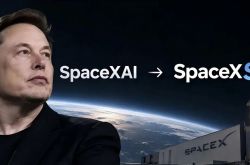
Musk Spearheads AI Renaming Trend! SpaceXAI Officially Rebrands to SpaceXSI
 10/09 2026
 451
451
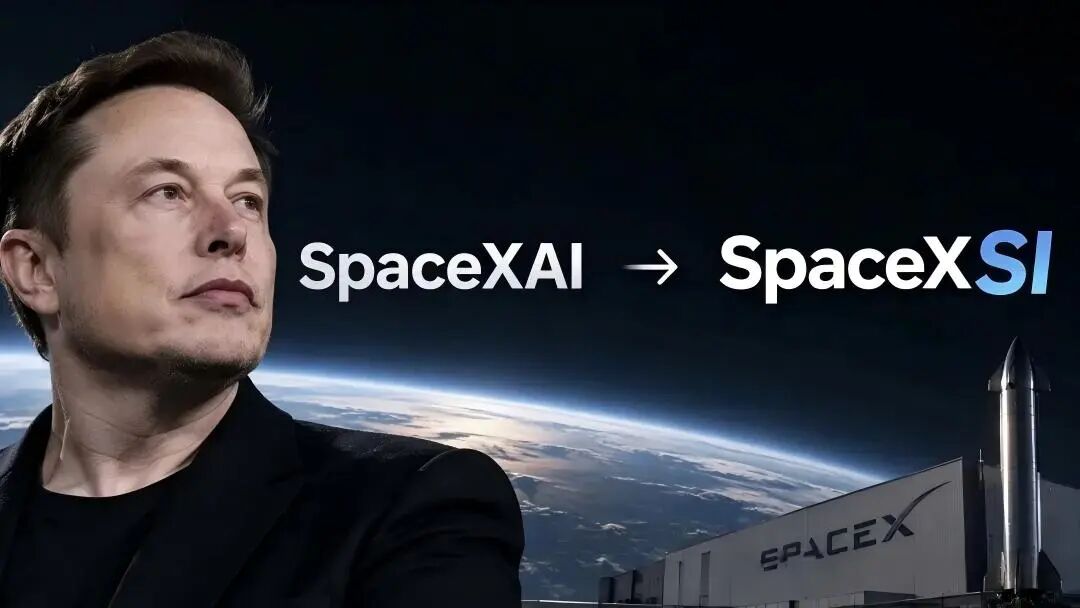

SpaceXAI Set for Second Brand Transformation in Mere Months
Image Source | Internet (Please reach out for removal in case of infringement; partially AI-generated)
The shift from 'AI' to 'SI', a seemingly minor one-letter difference, actually signifies a profound transformation in the industry's narrative.
On October 4, Musk officially confirmed on the social platform X that his artificial intelligence venture, SpaceXAI, will now be known as SpaceXSI. Responding to a user's query, he stated unequivocally, 'Yes, we're making the switch,' and added, 'No more AI, it's SI from now on, and it's better.'
Subsequently, Musk also posted, 'SpaceX is a superintelligence company.'
This announcement marks SpaceXAI's second brand renaming in just a few months.
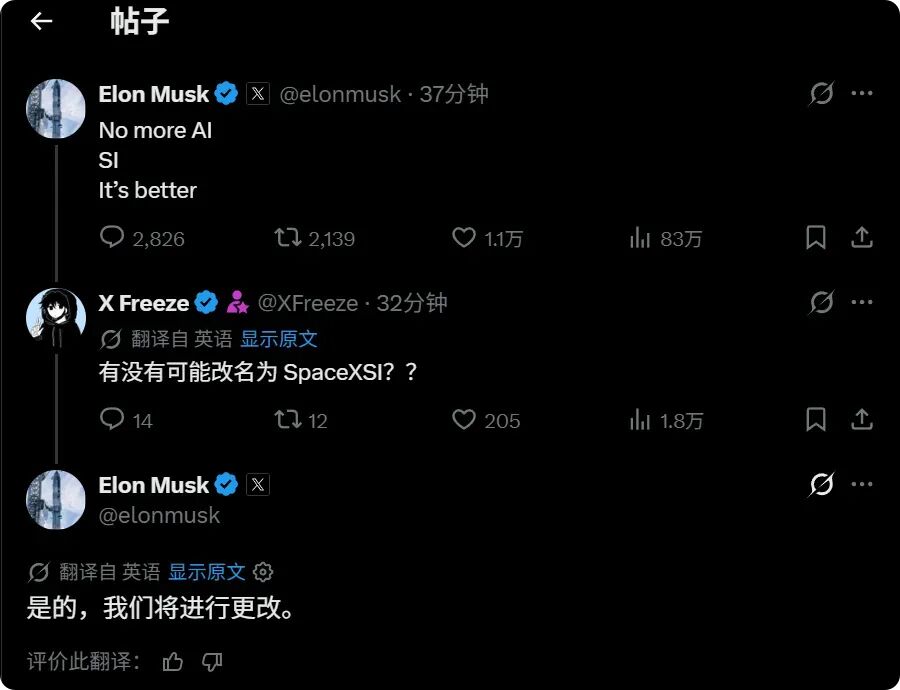
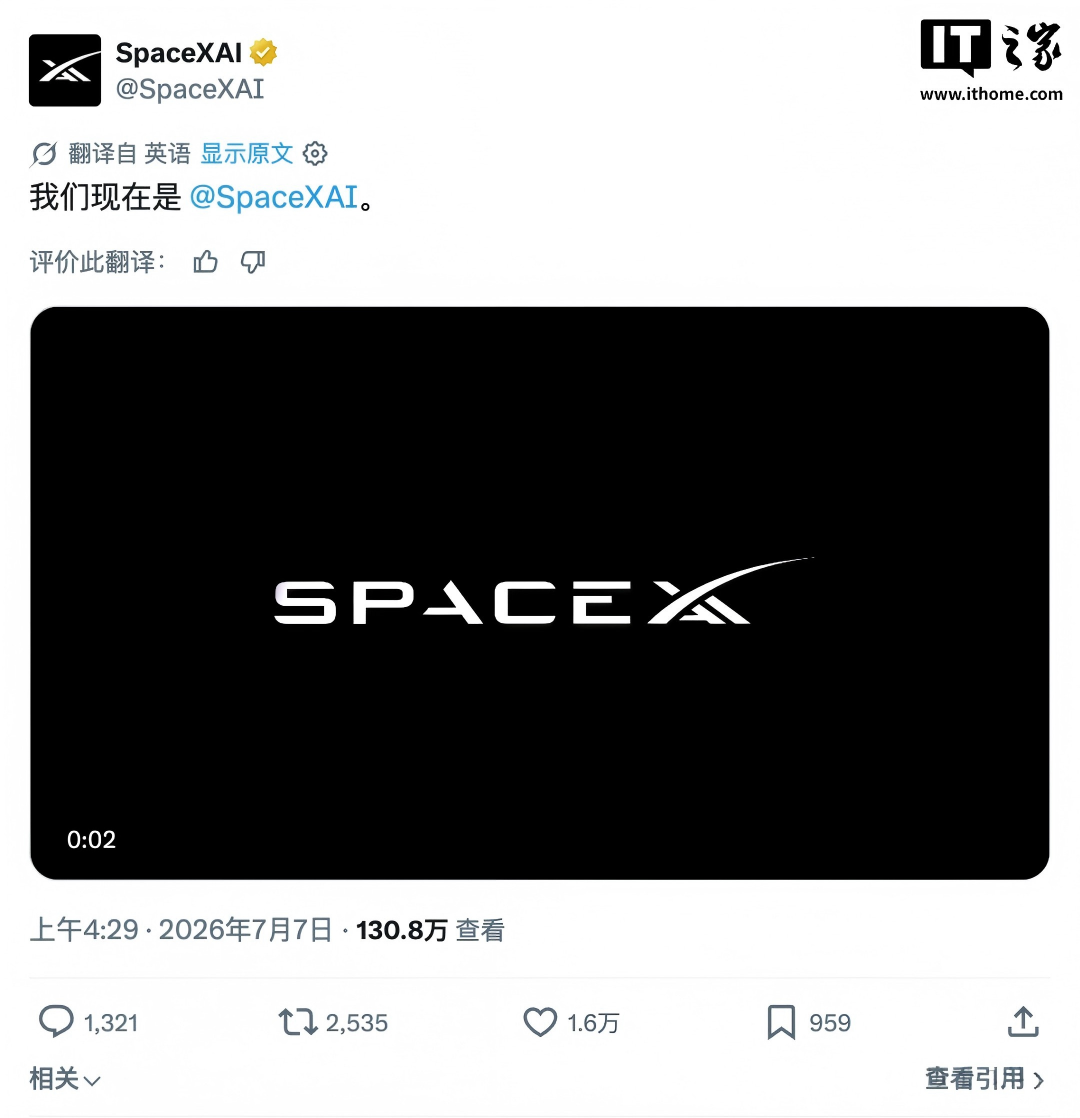
From xAI to SpaceXAI, and now to SpaceXSI: Three rebrandings in under a year.
To grasp the significance of this renaming, let's rewind to earlier this year.
In February, Musk's aerospace giant, SpaceX, acquired his artificial intelligence company, xAI, through an all-stock transaction. The Grok large model and social platform X were also seamlessly integrated into the SpaceX ecosystem. In July, xAI officially completed its brand overhaul, adopting the new name SpaceXAI, along with a revamped logo and X platform username.
At the time, the industry believed that was the final decision. However, less than three months later, Musk announced yet another change. The core modification in the new name, 'SpaceXSI', is the substitution of 'AI' (Artificial Intelligence) with 'SI' (Super Intelligence).
As of now, SpaceX has not officially announced the effective date of the renaming, nor have the company's official website and social media accounts been updated to reflect the change to SpaceXSI.
The impetus for this naming shift stems from a recent executive order issued by the U.S. federal government. Previously, Trump mandated that federal administrative departments replace the term 'Artificial Intelligence' (AI) with 'Super Intelligence' (SI) in official communications, government websites, reports, and policy documents.
Some argue that the prefix 'artificial' tends to conjure an image of technology that is 'not cutting-edge' or 'diluted', whereas the capabilities of current advanced AI far surpass what the term was originally meant to convey.
Musk is clearly an ardent supporter of this naming evolution. U.S. media reported that when Trump addressed the media alongside tech leaders, Musk initially blurted out 'AI' but swiftly corrected himself to 'SI', then smiled and apologized. This incident quickly went viral on social media, foreshadowing the subsequent official renaming.
Musk is not alone; the tech community is embracing this 'terminology shift'.
It's worth noting that Musk is not the only tech leader to adopt the new term 'SI'. Jensen Huang, CEO of NVIDIA, recently remarked at an event that data centers are evolving into 'superintelligence factories (SI factories)'.
However, industry opinions are divided. Some analysts point out that 'superintelligence' already carries a specific meaning in academic and technical circles, referring to an intelligence form that surpasses humans in nearly all cognitive domains. Current technological capabilities are still a far cry from achieving this milestone.
In other words, the name has changed, but the underlying technology remains largely the same.
Experts share similar sentiments: Given the established connotations of 'superintelligence', this renaming is unlikely to gain widespread industry acceptance.
From a commercial standpoint, Musk's decision appears to be driven by at least two considerations.
The first is brand positioning. The term 'artificial intelligence' was coined by John McCarthy in 1955, and the field has relied on this nomenclature for the past 70 years. By being the first to establish 'SI' and incorporate it into his company's name, Musk gains a competitive edge in the labeling race for the next era.
The second is narrative enhancement. Global discussions on the safety risks associated with AI continue to intensify, with concerns over data breaches, uncontrollable intelligent agents, and other issues constantly simmering.
The term 'superintelligence' inherently carries more weight and imagination in communication than 'artificial intelligence', making it easier to craft a narrative of 'technological leapfrogging'.
When industry leaders collectively start changing their terminology, it often signals the emergence of a new narrative framework.
-
Domestic Large-Scale AI Models: Evolving into 'Product Cycle Stocks'
-
![]()
FAW, Toyota, and GAC Ink Tripartite Pact: Fostering Integration and Synergy Between Northern and Southern Toyota via Capital Linkage
-
![]()
Silicon Valley AI: Embracing Open Source
-
![]()
AI Interviewer: A Step Too Far for Workers
-
![]()
Musk Spearheads AI Renaming Trend! SpaceXAI Officially Rebrands to SpaceXSI
-
![]()
Aptiv Divests Versigent: Following the Shedding of Wiring Harnesses, the Previously Unwanted Power Business Achieves a 10.8% Growth in Q1
-
![]()
Post-2000s Entrepreneur Builds $67 Billion AI Unicorn, Even Meta Takes Notice
-
![]()
Despite 800V and 6C Capabilities, Why Do We Still Face 5-6 Hour Charging Queues?