Q2 Revenue Growth and Improved Profitability: Haier Smart Home's Interim Results Demonstrate Business Resilience
 08/31 2026
 409
409

Frankly speaking, the home appliance interim results season of 2026 is destined to be the most emotionally complex in recent years: it reads less like a growth report card and more like an account book that has been prematurely closed.
The aggregated data from AVC Cloud does not lie. In the first half of 2026, the retail sales of the home appliance market reached RMB 425 billion, a year-on-year decline of 9.9%. The first quarter saw a 6.0% drop; the second quarter was even colder, with a 12.4% decline.
The National Bureau of Statistics' data provides nearly identical cross-verification, showing a 7.4% decrease in retail sales of home appliances and audio-visual equipment.
Among these, the air conditioning sector, affected by the withdrawal of subsidies, showed the most significant decline: retail sales reached RMB 122.1 billion, a staggering 15.9% year-on-year drop. Domestic sales volume fell by 14.4% and sales value by 19.2% in the cooling year. Major kitchen and bathroom appliances fell by 10.7% year-on-year.
The reasons behind this are not hard to understand. The contraction in demand following the withdrawal of subsidies is taking effect.
In Q2 2024, national subsidies significantly boosted retail sales, but by the first half of 2026, this had entered a stage of diminishing marginal utility. The continuous decline in completed real estate areas has suppressed demand for new home appliances.
Overseas markets present another curve of pressure.
High interest rates have increased housing-related expenses, while inflation has eroded discretionary consumption. As a post-cycle durable good, the replacement demand for white goods is visibly being postponed.
More importantly, today, U.S. tariffs have shifted from temporary measures to institutionalized costs. The old path of global home appliance companies relying on single manufacturing bases for large-scale exports is beginning to incur costs, delivery delays, and market access barriers simultaneously.
Whirlpool's total sales decreased by 6.8% in the second quarter, with North American major appliance sales down by 1.5% and EBIT dropping by 55%. Demand in the U.S. white goods industry contracted by approximately 3.4%. Electrolux also reported negative organic sales in North America. No leading European or U.S. brand has demonstrated strong demand.
In such an environment, it is difficult for Chinese white goods giants to deliver standalone impressive results. Gree Electric saw a high single-digit contraction, while Hisense Home Appliances and TCL Smart Home faced significant exchange rate impacts.
However, today, what matters is not the already priced-in profit declines or sluggish revenue growth by the market.
What truly matters are the two questions that investors need answered during this interim results season.
First, in this ubiquitous headwind environment, who has demonstrated greater resilience?
Second, when the future cyclical turning point arrives, whose financial statements already contain the seeds of an early reversal?
In its 2026 interim results, Haier Smart Home provides distinct answers to both questions.
01 Understanding Haier Smart Home's Interim Results Through Two "North Star Metrics"
As a durable consumer good, no company is entirely immune to macroeconomic cycles. However, when the tide recedes, investors should focus on two deeper metrics.
North Star One: Changes in Haier Smart Home's market share during downturns.
During a contraction, revenue may shrink along with the overall market, but if market share remains stable or even increases, it indicates that the company has not lost consumers: it is simply entering winter alongside the industry but possesses stronger recovery capabilities.
In its interim results, Haier Smart Home demonstrated efficiency gains through the integration of major white goods, reporting solidified domestic market share in refrigerators and washing machines, with continuous improvements from an already leading position; in Europe, it achieved market share gains across refrigeration and washing categories in the UK, France, Italy, and Spain.
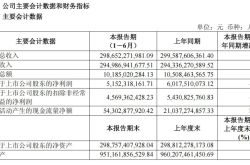
Moreover, through large-scale HVAC synergy, Haier Smart Home achieved 6.1% global revenue growth and a 26.8% surge in operating profit.
Reviewing Haier Smart Home's three primary markets, we can see consumer recognition of its products.
Domestically, according to GfK and CMM data, Haier's online retail sales market share in air conditioning reached 12.4%, up 0.9 percentage points year-on-year; offline market share stood at 20.6%, up 0.8 percentage points year-on-year.
In Europe, despite a flat industry performance, Haier Smart Home's revenue grew by 4.9% year-on-year.
North America is particularly noteworthy. As a deeply globalized enterprise with overseas revenue exceeding 50%, Haier Smart Home's international business involves multiple currencies for settlement. North America, being the company's largest and highest-proportion single overseas market, is the core area bearing the brunt of exchange rate impacts.
Measured in USD terms, against a 6.4% decline in the North American industry, Haier Smart Home was the only leading company to achieve positive growth in Q2 in USD terms.
This market share change is comprehensive: whether in terms of market share, product categories, core markets, or product premiumization, Haier Smart Home has excelled in capturing consumer mindshare.
For example, market share in white goods achieved full-line, cross-category growth. In the European market, according to GfK data, Haier Smart Home's combined refrigerator sales market share in the UK, France, Italy, and Spain increased by 1.0 percentage point year-on-year.
After global capability alignment, the premium market share of Chinese manufacturing represented by Haier Smart Home continues to rise. The Horizon multi-door refrigerator drove market share growth for Haier Smart Home. According to GfK data, in the first half of 2026, Haier Smart Home's sales market share in the multi-door refrigerator market in Spain and Italy reached 31.7% and 30.5%, respectively, both ranking first in the market.
All of this is inseparable from the efficient performance of Haier Smart Home's sales and supply chain.
On the marketing front, Haier Smart Home successfully signed top sports IPs to serve its premiumization strategy.
In the first half of the year, Haier Smart Home partnered with global top football IPs such as Liverpool and Paris Saint-Germain, as well as the top tennis IP Roland Garros. It successfully held two large-scale client conferences in Paris and Liverpool, covering core European clients and media, deeply binding the brand with a premium image and significantly enhancing brand premium.
As we will discuss later, these investments are directly reflected in the growth of sales expense ratios. This growth should not be interpreted as a change in expense ratios but rather as brand investments for the future.
On the logistics and supply chain front, Haier Smart Home also achieved significant optimizations, improving delivery and fulfillment capabilities: by establishing a multimodal transportation system and optimizing CKD solutions, it effectively offset geopolitical risks and cost inflation pressures.
Despite revenue pressures, consumers remain loyal to Haier Smart Home, and its market share growth is an indisputable fact.
North Star Two: Under pressure, is the company investing in the future or exposing shortcomings?
As I mentioned earlier, expense ratios are not the key; what matters is whether changes in expense structures represent "investments in the future" or "collapses under pressure tests."
These metrics themselves are neither good nor bad; the key lies in the logic behind them.
In this interim report, it is not difficult to notice changes in Haier Smart Home's sales expenses, R&D expenses, and capital expenditures, but upon closer inspection, each of these expenses harbors hidden details.
In terms of sales expense ratios, Haier Smart Home's sales expenses in the first half of the year reached RMB 16.439 billion, with a sales expense ratio of 10.8%, up 0.7 percentage points year-on-year compared to the same period in 2025.
One reason for the increase in the sales expense ratio is that Haier Smart Home is advancing a comprehensive TC transformation, with marketing-side user rights and interests resources shifting from decentralized client deployment to centralized platform operation and resource pool management.
In my view, the widening of the expense ratio should first be understood as the internalization of fulfillment costs rather than a loss of control over deployment efficiency.
Secondly, as mentioned earlier, investments in top sports IPs, the continuous construction of overseas terminal touchpoint stores, and supply chain layouts in three industrial parks in Thailand, Vietnam, and Indonesia also involve changes in the sales expense ratio.
These investments do not yield immediate returns but build long-term brand equity and channel barriers.
In terms of R&D expense ratios, Haier Smart Home's R&D expenses reached RMB 5.072 billion, a year-on-year decrease of 12.41%.
This is not a "reduction in R&D" but rather an optimization of R&D structure. SKU consolidation, focus on blockbuster products, and elimination of outdated models. Meanwhile, Haier Smart Home's AI industrial large model is compressing design cycles, enhancing rather than reducing R&D efficiency.
Doing more with fewer resources is itself an efficiency revolution.
Finally, regarding capital expenditures, we can more clearly see Haier Smart Home's long-term bets.
Today, amid irreversible increases in tariffs and shipping costs, Haier Smart Home is reallocating global production capacity according to target markets.
Thailand's refrigerator factory has taken over exports of large refrigerators to the United States, optimizing unit costs; local manufacturing bases for washing machines and water heaters in the United States are progressing steadily. GE Appliances will implement procurement, supply chain, and full-process digitization to hedge against tariffs in the second half of the year and accelerate the transfer of washing machines and large refrigerators to production, as well as new businesses in air and water.
These capital expenditures occurred during the reporting period, with capacity and cost competitiveness to be released subsequently. Daring to make counter-cyclical capacity investments during an industry contraction is essentially a long-term hedge against the judgment that "tariffs will eventually become institutionalized costs."
At this critical juncture, many would choose to optimize current performance, but Haier Smart Home has chosen a more long-termist path.
02 The Ace in the Hole of the Global South: Incremental Growth in Emerging Markets
Europe and North America represent inventory markets for white goods, with true incremental growth found in emerging markets across the Global South.
In the Indian market, Haier Smart Home's major collaboration with Warburg Pincus-backed Bharti is a signal that cannot be ignored. This deep cooperation in South Asia is built upon Haier Smart Home's rapid advancement in this vast market.
Haier Smart Home's Indian market continues to maintain high-speed development, with revenue growing by over 20% year-on-year in Indian rupee terms. Revenue in Pakistan increased by over 30% year-on-year in Pakistani rupee terms.
Additionally, Haier Smart Home's interim report shows significant revenue growth in Southeast Asia. It ranked first in Thailand's residential air conditioning market and achieved the highest white goods sales volume in Vietnam.
Haier Smart Home's footprint in Southeast Asian markets lies not only in growth rates but also in their independence from European and American real estate cycles and tariff games, providing an independent demand engine.
Today, Haier Smart Home is no longer just a "Chinese white goods company." It is a company with a globalized revenue structure and is also addressing the major proposition of global capability output.
03 AI Context Layer: The Overlooked Hidden Option
In the smart home sector, Haier Smart Home is clearly the earliest mover and has gained a significant first-mover advantage.
First, Haier Smart Home has already established a massive data terminal network, a fact known to most. By the end of 2025, Haier Smart Home had accumulated over 130 million registered users globally; there were 86.1 billion scene interactions annually, averaging over 7 billion monthly, or approximately 236 million daily.
Nearly 200 million daily data interactions across hundreds of millions of devices: this dataset is already large enough for model training.
Second, the value of Haier Smart Home's context layer remains largely unknown to most.
Today, nearly every home appliance company is attempting to venture into smart homes, but the difficulty lies not in adding a screen but in the frequent disconnections between device online status and semantic understanding.
Refrigerators recognize ingredients but cannot integrate them into tonight's cooking tasks; door locks recognize visitors but cannot adjust the living room's temperature and lighting.
This is because today's general-purpose large models can process language but cannot inherently understand a specific household.
Models do not know whether the master bedroom is currently occupied, whether the last item in the washing machine is dark-colored, which air conditioner "lower it a bit" refers to, or that this elderly person only speaks a dialect and prefers a different default temperature than a child.
In my view, the future ability of companies like Haier Smart Home to aggregate device states, spatial coordinates, member identities, and historical results into a callable context layer—so that models do not have to act like first-time visitors each time—represents the bridge between large model capabilities and smart terminals.
Haier Smart Home's long-standing massive home appliance terminals, along with rich context layer and data governance experience, will be the prerequisite for models to function stably in home scenarios. The context layer provided by Haier Smart Home represents the true channel value, the true value in the future AI era.
The potential commercial value of Haier Smart Home's context layer is already evident. It does not lie in selling one more connected home appliance (although it has already gained a first-mover advantage) but in being the first to transform "this household's current state" into an asset that models cannot easily replace. This represents an undiscovered AI option in the market.
In other words, while home appliance hardware in future households can be replaced, once Haier Smart Home organizes household states into a rich context layer that is recallable, auditable, and forgettable, cross-brand devices, in-vehicle systems, glasses, and robots will all need to access Haier Smart Home's data system to call upon the same context layer, leaving scheduling authority at Haier Smart Home's level.
It is not difficult to imagine that Haier Smart Home's future AI service relationships will promising be billed daily or reused per instance. Once Haier Smart Home establishes data governance as the only scheduling layer trusted by models in households, its business model will shift from selling devices to charging tolls for access.
Once Haier Smart Home's smart home pipeline becomes the default path, charging becomes justifiable: access certification, call volume, scene completion settlements, and cross-brand Settlement —in other words, channel rent for transforming vague instructions into executable, auditable actions.
This represents an imaginative future direction. In this early stage of AI development, it is certainly too early to expect these AI applications to form quantifiable, dominant contributions to Haier Smart Home's profits in the first half of 2026.
However, Haier Smart Home already meets the conditions for providing a context layer and data governance. It has passed the early stage where AI investments affect profits, and the effects are gradually emerging.
04 Conclusion: The Silver Lining on the Horizon
The home appliance industry in the first half of 2026 is undoubtedly in a clear demand contraction cycle. Domestic retail sales declined by nearly 10%, European and American peers faced comprehensive pressures, and the "industry taxes" of shipping fees, copper prices, and exchange rates left nearly all companies tightening their belts.
However, Haier Smart Home's revenue growth in Q2 represents rare warmth in this industry winter. More importantly, the structural characteristics behind this interim report—it is not about beautifying current figures but investing in the future.
After all, every winter will pass. What truly matters is who does what they should for spring during the winter.
-
![]()
Net Profit Drops Over 90%: Is the 'Big-Spending' Post-90s Billionaire Now Facing Hard Times?
-
![]()
Low Prices Alone Can't Sustain Liang Wenfeng's AGI Aspirations
-
![]()
Li Shufu Advances to the 'Next Battlefield'
-
![]()
Tearing Off the Female Label and Embracing Both Electric and Hybrid: How Far Can GWM's Ora Go in Its Self-Rescue Journey?
-
![]()
SAIC Motor Makes a Comeback: Net Profit Jumps 72% to 7.87 Billion in H1, Gross Margin Reaches Seven-Year Peak
-
![]()
FAW Achieves New Milestone in Solar Charging! Why Is It So Challenging for Cars to 'Harness the Sun'?
-
AI: The Catalyst for Industrial Transformation
-
Is Lixiang Innovation the Next Luxshare Precision? Backed by the Wang Laichun Family, It Relies on One Client for 70% of Its Earnings