Tearing Off the Female Label and Embracing Both Electric and Hybrid: How Far Can GWM's Ora Go in Its Self-Rescue Journey?
 08/31 2026
 685
685
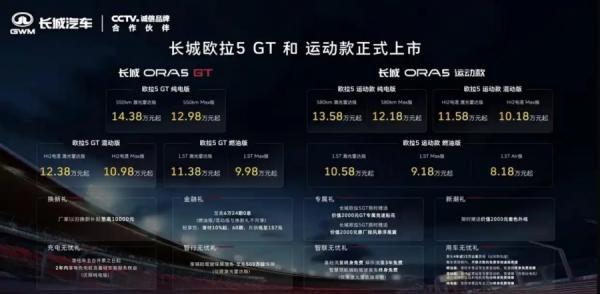
Recently, the Ora 5 Sport and Ora 5 GT were launched, featuring seven Sport variants with limited-time refreshed prices ranging from RMB 71,800 to RMB 125,800. The GT version offers six models, priced between RMB 99,800 and RMB 143,800, with limited-time refreshed prices from RMB 89,800 to RMB 133,800.
In fact, Ora, as GWM's earliest independent pure electric brand, has experienced a complete cycle of explosive growth, rapid decline, and arduous transformation. From a once-popular new energy vehicle (NEV) brand with monthly sales exceeding 10,000 units, it slipped to the fringes. The strategic overhaul initiated in 2025-2026 serves as a highly valuable case study for domestic NEV niche brands.
In summary, Ora has mainly gone through three development stages:
1. High-Growth Period (2020-2021)
Relying on the cost-effective Black Cat and White Cat micro-commuter cars, coupled with differentiated marketing as a "car brand that loves women," Ora's sales reached 135,000 units in 2021. These two models contributed over 80% of sales, becoming a hot choice for urban commuting and securing a foothold in the pure electric market under RMB 100,000.
2. Sharp Decline (2022-First Half of 2025)
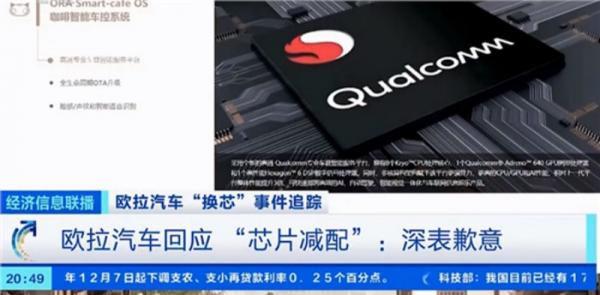
Soaring battery raw material costs led to losses exceeding RMB 10,000 per unit for the Black Cat and White Cat, prompting their discontinuation in 2022 and directly eroding the brand's sales base. Coupled with the public relations crisis over the Good Cat's "chip swap" incident, brand reputation suffered. Subsequent launches like the Ballet Cat and Lightning Cat failed to gain traction in the RMB 150,000-200,000 price range, exacerbating product discontinuity.
In 2024, Ora's sales plummeted to 63,300 units, down 41.69% year-on-year. By 2025, sales further dropped to 48,300 units, a 23.68% decline, making it the only declining brand among GWM's five major brands. Monthly sales often fell to 2,000-3,000 units, with frequent executive turnover, plunging the brand into crisis.
3. Comprehensive Transformation (Second Half of 2025-2026)
The new management team overhauled Ora's positioning, weakening the "female-exclusive" label and rebranding it as a global lifestyle brand for young urbanites. No longer confined to pure electric vehicles, the Guiyuan platform-based Ora 5 offers three powertrain options: pure electric, hybrid, and fuel. Simultaneously, it aggressively expanded overseas markets. In the first half of 2026, Ora's sales reached 26,400 units, up 89.74% year-on-year, though a significant portion of the growth came from exports. Domestic retail recovery remains limited, failing to reach its peak levels.
In my view, Ora's decline from prominence stems from three core reasons:
1. Strategic Trade-offs: Voluntarily Abandoning Sales Volume for Failed Upward Breakthrough
While the Black Cat and White Cat incurred losses, they drove sales volume, user accumulation, and channel vitality. Their discontinuation left Ora without a mass-market model under RMB 100,000, shifting its mainstay models above RMB 120,000. However, the fiercely competitive RMB 150,000-200,000 segment proved challenging. The Ballet Cat's niche retro positioning and high pricing hindered mass-market appeal, creating a "sandwich dilemma" of losing the low-end market while failing to penetrate the high-end.
2. The Double-Edged Sword of "Female-Exclusive" Positioning
This marketing strategy initially propelled Ora to fame through differentiation but also pigeonholed the brand: users defaulted Ora to "female cars," excluding male and family buyers and artificially narrowing its market. Meanwhile, excessive gender-focused marketing sparked controversies, eroding brand goodwill. While automakers can create female-friendly products, binding an entire brand to a single gender label is unwise.
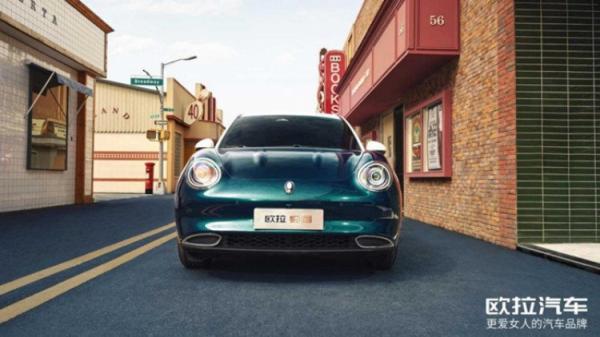
3. Product and Reputation Risks
The Good Cat's "chip swap" scandal left early users distrustful. Additionally, Ora's slow product iteration lagged behind rivals like BYD's Dolphin and Seagull in terms of intelligence, cost-effectiveness, and configuration updates. Price fluctuations further confused brand perception.
Since the second half of 2025, Ora has embarked on a comprehensive transformation, shedding its old positioning, diversifying powertrains, betting on globalization, and lowering prices. The results are evident: in June 2026, Ora's monthly sales hit 10,806 units, surging 229.15% year-on-year. First-half sales reached 26,389 units, up 89.74%, ending a 14-month slump and returning to monthly sales of over 10,000 units.
However, this rebound does not equate to full recovery. Two major concerns persist:
① Divergent Market Performance: While Ora's total sales have recovered, a significant portion of the growth comes from exports. Domestic retail recovery lags behind wholesale data, facing intense competition from BYD, Geely, and Chery's compact models. Product and channel rebuilding require time.
② Lingering Historical Burdens: Ora's sluggish sales in recent years have shaken dealer confidence. Meanwhile, reshaping old users' perceptions of the brand takes time. The "hybrid and electric sales" strategy, while boosting sales, dilutes Ora's original identity as a pure electric brand, necessitating a reestablished user perception.
Overall, Ora has completed its strategic pivot but faces a challenging restart. Overseas markets will drive significant growth, while domestic resurgence hinges on future product iterations and channel execution. How far its self-rescue journey will go remains to be seen—let's wait and see.
-
China’s Auto Market: How Fierce Is the Competition with Frequent New Car Launches? When Will It Subside?
-
Has Tesla Lost Its Lead and Missed the Chance to Enter China? Time is Running Out for Tesla's FSD in the Chinese Market
-
![]()
When Ambition Meets Boundaries, Building a Step-Change Future is Tougher Than Building a Phone
-
NIO’s Battery Swap Stations Now Accommodate an Additional Battery Model
-
![]()
Why Are Smartphones Selling Fewer Units but at Higher Prices?
-
iPhone Duo Sees Just 900 Yuan Price Hike, Scalpers in Frenzied Resale Race
-
![]()
Focus | Warburg Pincus Considers Selling Chinese Parking Operator Yangguang Haitian, Valuation May Reach US$300 Million
-
![]()
What? The Audi A8 is Set to Be Manufactured in China, in Partnership with Huawei