Li Shufu Advances to the 'Next Battlefield'
 08/31 2026
 557
557
Source | Bohu Finance (bohuFN)
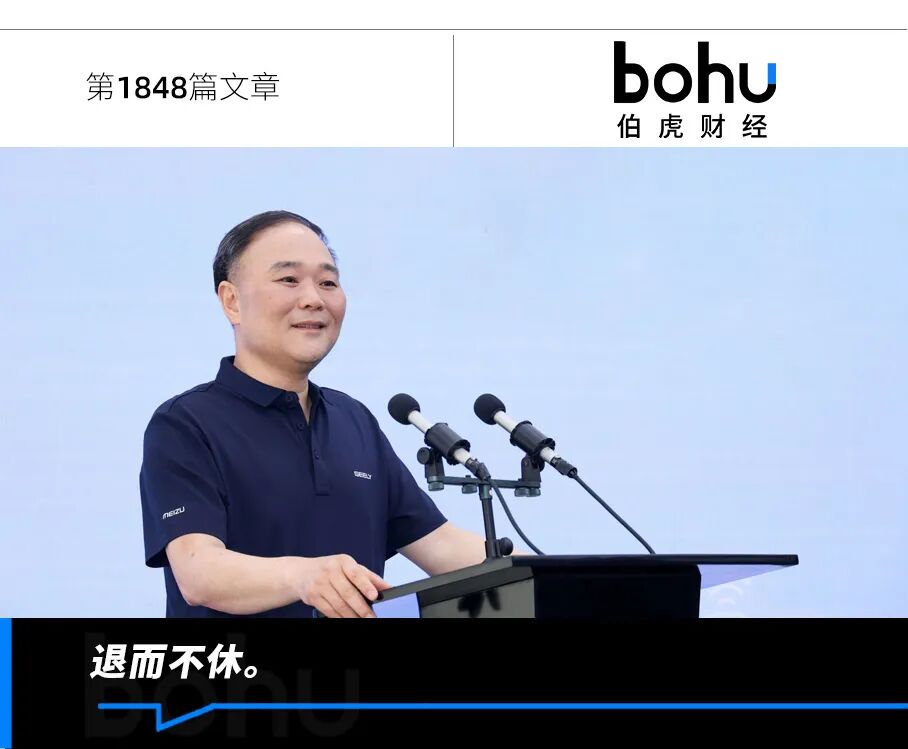
On August 17, Geely Automobile Holdings Limited made two significant announcements.
Li Shufu stepped down as Chairman of the Board and Executive Director, with An Conghui taking over as Chairman, Gan Jiayue appointed as CEO, and Gui Shengyue transitioning to Vice Chairman.
On the same day, Geely delivered what could be considered its best interim report to date: revenue reached RMB 173.6 billion, up 15% year-on-year, and core net profit attributable to the parent company hit RMB 9.68 billion, surging 46% year-on-year.
In the first half of this year, the automotive industry faced significant challenges. The lingering effects of price wars persisted, and rising raw material costs further squeezed profit margins. While most automakers experienced revenue growth without corresponding profit increases—or even shifted from profitability to losses—Geely managed to distinguish itself.
Yet, on this day of corporate success, the founder chose to step aside and pass the torch.
This contrast alone piques external curiosity: Why now? Why must he step down? Why were An Conghui and Gan Jiayue chosen as successors?
Answering these three questions allows us to grasp the grand strategy Li Shufu is pursuing.
First, why did Li Shufu choose to pass the baton at this time?
In the first half of 2026, Geely delivered an outstanding performance: both total revenue and core net profit attributable to the parent company reached record highs.
Additionally, the company's gross profit was RMB 31.15 billion, up 25.7% from RMB 24.78 billion in the same period last year; the gross margin increased to 17.9%; average revenue per vehicle rose 16% year-on-year to RMB 112,000; and core net profit per vehicle increased 45% year-on-year to RMB 6,806.
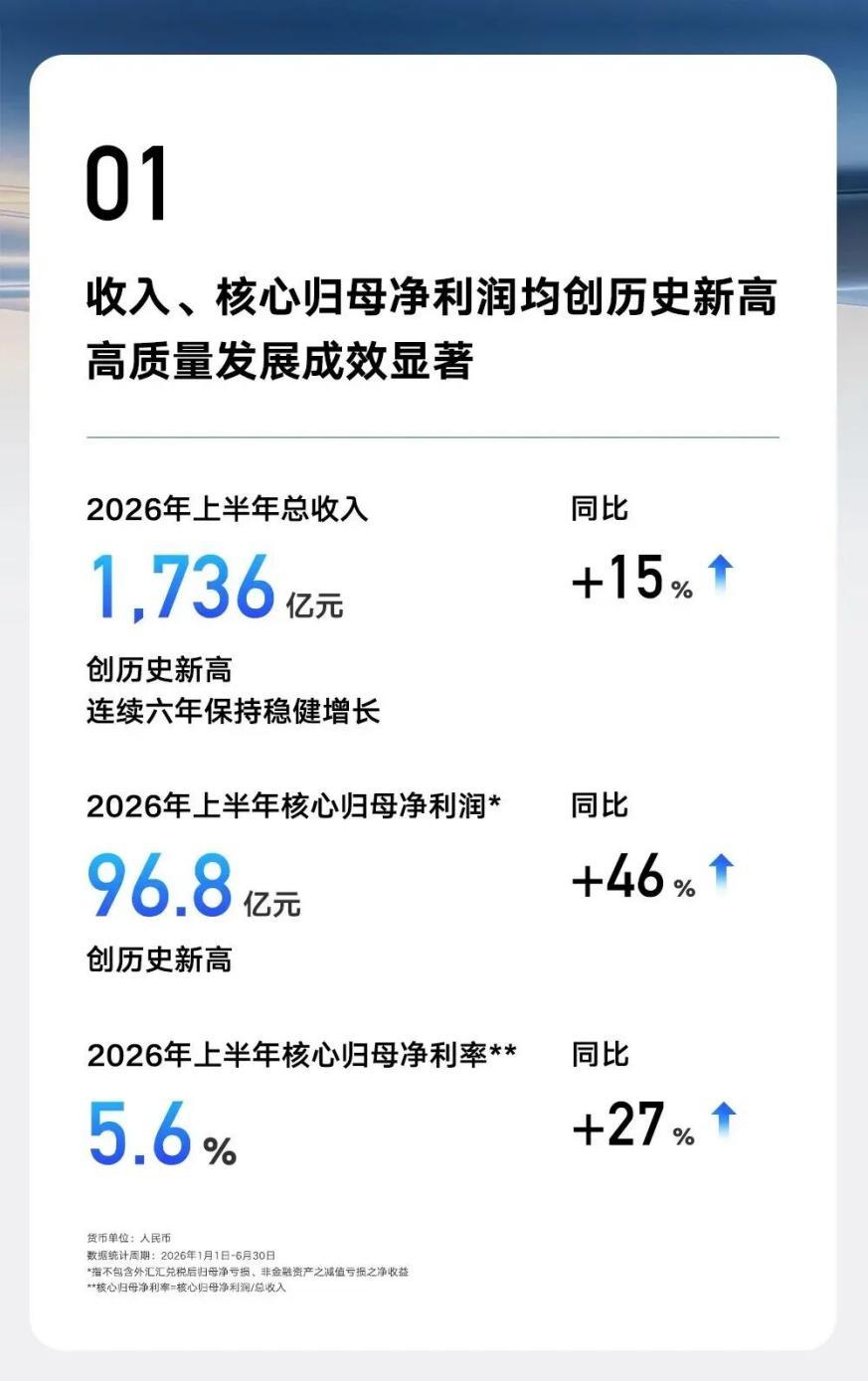
This performance is nearly flawless—revenue growth outpaced sales growth, gross profit growth outpaced revenue growth, and core net profit growth surpassed gross profit growth, with both average revenue and profit per vehicle maintaining upward trends.
In short, Geely's success does not rely on selling more vehicles but on earning more from each vehicle sold. In 2026, amid intensified industry price wars, Geely's profitability significantly improved.
Achieving this hinges on two key strategies: premiumization and globalization.
Premiumization is a genuine profit driver.
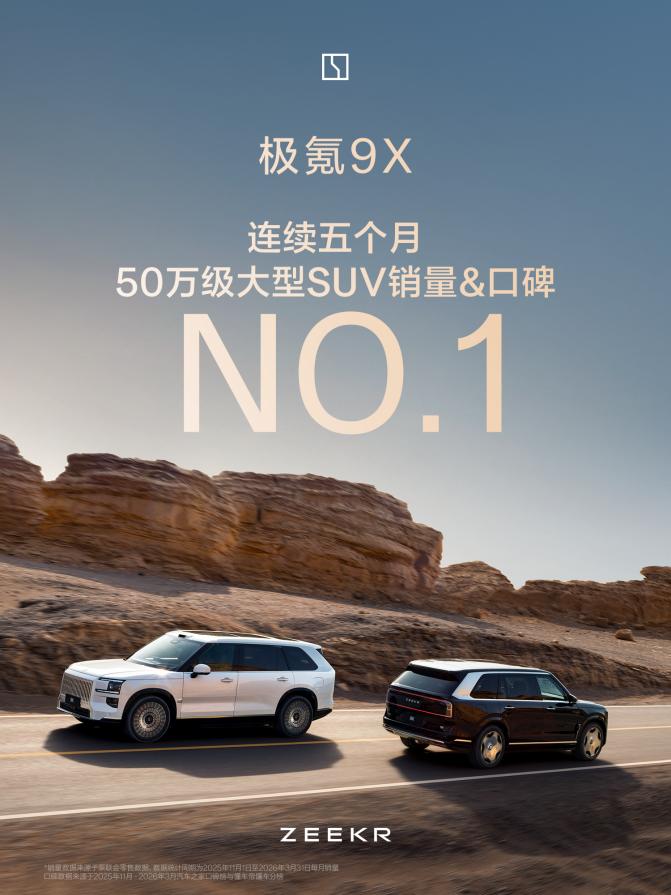
In the first half of this year, Zeekr sold 178,000 units, up 97% year-on-year, accounting for only 12.5% of total sales but contributing 31.7% of revenue, with an average selling price of around RMB 350,000. Geely Auto's management revealed that Zeekr's brand gross margin exceeded 20% and continued to rise.
Meanwhile, product reputation continued to improve. The latest research report from Jielan Road shows that Zeekr has firmly established itself as a "luxury brand" in consumer perception, achieving a value leap from "having luxury products" to "being a luxury brand."
Global expansion represents another impressive profit curve.
In the first half of this year, Geely's overseas sales reached 474,000 units, surpassing total exports in 2025 and soaring 158% year-on-year. It currently ranks third in overseas sales among Chinese automakers, with the highest growth rate among mainstream automakers.
Moreover, Geely's global expansion is not merely "product exports" but "systemic exports." From overseas factory construction and localized supply chains to sales and service networks, Geely has formed a complete industrial operation system, with overseas business gross margins 7-10 percentage points higher than domestic margins.
Supporting premiumization and global expansion is Geely's two-year "One Geely" integration strategy.
In 2024, Li Shufu issued the "Taizhou Declaration," announcing a large-scale internal integration within Geely. Geometry was merged into Galaxy, Zeekr acquired a controlling stake in Lynk & Co, and Zeekr was delisted and reintegrated into Geely Auto's listed entity.
Relying on the "One Geely" system, Geely fully leveraged internal synergies, enabling efficient reuse of intelligent driving technologies, R&D resources, and solutions. This addressed internal resource competition and product overlap issues, further reducing costs and improving efficiency.
For Geely today, the toughest challenges have been overcome.
Li Shufu spent over a decade leading Geely to achieve core technology globalization while constructing a clearer brand matrix through the "One Geely" strategy. The two most difficult paths—premiumization and global expansion—have been successfully navigated.
At this point, Geely is a company Li Shufu can confidently entrust to others—with clear branding, financial health, collaborative governance, and a proven global expansion path. As of June 2026, the company's cash reserves reached RMB 69.56 billion, at an all-time high.
Passing the baton now is the most opportune moment.
The second question: Why is Li Shufu stepping down when Geely is at its best?
To understand this, we must first review how Li Shufu built Geely into what it is today. Over the past two decades, Li Shufu's approach can be summarized in one word: "acquire."
In 2009, Geely acquired Australian DSI, the world's second-largest automatic transmission company; in 2010, it acquired Volvo; in 2017, it completed the acquisitions of Proton and Lotus; in 2018, it became the largest shareholder of Daimler through equity investment.
Through these capital operations, Geely completed its global automotive industry layout in a shorter time. Volvo brought vehicle engineering capabilities, Lotus brought chassis tuning expertise, and Geely internalized these capabilities into its product strength.
However, this approach is gradually losing effectiveness.
Today, the automotive industry has undergone seismic shifts. China's automotive industry, once far behind the world, has risen. Technology iteration speeds have compressed from five to eight years of development to facelifts every six months and model changes every year.
The core of industry competition has shifted from "who has better technology" to "who can faster transform technology into products and products into profits." This is no longer an era where "buying technology" alone can solve problems. Instead, it requires companies to form a replicable system across supply chains, product R&D, and technological innovation, with a focus on building a systematic organizational management system.
Zeekr's success is a typical example.
It did not start from scratch but rapidly incubated based on Geely's SEA architecture, with chassis tuning by the Lotus team. It shared Geely's foundational accumulations in supply chains, intelligent manufacturing, and three-electric technologies, consolidating resources, technologies, and channels previously dispersed across subsidiaries.
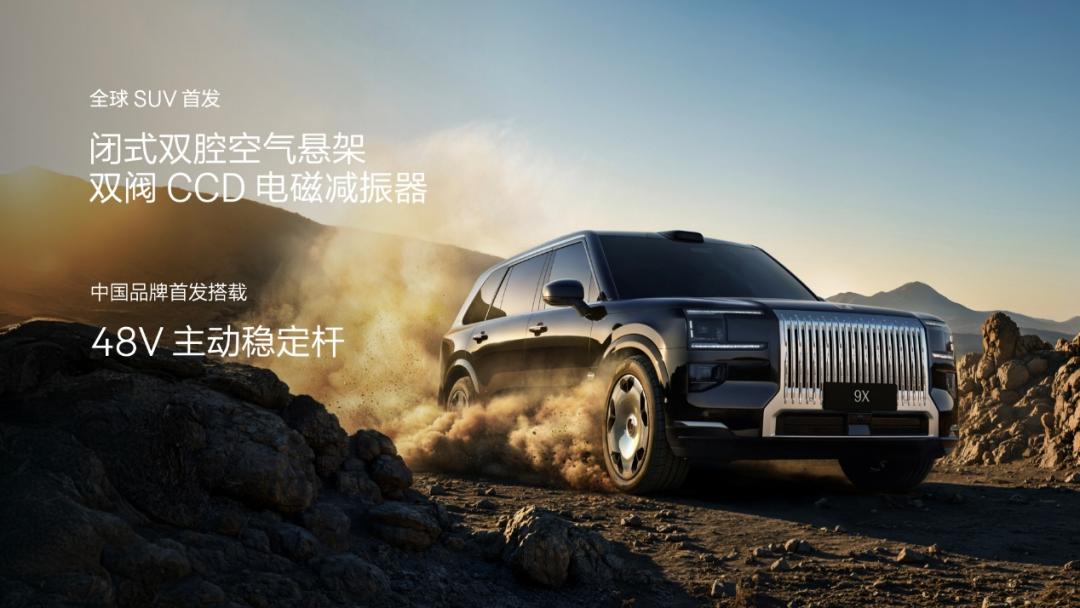
Zeekr's success represents Li Shufu's decisive actions during Geely's transition from the fuel era to the new energy era, leading the team to victory after restructuring and repositioning.
However, to advance Geely to the next stage along this path, what Geely needs is not "another Li Shufu" but an organizational structure that can continue operating without him.
Therefore, Li Shufu must step down to give Geely's organizational structure greater development space. However, it is worth noting that Li Shufu is only stepping down, not retiring.
Although he resigned as Chairman of the Board and Executive Director of Geely Automobile Holdings Limited, he continues to serve as Chairman of Zhejiang Geely Holding Group. The distinction between these two roles reveals Li Shufu's true strategy.
Geely Automobile Holdings is the listed platform for vehicle manufacturing and sales, responsible for the "present"—selling cars, earning profits, and delivering results. Zhejiang Geely Holding Group, the parent company, is responsible for the "future"—exploratory businesses such as commercial aerospace, low-altitude economy, and AI.
In June this year, Geely Holding established a new company, "Geely Technology (Sichuan) Co., Ltd.," in Chengdu, with Li Shufu personally serving as Chairman. Its business scope covers vehicle manufacturing, intelligent mobility, new energy, low-altitude economy, and other cutting-edge fields.
Simultaneously, Geely Holding launched the "Cross-Era Talent Cultivation Plan," selecting high school graduates to directly enter four frontier fields: new energy, artificial intelligence, low-altitude flight, and low-orbit satellites.
At this point, the answer to why Li Shufu is stepping down is clear.
He is relinquishing the scaled-up business of how to build and sell cars but tightly holding onto Geely's development for the next 20 years or even longer.
This brings us to the third question: Why are An Conghui and Gan Jiayue the successors?
Let's first outline the management team configuration of Geely Group going forward.
First, Zhejiang Geely Holding Group, the parent company of Geely Automobile Holdings Limited, continues to have Li Shufu as Chairman and An Conghui as CEO (appointed in January this year).
Additionally, in Geely's listed entity, Geely Automobile Holdings Limited, Li Shufu has resigned as Chairman of the Board, with An Conghui taking over as Chairman and Gan Jiayue appointed as CEO.
Finally, Geely Automobile Group, the core operating subsidiary under Geely Automobile Holdings, continues to have Gan Jiayue as CEO.
Thus, the management structure of the entire Geely Group is now clear. An Conghui and Gan Jiayue, two talents who grew up within the Geely system, will respectively serve as Chairman and CEO of the listed company, with one overseeing strategy and the other managing operations, a clear division of labor.
As for why they were chosen, a look at their "journeys" makes it evident.
An Conghui has been with Geely for 30 years, starting as an auditor. He led the integration of Volvo, the creation of the Lynk & Co brand, and deeply participated in the implementation of the SEA pure electric architecture. He was a key decision-maker in Geely's transition to new energy.
In 2021, he voluntarily stepped down as CEO of Geely Auto to establish the Zeekr brand from scratch, taking it public on the New York Stock Exchange in less than three years. In early 2026, he returned to Geely Holding Group as CEO and now further advanced to become Chairman of the listed company.
An Conghui's career spans every critical area—finance, technology, and branding. Li Shufu once described An Conghui as an "exceptionally talented professional," making him the most suitable candidate to lead Geely Automobile Holdings.
Gan Jiayue joined Geely in 2003, working in finance, procurement, supply chain, and organizational management. During his tenure, he drove the integration of Geometry into Galaxy and the strategic synergy between Zeekr and Lynk & Co, shouldering the heavy responsibility of Geely's business integration and development.
Moreover, both An Conghui and Gan Jiayue hold core positions at different levels within the group, aligning perfectly with the "One Geely" strategy's requirements for top-level coordination.
Li Shufu passed the baton to the most suitable people at the most opportune time, but the new management team cannot rest easy—they face numerous future challenges.
Li Shufu left at least three key tasks: products, growth, and global expansion.
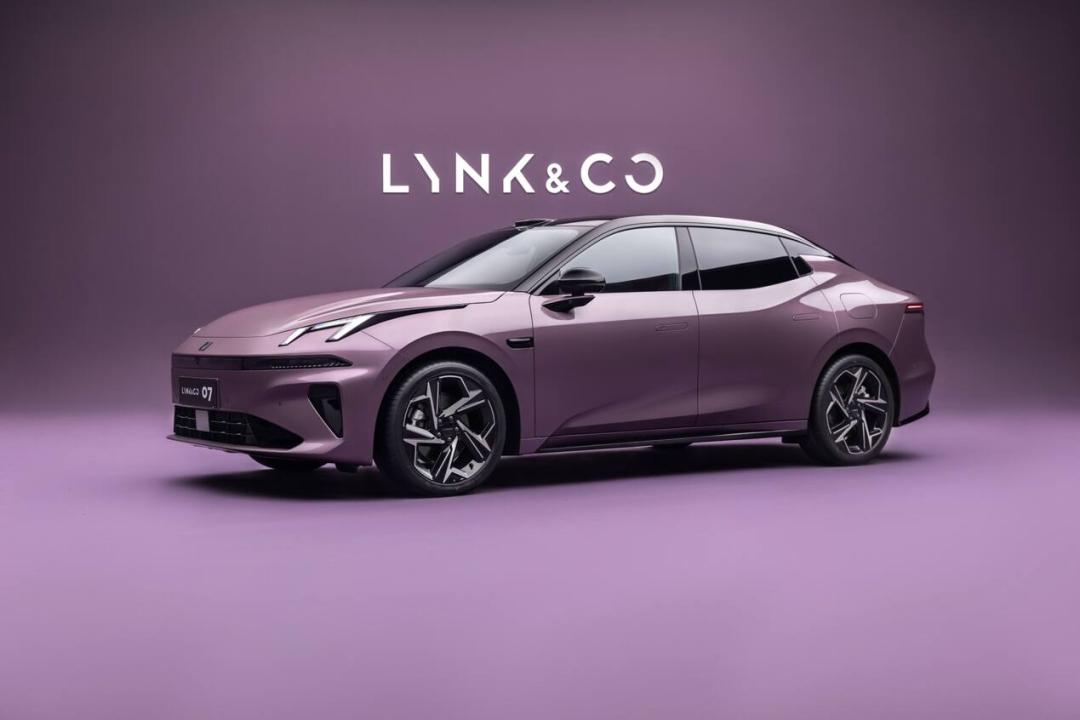
First, while Zeekr has excelled, Geely Galaxy sold 520,000 units in the first half of the year, down 5% year-on-year, and Lynk & Co sold 144,000 units, down 6%. An Conghui admitted that the product matrix lacks "mid-range strength" and needs a blockbuster model in the mainstream market.
Second, according to Dolphin Research, Geely's domestic sales fell 23% year-on-year to 949,000 units in the first half of this year, with overseas markets accounting for nearly all of Geely's growth. Geely still faces severe challenges in the domestic automotive market.
Finally, although Geely's net profit margin attributable to the parent company is among the highest in the industry, this is because it shifted battlefields early through exports and premiumization. Whether it can maintain overseas market growth momentum will be key to safeguarding profits.
This is why Li Shufu entrusted Geely to a more professional management team. These challenges are essentially comprehensive tests of organizational capabilities, cost control, and operational efficiency. The escalating industry competition is forcing this system to mature faster.
Therefore, Li Shufu must transform Geely from a company reliant on one individual into a self-sustaining system.
Geely's ship continues to move forward, but market waves are growing stronger. For the new captain, the real test has just begun.
The cover image and illustrations in this article are owned by their respective copyright holders. If the copyright owners believe their works are unsuitable for public browsing or should not be used without compensation, please contact us promptly, and our platform will make immediate corrections.
-
China’s Auto Market: How Fierce Is the Competition with Frequent New Car Launches? When Will It Subside?
-
Has Tesla Lost Its Lead and Missed the Chance to Enter China? Time is Running Out for Tesla's FSD in the Chinese Market
-
![]()
When Ambition Meets Boundaries, Building a Step-Change Future is Tougher Than Building a Phone
-
NIO’s Battery Swap Stations Now Accommodate an Additional Battery Model
-
![]()
Why Are Smartphones Selling Fewer Units but at Higher Prices?
-
iPhone Duo Sees Just 900 Yuan Price Hike, Scalpers in Frenzied Resale Race
-
![]()
Focus | Warburg Pincus Considers Selling Chinese Parking Operator Yangguang Haitian, Valuation May Reach US$300 Million
-
![]()
What? The Audi A8 is Set to Be Manufactured in China, in Partnership with Huawei