Can AI Be Integrated into Smartphones, or Will It Completely Transform Them?
 10/12 2026
 549
549
Author | Unsigned
There's no denying that AI holds revolutionary potential. To capitalize on the opportunities of this era, smartphone manufacturers have been actively developing AI-driven smartphones in recent years.
However, when we examine sales data, it becomes clear that AI technology hasn't opened up new growth avenues for the smartphone industry. According to IDC, in the second quarter of 2026, smartphone shipments in China reached 66.01 million units, a 4.3% year-on-year decrease, marking the fifth consecutive quarter of decline.
In stark contrast to the lukewarm reception of AI smartphones, Agent products developed by tech companies, particularly Personal Agent products, are garnering significant attention. For instance, Reuters reported that AI startup Instinct secured $1 billion in funding in September 2026, reaching a post-money valuation of $10 billion. Founded in October 2025 with just 14 employees, the company hasn't yet launched its product but already boasts around 100,000 users.
This raises several questions: Why are Agent products gaining traction while AI smartphones struggle? Is it due to incomplete AI functionality, or is the smartphone form factor unsuitable for AI technology? How will Agents shape the future of smartphone products?
01 GUI Defines Smartphones, But It’s Not Ideal for Human-Computer Interaction
Although smartphones and PCs belong to different eras and device categories, their underlying operational logic is similar, both relying on GUIs (Graphical User Interfaces) and local computing power to serve users.
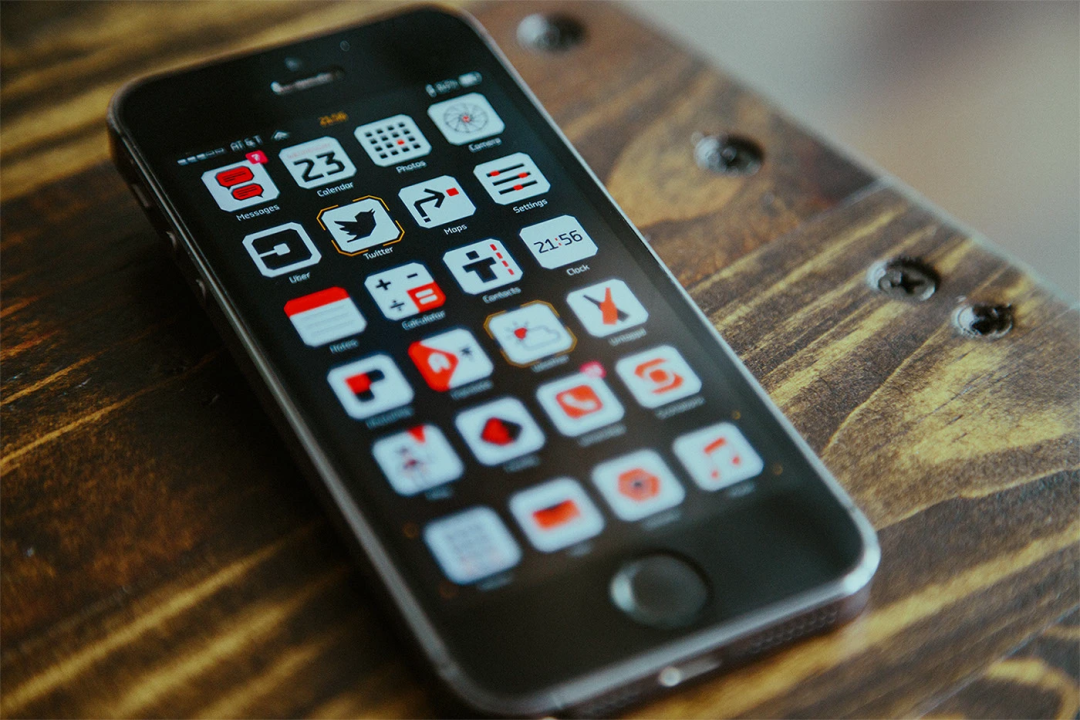
Image Source: Behance
Smartphones are convenient because they can be operated intuitively through graphical elements like windows, icons, and pointers. However, GUIs are not without their limitations. When dealing with a long list of tasks, the complexity of GUI operation increases exponentially.
For example, if a user wants to book a trip, they need to open a ticketing app, search, filter, compare, fill in details, and then switch to other apps to arrange subsequent matters. Each step requires manual effort, making the process extremely cumbersome.
In this regard, Li Nan, former Vice President of Meizu Technology, revealed, "Our research indicates that about 7% of people currently cannot use GUIs effectively; there is a learning curve."
Compared to GUIs, natural language is a lower-threshold and more efficient interaction method because conversing with others is an innate human ability. Some elderly individuals may not be familiar with app operations but can clearly articulate their needs, such as specifying when and where they want to go and what their budget is.
Indeed, before the rise of the mobile internet, natural language conversation was the dominant interaction method. Tasks like booking tickets, trading stocks, and transferring money could all be done via phone services. Ctrip's prospectus shows that in the first nine months of 2003, about 70% of transactions on the platform were completed through its call center, with the remainder done via the website.

Image Source: Ctrip
Even in the mobile internet era, Ctrip continued to place great importance on phone customer service. At Ctrip's second Customer Service Festival in June 2019, co-founder and Executive Chairman James Liang stated, "Customer service is indeed tough work and carries the greatest responsibility. Because customer service is Ctrip's most important competitive advantage."
The reason GUI replaced natural language conversation as the mainstream interaction method in the mobile internet era is twofold: First, this solution aligns well with the large-screen nature of smartphones; second, it relates to the limited capabilities of rule-based AI at the time. Back then, due to the immaturity of generative AI technology, rule-based AI struggled to account for all edge cases, leaving smartphones to rely on GUIs to meet user needs.
Today, with the gradual maturation of large language model technology, human-computer interaction finally has the potential for an upgrade.
02 Agents Rise to Prominence as Smartphone Manufacturers Fall into Path Dependency
Brian Arthur, founder of modern complex economics, once noted in his research that under conditions of increasing returns, early advantages formed by chance can be continuously amplified through sustained adoption and improvement, ultimately locking the market into a technological path that may not be optimal or even inferior.

Image Source: Microsoft
A classic example is Microsoft. Early on, at the dawn of the iPhone era, Microsoft began laying the groundwork for its smartphone business, launching Windows Mobile 6.0 in February 2007. This system's operational logic resembled that of the desktop system Windows Vista, incorporating many design elements from computer operating systems and featuring apps like MSN and IE.
Ultimately, Apple's iPhone OS, with its more intuitive touch-based design tailored to smartphones, defeated Windows Mobile 6.0, ushering in a new era of mobile internet.
Today, as smartphone manufacturers develop AI smartphones, they seem to be repeating Microsoft's mistakes, falling into GUI path dependency.
Most AI smartphones on the market today are evolved from traditional smartphones, relying on local computing power and GUIs to serve users. While they support natural language interaction, their AI capabilities are highly fragmented, making it difficult to perform complex tasks efficiently over extended periods.
Admittedly, the limited capabilities of AI smartphones are partly due to the isolated nature of the mobile internet ecosystem. However, knowing full well that super apps have closed interfaces, smartphone manufacturers still explore AI functions around their devices, indicating a lack of deep understanding of AI technology's characteristics.
Given that the smartphone form factor restricts the full potential of AI, since 2026, many tech companies have chosen to bypass traditional hardware and focus on Personal Agents, developing products like Instinct, Muse, and Cue.
Unlike office Agents that run on users' computers, most Personal Agent products provide users with a dedicated VM (virtual machine) in the cloud, enabling task execution through cloud computing power, applications, and memory.
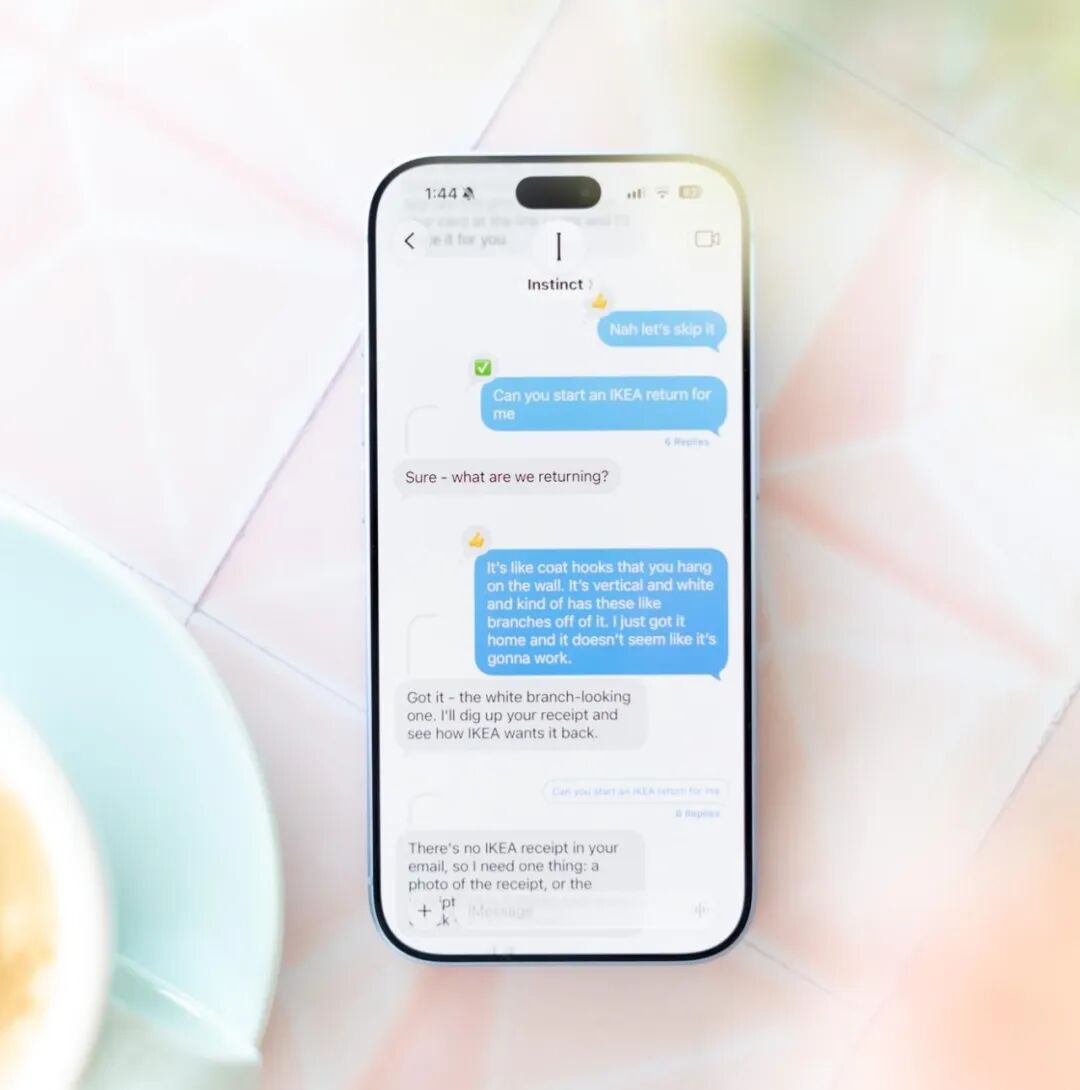
Image Source: Instinct
As computing shifts to the cloud, the interaction methods of Personal Agents begin to change. Take Instinct, for example: It has no standalone app but its own phone number, computer, and email address. Users can assign tasks by sending text messages, making phone calls, or sending emails.
In this regard, Noah Shinn, founder of Instinct, stated, "My philosophy is that people shouldn't have to learn a new app just to interact with AI. It should have enough social intelligence to interact with you like you would with anyone else. The experience is extremely simple, but it has a computer that can do almost anything you can do online."
This resembles the pre-mobile internet era, when users interacted with commercial platforms' phone services using natural language. The difference is that Personal Agents are no longer served by human agents scattered across various platforms but are backed by dedicated large language models, offering lower interaction thresholds and the ability to provide proactive services.
03 Agents Paired with Portable Hardware: Will Subscription Models Become Mainstream?
Alan Kay, a pioneer of computer graphical interfaces, once said, "People who are really serious about software should make their own hardware." Apple, which understands this well, created the integrated iPhone, dominating the mobile internet era.
In the AI era, tech companies aiming to spark a new wave of technological change are not just developing Personal Agent software in isolation but are also actively laying the groundwork for innovative hardware.
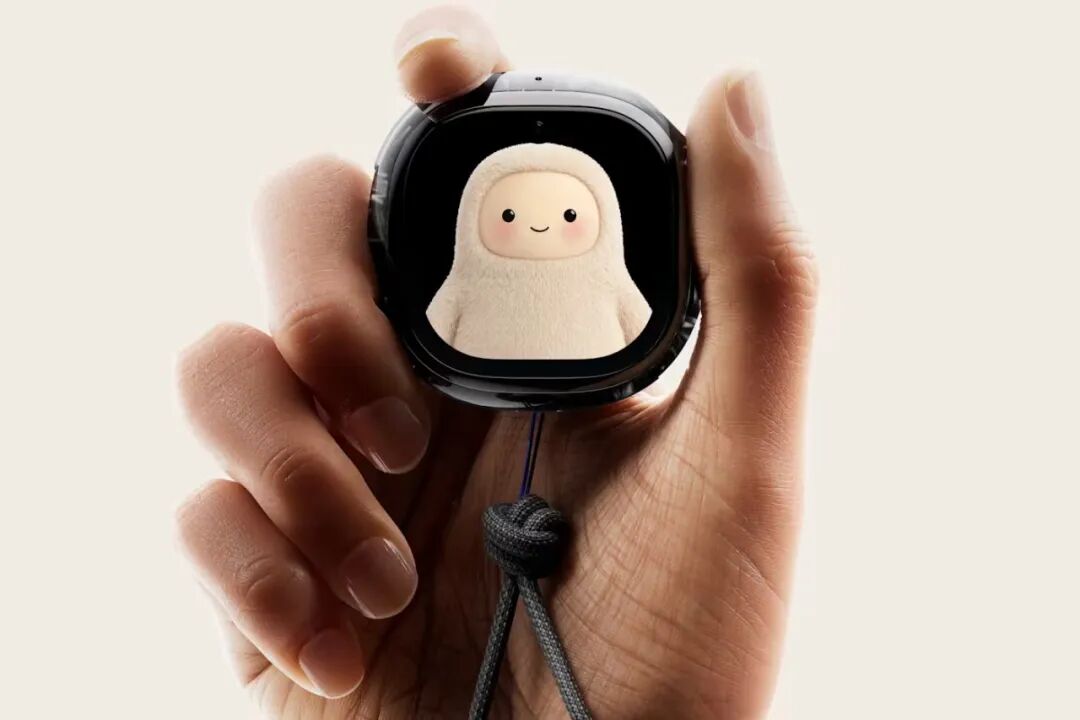
Image Source: Mate
For example, in September 2026, Mate released the Muse Charm, featuring a ~2-inch OLED display, built-in 5G modem, fingerprint unlocking, and sensors like a camera, speaker, and microphone. Users can engage in natural language conversations with Muse through this device.
Similarly, OpenAI is planning to launch a portable voice interaction device. In August 2026, Bloomberg reported that OpenAI's first consumer device, resembling a 'donut' in shape, would operate similarly to the voice mode of ChatGPT on mobile apps and is set to launch in 2027, priced between $300 and $400 (approximately RMB 2007 to 2676).
Although Personal Agent products have not yet disrupted smartphones, the trends they represent are worth noting for smartphone manufacturers. Once integrated Personal Agents mature, users' contextual data and most computing needs may migrate to the cloud.
Noah Shinn revealed that after three weeks of use, 40% of users entrust their personal credit cards to Instinct. "Once users share at least one piece of sensitive information and truly trust Instinct, the retention rate reaches 80%.
As Personal Agents handle more computing tasks, they may not only disrupt traditional smart devices like smartphones and PCs but also pave the way for entirely new business models.
Currently, most smart devices are sold under a buyout model, where consumers pay a one-time fee for a device with local computing capabilities. As devices age and data accumulates, consumers need to repeatedly purchase new devices over time.
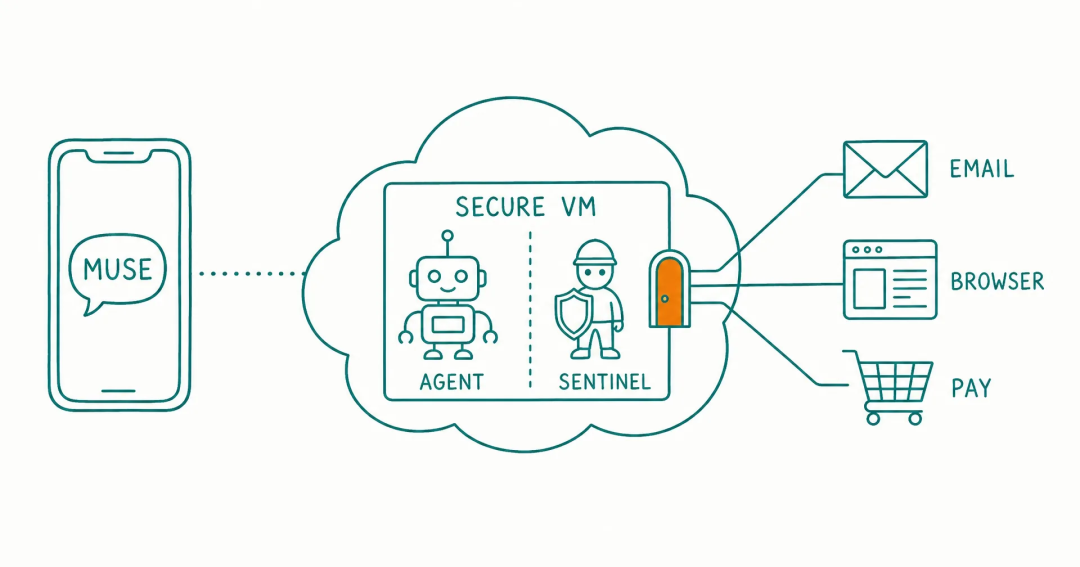
Image Source: CellCog
In the AI era, as most computing and data shift to the cloud, consumers have little reason to pay high costs for redundant local hardware capabilities, except for needs like gaming or high-definition video recording. At that point, portable smart hardware with limited computing power will primarily serve as an entry point, allowing users to flexibly subscribe to cloud computing power from tech companies based on their Personal Agent needs.
Ultimately, new technologies can spark revolutionary waves because they create higher user value. Compared to traditional smartphones, AI smartphones have not delivered significant experience upgrades, making it difficult for them to gain market traction. In contrast, Personal Agents, built around the characteristics of large language models and users' fundamental needs, can efficiently complete tasks and hold greater potential.
While it's unclear which company will win the Personal Agent race, one thing is certain: Traditional smart device forms based on GUIs and local computing power will increasingly struggle to adapt to the next era.
Interactive Topic
Have you used an AI smartphone? What are its advantages and disadvantages in your opinion?
This article is original content from Farsight and is prohibited from reproduction without authorization.
-
Kimi Valued at $50 Billion, Yang Zhilin's Past Disputes Reach IPO Threshold
-
Founder from Generation Z Leads 14-Member Team to Challenge Meta
-
![]()
Over 1 Billion Yuan in Series C+ Funding Secured! Kunyu Optoelectronics’ 12-Inch Optical Production Line Slated for Operation by 2027
-
![]()
Can AI Be Integrated into Smartphones, or Will It Completely Transform Them?
-
FDE Suddenly Becomes a Topic ‘No One Wants to Discuss’
-
![]()
Android Takes the Lead, Honor Makes a Comeback
-
![]()
Android Takes the Lead, Honor Makes a Comeback
-
![]()
Virtual Humans Now Have Official Identification! AI Idols with Certificates Can Participate in Commercial Performances, But Who is Liable if Issues Arise?