Over 1 Billion Yuan in Series C+ Funding Secured! Kunyu Optoelectronics’ 12-Inch Optical Production Line Slated for Operation by 2027
 10/12 2026
 564
564
Kunyu Optoelectronics has recently announced the successful completion of its Series C+ funding round, raising over 1 billion yuan from undisclosed investors.
Wang Ting, the company’s board secretary, revealed that the construction of the 12-inch wafer-level optical production line in Shanghai Lingang, backed by a 2 billion yuan investment, is proceeding smoothly according to plan and is anticipated to be fully operational by 2027. This development is poised to drive growth in downstream markets, including AR, fiber optics, optical communications, automotive optics, and photonic computing.
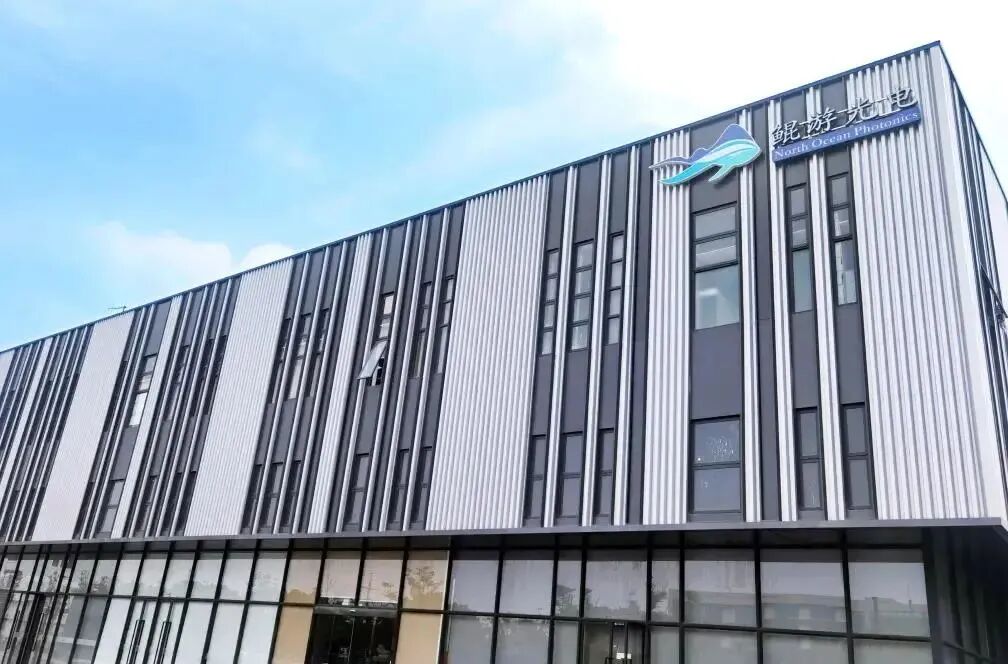
Following the completion of Series C funding in January 2026 and a subsequent nearly 400 million yuan Series C+ round in April 2026, what has enabled Kunyu Optoelectronics to secure yet another substantial funding injection?
Established in 2016, Kunyu Optoelectronics specializes in wafer-level optics and photonic integration. Its core team is composed of professors and PhDs from prestigious optoelectronic institutions such as Stanford University, University of Rochester, University of Cambridge, Zhejiang University, and Shanghai Jiao Tong University, along with seasoned experts from internationally renowned companies like Microsoft and NASA.
The company operates under an Integrated Device Manufacturer (IDM) model and has set up a nearly 10,000-square-meter cleanroom at its Lingang facility. This setup covers the entire closed-loop process, from optical design and master fabrication to scalable mass production and precision testing. Such comprehensive capabilities are a rarity in the global wafer-level optics sector, with only a handful of manufacturers, including Heptagon/AMS, Himax, VisEra, and Anteryon, currently capable of mass-producing WLO products.
All three of Kunyu’s major product lines have achieved scalable shipments. Since 2019, 3D sensing micro-nano optical components have been supplied to leading global smartphone manufacturers, with cumulative shipments reaching tens of millions of units and expanding into applications like robotic vacuums, smart door locks, and drones. Micro-nano fiber optic products have been supplied to domestic new energy vehicle LiDAR manufacturers since 2021 and began to be adopted by automakers such as NIO in 2022, with plans to extend into high-speed optical modules. AR diffractive waveguides represent a strategic core growth area, leading the domestic market in shipments and offering six major product series that cover material systems such as resin, glass, and silicon carbide, as well as monochrome to full-color displays. The latest generation of photolithography-etched waveguide products has already entered practical use.
According to the company’s plans, the shipment target for AR waveguides in 2026 exceeds 200,000 units. The company has clearly stated its short-term goal of striving to become one of the top three global players in AR waveguide market share and has commenced IPO preparations. Its long-term vision is to establish a full-stack technology platform and emerge as a key player in the global consumer photonics, AR optics, and automotive optics sectors.
Kunyu’s significant investment in the 12-inch production line is supported by the convergence of two high-growth trends. Wafer-level optics manufacture optical components using semiconductor processes, enabling high-precision, miniaturized, and cost-effective mass production. According to Verified Market Reports, the global WLO market size was approximately $1.5 billion in 2025 and is projected to reach $5.8 billion by 2033, with a compound annual growth rate of 17.2%. Kunyu’s position in the waveguide component segment, a niche within the WLO market, necessitates a further evaluation of the actual market size based on its value chain positioning.
This latest funding round underscores that full-stack manufacturing capabilities are becoming a vital foundation for competitiveness among optical companies. Kunyu’s closed-loop process, spanning from design and master fabrication to mass production and testing, offers structural advantages in customer acquisition and production scaling. The successful completion of over 1 billion yuan in Series C+ funding, with investors remaining undisclosed, indicates that capital is increasingly valuing the certainty of mass production.
Moreover, optical components are evolving from supporting elements in end products to the experience foundation of AI hardware. Whether in 3D sensing, LiDAR, or AR waveguides, optical modules directly influence the size, power consumption, and display performance of end products. The scale of this funding round reflects ongoing capital investment in this strategic judgment.
In the global WLO competitive landscape, manufacturers with 12-inch production line capabilities are exceedingly rare. If Kunyu’s production line is successfully implemented as planned, it will secure a strong position in the global wafer-level optics capacity race. However, the true test lies not in the funding amount but in whether this production line can deliver mass production results that sufficiently support its vision of “laying the foundation for photonic AI through wafer-level optics” once operational.
-
Kimi Valued at $50 Billion, Yang Zhilin's Past Disputes Reach IPO Threshold
-
Founder from Generation Z Leads 14-Member Team to Challenge Meta
-
![]()
Over 1 Billion Yuan in Series C+ Funding Secured! Kunyu Optoelectronics’ 12-Inch Optical Production Line Slated for Operation by 2027
-
![]()
Can AI Be Integrated into Smartphones, or Will It Completely Transform Them?
-
FDE Suddenly Becomes a Topic ‘No One Wants to Discuss’
-
![]()
Android Takes the Lead, Honor Makes a Comeback
-
![]()
Android Takes the Lead, Honor Makes a Comeback
-
![]()
Virtual Humans Now Have Official Identification! AI Idols with Certificates Can Participate in Commercial Performances, But Who is Liable if Issues Arise?