Android Takes the Lead, Honor Makes a Comeback
 10/12 2026
 444
444
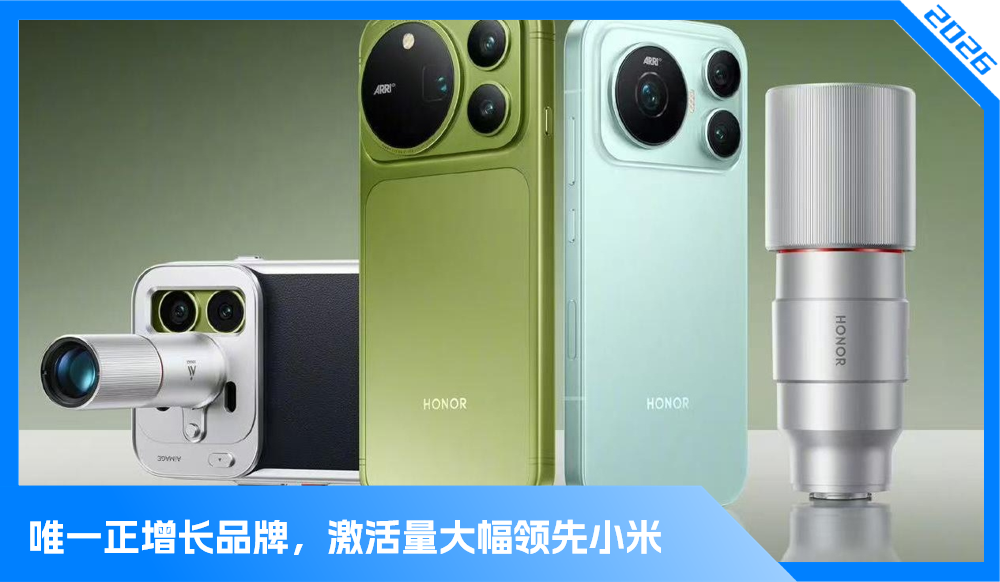
Honor CEO Li Jian couldn't hide his excitement, tweeting on October 8th: 'The Magic9 series held the top spot among Android flagships for seven days during the National Day holiday.'
Guan Haitao, Honor's Global CMO, added details: 'For seven consecutive days during the holiday, we led every single day. It was an absolute lead, roughly double the competition. Many versions are continuously out of stock.'
At the Honor Magic9 series launch event on September 28th, Li Jian's bold declaration—'For Android flagships, look to Honor'—appears to be becoming a reality.
Throughout the first half of 2026, Honor faced significant pressure. According to IDC data, Honor ranked sixth in China's market share during the second quarter, a 9.5% decline compared to the same period in 2025. The first quarter saw a similar ranking. Overall, Honor's market share in China's smartphone market was less than 12% in the first half of the year. Despite being the only Chinese manufacturer with positive global shipment growth during this period, the contribution primarily came from overseas markets.
After a flurry of flagship smartphone launches in September, Honor emerged as the true market leader in October. With a 14% market share, it ranked third among all brands, trailing only Apple and Huawei.
At the 10th anniversary of the Magic series, Honor finally delivered a satisfying answer to both itself and the market. The disappointment with the Magic8 left the entire company determined to prove itself.
Honor revolutionized its products and disrupted the industry with its pricing strategy. This was a do-or-die battle, and Honor achieved a resounding victory.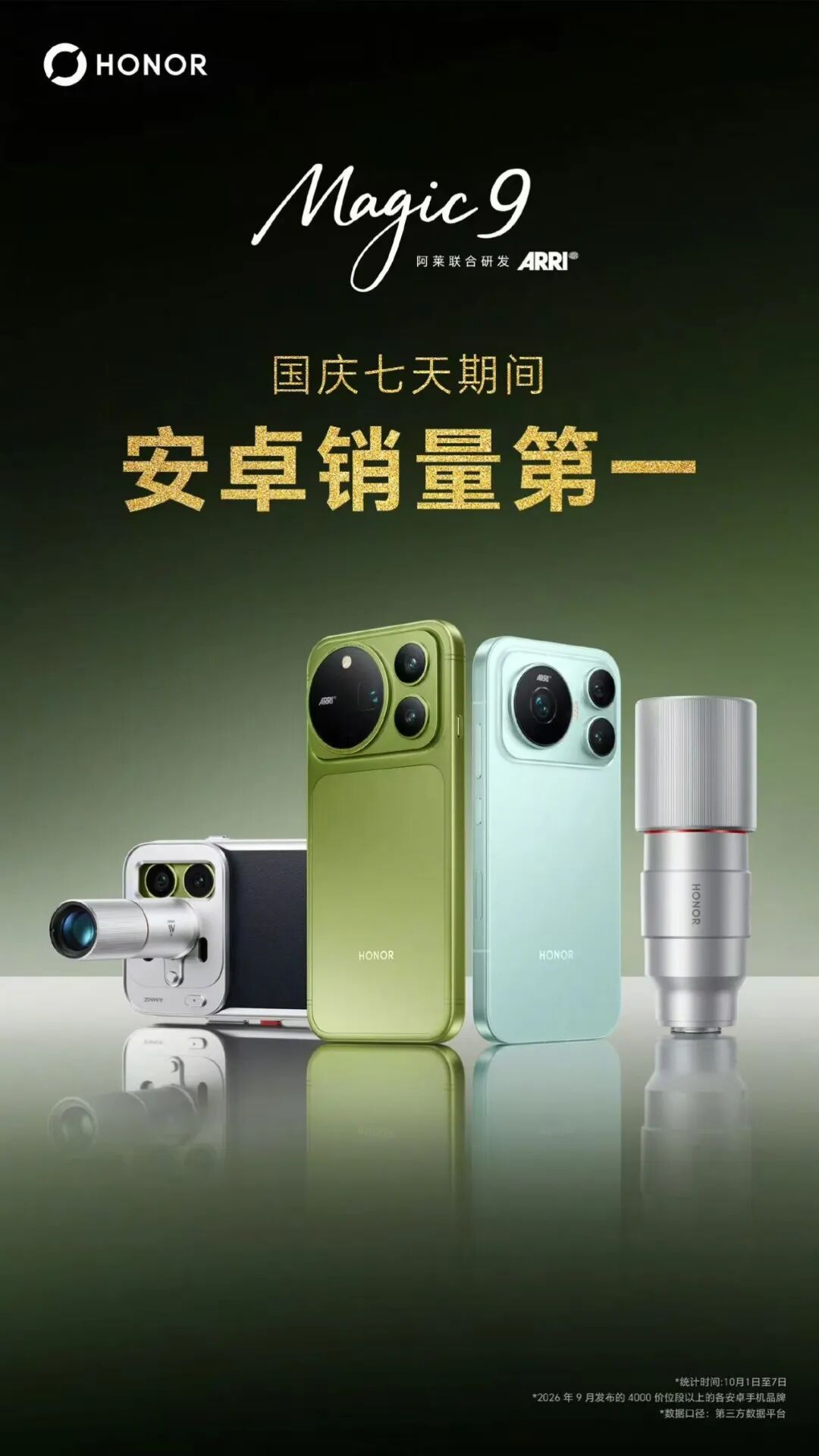

ARRI Transforms Honor's Imaging Capabilities
The collaboration with ARRI rescued Honor's imaging prowess.
In discussions with Value Planet earlier this year, 'imaging capabilities' was a recurring keyword for Honor—a rarity, as this had long been a weakness for the brand, even becoming an indelible stereotype.
In stark contrast to the Magic9, last year's Magic8 struggled throughout its lifecycle (up to 2026W30), selling just over 1.5 million units. By comparison, Xiaomi's 17 series sold 5.83 million units, VIVO's X300 sold 3.44 million, and OPPO's Find X9 sold approximately 2.75 million. The gap was clear.
Imaging challenges were a major hurdle for Honor. While the brand excelled in eye-protection screens, communication, and system fluidity, with strong mechanical quality, the Magic8 faced criticism. Though many professional media and reviewers acknowledged significant improvements in Honor's imaging capabilities—with the Magic8 Pro's periscope image quality rivaling the X300 Pro and its primary camera holding its own—the perception problem persisted.
The issue was psychological. The 'weak imaging' label was hard to shake without radical changes. In contrast, VIVO sometimes fell short in areas like battery capacity but maintained a loyal following due to its strong imaging reputation.
As domestic flagships strive for the high-end market, the era of simply stacking specs is over. Being well-rounded risks being forgettable. Having a standout strength that addresses specific user needs in particular scenarios is now the path to success for domestic smartphones aiming for the high end.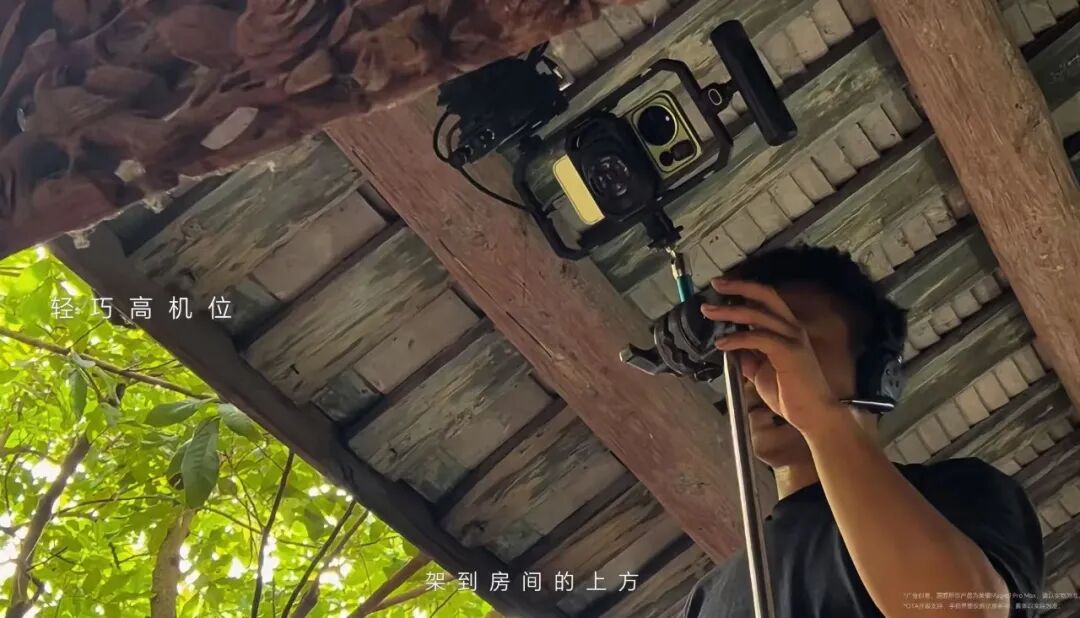
This year, Honor prominently featured its collaboration with ARRI at every opportunity. From the official announcement to high-profile promotions with Robot Phone, and finally applying the technology to the Magic9 flagship, Honor leveraged ARRI to address its imaging shortcoming (weakness). More importantly, with ARRI's support, Honor shattered the stereotype of inadequate imaging capabilities—a factor that directly impacts sales.
When Xiaomi collaborated with Leica, Lei Jun said, 'Essentially, we've found a world-class teacher in the imaging field.' Imaging was also a weakness for Xiaomi at the time. Beyond capability improvements, partnerships with imaging firms are a crucial step for domestic brands to establish their high-end narratives.
Previously, Honor was cautious about collaborating with global optical giants, despite interest from various photography manufacturers. They preferred to enhance user value through their own efforts.
This marked Honor's first collaboration, and ARRI's first partnership with a smartphone manufacturer. The combination of these two 'firsts' carried significant weight.
For Honor, this was a high-profile self-validation. ARRI's choice of Honor reflected its appreciation for Honor's openness to technical collaboration and its determination to deep cultivation (deeply cultivate) the video sector. Industry consensus holds that ARRI is extremely selective in choosing partners. Smartphone manufacturers must demonstrate genuine access to cinematic-grade imaging technology, along with substantial technical accumulation, engineering capabilities, and supply chain influence. The partnership was a perfect match.
Honor's collaboration with ARRI wasn't simply about aligning its smartphone imaging capabilities with industry standards or resolving image quality issues. The goal was to integrate cinematic-grade camera capabilities into consumer-grade smartphones, elevating video quality—an ambitious yet precisely targeted move to meet evolving user demands.
While photography needs have been largely satisfied, videography remains a relative blind spot for most smartphone manufacturers. The technical challenges of high-quality video recording far exceed those of photography.
Hardware-wise, Honor squeezed a Yuguang H1 imaging chip into already cramped smartphone internals, added a top-tier configuration of dual 200MP sensors and a periscope telephoto lens, and included cinematic-grade microphones for superior audio capture. At the data pipeline level, professional cinematic technologies like the ARRI LogC3 curve, AWG3 wide color gamut, and the full ARRI Look system were fully integrated into the smartphone's imaging pipeline.
To date, Honor's video capabilities are gaining recognition from professionals and users alike, as evidenced by tangible market feedback. Guan Haitao revealed that in the past seven days, camera and gallery apps on the Honor Magic9 series surpassed WeChat in average daily usage time for the first time. Photography accessories like rabbit cages and teleconverters are in high demand. Additionally, the Honor Magic9 series has been incorporated into the creative workflows of numerous influencers in photography, film, celebrity fan circles, and automotive communities.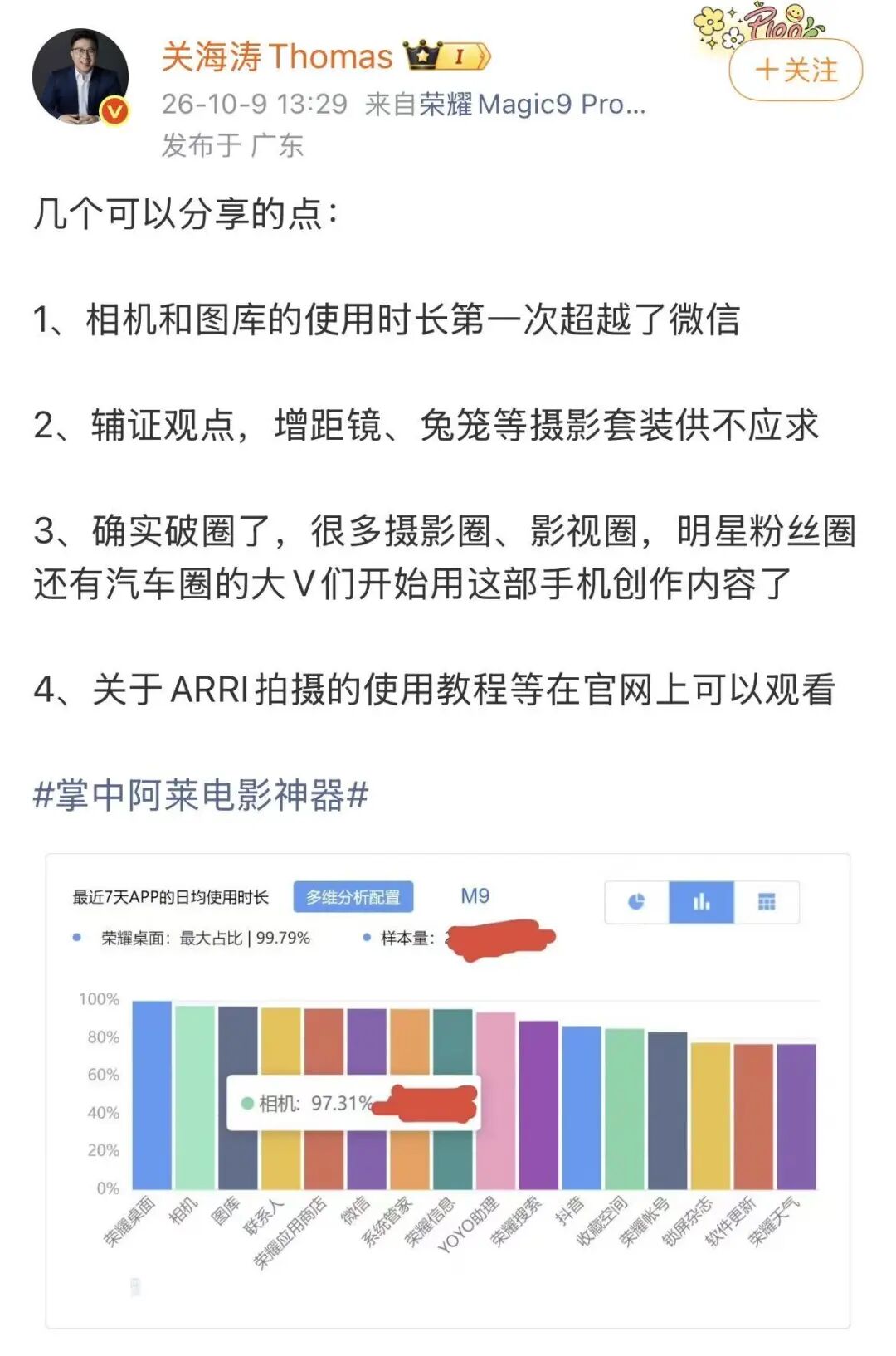
This explains why, to date, the Magic 9 Pro Max accounts for over half of all series sales, while the standard version makes up only about one-third. In some offline stores, 60-70% of pre-orders are for the Pro Max. Initially, frontline staff estimated that the top-tier model would account for just 30% of sales. Now, certain stores report that scarce color variants of the Pro Max's high-capacity version require two to three-week waits without pre-ordering.
In contrast, the OPPO Find X10's standard and Pro Max versions have similar sales volumes, but the high-end variant saw an 80% decline compared to its predecessor. The vivo X500's top-tier model also suffered a severe drop, with sales falling 86% year-on-year.
The inversion of sales between standard and top-tier models proves that Honor's imaging reputation has been reversed. This deep collaboration has provided a more solid foundation for Honor's high-end narrative.
The Cheapest Android Flagship: Trading Profit for Scale
In terms of first-week activation volumes for this year's Android flagships, the Xiaomi 18 series sold just over 200,000 units, the OPPO Find X10 nearly 110,000, and the vivo X500 less than 100,000. Industry estimates suggest the Honor Magic9 series sold around 300,000 units in its first week.
Moreover, Honor was the only Android flagship brand to achieve year-on-year growth this year. Xiaomi's sales plummeted by over half, while OPPO and vivo saw declines of around 70%. Even Huawei and Apple experienced moderate drops, making Honor the only brand among the top players to achieve positive growth.
A low base from the previous year partly explains this. However, amid widespread flagship price hikes and sharply reduced consumer upgrade appetite, Honor's competitive pricing managed to sustain consumer interest.
'Smartphone prices are rising across the board. Under immense cost pressure, the industry is facing its toughest moment yet. But I wonder: if manufacturers are struggling, aren't users struggling too? We can't simply pass all cost increases onto consumers,' Li Jian declared at the launch event, earning loud applause.
Subsequently, we saw the Honor Magic9 Pro Max priced starting at 6,499 yuan, the Honor Magic9 at 4,999 yuan, and the Honor Magic9 Super Power Edition at 4,499 yuan. After national subsidies, each model's price drops by an additional 500 yuan.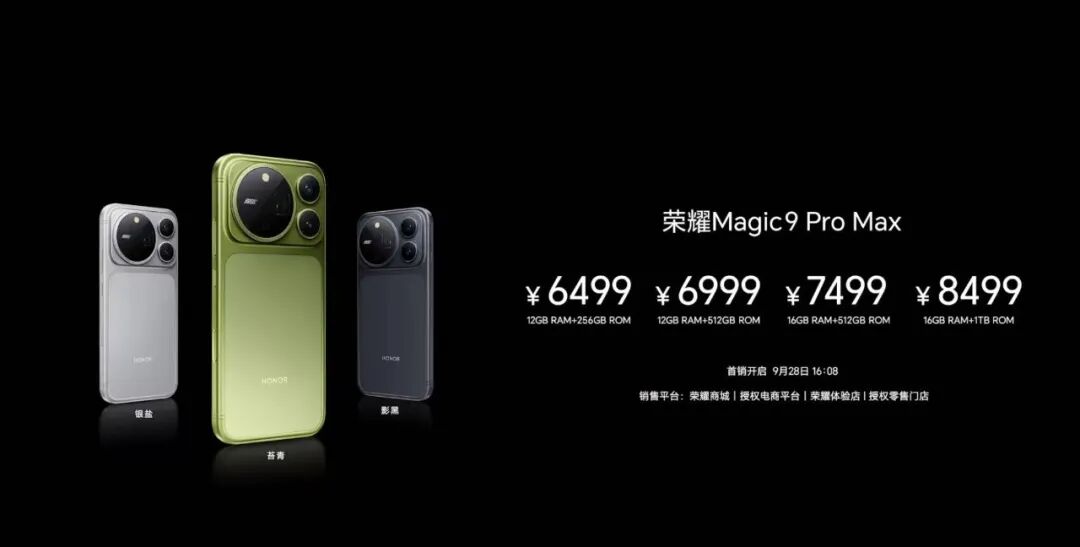
Compared to Xiaomi, OPPO, and vivo, Honor's standard version is roughly 500 yuan cheaper on average, the Pro version is 2,000 yuan cheaper, and the top-tier model can be over 3,000 yuan less expensive. In contrast, the OPPO Find X10's price increased by 1,100-1,500 yuan compared to its predecessor, and the vivo X500 standard version also rose by 1,100 yuan.
Admittedly, amid a semiconductor supercycle, soaring costs for DRAM, NAND storage, and SoCs have forced smartphone prices upward, making manufacturers' pricing decisions reasonable. However, consumers have limited understanding of core components like processors and perceive price changes directly. Especially when all competitors are raising prices, Honor's pricing stands out.
At the launch event, we repeatedly heard exclaim (amazement) at Honor's bold pricing.
Honor is trading profit margins for growth, particularly in the high-end segment. This isn't a desperate price war but a strategic choice given internal and external pressures.
Internally, 2025 was a challenging year for Honor, with the Magic8's failure fresh in memory. The Magic8 Pro's premium pricing strategy, which raised its starting price from 5,699 yuan (Magic7 Pro) to 6,299 yuan—a more than 10% increase without significant core configuration upgrades—was widely blamed for its poor sales.
The high-end market's collapse left Honor overly reliant on mid-range and low-end segments. In Q3 2025, products priced under 2,000 yuan accounted for 58% of Honor's portfolio. While shipment volumes rose, brand premium capability further eroded. In H1 2026, all Honor products ranking in Single product sales volume (individual model sales) lists were mid-range or low-end devices like the X70, entry-level Honor 500, and Honor Power2.
Thus, the Magic9 was a make-or-break product. It carried the weight of sales, profits, and brand image—the entire company's hopes. After all, the Robot Phone isn't a volume-driven product; its significance is more symbolic than commercial.
Externally, the greater the cost pressures, the more critical it is for brands to pursue the high end. High-end brands can better absorb cost increases through superior profit margins and have stronger supply chain integration capabilities to weather macroeconomic shifts. While the market climate is changing, high-end brands retain resilience against risks.
This year, Huawei and Apple avoided large-scale price hikes, even viewing cost increases as opportunities to expand market share.
For Honor, temporarily sacrificing profits to offer lower prices is a strategic detour to recovery.
Reversing decline, reshaping perception, and capturing scale—the Magic9 achieves all three.
-
Kimi Valued at $50 Billion, Yang Zhilin's Past Disputes Reach IPO Threshold
-
Founder from Generation Z Leads 14-Member Team to Challenge Meta
-
![]()
Over 1 Billion Yuan in Series C+ Funding Secured! Kunyu Optoelectronics’ 12-Inch Optical Production Line Slated for Operation by 2027
-
![]()
Can AI Be Integrated into Smartphones, or Will It Completely Transform Them?
-
FDE Suddenly Becomes a Topic ‘No One Wants to Discuss’
-
![]()
Android Takes the Lead, Honor Makes a Comeback
-
![]()
Android Takes the Lead, Honor Makes a Comeback
-
![]()
Virtual Humans Now Have Official Identification! AI Idols with Certificates Can Participate in Commercial Performances, But Who is Liable if Issues Arise?