From Doubao Mobile Phone to OPPO’s Partnership with Manus, and the Gradual Rise of Startups like Jieyue Xingchen: Who’s Riding the Wave of Opportunity?
 10/23 2026
 436
Editor: Liu Zhicheng
Reviewer: Xu Xu
Following the launch and subsequent sales of the second-generation Doubao mobile phone last month, and the confirmation that the Honor Magic9 series has secured the 'first batch of AI agent mobile phone' network access certification, the mobile phone industry has recently witnessed a resurgence of AI-driven momentum.
First, Jieyue Xingchen, a prominent large model company, officially unveiled its inaugural large model-native agent mobile phone, the STEP X Neo, rekindling enthusiasm across both the AI and mobile phone sectors. OPPO swiftly followed suit, announcing a collaboration with AI firm Manus to integrate Manus's agent capabilities into OPPO's AI Mind Pilot. Not to be outdone, Apple confirmed on October 15 that its Apple Intelligence had received approval in China and would roll out a beta version later in the month. Within two months, two waves of AI mobile phone trends have emerged, featuring three major announcements in just three days—a pace that is intriguing when viewed against the backdrop of the entire tech industry.
Behind this surge lie two types of anxieties and two sets of demands from mobile phone manufacturers and AI vendors. On one hand, amid rising memory prices and a sluggish mobile phone sales market, brand manufacturers are urgently seeking new growth drivers. On the other hand, both Doubao and Jieyue Xingchen need to capitalize on AI entry points, explore commercialization avenues, and demonstrate their AI capabilities through mass-market devices like mobile phones. While both sides need each other, their pursuits are not entirely aligned.
Therefore, we will analyze this phenomenon from two perspectives: First, can AI phones and AI agent phones truly transform the current challenges faced by the domestic mobile phone industry? Second, can AI vendors achieve their strategic goals through AI phones, and what new insights does this offer for the entire AI industry?
Is the AI Agent Mobile Phone a Boon?
The impact of AI agent phones on the current industry and future brand manufacturers can be encapsulated in a single phrase: 'A sudden spring breeze brings forth a thousand pear blossoms.' However, this metaphor refers not to spring but winter—on the surface, AI agent phones appear as beautiful as flowers, yet they cannot fundamentally alter the cyclical downturn of the industry or the challenges of brand premiumization.
The most pressing issue in the current mobile phone industry is: How can mobile phones with soaring costs be sold reasonably and in large quantities? Manufacturers have explored two breakthrough paths: One is disruptive innovation in physical form. For instance, Huawei's triple-fold and wide-straight designs, or Apple's iPhone Duo, essentially rely on significant form changes to create freshness and new premium narratives, thereby justifying high prices. While OPPO and Xiaomi have also made efforts in this area, their product adaptation experiences have not fully kept pace, and their brand premiumization momentum is limited, resulting in most not achieving comprehensive breakthroughs.
Thus, some brands have developed a second path: Leveraging AI at the user experience level. After all, if the direction of AI agent phones proves successful, users could indeed experience a cross-era experience comparable to the transition from feature phones to smartphones, or even the iPhone 4, which redefined interaction—completing most tasks with a single sentence, potentially sparking strong device upgrade demand.
This logic is sound, but in reality, there is a mismatch in value. On one hand, for the current mobile phone industry, AI agents are like 'distant water that cannot quench immediate thirst'—the overall path is not yet fully established, and user market awareness is not mature or stable. For example, Doubao Mobile Assistant recently revealed that over 100 third-party apps, including national-level apps like Tencent WeChat and Alibaba Taobao, refuse to grant screen automation permissions. As for Jieyue Xingchen's newly launched STEP X Neo, while it has secured collaborations with nearly 100 enterprises, including Alipay, Meituan, and some Tencent products, by only invoking APIs actively opened by apps,
the trade-off is that the phone's agent capabilities are determined by the apps. For instance, Meituan may only open its errand services but not food delivery. This means users still cannot ask the AI agent phone to send WeChat messages or shop on Taobao, leaving a significant gap in core experiences. For other complex task processing that AI agents can handle, they face another practical challenge—these functions require additional Token consumption.
In internet-era terms, users would need to continuously purchase additional data plans; without Tokens, the phone reverts to a regular smartphone. To address this, Jieyue Xingchen launched the STEP X Token Plan, offering users who purchase the STEP X Neo early adopter edition 12 consecutive months of 10 billion Tokens per month.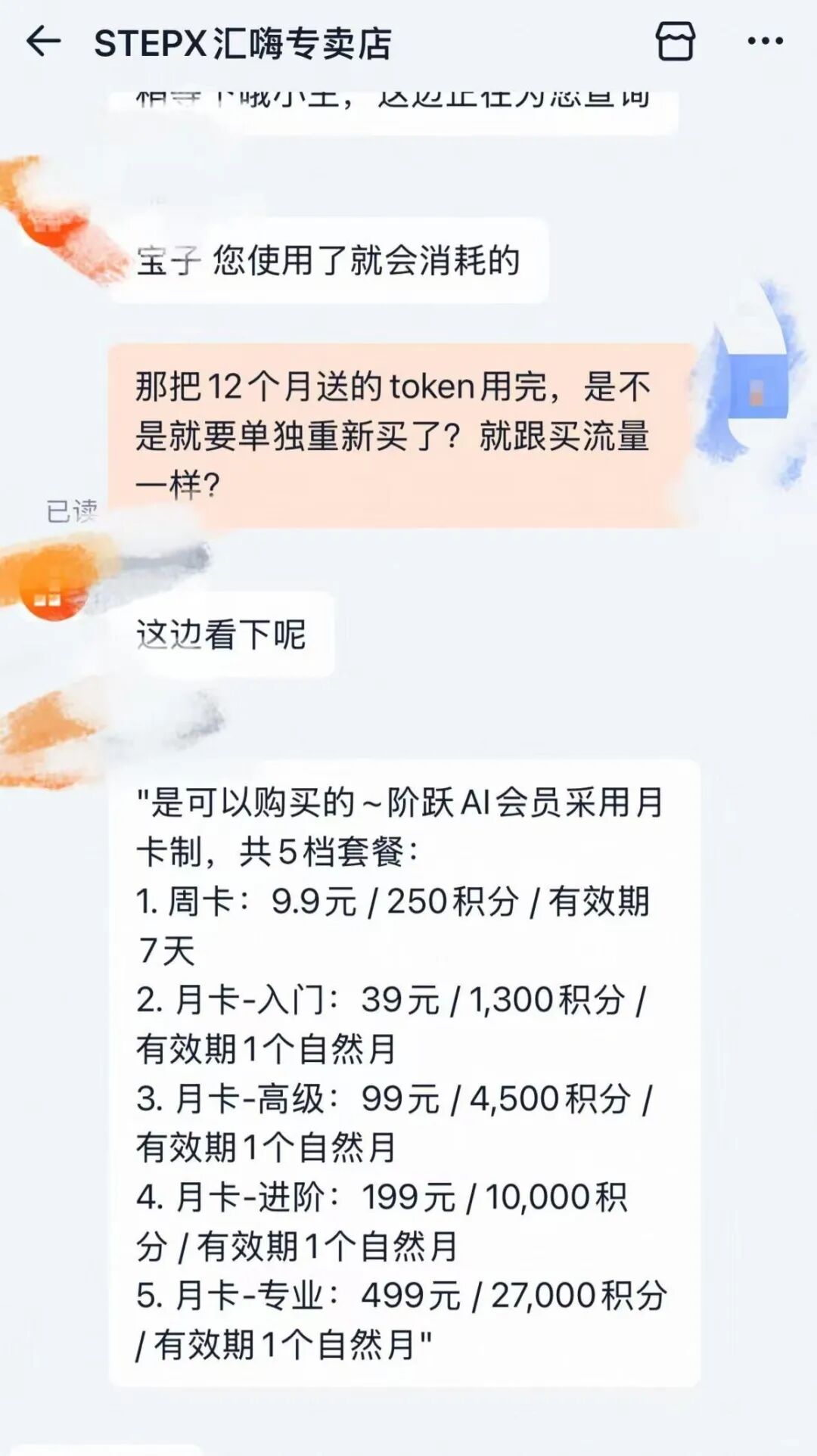
This generosity is undeniable, but users will still need to pay for Tokens in the future. Additionally, with free AI alternatives available, such as Qianwen APP, which already offers some one-sentence task completion capabilities for free, AI agent phones may attract some early adopters but are unlikely to reverse the negative market trends caused by rising industry costs at this stage. On the other hand, in the long run, AI agent phones may indeed trigger a market upgrade trend similar to the transition from 4G to 5G phones. However, by the time that maturity is reached, the current memory cost hike may have passed, and mobile phone prices and sales markets may have returned to normal, reducing the impact of AI agents.
Even if costs remain high, the imagination space for AI agents among mobile phone brand manufacturers will be significantly diminished. Why? Because AI agents are a functional innovation, similar to previous features like the Dynamic Island or live photos—anyone can adopt them. Apart from first-mover advantages, they do not create significant core competitive barriers. For example, the first-generation Doubao mobile phone (Nubia M153) had a starting price of 3,499 yuan and was once resold for as high as 30,000 yuan; the second-generation Doubao mobile phone (Nubia NaviX Ultra), released in September this year, achieved 'over 100 million yuan in sales within a second.' Its popularity stemmed not from a superior experience but from its unique scarcity.
Today, consumers have three AI agent phone options (Nubia, Jieyue Xingchen, and Honor), and OPPO has entered the market, with Huawei, Xiaomi, and Vivo likely to follow. So, even if there is future market demand for device upgrades, when everyone has AI agents, will brands still rely on premiumization to justify high prices driven by rising costs? This reflects in competition—in the AI agent phone consumer market, future brand manufacturers like OPPO and Honor may outperform Doubao (Nubia) and Jieyue Xingchen. After all, the former approach AI from a mobile phone perspective, primarily to sell phones; the latter approach mobile phones from an AI perspective. Currently, apart from AI highlights, Jieyue Xingchen's STEP X Neo lacks competitiveness in hardware configurations like imaging, screen, and system. It's a case of 'all-rounder vs. specialist,' making consumer choices clear.
Do Jieyue Xingchen and Doubao Mobile Phones Have Uneven Success?
Of course, for AI vendors like Doubao and Jieyue Xingchen, creating AI agent phones is important now, but their core goals are not to become the next Huawei, Xiaomi, OPPO, or Vivo. Instead, they focus on three aspects, each with its own emphasis: 1. Seizing strategic AI hardware entry points, similar to how Alibaba and Baidu previously pushed smart speakers to capture smart home entry points; 2. Selling AI agent solutions, like OPPO's collaboration with Manus; 3. Marketing to showcase capabilities.
Specifically: For Doubao, its mobile phone leans more toward entry point value, with selling AI solutions and marketing as secondary considerations. Currently, Doubao leads in monthly active users but lacks hardware entry point achievements, being 'biased' toward software applications. Thus, ByteDance needs AI phones to break into the hardware market; otherwise, in an era where 'entry points equal power,' it risks losing its seat at the table. For Jieyue Xingchen, as a second- or third-tier large model player, seizing AI entry points now may be overly ambitious, so its AI phone efforts likely prioritize selling AI solutions and marketing.
First, consider selling AI solutions. Behind this lies two objectives: 1. Internal brand commercialization. Jieyue Xingchen's main revenue has long come from supplying AI to mobile phone manufacturers. According to previous disclosures, 60% of China's top mobile phone brands use Jieyue's models, with over 42 million installations. After Jieyue Xingchen's AI terminal brand launch in July this year, Tianyancha APP revealed that Chairman Yin Qi told the media: 'In the agent era, existing mobile phone ecosystems cannot fully present models + OS + agents. We hope to lead by example, build a complete system, and remain open to sharing agents and OS with other OEMs in the future.'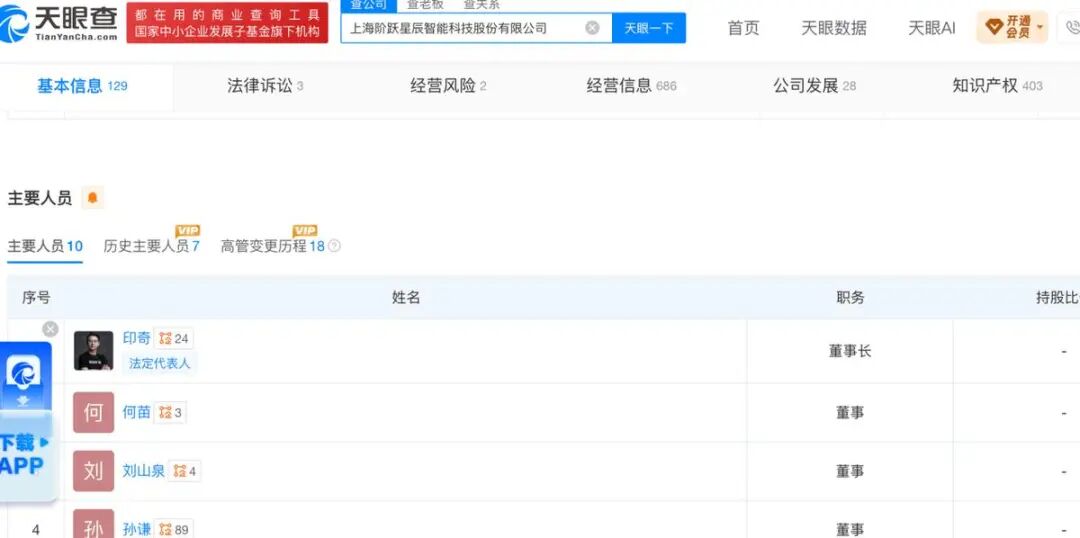
Thus, Jieyue Xingchen's foray into AI agent phones is, to some extent, an attempt to create a brand showcase to further sell AI systems and agents to mobile phone manufacturers and other smart terminals. Commercially, this shifts from selling AI functions to selling AI solutions—a nearly order-of-magnitude difference. 2. External risk mitigation.
Simply put, being an AI capability supplier is Jieyue Xingchen's lifeline, but the biggest risk for large model startups today is not keeping up with model capabilities but the diminishing barriers. Today, ChatGPT leads, tomorrow DeepSeek surpasses, and the next day Doubao emerges—in this revolving door scenario, major brands like Huawei, Xiaomi, OPPO, and Vivo could replace Jieyue at any time.
An interesting piece of evidence: Early last year, Jieyue Xingchen announced deepening collaborations with OPPO while pushing smart terminal agents. Yet, OPPO now chose Manus for agent collaboration. Thus, Jieyue Xingchen must prove its AI value to avoid being abandoned by mobile phone manufacturers.
Unfortunately, this only ensures Jieyue remains in the game. In terms of competition, what AI agent phones aim to achieve is what previous 'Lobster,' now 'Muse' and 'Manus,' have been doing. Thus, Jieyue Xingchen is far from complacent in selling AI solutions. Now, let's look at marketing—this is arguably Jieyue Xingchen's most successful strategic move, offering new insights for the entire AI industry.
The reason is simple: While Jieyue Xingchen was once among the 'AI Six Dragons,' its market presence has faded amid competing star models in recent years. How many still hear about Jieyue Xingchen and its models today? Maybe some, but its market influence pales compared to peers like Zhipu AI and MiniMax, let alone DeepSeek.
This could impact Jieyue Xingchen's valuation and investment appeal in future capital markets, especially as it reportedly prepares for a Hong Kong IPO. However, since July this year, when Jieyue Xingchen followed Doubao's lead with its terminal brand STEP X launch, igniting dual industry and market attention, to the recent official release of STEP X Neo,
regardless of final sales volume, Jieyue Xingchen has already won in terms of market attention. With its mobile phone, system entry points, and agent transactions, it has carved out a unique AI phone label distinct from Zhipu's AI coding or Kling's AI video.
If Jieyue Xingchen can further solidify this label, its future narrative could lead a new sector. Thus, this marketing combo points a direction for the AI industry, especially second- and third-tier model players: Follow predecessors but dare to make bold bets.
Especially as model barriers rapidly decline, brands can quickly shift to building perceptual barriers. In this era of technological democratization, the rarest commodity is not the next model but convincing the market that you represent the future. As the saying goes, first-tier companies sell products; top-tier companies sell definitions. Whoever defines the sector gets to share its future. Zhipu and Kling see this, and Jieyue Xingchen is moving in this direction. Who will be next?
-
![]()
Will Doubao Mobile Trigger a New Round of 'Soul Theory' Debate?
-
![]()
Doubao Phone: Will It Spark a Fresh Wave of 'Soul Theory' Controversy?
-
![]()
When AI Creates Problems but No One Is Held Accountable: It Gave the Police a False Tip
-
![]()
From Doubao Mobile Phone to OPPO’s Partnership with Manus, and the Gradual Rise of Startups like Jieyue Xingchen: Who’s Riding the Wave of Opportunity?
-
![]()
Audi in Negotiations with Huawei: Developing Next-Gen A8 for China Using Huawei’s Platform, with Plans for Multiple New Models | Mirror Pro
-
![]()
People Trapped in Algorithms
-
![]()
Musk’s Computing Power Venture Recoups Investment Within a Year, Meta’s Muse Faces Uncertain Rollout Timeline
-
![]()
AI: From ‘Accelerator’ to ‘Paradigm Reconstructor’ in Metaphotonics