Doubao Phone: Will It Spark a Fresh Wave of 'Soul Theory' Controversy?
 10/23 2026
 341
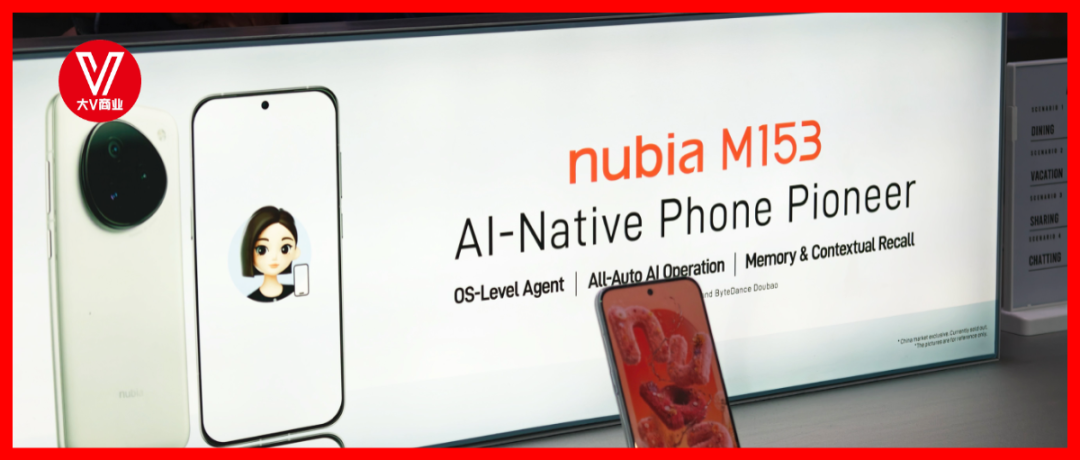
The advent of AI-powered phones has once again shaken up the mobile hardware and internet software landscape.
On October 14, Doubao Phone announced the conclusion of its 30-day public comment period for the Screen Automation Operation Statement Protocol (SAEP), signaling its intention to gradually grant screen automation operation permissions to third-party apps.
Notably, the announcement highlighted 153 apps that declined to integrate with Doubao Phone, including 66 from Tencent, 23 from Alibaba, as well as standalone apps like Zhihu, Pinduoduo, Xiaohongshu, Didi, DeepSeek, Kimi, and Trip.com.
There's a saying in the market: 'Half of the internet has turned its back on Doubao Phone.'
Delving deeper, it's not just half of the internet; mobile phone companies also exhibit nuanced attitudes towards AI-phone integration.
Before and after Doubao Phone's launch in December 2025, rumors swirled about OPPO's refusal to collaborate with ByteDance on Doubao Phone. OPPO representatives later refuted these claims, expressing an open stance. Additionally, market rumors linked ByteDance with potential collaborations with vivo, Lenovo, and Transsion.
However, ByteDance's current partnerships and models are limited to ZTE's Nubia brand. Given Nubia's dwindling market share, this collaboration echoes Huawei's partnership with Seres.
▌1. Software Resistance Outweighs Hardware
Doubao Phone has emerged as a new disruptor in the internet sector.
Judging by the SAEP announcement, internet products exhibit greater resistance. The list of 153 rejected apps includes numerous offerings from Tencent, Alibaba, Pinduoduo, and Xiaohongshu, many of which overlap with ByteDance's business areas, such as e-commerce, short videos, and AI products.
On the 21st, Doubao Phone updated its SAEP announcement, voluntarily including 'financial-related applications,' such as banking and payment apps.
In contrast, hardware manufacturers have adopted a more measured approach. Apart from OPPO's rumored refusal to cooperate with ByteDance, there have been whispers of collaborations between ByteDance and Transsion, Lenovo, and vivo.
Notably, Xiaomi and Huawei have never been mentioned in the context of potential collaborations or rejections.
On one side stands hardware, on the other, software. ByteDance faces a 'soul theory' dilemma akin to that encountered by intelligent driving companies when partnering with automakers, but the challenge is even more formidable.
The concept of a 'soul' in the automotive industry stems from a 2021 public statement by SAIC Motor Chairman Chen Hong:
'Cooperating with a third-party company like Huawei on autonomous driving is unacceptable to SAIC. It would be akin to another company providing us with a complete solution, making them the soul and SAIC the body. SAIC cannot accept such an outcome; we must retain control over our soul.'
The battle for the automotive 'soul' has also ignited controversy over whether OEMs should develop technologies in-house or rely on third parties.
▌2. ByteDance's Allies and Adversaries
From the current landscape, ByteDance faces greater software challenges than hardware ones. The resistance or refusal from software companies stems from two primary reasons.
Firstly, many software companies are direct competitors of ByteDance.
Tencent and ByteDance compete across multiple fronts, including short videos and social media, with numerous clashes in the past. Due to concerns over user privacy, corporate data security, and trade secret protection, Tencent is unlikely to grant GUI permissions to Doubao.
It's foreseeable that Tencent will not open up core product permissions, such as WeChat and Honor of Kings, to Doubao for the foreseeable future.
Additionally, Alibaba and Pinduoduo compete with ByteDance in e-commerce, while Xiaohongshu and Douyin vie in content ecosystems.
Secondly, AI significantly impacts software entry points.
Integrating with Doubao means that a software's core functionalities could be 'hijacked.' For instance, if e-commerce ordering functions are integrated with Doubao, the app may no longer be necessary on users' phones, as users could complete services directly through the Doubao assistant.
Hardware companies' attitudes fall into two camps. For instance, Xiaomi and Huawei have never been mentioned as potential collaborators or rejecters, primarily because Xiaomi's AI assistant, Xiao Ai, and Huawei's Xiaoyi conflict with Doubao Assistant.
Simultaneously, Xiaomi's internet business once contributed significantly to its profits, which may also explain the difficulty in forging a partnership.
In contrast, manufacturers like ZTE, Transsion, and Lenovo rely more on hardware profits. Given the current market landscape dominated by Huawei, Xiaomi, OPPO, and vivo, it's understandable that they are willing to experiment with AI phones to regain market share.
Whether ByteDance and mobile phone manufacturers will engage in a 'soul theory' debate hinges on whether the future AI phone market is a seller's or buyer's market.
Why are mobile phone manufacturers more receptive to AI assistants compared to software companies?
Firstly, mobile phone manufacturers primarily profit from hardware sales. In the short term, AI is a weakness for these manufacturers but not a must-have for consumers.
If AI becomes the core selling point of mobile phones, akin to how intelligent driving has become a key feature of electric vehicles, then AI could become the 'soul' of mobile phones.
If mobile phone manufacturers merely use AI as an entry point to capture the market, future collaborations could resemble the pre-installation model of the past, where apps pay manufacturers for pre-installation.
Secondly, Apple's AI is entering the market, exerting pressure on other manufacturers. With Apple's AI smart features set to enter China soon, OPPO and vivo face greater pressure to rapidly enhance their AI capabilities.
▌3. How Can Doubao Phone Break Through?
Another AI phone contender, StepFun, has also launched an AI phone. Unlike Doubao, StepFun's AI phone primarily integrates other ecosystem apps through the MCP (Model Connection Protocol) method.
According to StepFun, its Amoo AI has partnered with nearly a hundred companies or products, including Alipay, Tencent, Ctrip, Didi, CapCut, Gaode Maps, and Meituan, achieving bottom-layer ecosystem integration in areas such as local services, travel, office efficiency, and content creation.
MCP completes services by directly invoking models, rather than relying on GUI-based image recognition operations.
It's reported that the second generation of Doubao Phone has opened up MCP integration capabilities, supplementing GUI and addressing the challenge of some top-tier apps being unable to integrate via GUI.
In fact, facing the current issue of internet services being unable to interconnect, leading to software silos, Tencent's mini-programs offer a valuable reference.
To address the problem of multiple apps being unable to interconnect in the mobile internet ecosystem, causing information barriers, WeChat introduced mini-programs to attract different products to join and achieve interoperability within the WeChat ecosystem.
Of course, other apps were enticed by WeChat's ecosystem traffic.
Now, ByteDance faces similar challenges and advantages as WeChat.
Through Douyin's mini-programs and fast apps in the mobile ecosystem, ByteDance can bypass products that cannot provide services. For example, ride-hailing services can directly invoke aggregated service providers' mini-programs, and e-commerce shopping can leverage Douyin Mall.
Whether ByteDance's traffic can attract merchants and platforms to join will be a significant variable in determining whether Doubao Phone can enhance its ecosystem. For instance, some have observed that JD.com's apps are not on ByteDance's SAEP rejection list.
Despite the intense competition between JD.com's procurement and sales team and Douyin, with Douyin Mall's GMV surpassing JD.com to become China's third-largest e-commerce platform in 2024, JD.com remains clear-headed about channels that can drive traffic.
- End -
-
![]()
Will Doubao Mobile Trigger a New Round of 'Soul Theory' Debate?
-
![]()
Doubao Phone: Will It Spark a Fresh Wave of 'Soul Theory' Controversy?
-
![]()
When AI Creates Problems but No One Is Held Accountable: It Gave the Police a False Tip
-
![]()
From Doubao Mobile Phone to OPPO’s Partnership with Manus, and the Gradual Rise of Startups like Jieyue Xingchen: Who’s Riding the Wave of Opportunity?
-
![]()
Audi in Negotiations with Huawei: Developing Next-Gen A8 for China Using Huawei’s Platform, with Plans for Multiple New Models | Mirror Pro
-
![]()
People Trapped in Algorithms
-
![]()
Musk’s Computing Power Venture Recoups Investment Within a Year, Meta’s Muse Faces Uncertain Rollout Timeline
-
![]()
AI: From ‘Accelerator’ to ‘Paradigm Reconstructor’ in Metaphotonics