Audi in Negotiations with Huawei: Developing Next-Gen A8 for China Using Huawei’s Platform, with Plans for Multiple New Models | Mirror Pro
 10/23 2026
 529
As the first German luxury car brand to partner with Huawei, Audi seems set to deepen its collaboration.
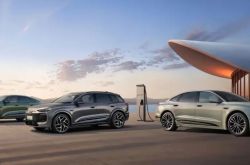
On October 20 (local time), Germany's Manager Magazin reported that Audi is teaming up with Huawei to develop and manufacture the next-generation A8 in China, aiming to rejuvenate the Audi FAW plant through this alliance. Manager Magazin noted that Audi AG's Global CEO, Gernot Döllner, intends to replace the original A8 replacement plan—which was based on Porsche's Panamera MSB platform and slated for production at Porsche's Leipzig factory—with a new strategy. Instead of continuing production at Audi's Neckarsulm plant, which has been producing the A8 for 34 years, the plan has sparked internal debate.
Furthermore, Döllner has devised a bold strategy specifically tailored for the Chinese market, a plan that was initially kept under wraps even from the group's top executives. The Chinese version of the A8 will no longer be imported from Germany but will be manufactured directly in China, with core R&D provided by Huawei. Manager Magazin has dubbed this the "Audi executives' Chinese adventure plan." It is reported that the Chinese version of the Audi A8 will enjoy full platform support from Huawei, akin to how the German version of the A8 is supported by Porsche's MSB platform. However, this plan has not yet reached a unanimous agreement. According to sources within the negotiation circle, several models will be built on Huawei's architecture, with the A8 being the flagship, alongside a high-end SUV.
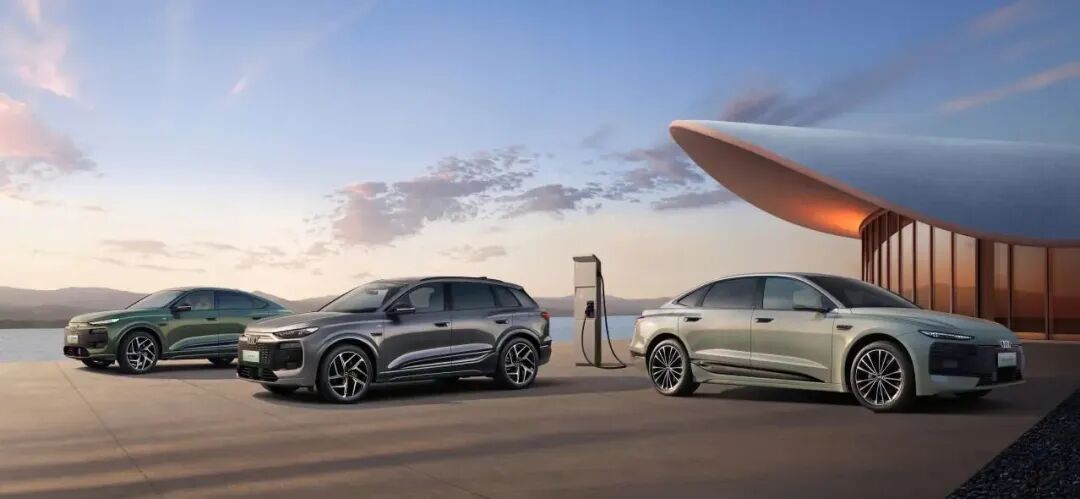
Several Audi models already incorporate Huawei's intelligent driving technology. Reports indicate that as early as 2019, the two companies began signing cooperation agreements and embarked on in-depth adaptation development, aiming to seamlessly integrate Huawei ADS (Qiankun Intelligent Driving) into Audi's E electrical architecture, rather than opting for a simple plug-and-play approach. Teams from both sides have collaborated for years to overcome challenges related to power supply, cooling, and chassis coordination in fuel vehicles. Subsequently, the Audi A5 became the first luxury brand to utilize Huawei's intelligent driving technology. Currently, Audi's electric vehicles also leverage Huawei's intelligent driving technology.
For Audi, incorporating Huawei's platform and technology into its flagship products is a logical move. Huawei has collaborated with Zunjie and Wenjie to develop multiple high-end products, all priced above 600,000 yuan. Several Zunjie models have even reached the million-yuan price range, traditionally the domain of luxury D-segment cars. These products have introduced a new blend of technology and luxury, challenging the established D-segment luxury cars represented by Maybach, Mercedes-Benz S-Class, BMW 7 Series, and Audi A8.
From a sales perspective, the monthly sales of Zunjie's V800 have surpassed 2,000 units, reaching 2,092 units, while the previously launched Zunjie S800 has also achieved monthly sales of 486 units. As a million-yuan luxury car, Zunjie is performing exceptionally well. Currently, German luxury brands do lag behind their domestic counterparts in terms of intelligence, a gap stemming from differences in manufacturing philosophies and understandings of luxury.
In addition, Audi aims to revitalize its Changchun PPE factory through its partnership with Huawei. The PPE factory is Audi FAW's new energy vehicle plant, with an annual production capacity of approximately 150,000 units, but it is currently operating well below capacity. Audi holds a majority stake in the company and has invested 2.6 billion euros in the project. Data shows that the monthly sales of the Audi Q6L e-tron and Audi A6L e-tron, both key products in the early stages of PPE, have not exceeded 1,000 units. Therefore, revitalizing this factory is of paramount importance.
Another factor is Audi's experience in collaborations with XPENG and SAIC, where it has witnessed the rapid development of vehicles by its Chinese partners. Moreover, Audi's collaboration with SAIC has fully demonstrated the current development and technological capabilities of Chinese automakers within the AUDI brand framework. This may have prompted Audi to reconsider its product development strategy, representing a typical example of 'reverse joint ventures'.
Besides Audi, several luxury brands have recently been collaborating with Chinese brands to develop intelligent electric vehicles. For instance, Maserati, a luxury brand under the Stellantis Group, is engaged in deep substantive negotiations with Huawei and JAC Motors, with plans for long-term joint development of high-end pure electric models and global production and sales cooperation.
According to the cooperation framework disclosed by the media, the tripartite cooperation model is as follows: Maserati is responsible for the vehicle's exterior design, luxury chassis tuning, brand operation, and overseas dealer channels; Huawei provides a comprehensive suite of HarmonyOS Intelligent Mobility solutions, including the HarmonyOS Smart Cockpit, Qiankun ADS advanced intelligent driving, and high-voltage electric drive systems; JAC Motors, leveraging the Hefei Zunjie Super Factory, undertakes vehicle engineering development, chassis calibration, and mass production tasks.
It is reported that the product planning includes two high-end pure electric models: a large luxury pure electric GT coupe and a mid-to-large luxury pure electric SUV, targeting the million-yuan luxury new energy vehicle segment. The project prioritizes the development of the GT coupe, with the first collaborative mass-produced vehicle expected to launch by the end of 2027. The sales channels will adopt a 'dual-branding, separate domestic and international sales' model. The same model will be branded as Zunjie in China and sold through HarmonyOS Intelligent Mobility channels, while overseas it will bear the Maserati trident logo and leverage its global dealer network.
Meanwhile, the JEEP brand under the Stellantis Group is also collaborating with Dongfeng Group. It is reported that Stellantis has relinquished absolute control, with JEEP retaining its genes through leading styling and chassis tuning, while Dongfeng is responsible for core technologies such as the three electric systems (battery, motor, and electronic control) and the intelligent cockpit, using the Mengshi platform. The goal is to launch the first new model by 2027. Additionally, brands like Land Rover are already utilizing Chinese platform technologies. For Audi, it will be the first German luxury brand to adopt Huawei's technology in its main brand.
Besides strengthening its collaboration with Huawei within the Four Rings brand, Audi has also been making aggressive moves in the Chinese market. Audi plans to transfer the Four Rings models and related assets currently under SAIC Audi to FAW-Volkswagen Audi, focusing on developing the AUDI brand electric vehicles, while the Four Rings brand will be fully integrated under FAW-Volkswagen Audi. In this separation plan, if FAW-Volkswagen Audi, holding the Four Rings brand, strengthens its collaboration with Huawei, it will open up new market opportunities while maintaining brand unity.
-
![]()
Will Doubao Mobile Trigger a New Round of 'Soul Theory' Debate?
-
![]()
Doubao Phone: Will It Spark a Fresh Wave of 'Soul Theory' Controversy?
-
![]()
When AI Creates Problems but No One Is Held Accountable: It Gave the Police a False Tip
-
![]()
From Doubao Mobile Phone to OPPO’s Partnership with Manus, and the Gradual Rise of Startups like Jieyue Xingchen: Who’s Riding the Wave of Opportunity?
-
![]()
Audi in Negotiations with Huawei: Developing Next-Gen A8 for China Using Huawei’s Platform, with Plans for Multiple New Models | Mirror Pro
-
![]()
People Trapped in Algorithms
-
![]()
Musk’s Computing Power Venture Recoups Investment Within a Year, Meta’s Muse Faces Uncertain Rollout Timeline
-
![]()
AI: From ‘Accelerator’ to ‘Paradigm Reconstructor’ in Metaphotonics