Why Hasn’t eSIM Gained Traction in China Despite Years of Promotion?
 10/09 2026
 397
397
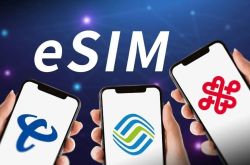
In October 2025, China’s three major telecom operators—China Mobile, China Telecom, and China Unicom—received approval from the Ministry of Industry and Information Technology (MIIT) to conduct commercial trials of eSIM technology for mobile phones. Subsequently, brands such as Apple, Huawei, OPPO, and Honor launched eSIM-compatible smartphone models.
However, over a year later, how often do you observe consumers activating eSIM services at carrier stores?
According to the "eSIM Industry Development Research Report (2026)" released by the China Academy of Information and Communications Technology (CAICT) in August 2026, domestic eSIM connections have surpassed 230 million, with the Internet of Things (IoT) sector accounting for over 180 million of these connections.
In comparison, the penetration rate of eSIM in mobile phones has reached 39% in North America and remains steady at 27-28% in Europe. In China, the market share increased from 8.5% in 2024 to 13% in the first quarter of 2026.
The issue does not stem from technological immaturity or a lack of chip production capabilities.
Instead, the barriers to eSIM adoption in China arise from structural conflicts involving industry interests, security concerns, and consumer habits.
01 Why Are Telecom Operators Indifferent?
The core technological feature of eSIM is remote SIM provisioning.
Users can activate services, change plans, or even port numbers online without visiting physical stores or waiting for physical SIM card delivery.
While this convenience benefits consumers, it poses challenges for telecom operators.
eSIM enables number porting in seconds, whereas traditional physical SIM porting requires in-person store visits and procedural steps.
Lower barriers to porting increase the risk of customer churn.
Data indicates that eSIM users abroad have an 18% higher annual porting rate compared to physical SIM users.
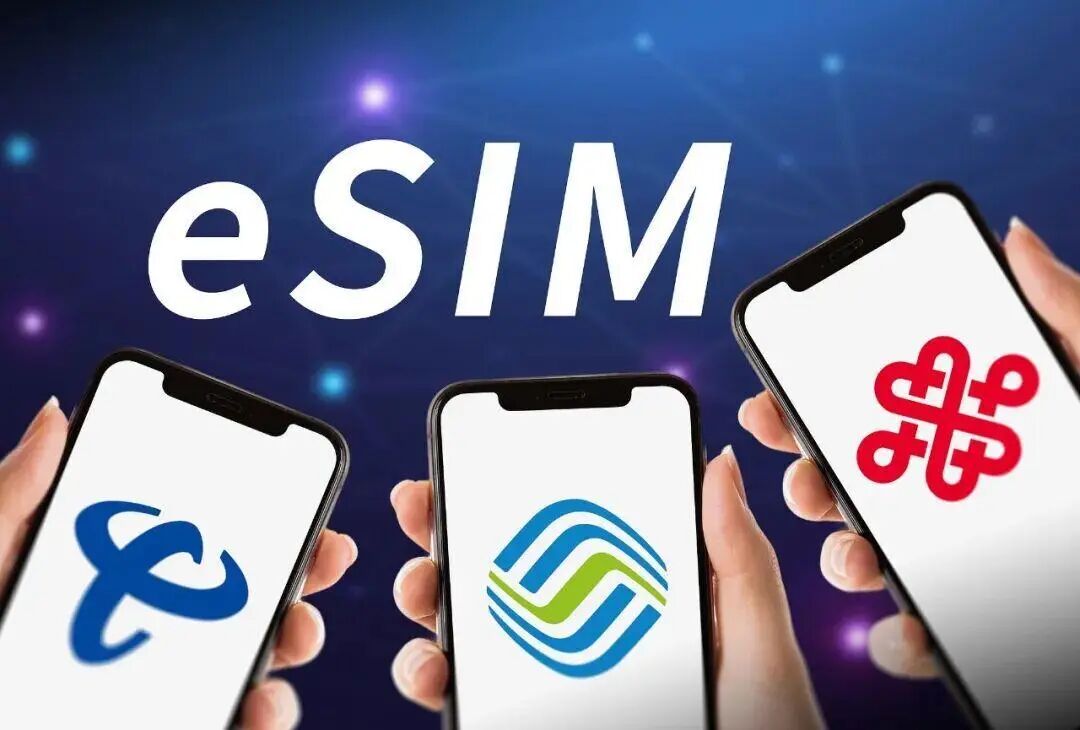
Image source: Internet
eSIM also directly impacts operators’ channel strategies and value-added services.
Physical operator stores serve not only as SIM activation centers but also as hubs for promoting broadband services, contract phones, video memberships, and other value-added offerings.
With eSIM enabling fully online activation, porting, and cancellation, the channel value of physical stores diminishes.
Another revenue stream at risk is international roaming. Users traveling abroad can directly activate local eSIM services, avoiding expensive roaming fees.
Market data shows that travelers using eSIM pay an average of $5.50 per GB of data, compared to $8.57 for traditional roaming services.
Zhang Jialong, a network evolution expert from Ericsson’s Northeast Asia Network Products Division, commented that operators have mixed feelings about eSIM. While it simplifies number porting, operators face internal conflicts between customer retention and competition.
However, he noted that GSMA data shows no significant increase in churn rates in North America, where eSIM penetration reaches 40%, suggesting that eSIM may instead accelerate operators’ digital transformation.
02 Regulatory Concerns
If operator indifference stems from financial interests, regulatory caution arises from security considerations.
eSIM’s remote provisioning bypasses the identity verification process required for physical SIM card delivery.
In 2023, criminals exploited over-the-air (OTA) vulnerabilities to register eSIM numbers in bulk using fake identities for fraud and spam messaging.
The three major operators subsequently suspended eSIM services for smartwatches under the pretext of system maintenance.
This incident made regulators highly cautious about eSIM.
The MIIT adopted a strategy of “cautious inclusiveness,” permitting commercial eSIM for mobile phones but mandating in-person activation and prohibiting domestic users from remotely activating foreign operator services.
These security measures directly impact user experience.
Currently, domestic eSIM activation for mobile phones requires in-person identity verification at designated stores, including facial recognition and device validation. Cross-province activation for non-local numbers remains unavailable, necessitating a return to the home province.
This process is even more cumbersome than physical SIM activation, which allows nearby store visits.
03 Device-SIM Binding and Number Limitations
Theoretically, eSIM should enable remote activation, seamless switching, and multi-number support on a single device. However, domestic technical restrictions limit these capabilities.
China Mobile’s "5G Mobile Phone Product White Paper (2026 Edition)" mandates that each eSIM device must embed a single, non-removable eSIM chip with device-locking capabilities.
This strictly binds eSIM numbers to phone motherboards.
With physical SIMs, users can transfer cards between devices in minutes. With eSIM, device changes require complex replacement procedures at operator stores.
Image source: Internet
Number limitations also apply. During commercial trials, each eSIM phone could bind a maximum of two domestic operator numbers, with no more than two new activations permitted monthly.
Public information shows that overseas models support over eight eSIM profiles.
For users managing multiple numbers, eSIM’s multi-number advantage remains largely unavailable in China.
Operator interoperability remains incomplete.
The three major operators’ eSIM platforms primarily support single-brand, single-system testing. Cross-operator profile compatibility is lacking, and operator switching remains constrained by contract terms and backend approval processes.
04 Why Users Resist Adoption
Beyond supply-side limitations, demand-side barriers include cognitive gaps and habitual resistance.
This cognitive blind spot is particularly pronounced among elderly users, whose familiarity with and psychological reliance on physical SIM slots make transition difficult in the short term.
Manufacturer strategies reinforce this inertia.
Currently, all eSIM-compatible phones sold in China adopt a dual-support approach (physical SIM + eSIM), with no pure eSIM models available.
Manufacturers hesitate to launch SIM-free devices due to risks of non-compliance with operator requirements and policy uncertainties. Additionally, eSIM certification costs are substantial.
The CTTL certification for consumer electronics eSIM type testing alone costs 515,000 RMB per model, with an additional 500,000 RMB for card information security certification (EAL4+), totaling millions in expenses.
Given uncertain market prospects, this represents a high-risk investment with unclear returns.
05 eSIM’s True Potential Lies Beyond Smartphones
The advantages of eliminating SIM slots and freeing up device space hold less urgency for current smartphone designs.
Liang Zhenpeng, a senior industry observer, bluntly stated that eSIM remains an incremental feature rather than a core smartphone component.
The situation changes dramatically in other contexts.
At CES 2026, Thunderbird Innovation unveiled the Thunderbird X3 Pro Project eSIM, the first AR glasses with integrated eSIM.
AR glasses have far stricter space constraints than smartphones, making physical SIM slots impractical. Simultaneously, scenarios like outdoor navigation and real-time translation demand independent connectivity, which Bluetooth and Wi-Fi cannot reliably provide.
Image source: Internet
China Mobile and China Unicom’s investment funds participated in Thunderbird’s funding round exceeding 1 billion RMB, marking the first strategic investment by domestic operators in the smart glasses sector.
In scenarios like connected vehicles and industrial IoT, where devices are widely distributed and operate in harsh environments, eSIM’s remote configuration capabilities offer inherent advantages over physical SIMs.
Widespread eSIM adoption on mobile phones won’t accelerate due to a single device launch.
Shifts in operator interest structures, regulatory security thresholds, or user habits will all require time.
However, when shifting focus beyond smartphones, eSIM is already becoming the default choice for space-constrained devices requiring independent connectivity, such as AR glasses, connected vehicles, and smart wearables. #eSIM
-
![]()
Blockbuster! Alibaba and ByteDance Launch Urgent Mystery Projects as Battle Looms
-
![]()
Why Does Apple Opt for Aluminum in Its Phone Cases? Beyond Lightness and Heat Dissipation
-
![]()
Securing a More Expensive Sum, Manus Returns to Beijing
-
![]()
Why Hasn’t eSIM Gained Traction in China Despite Years of Promotion?
-
![]()
How Much Internet Speed Boost Can Huawei's 'Pinhao Network' Offer on High-Speed Trains?
-
![]()
Why Did Axisystems Only Earn 29.09 Million Yuan After Selling 420,000 Automotive Chips in Six Months?
-
![]()
Chery’s Globalization 3.0: What Exactly Does It Entail?
-
![]()
Why Does Apple Opt for Aluminum in Its Phone Cases? Beyond Lightness and Heat Dissipation