FCC’s US Ban to Drive Internationalization of Chinese Technical Certification
 10/09 2026
 527
527
On the first working day following the National Day holiday, a major development emerged.
The US Federal Communications Commission (FCC) is set to vote on October 29 to prohibit all Chinese laboratories from testing electronic devices, including smartphones, cameras, and computers, intended for the US market. FCC Chairman Brendan Carr highlighted that 82% of electronic products undergo testing in China by 2025, with no relevant mutual recognition agreements (MRAs) in place between China and the US.
The ban is slated to take effect in December 2028.
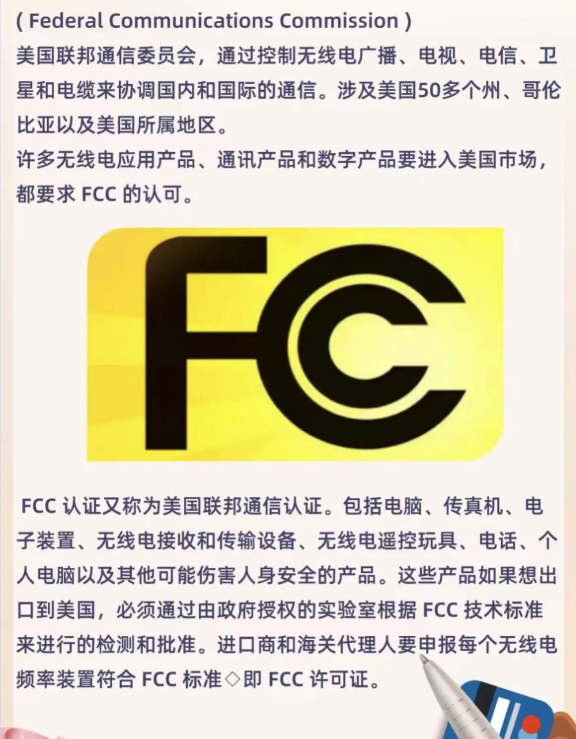
This is not the FCC’s first action. In 2025, it banned a group of Chinese laboratories, but this year, the FCC acknowledged that the vast majority of testing labs in China continue to handle testing for US electronic products as usual. Carr noted, “Less than 4% of all electronic devices are tested in laboratories within the United States.”
While 82% of testing volume is concentrated in China, rule-making authority remains firmly in US hands.
This discrepancy lies at the heart of the issue.
I. Testing Volume ≠ Influence; Agreements Matter
China conducts the majority of FCC compliance testing for electronic products exported to the US globally. However, China and the US have not signed an MRA.
The FCC’s proposal is logically grounded in MRAs: Testing reports from Chinese-funded, foreign-funded, or joint-venture laboratories in countries without MRAs with the US will no longer be officially recognized.
Approximately 200 Chinese laboratories already accredited by the FCC will lose their qualifications after the transition period ends.
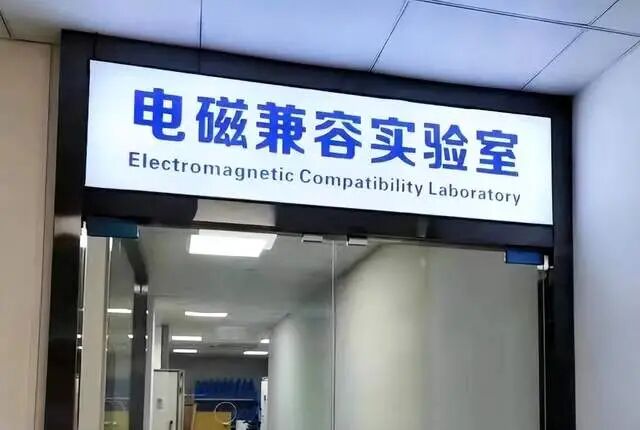
Notably, the FCC’s restrictions target not only “laboratories owned by Chinese companies” but also “laboratories located in China.” Regardless of funding source—Chinese, foreign, or joint venture—if physically situated in China, they are ineligible. Laboratories operated by SGS, TV, and UL in China are also excluded.
For the past two decades, China’s testing and certification industry has thrived on this geographical advantage.
The density of the electronics supply chain in the Pearl River Delta, the expertise of testing engineers, and the rapid two-week cycle from prototyping to report issuance have concentrated global testing demand in China.
However, this concentration has generated business volume, not rule-making authority. Despite handling 82% of testing, China lacks a single bilateral MRA.
A Ministry of Commerce spokesperson responded, “The US side has abandoned the principle of technological neutrality, generalized the concept of national security, and frequently imposed restrictive measures without factual basis.” The FCC’s proposal also lacks empirical evidence of systemic security risks in Chinese laboratories.
Yet, this unreasonable policy has inadvertently pushed China’s testing and certification industry out of a state of “high volume but low influence.”
Testing volume represents business; MRAs represent rules.
No matter how large your business is, if the rules aren’t in your hands, the table can be overturned at any moment.
II. How Chinese Testing Institutions Are Responding
In response to investor inquiries after the FCC’s proposal passed, Centi Testing stated, “This change will impact all domestic laboratories, but the overall impact on our company is minimal, as the relevant business accounts for a very low proportion of total revenue.”
This confidence stems from Centi’s proactive overseas expansion over the past two years.
Centi’s global footprint includes: acquiring South Africa’s Safety SA to establish a presence in Africa, purchasing France’s MIDAC laboratory to strengthen its European household chemical testing network, acquiring a controlling stake in Greece’s Emicert to enter the EU certification market, and completing the acquisition of Singapore’s Ugene laboratory to extend its Southeast Asian food testing network.
As of January 2026, Centi has established over 160 laboratories across more than 10 countries and regions worldwide.

The situation of Trustworthy Standards better illustrates the challenges faced by Chinese institutions.
All five of the company’s major testing bases in China hold FCC official accreditation, but it has almost no usable FCC testing sites overseas.
After the ban takes effect, customer orders must be transferred overseas, which Trustworthy Standards cannot handle. The company’s response on an interactive platform was: FCC-related business accounted for less than 2% of revenue in 2024 and 2025 and is expected to further decline to below 1% after the 2026 policy change. In the future, it will “gradually reduce reliance on US FCC-related business by promoting testing outlines and one-stop international certification services for countries along the Belt and Road.”
One company has overseas sites; the other does not. Firms with international laboratories can assure customers: “We’ll still test your products, just in Singapore instead of Shenzhen.”
Without overseas expansion, customers may take their orders elsewhere.
The FCC’s restrictions on overseas laboratories hinge solely on whether the host country has an MRA with the US—at least for now—and are largely unrelated to ownership structure.
This means Chinese testing companies with laboratories in Singapore, South Korea, the EU, and other locations can still undertake FCC business.
Relying on Chinese manufacturing volume for testing business has sustained the industry for two decades, fostering widespread inertia.
Now, the FCC’s ban has disrupted the status quo, allowing firms with overseas sites to continue operating while leaving others to watch their customers depart.
Senior internet expert Zhang Dongwei believes the FCC’s new regulations will significantly accelerate the internationalization of China’s testing and certification service institutions.
III. Forging a Chinese Path to Certification and Testing in the New Era
The FCC’s proposal is logically grounded in MRAs, which do not exist between China and the US. However, China has been advancing certification MRAs with other trading partners in recent years.
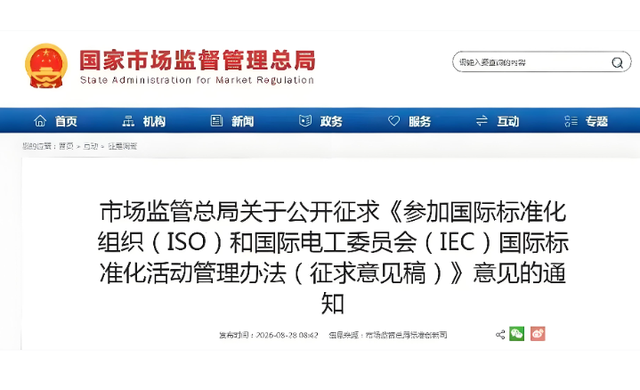
In June 2026, the State Administration for Market Regulation announced that China had signed 15 multilateral MRAs and recommended 84 certification and inspection institutions to join the International Electrotechnical Commission (IEC) conformity assessment system, establishing a “one evaluation, multiple country acceptance” mechanism covering regions accounting for over 95% of global economic output.
Currently, in bilateral cooperation, 159 bilateral cooperation documents in the field of conformity assessment have been signed, and bilateral cooperation arrangements have been established with over 40 countries and regions.
Specific cases include: Egypt’s General Organization for Export and Import Control authorizing institutions like Vkan Certification & Testing to conduct certification business, reducing testing and certification cycles for Guangdong enterprises exporting to Egypt by over 50% and costs by over 30%. Indonesia’s Vehicle Verification and Certification Center signed a cooperation agreement with the China Automotive Technology and Research Center. Morocco’s Standards Institute signed a cooperation agreement with Vkan Certification & Testing Co., Ltd. Kazakhstan adopts Chinese CCC certification data to issue customs union technical regulation certification certificates, reducing certification time from several months to one and a half months.
While these cases currently pale in scale compared to Sino-US testing volumes, the direction is clear: China is gradually replacing its past reliance on the US’s singular certification system with bilateral MRAs among trading partners. The FCC ban has accelerated this transition.
However, it is crucial to emphasize that the goal is not to force companies to choose between “Chinese standards” and “European/US standards” but to rapidly expand the international influence of Chinese standards through mutual recognition of norms.
In the certification system for domestic information technology, the China Information Technology Security Evaluation Center released its 2026 No. 3 security and reliability evaluation results, granting the highest Class II certification for CPU products to Loongson 3B6000M and HiSilicon Kirin 9000X, and Class II certification for the operating system to Kylin V11 SP1.
The credibility of this evaluation system does not rely on US institutional endorsement; it serves the actual procurement needs of the domestic information technology innovation market and objectively provides a referenceable certification framework for future exports of Chinese technology products to markets recognizing Chinese standards.
If others don’t recognize your reports, find those who will and sign agreements.
Dong Cha
The FCC’s ban represents a significant shock to China’s testing and certification industry. Approximately 200 laboratories face qualification loss, while export enterprises confront rising certification costs and longer cycles.
However, viewing the broader picture, the real issue is not that “the US won’t allow testing” but that China’s testing and certification industry has overly relied on the US certification channel for the past two decades.
While 82% of global testing volume is concentrated in China, certification rules and MRAs remain outside Chinese control. This arrangement posed no problem in a stable trade environment but became a vulnerability when conditions changed.
The FCC has exposed this vulnerability. Companies with overseas expansion are securing orders, while those without are transferring them. At the national level, more MRAs are being signed with trading partners. Whether this path succeeds depends not on Washington’s intentions but on whether Chinese testing companies are willing to establish laboratories near their customers.
As Lu Xun said, “There is no path on the ground; the more people walk, the more it becomes a path.”
The FCC has blocked the original path, so Chinese testing and certification companies must forge new ones. Establishing laboratories overseas, signing MRAs with trading partners, and delivering reports to recognized jurisdictions—these tasks have no shortcuts and must be negotiated one by one and implemented location by location.
In certification MRAs, don’t wait for anyone to issue a pass.
Walk your own path, and as more do, the path becomes yours.
-
![]()
Post-2000s Entrepreneur Builds $67 Billion AI Unicorn, Even Meta Takes Notice
-
![]()
Despite 800V and 6C Capabilities, Why Do We Still Face 5-6 Hour Charging Queues?
-
![]()
McLaren’s Market Plummet: From 310 to a Mere 9 Annual Sales!
-
![]()
High-Speed NOA Collision: Blaming the Driver When Only a Sudden 0.2-Second Hard Brake Could Avert Disaster!
-
![]()
AI Transforms the Tech Industry: Software's Glory Fades as Hardware Starts Profiting from Scarcity
-
![]()
FCC’s US Ban to Drive Internationalization of Chinese Technical Certification
-
![]()
Zunjie V800 Rolls Out Free Upgrades Following Three Brake Pedal Malfunctions
-
![]()
FAW Toyota to Maintain Operations; FAW, GAC, and Toyota Forge New Partnership