GAC Group: Pioneering Integration Among Domestic Automakers
 10/08 2026
 426
426
Author: Gao Linglang Editor: Ai Qingshan
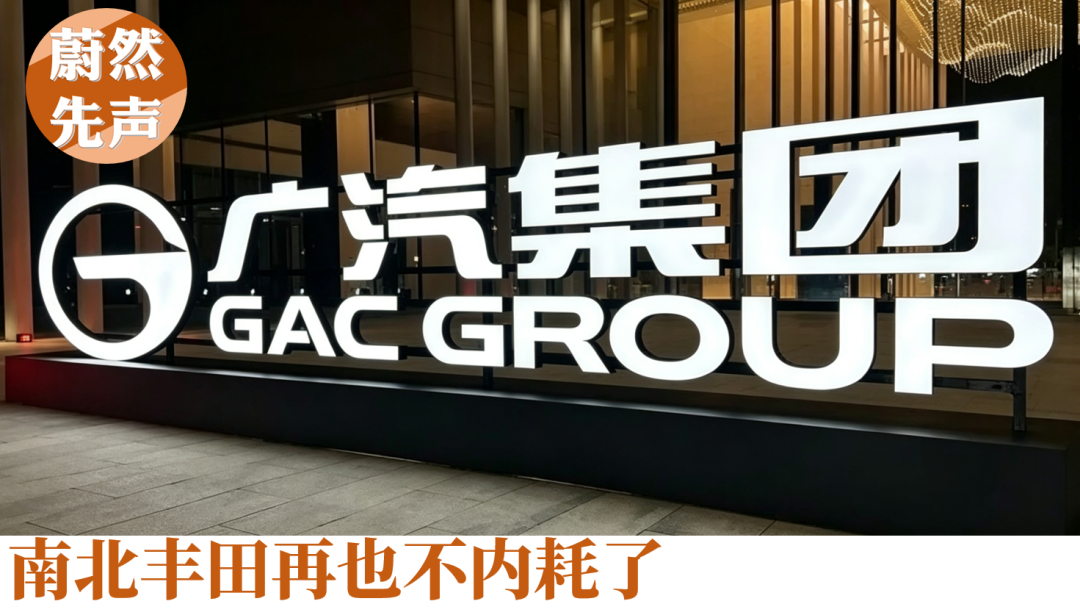
In the late hours of September 28, GAC Group released a series of 16 consecutive announcements, detailing its plan to acquire the full 50% stake in FAW Toyota currently held by China FAW Group. This will be achieved through the issuance of new shares, while simultaneously raising supplementary funds from no more than 35 designated investors. The provisional issue price has been set at 5.75 yuan per share.
When trading resumed the following day, GAC Group's A-shares immediately surged to the daily limit at the market opening, closing at 5.60 yuan. The value of pending buy orders exceeded 650 million yuan. Its Hong Kong-listed shares also experienced a significant intraday rally, surging by over 5%.
The transaction structure is relatively straightforward. GAC will use newly issued shares as payment, and FAW will exchange these for shares in GAC's listed entity, becoming the second-largest strategic shareholder after Guangzhou State-owned Assets.
Following the transaction, GAC will hold a 50% stake in FAW Toyota, with Toyota Motor Corporation retaining the other 50%. Both parties will jointly control FAW Toyota, although its financial data will not be consolidated into GAC's financial statements. Instead, related earnings will primarily be reflected in GAC's income statement as investment income.
Three days prior to the announcement, the National Development and Reform Commission expressed its support for large automakers to pursue mergers and acquisitions through market-oriented and legally compliant means, aiming to avoid homogeneous competition in product design and technological R&D.
On September 29, China FAW Group and GAC Industrial Group officially signed a strategic cooperation framework agreement, expanding their collaboration to encompass vehicle manufacturing, international operations, and key technological breakthroughs.
This marks the first cross-level automotive asset integration completed through a listed company issuing shares between central and local state-owned enterprises. The model of separating operational and ownership rights, with each party dividing responsibilities based on capabilities and sharing benefits based on resources, is likely to set a precedent for future state-owned automaker integrations.

GAC's financial challenges provide the most immediate context for this transaction.
The group reported a net loss attributable to shareholders of approximately 8.784 billion yuan in 2025, marking a shift from profitability to loss. The deficit further deepened to 4.467 billion yuan in the first half of 2026, representing a year-on-year increase of nearly 76%.
In contrast, FAW Toyota maintained stable operations, with unaudited data from GAC's restructuring plan indicating net profits of approximately 4.717 billion yuan in 2024 and 1.009 billion yuan in the first half of 2026.
Following the acquisition, GAC will hold a 50% stake in FAW Toyota. Even without consolidating its financial statements, the corresponding investment income will significantly bolster GAC's profitability.
However, GAC's pressing needs are not the sole impetus behind this integration.
FAW Toyota and Toyota's operations in northern and southern China have remained independent for over two decades, leading to the development of multiple sister models, such as the Corolla and Levin, RAV4 and Wildlander, Avalon and Camry, as well as Sienna and Granvia. Operating two model lines on the same platform has resulted in duplicated investments in procurement and marketing systems.
According to the China Association of Automobile Manufacturers, combined sales of FAW Toyota and Toyota in China reached approximately 1.578 million units in 2025, accounting for 17.03% of the joint-venture passenger vehicle market. However, around 1,400 dealers competed within the same brand framework, driving down terminal prices through prolonged internal competition.
Post-integration, Toyota plans to establish a unified sales company in China, with Toyota holding a 50% stake and FAW and GAC each holding 25%. This move could potentially eliminate channel friction.
For FAW, relinquishing its stake in FAW Toyota may appear to be surrendering a high-quality asset. However, it actually represents an exchange of a slowing cash flow for direct access to GAC's new energy vehicle (NEV) ecosystem.
GAC possesses deep expertise in three core electric vehicle technologies: batteries, electric motors, and electronics. Its magazine battery has been installed in over 1.3 million vehicles, while its Inpower battery boasts an 18GWh production line. These resources are urgently needed by FAW's Hongqi and Besturn brands for their electric transformation.
Clearly, by exchanging a profit-generating asset for a technological interface, both companies are able to fulfill their respective needs.
The integration of FAW Toyota and Toyota's operations in China represents a pioneering step amid the overall pressure faced by joint-venture brands.
Domestic automakers' market share rose to 64.6% in 2025, while the combined share of joint-venture and foreign brands fell to 35.4%, a historic low. With NEV penetration exceeding 60%, joint-venture brands that rely heavily on internal combustion engine vehicles are rapidly losing market ground.
Honda and Nissan signed a memorandum of integration in late 2024, aiming to form the world's third-largest automotive group. However, disagreements over control led to the collapse of negotiations in February 2025.
In August 2026, the two companies重启 (restarted, here using the Chinese term to convey the sense of resuming a previous effort) cooperation through a software joint development agreement, although on a far smaller scale than initially envisioned and without any fundamental change in the underlying logic.
Dongfeng Honda and Dongfeng Nissan, both under Dongfeng Motor Group, have highly overlapping product lines and theoretically stronger conditions for integration than FAW Toyota and Toyota in China. However, the involvement of more stakeholders and higher coordination complexity are likely to slow implementation beyond external expectations.
Volkswagen took a different approach. While sales at FAW-Volkswagen and SAIC Volkswagen declined by approximately 4.8% and 11.4%, respectively, in 2025, Volkswagen responded by introducing NEV products across three joint-venture platforms rather than merging existing assets.
FAW and SAIC belong to different state-owned asset systems, lacking the clear complementary structure seen between FAW and GAC. This results in insufficient drivers for integration.
Elsewhere, Changan Automobile led the way within its own system by merging the operations of Deepal and Avatr and establishing synergistic departments. NIO and Geely conducted cross-shareholdings to jointly build charging and battery-swapping infrastructure. While the paths differ, the trend toward resource convergence remains consistent.
GAC and FAW's arrangement—replacing cash with share swaps and trading operational rights for technological resources—at least demonstrates that cross-level asset integrations among large state-owned automakers are not insurmountable. Clarifying operational control, resource contributions, and profit distribution is essential for successful execution.
Of course, from the announcement of the preliminary plan to formal implementation, procedures such as audits, regulatory approvals, and shareholder meetings remain. The market is currently trading on expectations, with actual outcomes pending further validation.
Disclaimer: The content herein is for reference only. The information or opinions expressed do not constitute investment advice. Readers should exercise caution when making investment decisions.
-
![]()
JAC Motors’ Stock Price Rockets for Three Days Straight: Is the ‘Huawei Partnership’ Being Treated as a Cash Cow?
-
![]()
What Does China's Motorcycle Industry Still Lack After 7 Billion Views?
-
![]()
Yijing’s First Car Hits the Market: Timing, Location, and Target Audience—How to Get Them Right?
-
![]()
Volkswagen Lays Off 100,000 Employees but Builds Three Battery Factories in Europe with Gotion High-Tech
-
![]()
GAC Group: Pioneering Integration Among Domestic Automakers
-
![]()
Huawei and Seres Forge Alliance: A Strategic 'Remarriage'!
-
![]()
The Largest IPO in History, But Its Future Prospects Are Cause for Concern!
-
![]()
BYD's Export Surge: A Global Triumph!