Delta Electronics Hits Trillion-Yuan Market Cap: AI Fuels Growth Amid Automotive Struggles
 10/08 2026
 507
507
Authored by Zhineng Technology
In July 2026, Delta Electronics reported a nearly 50% surge in quarterly revenue, with operating profit soaring over 60%. Yet, the automotive sector continued its losing streak.
Delta Electronics supplies onboard chargers, inverters, DC/DC converters, and electric drive systems for electric vehicles (EVs). Amid a challenging landscape where many automotive suppliers grapple with customer production cuts, escalating costs, and shrinking profit margins,
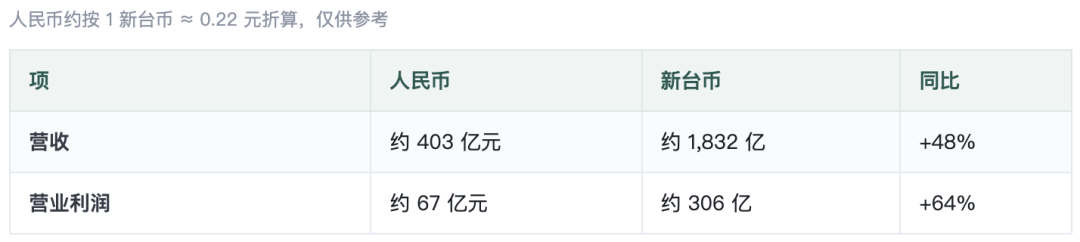
Delta Electronics saw its second-quarter revenue soar to approximately RMB 40.3 billion (around NT$183.2 billion), marking a 48% year-on-year increase. Operating profit reached approximately RMB 6.7 billion (about NT$30.6 billion), up 64% from the previous year.
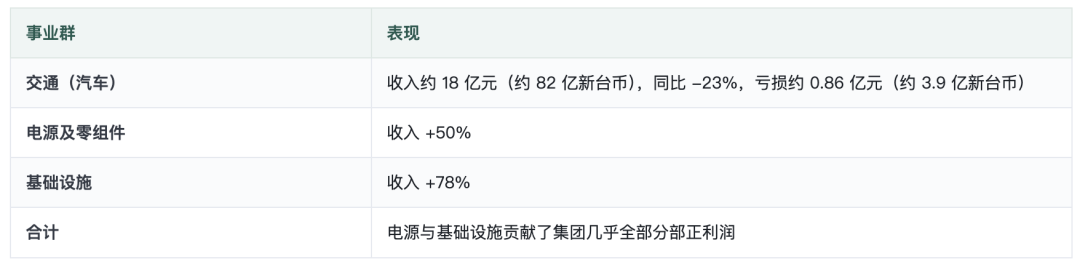
In the second quarter, Delta's transportation business group generated revenue of only about RMB 1.8 billion (approximately NT$8.2 billion), a 23% year-on-year decline, with losses amounting to approximately RMB 86 million (around NT$390 million). The automotive business is weighing down the company. Meanwhile, the power supplies & components business group saw a 50% revenue increase, and the infrastructure business group grew by 78%, together accounting for nearly all of the group's segment profits.
EVs require efficient power transfer from the grid to the battery and then conversion of battery power to drive the wheels. On the other hand, AI data centers need to reliably deliver vast amounts of power to cabinets and chips while dissipating the heat generated by dense computing. Despite the stark differences in end products, Delta Electronics leverages its years of expertise in power conversion and cooling to serve both markets, as the underlying technologies are fundamentally the same.
As the world's leading power supply manufacturer, Delta has dominated the server power supply market for over a decade. Within the NVIDIA ecosystem, multiple institutions estimate Delta's share of AI server power supplies to range between 40% and 60%, with Lite-On holding about 30% and the remainder going to mainland Chinese manufacturers.
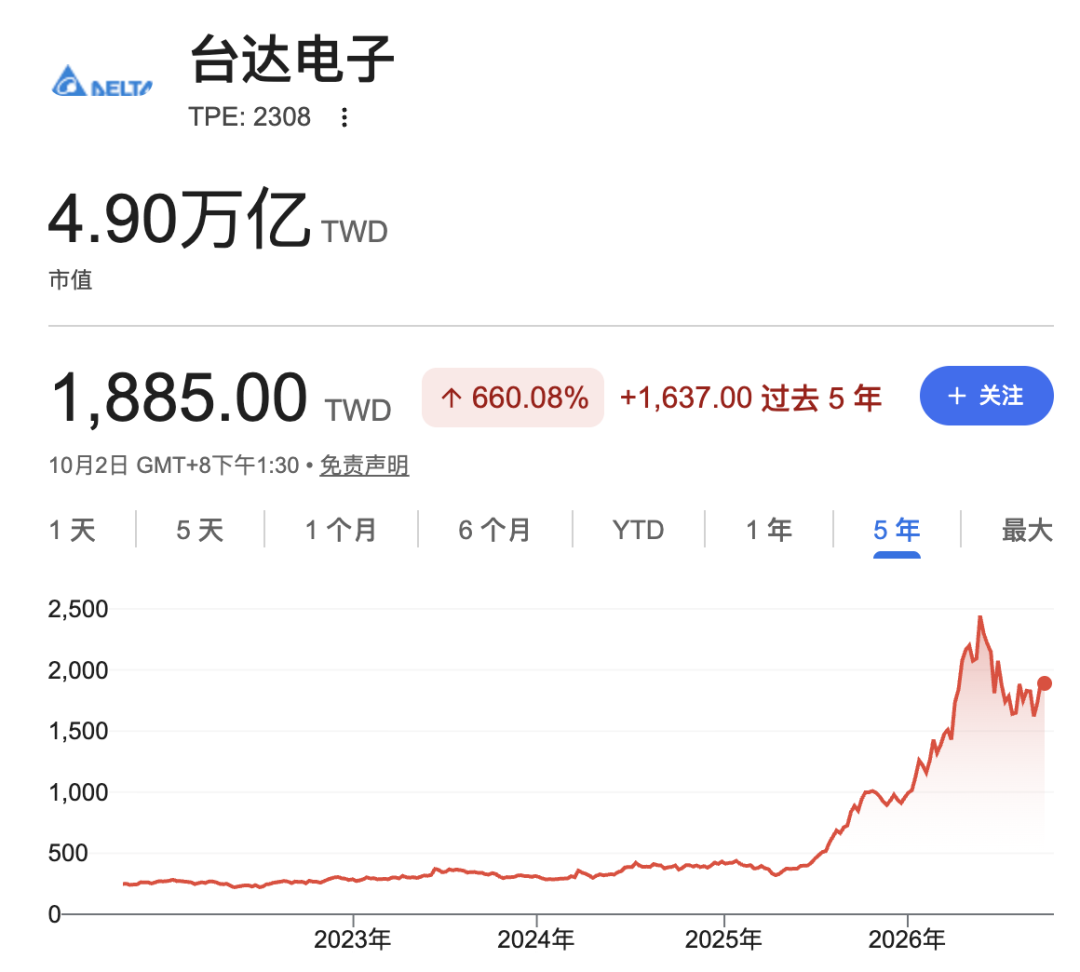
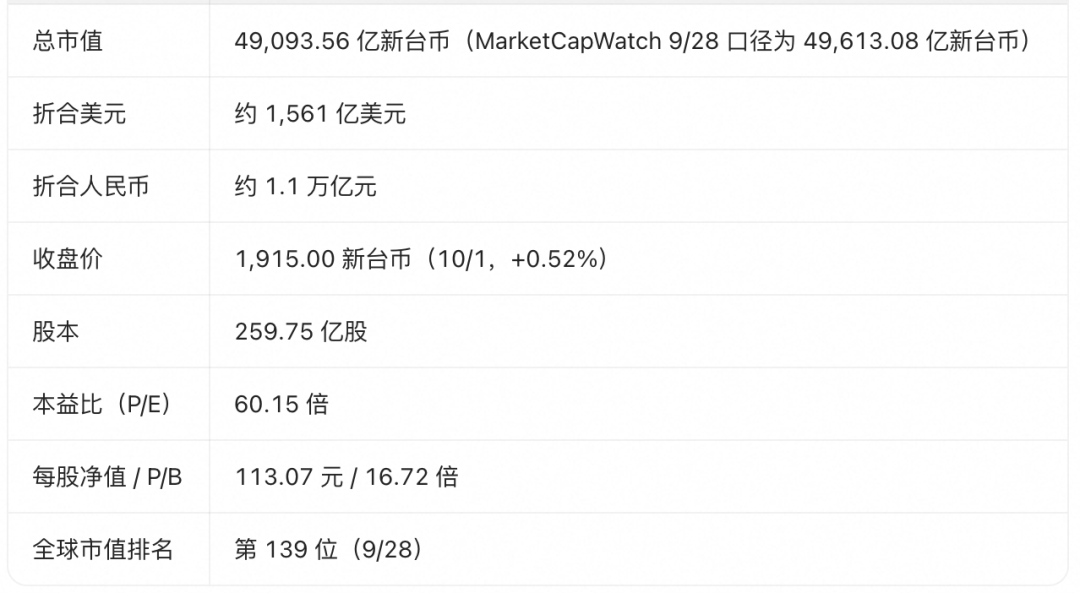
AI servers are power-hungry, making Delta an indispensable player. While the automotive business falters, the data center segment sustains the company, thanks to its solid foundation in this area. With a market capitalization exceeding RMB 1 trillion as of mid-2026, Delta Electronics stands as a technology behemoth among Taiwanese listed companies.
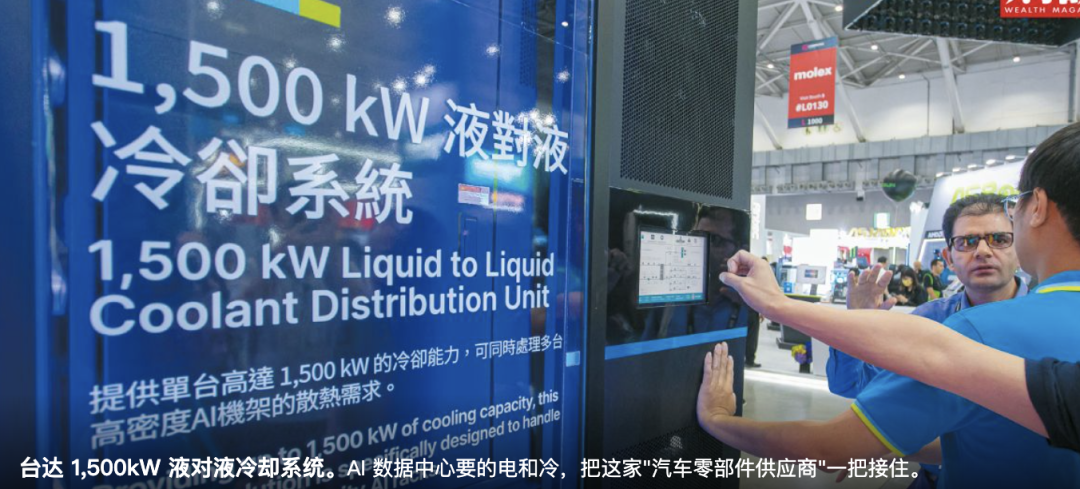
Delta gains entry into customer equipment through its power supplies and components. As AI data centers face escalating power supply and cooling challenges, Delta offers power products, liquid cooling components, and data center infrastructure solutions, falling under its power supplies & components and infrastructure business groups. Data center-related businesses contributed to over half of the group's revenue in the first half of the year.
This transition is steering Delta Electronics towards a more complex business model. After component delivery, customers primarily evaluate performance, quality, and cost. However, system solutions also necessitate considerations for on-site deployment, service teams, and ensuring the entire facility operates on schedule. Delta is revamping its factory design and manufacturing organization while bolstering its overseas service capabilities.
AI Boom, Automotive Slump
Challenges in the Automotive Business Group: In the first half of 2026, the transportation business group's revenue plummeted 25% year-on-year, with cumulative losses nearing RMB 250 million (approximately NT$1.13 billion). When questioned by analysts, Chairman Zheng Ping candidly stated: "The EV business remains sluggish this year. We will control losses, preserve engineering capabilities and customer relationships, but do not anticipate a swift market recovery in the next one to two years."
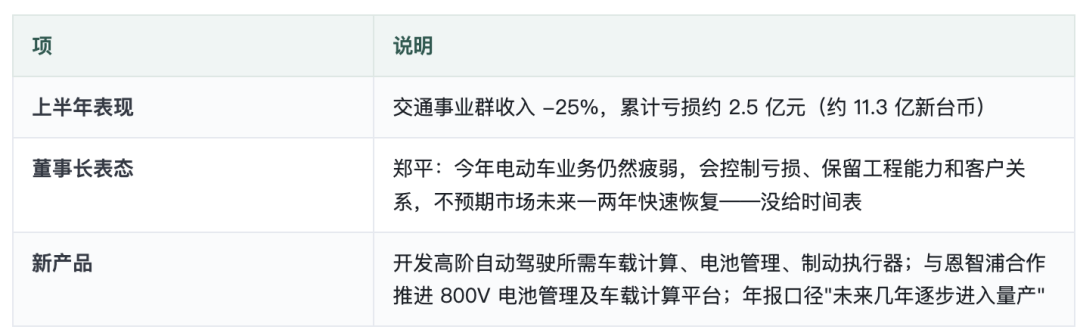
Delta Electronics is developing onboard computing, battery management, and brake actuator products for advanced autonomous driving. It is also collaborating with NXP to advance 800V battery management and onboard computing platforms. However, new products require time from development, securing customer projects, to mass production, with a gradual ramp-up expected over the next few years.
The power and cooling demands of AI data centers are substantial. The global data center power infrastructure market, encompassing power supplies, UPS, power distribution, and thermal management, is estimated to be worth between US$20 billion and nearly US$40 billion (approximately RMB 140 billion to RMB 280 billion) in 2025. Widespread expectations foresee it reaching US$100 billion by the early 2030s, with most estimates projecting double-digit annual growth. TrendForce estimates that liquid cooling penetration in AI chips will reach about 53% in 2026 and nearly 60% in 2027. Delta is among the few manufacturers capable of mass-producing 800V DC power cabinets and obtaining NVIDIA's full cabinet certification.
However, unlike Vertiv, Schneider, and Eaton, which offer turnkey power supply and cooling solutions for entire data centers, Delta's market share is more concentrated in the upstream server power supply segment. It is transitioning from chip-level power supply to system solutions, while Vertiv and others are moving downward from infrastructure, beginning to converge on 800V DC architectures.
Delta leads in its narrowest yet most profitable segment, but its overall market is smaller than Vertiv's.
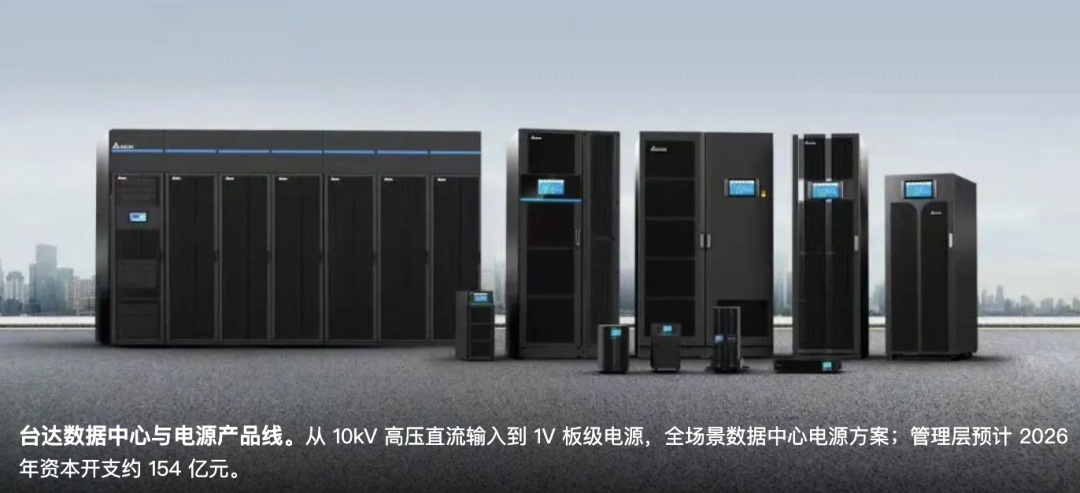
AI demand provides Delta Electronics with a compelling reason to expand production. Management anticipates capital expenditures of approximately RMB 15.4 billion (around NT$70 billion) in 2026, up from approximately RMB 10.3 billion (about NT$46.6 billion) in 2025. Operating cash flow in the first half was approximately RMB 13.9 billion (around NT$63.1 billion), supporting current investments. However, inventories rose from approximately RMB 22.3 billion (about NT$101.5 billion) at the end of last year to approximately RMB 30.7 billion (around NT$139.4 billion) by the end of June. Once factories are built and equipment is in place, customer projects must be implemented on schedule for these investments to continue translating into profits and cash. Expansion entails risks.
Management is also tempering market expectations. The highly anticipated ±400V and 800V high-voltage DC products are expected to commence mass production in the third quarter, but shipments will remain limited this year, with meaningful scale likely not until next year.
Summary: Delta Electronics once introduced power electronics technology to the automotive industry and is now leveraging the same expertise to penetrate AI data centers. While the automotive business faces headwinds, another market is driving the company's growth, leaving room for continued investment in new automotive products.
-
Multi-route Auto Racing, Abandoning BEV: Analyzing Leapmotor's World Model from a Paper Perspective
-
![]()
Huawei and Qualcomm Announce Broad Patent Licensing Agreement: Covering 5G, AI, and More
-
Is It Hard to Charge EVs on Expressways During National Day? Netizens: Is It Illegal to Charge Off the Expressway? Blame Poor Planning by Car Owners!
-
Data Center Space in Short Supply, Yet Capital Turns Selective
-
Huawei and Seres: The Path of Synergy and the Perils of Divergence
-
![]()
Murata’s Capacitor Orders Soar by 85.5%, Navigating the Intersection of AI and Automotive
-
![]()
Bosch’s Mid-Year Report: €46.41 Billion in Revenue, Automotive Sector Contributes 60%, Growth Spurred by HVAC Acquisition
-
![]()
Delta Electronics Hits Trillion-Yuan Market Cap: AI Fuels Growth Amid Automotive Struggles