Bosch’s Mid-Year Report: €46.41 Billion in Revenue, Automotive Sector Contributes 60%, Growth Spurred by HVAC Acquisition
 10/08 2026
 455
455
Bosch has unveiled its first half-year report since its inception. As a non-listed company, the decision to disclose a comprehensive operating status mid-year primarily stems from financing considerations. Zhineng Zhixin reports that in the first half of 2026, Bosch generated €46.41 billion in revenue, marking a 3.6% increase year-on-year. Operating earnings before interest and taxes (EBIT) reached €2.153 billion, a slight dip from €2.265 billion in the same period last year, with the profit margin declining from 5.1% to 4.6%. 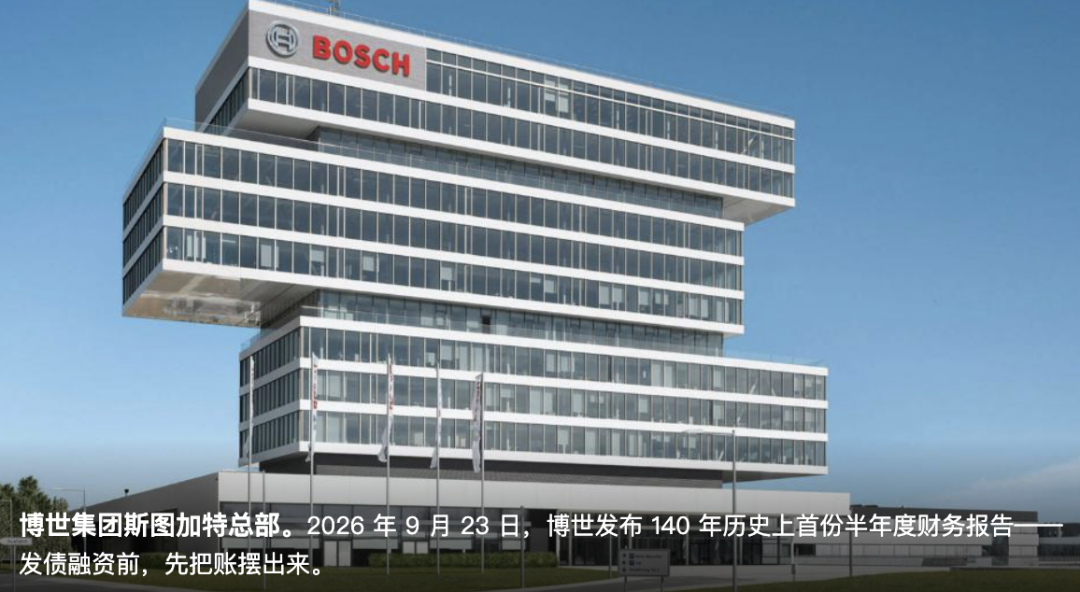
The mobility business continues to be the primary revenue contributor, accounting for nearly 60%. However, new revenue streams are predominantly driven by HVAC acquisitions. 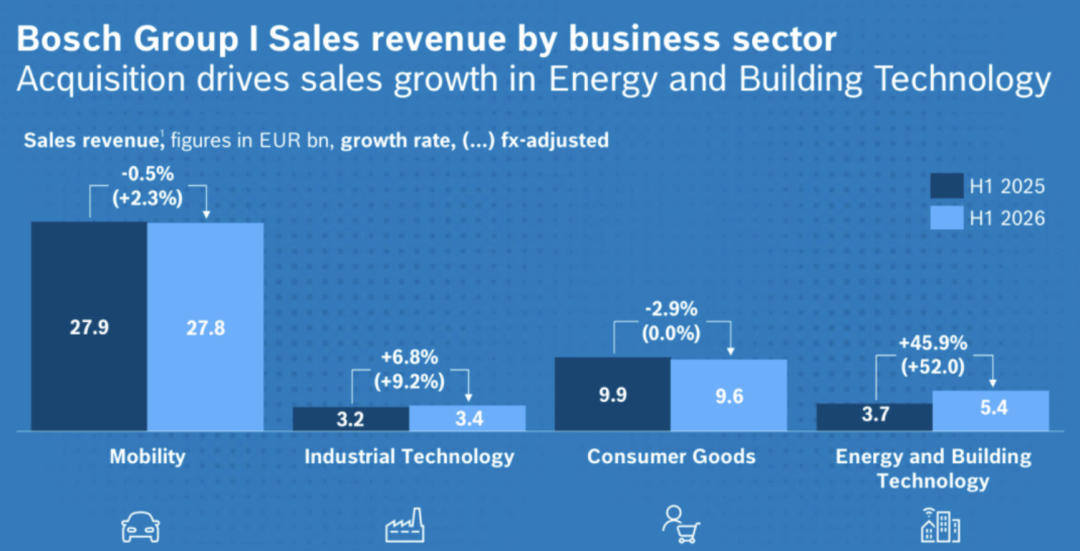
The revenue increase in Bosch’s 2026 half-year report primarily originates from outside the automotive sector. Bosch’s revenue for the first half of the year rose by approximately €1.62 billion compared to the previous year.
The acquisition of Johnson Controls and Hitachi HVAC businesses last year alone contributed roughly €2 billion in new revenue. Conversely, the divestiture of some building technology product businesses reduced revenue by about €450 million. Excluding these business portfolio adjustments, the group’s nominal revenue remained relatively stable year-on-year. 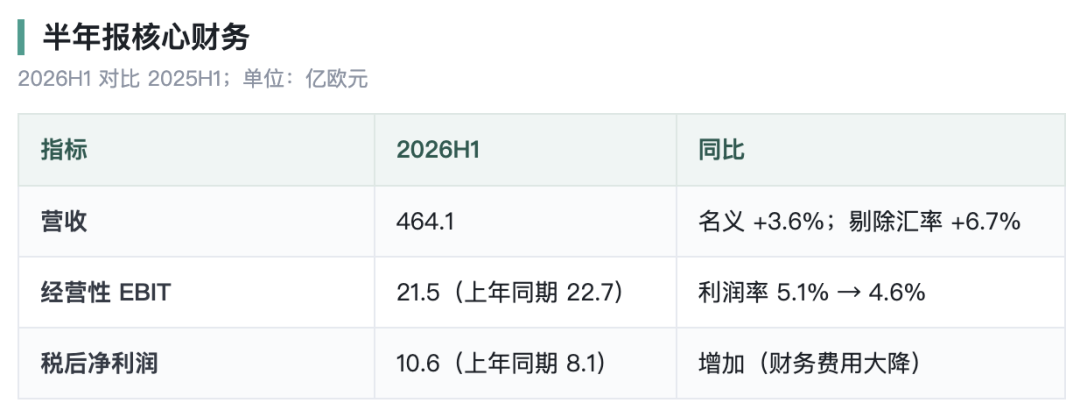
Existing businesses have also shown some growth, as a combination of increased sales volume and price hikes has positively impacted revenue, although exchange rate fluctuations have offset a significant portion of these gains.
In the first half of the year, the group’s revenue grew by 6.7% at constant exchange rates, showcasing a substantial difference from the 3.6% nominal growth rate.
Bosch 2026 Half-Year Report · Mid-Year Performance Presentation Materials By segment, revenue from Energy and Building Technology surged to €5.359 billion, a 45.9% increase year-on-year, with HVAC acquisitions serving as the main catalyst. The operating EBIT margin improved from 0.8% in the same period last year to 7.3%, bolstering the group’s profits (including the impact of acquisition consolidation and reduced transaction costs). Bosch is diversifying its business portfolio to reduce reliance on the automotive market.
However, for the time being, the scale of the automotive business still dictates the group’s operating performance. The automotive sector faces a disparity between growth and investment rhythms. Revenue from the mobility segment in the first half of the year was €27.773 billion, representing 59.9% of group revenue.
Nominal revenue decreased by 0.5% year-on-year but increased by 2.3% excluding exchange rate impacts. Operating EBIT fell from approximately €1.63 billion in the same period last year to €1.312 billion, with the profit margin dropping from 5.8% to 4.7%. 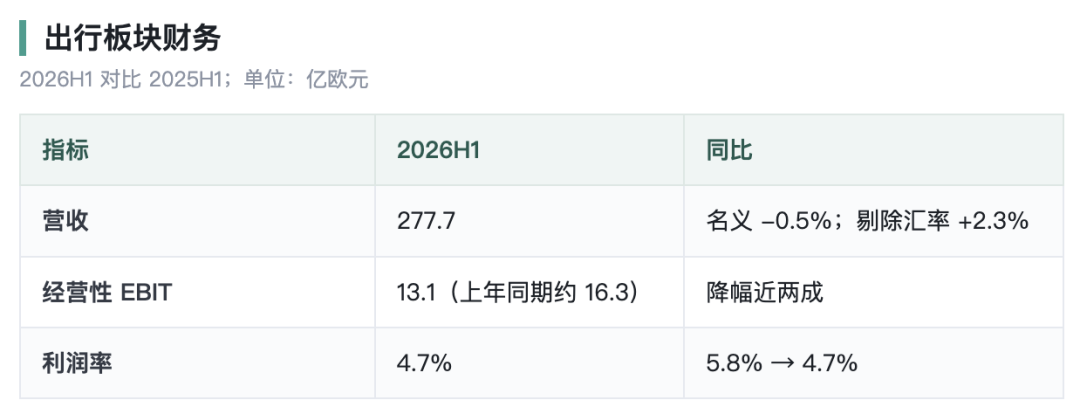
The market environment is exerting significant pressure.
According to Bosch’s statistics, as of the end of May 2026, global automotive production stood at approximately 38.2 million units, unchanged year-on-year. Passenger car and light commercial vehicle production was about 36.8 million units, down 1.3% year-on-year.
Production declined in China, the EU, and the UK, stagnated in North America, and experienced rapid growth in India. Bosch anticipates a continued decline in global passenger car and light commercial vehicle production for the full year.
Due to slower-than-expected electrification progress, Bosch recognized €270 million in impairments for production facilities related to the mobility segment in the first half of the year, as current capacity is unlikely to yield the previously anticipated returns. 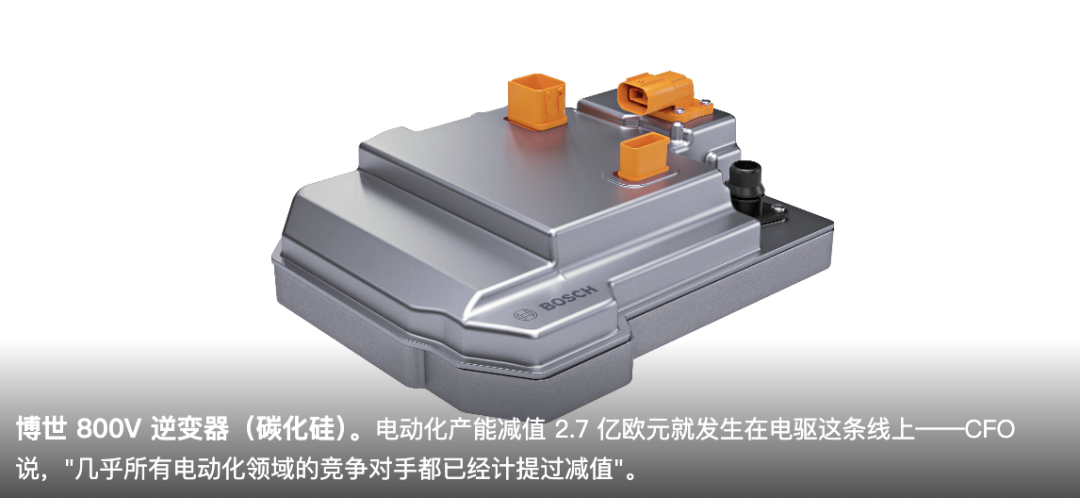
Customer claims and the termination of a research and development cooperation also impacted profits. The latter also led to the write-back of a previously recognized contract asset, reducing revenue by over €100 million (Bosch did not disclose the claim amount or the partner). 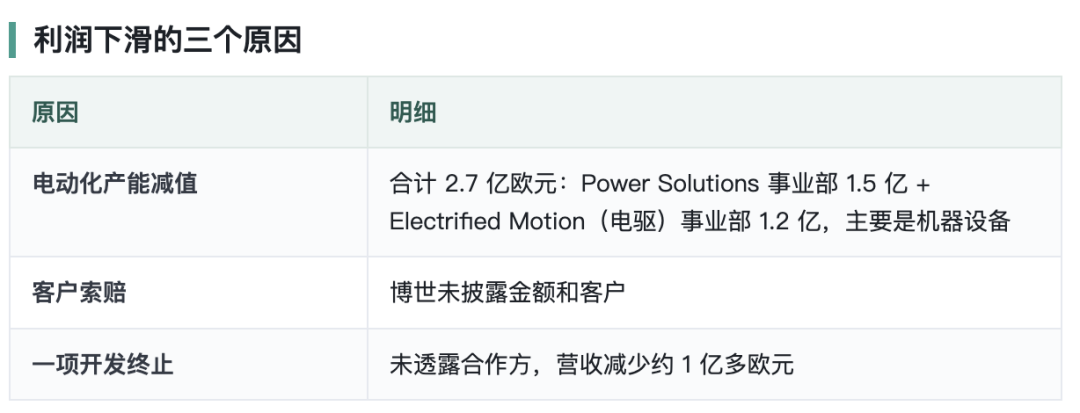
This underscores the most challenging aspect of component suppliers’ transformation: they must invest in R&D and equipment for next-generation products years in advance, but model launches, customer order conversions, and end-user demand may not align with the original schedule (the gap between previous investments and current expectations). In June this year, Bosch secured a large-scale motor order for Mercedes-Benz’s next-generation electric drive system, with supply plans extending into the 2030s.
The order underscores Bosch’s continued ability to participate in automakers’ next-generation projects. The more critical next step is whether stable production volumes can be achieved after project launch, enhancing capacity utilization and returns in the existing electrification business. 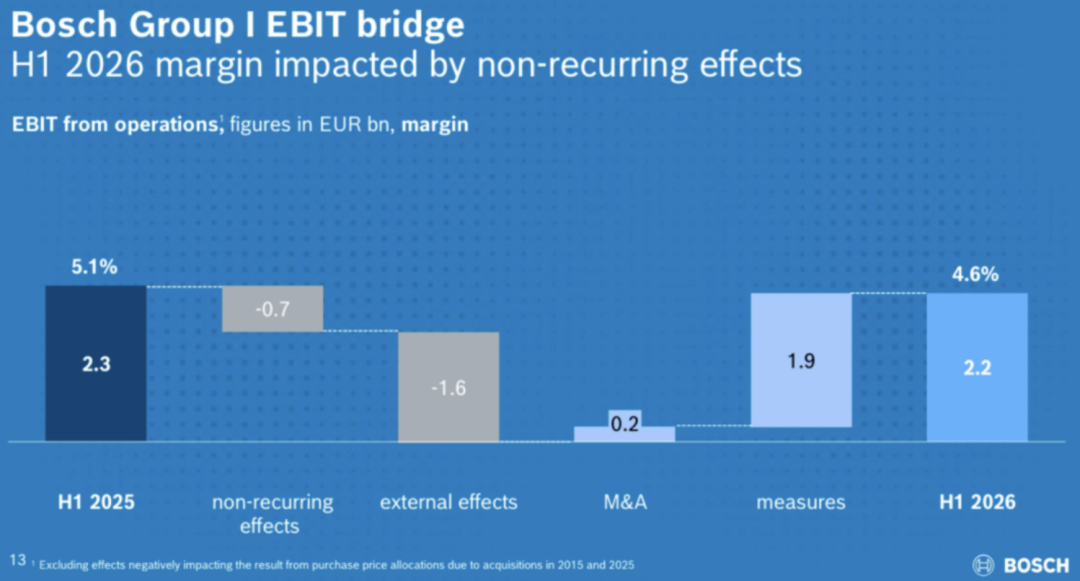
The group’s operating EBIT declined, but net profit after tax rose from €808 million to €1.062 billion.
In the first half of last year, Bosch utilized foreign exchange options to lock in the HVAC acquisition price, and related fees dragged down financial results. This year, these fees were absent, and financial losses narrowed from €787 million to €232 million.
Therefore, the growth in net profit cannot be simply interpreted as an improvement in core business profitability. Bosch’s free cash flow in the first half of the year was negative €969 million, a significant improvement year-on-year. The negative value in the first half was partly due to seasonal factors, and the group maintains its target of achieving free cash flow of at least 1% of revenue for the full year.
To meet this target, working capital and capital expenditures must still be controlled in the second half of the year. The new business direction is clear, but financial contributions are still pending. Facing pressure from the automotive business, Bosch is not betting its future on a single technology. 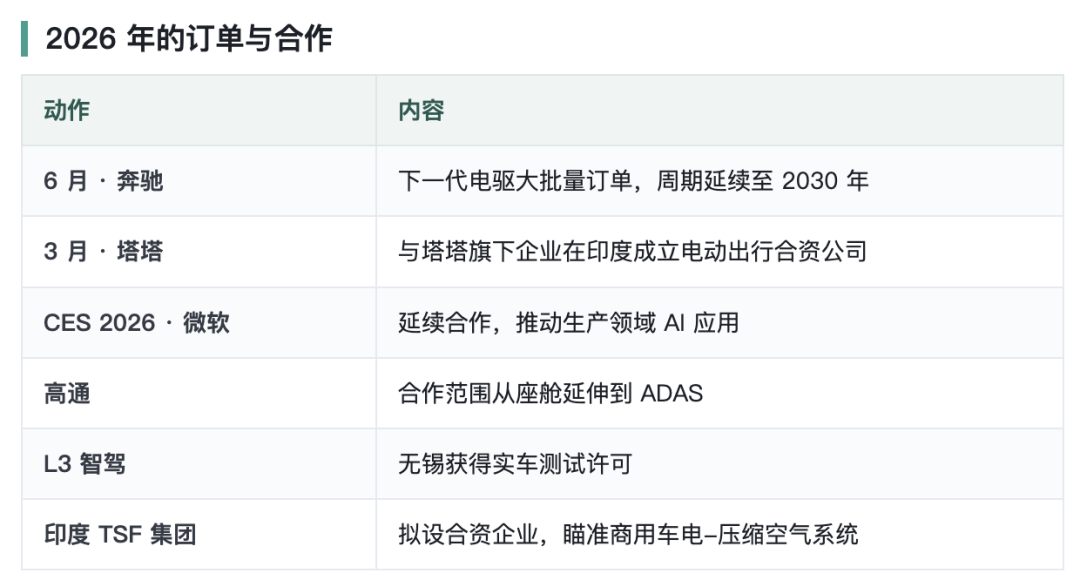
In the automotive sector, Bosch is expanding its cooperation with Qualcomm from cockpit systems to assisted driving and has obtained L3 real-vehicle testing approval in Wuxi. In India, it plans to establish an electric mobility joint venture with Tata AutoComponents and is also planning a commercial vehicle electric mechanical compressed air system business with local partners. 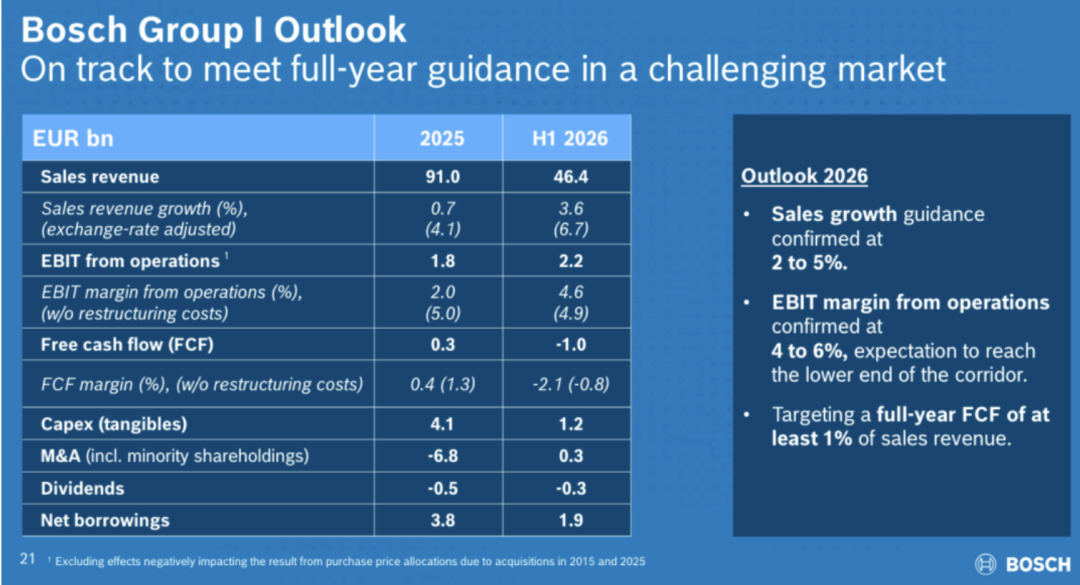
Outside the automotive sector, Bosch is also advancing AI and robotics collaborations in manufacturing. 
Bosch’s first half-year report indicates that while the automotive business remains crucial and future projects are progressing, previously invested capacity must now align with market rhythms. Non-automotive businesses provide a buffer but cannot yet support the group in detaching from the automotive industry cycle.
Summary:
For Bosch, being the world’s largest automotive component supplier now feels more like a burden.
Key questions loom: whether new orders can translate into profitable mass production, whether HVAC growth can be sustained, and whether profit margins can be maintained while the group continues to invest in future technologies.
Bosch is no longer the company that once dictated technical directions for many automakers in the automotive industry!
-
Multi-route Auto Racing, Abandoning BEV: Analyzing Leapmotor's World Model from a Paper Perspective
-
![]()
Huawei and Qualcomm Announce Broad Patent Licensing Agreement: Covering 5G, AI, and More
-
Is It Hard to Charge EVs on Expressways During National Day? Netizens: Is It Illegal to Charge Off the Expressway? Blame Poor Planning by Car Owners!
-
Data Center Space in Short Supply, Yet Capital Turns Selective
-
Huawei and Seres: The Path of Synergy and the Perils of Divergence
-
![]()
Murata’s Capacitor Orders Soar by 85.5%, Navigating the Intersection of AI and Automotive
-
![]()
Bosch’s Mid-Year Report: €46.41 Billion in Revenue, Automotive Sector Contributes 60%, Growth Spurred by HVAC Acquisition
-
![]()
Delta Electronics Hits Trillion-Yuan Market Cap: AI Fuels Growth Amid Automotive Struggles