Blockbuster! Wang Chuanfu Appointed as BYD's Chairman, Sets Four-Year Goal to 'Reach for the Sky'
 10/09 2026
 457
457
Among China's entrepreneurs, Wang Chuanfu stands out as a unique figure.
It's easy to spot the differences when comparing him to other well-known figures in the industry: Jack Ma excels at public speaking, capable of igniting public opinion with just a few words; Ren Zhengfei possesses a natural preacher-like charisma, with remarks that always provoke deep thought. Wang Chuanfu is different; he dislikes public appearances and rarely delivers grandiose speeches. At his core, he is an engineer dedicated to solving problems.
Yet, it is precisely this quiet technologist who started from scratch with a borrowed 2.5 million yuan, beginning in an old factory building in Shenzhen, and built a manufacturing giant with annual revenues in the hundreds of billions.
On September 29th, BYD released an announcement that stirred the entire automotive industry: Wang Chuanfu was unanimously elected as the chairman of the ninth board of directors and was reappointed as the company's president, serving both roles for a three-year term.
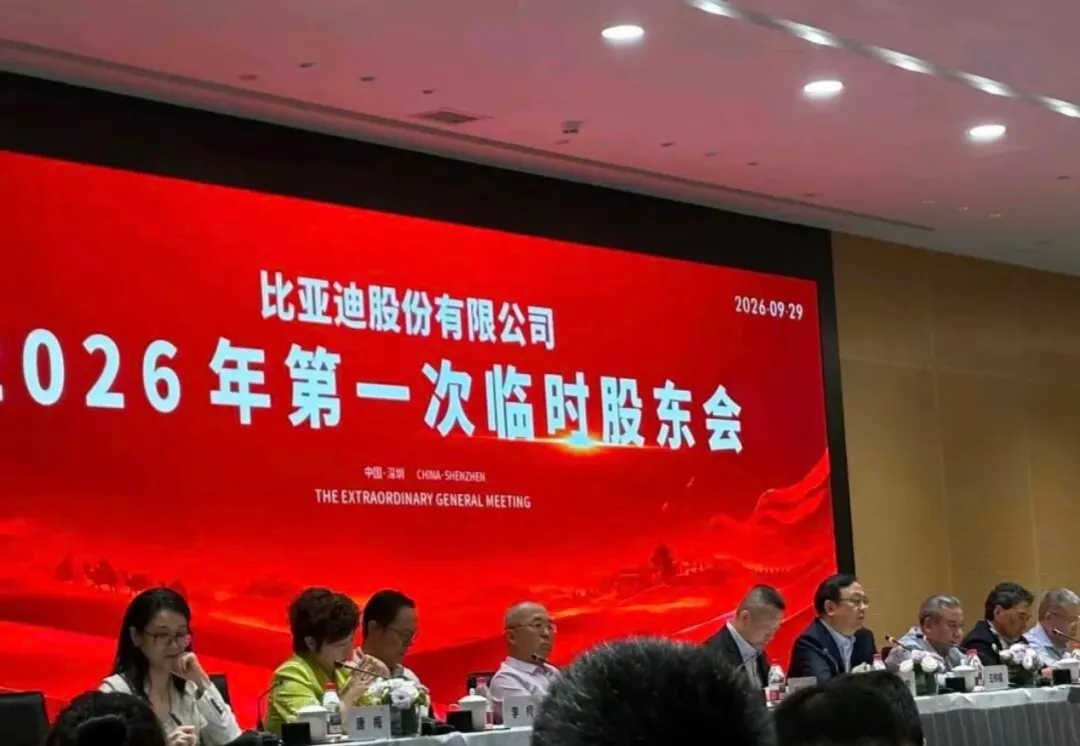
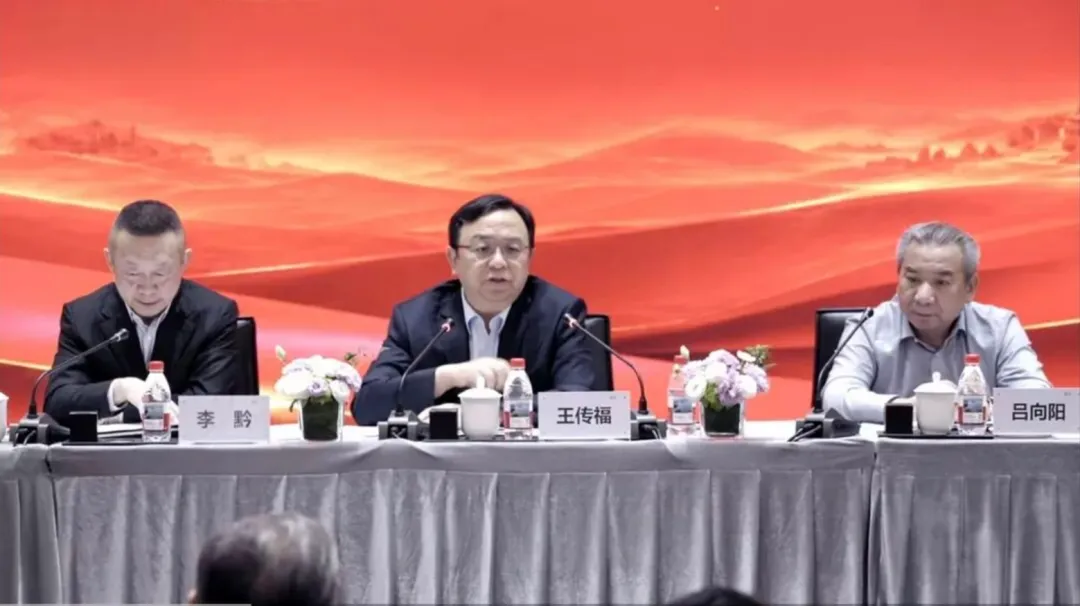
Image Source: Weibo
All nine directors attended the board meeting, with nine votes in favor, zero against, and zero abstentions. Co-founder Lv Xiangyang was appointed as vice chairman, and 12 vice presidents, including Li Ke and He Zhiqi, were all retained. The core team remained largely unchanged, with no major personnel reshuffles.
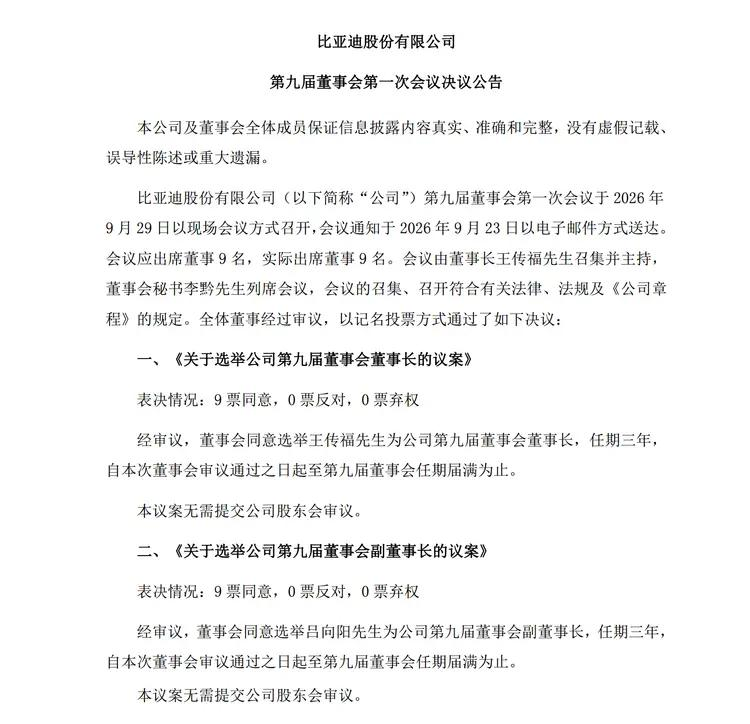 Image Source: BYD's Board of Directors
Many readers might initially think this is just a routine transition for a listed company. However, in the current fiercely competitive new energy industry, this zero-controversy vote carries far more weight than an ordinary procedure.
Wang Chuanfu, who has just secured a three-year term, directly set an ambitious goal: BYD aims to become the world's top-selling automaker by 2030.
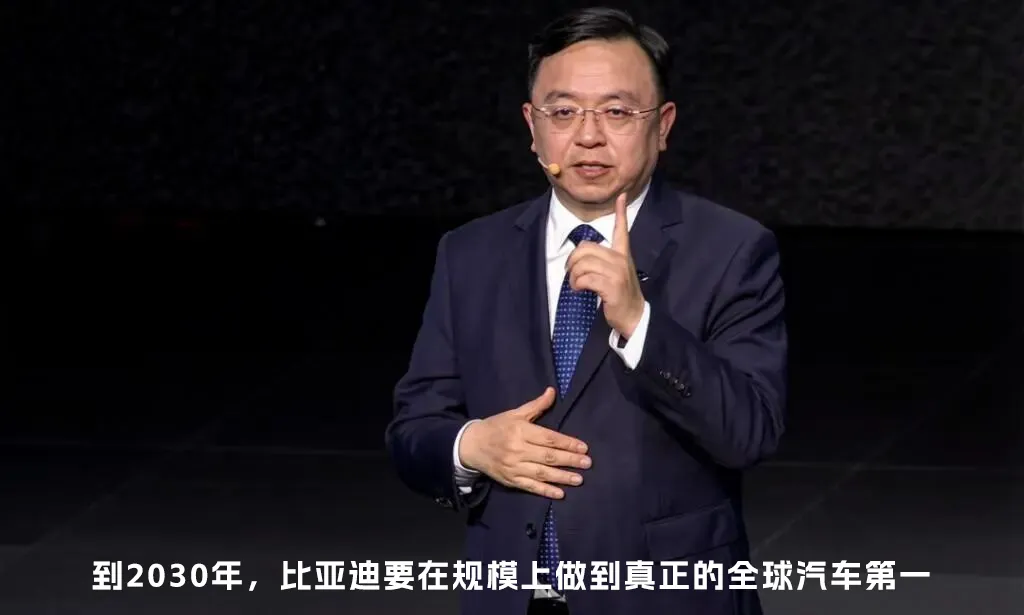 Image Source: Weibo
In four years, the goal is to surpass Toyota, which has consistently held the global sales crown. While this goal sounds highly ambitious, few now dismiss it as mere empty talk.
01 Why Must a Trillion-Dollar Giant Keep the Steering Wheel in His Hands?
Many netizens wonder: BYD is already a world-class automaker with a massive scale, so why does it still need its founder to serve as both chairman and president?
Most mature listed companies advocate for separating the roles of chairman and president to mitigate governance risks associated with concentrated power. BYD's choice to have one person hold both positions is not impulsive but a pragmatic decision made after weighing the challenges faced by the industry.
A glance at the half-year report reveals BYD's current pressures. In the first half of 2026, BYD's revenue was 344.8 billion yuan, down 7.13% year-on-year; net profit attributable to shareholders was 12.3 billion yuan, down 20.54% year-on-year.
In short, the current situation is: domestic price wars continue to erode profits, overseas markets are riddled with barriers, and multiple high-investment sectors continue to burn cash.
The domestic new energy sector has long bid farewell to the era of effortless sales, with intense competition year-round, frequent price cuts, and shrinking profit margins. Overseas markets may seem promising, but the barriers are high: Europe and the United States continue to ramp up trade policies, requiring long-term investments in localization, factory building, regulatory certifications, and supply chain construction, with little short-term return.
Meanwhile, intelligent R&D, self-developed automotive-grade chips, and energy storage business expansion are all progressing simultaneously. During such phases, companies fear management turmoil and frequent strategic shifts the most.
This is also the biggest difference between founders and professional managers. Professional managers typically face evaluation cycles of one or two years, and with financial report pressures, their first choice when profits decline is often to cut R&D and reduce long-term investments to beautify short-term financial statements.
However, BYD's competitive edge lies not in short-term sales figures but in the technology developed through years of sustained investment.
Looking back at BYD's three-decade entrepreneurial journey, every breakthrough has come from Wang Chuanfu's bold bets on long-cycle technologies.
In 1995, at the age of 29, Wang Chuanfu left his job at a research institute and started a business with a 2.5 million yuan loan to make rechargeable batteries. At the time, the global battery market was largely dominated by Japanese companies, with a single imported production line costing tens of millions. He led a team of more than 20 people to dismantle equipment and explore Independent innovation (independent innovation), using a makeshift approach of manual labor and fixtures to reduce production costs to one-third of those of Japanese competitors.
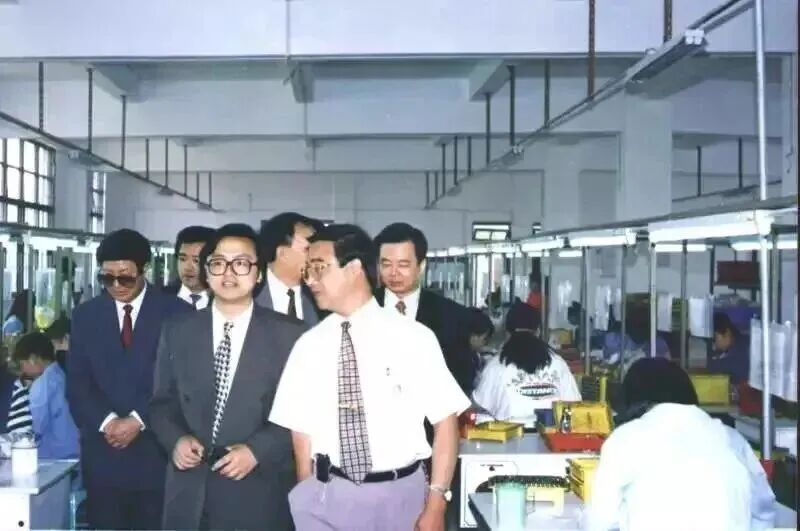
Image Source: Weibo
In just three years, BYD surpassed Sanyo, securing orders from Motorola and Nokia and breaking the Japanese monopoly.
In 2003, Wang Chuanfu, already firmly established in the battery industry, announced his foray into automobile manufacturing. The news sent BYD's stock price plummeting, with fund managers calling to express their doubts. Facing widespread skepticism, he left only one statement: "I will dedicate the rest of my life to automobiles."
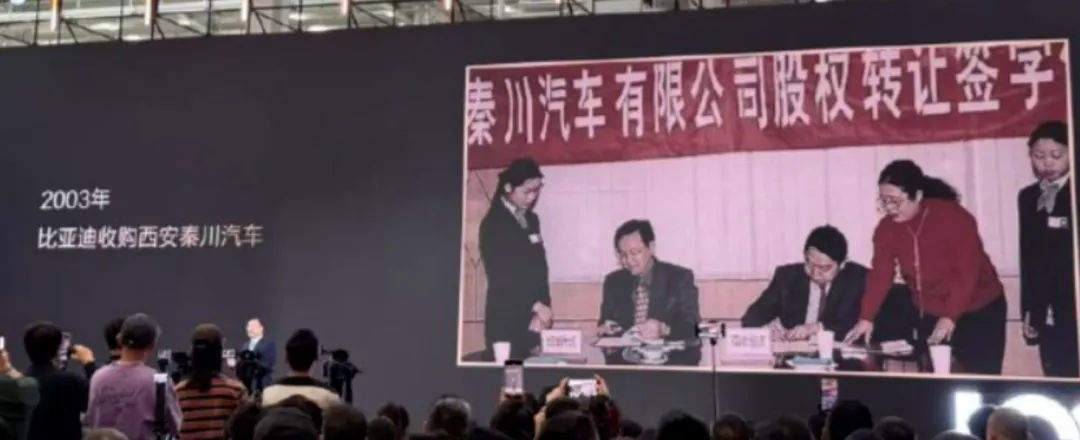
Image Source: NetEase News 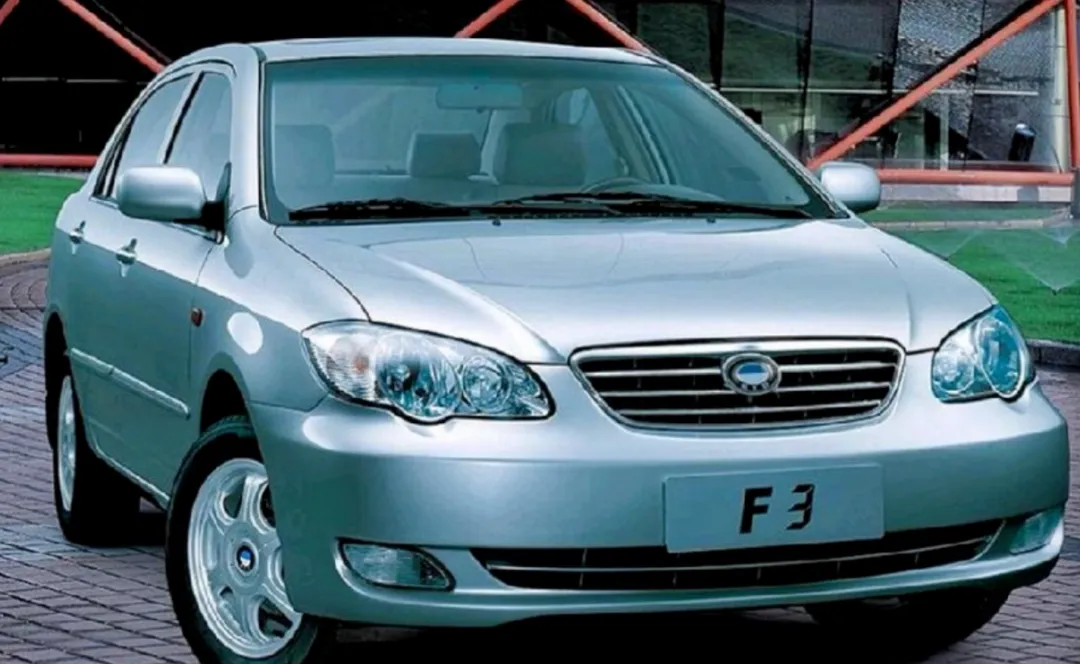 Image Source: Weibo
Charlie Munger once described Wang Chuanfu as a combination of Edison and Welch, meaning he possesses both an engineer's ability to delve into technology and an entrepreneur's ability to oversee the big picture.
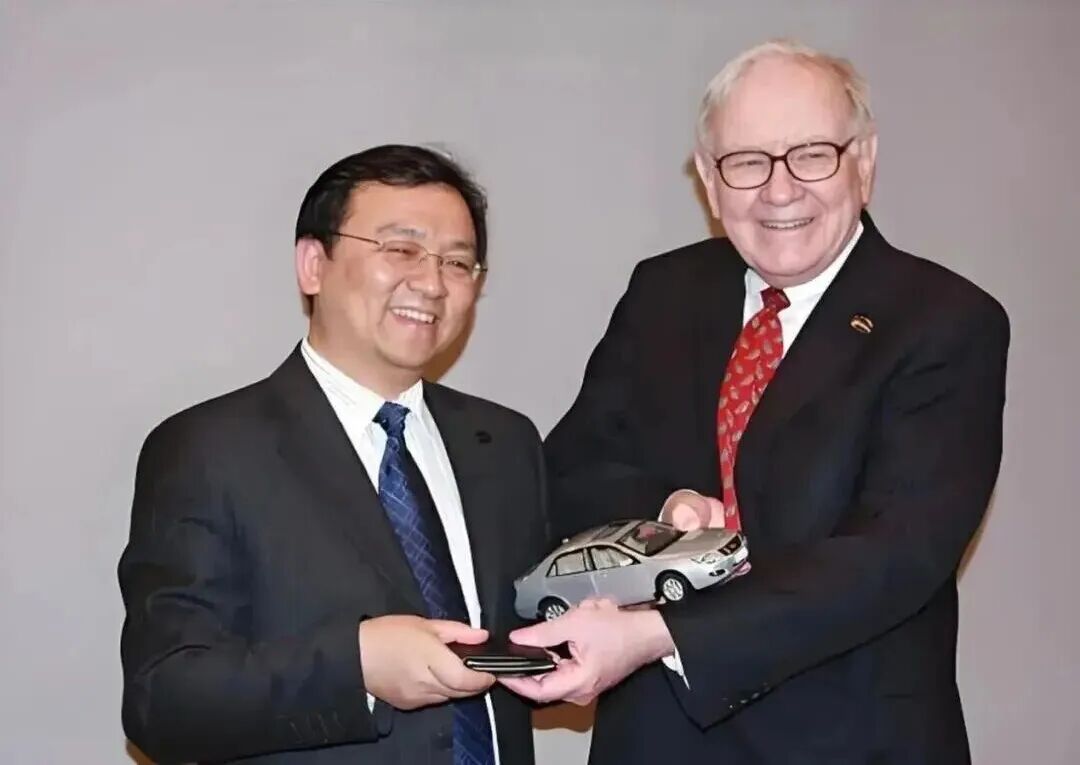
Image Source: Weibo
The Blade Battery did not take one or two years to develop; the automotive-grade chip team has been quietly working for two decades. These technological investments are slow to yield results and carry high risks, but only a founder is willing to withstand short-term performance pressures and persist with continuous investment.
BYD's announcement clearly states: Wang Chuanfu serving as both chairman and president is conducive to improving decision-making and operational efficiency, ensuring the continuity and stability of long-term strategies. In short, BYD cannot afford to halt long-cycle investments midway.
Of course, BYD has not overlooked governance risks. This transition Synchronized revision (simultaneously revised) the board's specialized committee rules and the president's work rules, strengthened internal audits, and relied on independent directors and specialized committees to form checks and balances, addressing risk control shortcomings while maintaining efficient decision-making.
02 The Confidence Behind the Ambitious Goal is Built Little by Little
Many consider the 2030 goal of becoming the world's top automaker overly aggressive. However, those familiar with BYD know that most of Wang Chuanfu's past goals have been achieved, often ahead of schedule.
The most memorable example is 2019, when the automotive market was in a downturn and new energy subsidies were being phased out, leading to widespread pessimism in the industry. That year, BYD's net profit attributable to shareholders was only 1.614 billion yuan, while R&D investment reached 8.421 billion yuan, with R&D expenses 5.2 times net profit.
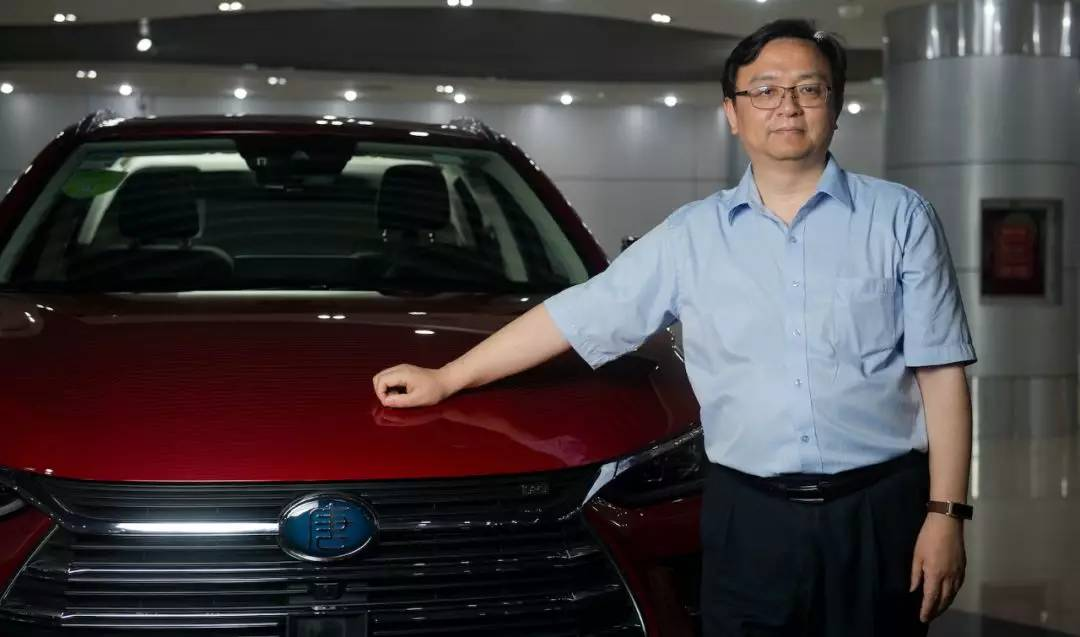
That year, many peers were cutting costs to survive, but BYD went against the trend and heavily invested in R&D. It was precisely these investments, made without regard for short-term returns, that led to the successive launches of DM-i hybrid and Blade Battery technologies, becoming the core drivers of BYD's subsequent explosive growth.
After years of accumulation, the results are now evident.
In 2025, BYD's annual sales reached 4.602 million vehicles, ranking sixth among global automakers. A significant milestone: BYD's annual pure electric vehicle sales reached 2.257 million vehicles, up 27.86% year-on-year, officially surpassing Tesla in pure electric vehicle sales.
A few years ago, surpassing Tesla in pure electric vehicle sales was unthinkable for many. Early on, BYD relied on the combined total of plug-in hybrid and pure electric vehicles to compete with rivals, but now, in the pure electric vehicle segment alone, it stands at the global pinnacle.
Overseas markets are the most critical source of growth for BYD's bid to become the world's top automaker.
In the first half of 2026, BYD exported 792,000 vehicles overseas, up 68% year-on-year, with overseas revenue accounting for over 50% of total revenue for the first time, and overseas sales accounting for nearly 44% of total sales.
BYD's business now covers 119 countries, with factories in Thailand and Brazil already in operation and a factory in Hungary under construction. BYD is no longer simply exporting vehicles but has officially entered the stage of localized automobile manufacturing overseas, no longer relying solely on the fiercely competitive domestic market.
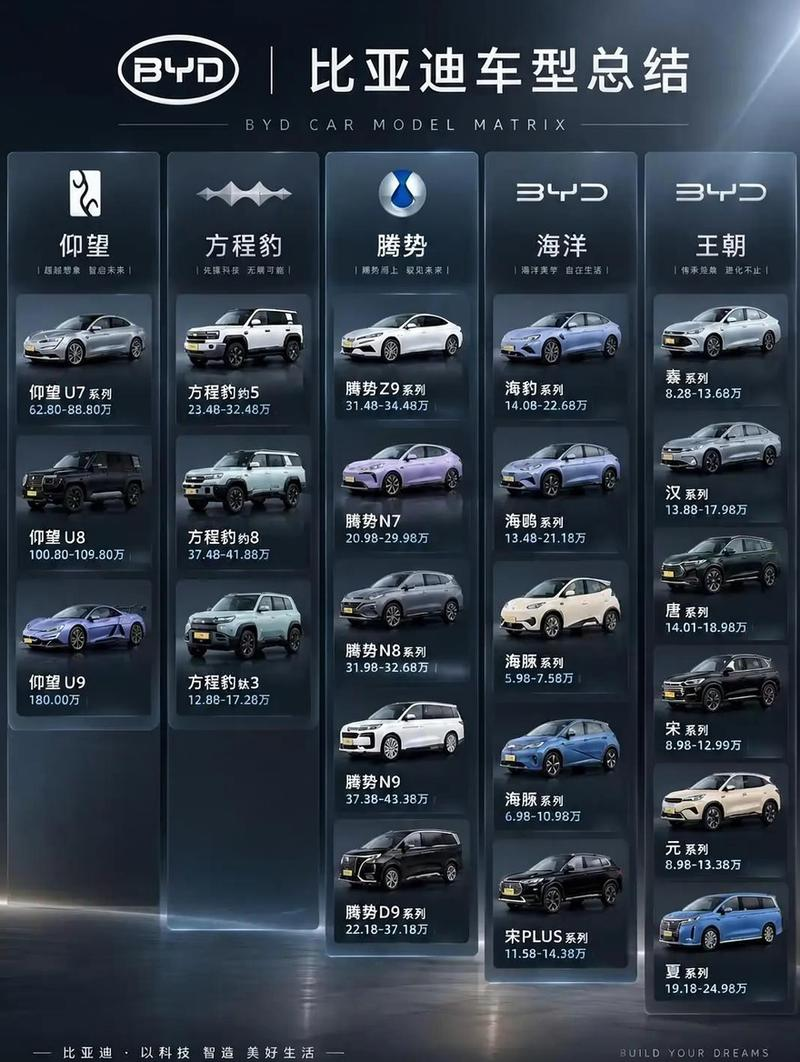
In terms of product lineup, BYD has completed a layout (layout) across all price ranges. The Dynasty and Ocean series stabilize the home market base; the Denza brand targets the mid-to-high-end segment; the recently launched Fangcheng S has generated significant buzz, equipped with an 800V high-voltage platform, second-generation Blade Battery, Yunlian-M suspension, and laser intelligent driving, priced starting at 189,900 yuan, directly competing with the Tesla Model 3 and Xiaomi SU7. Wang Chuanfu stated at the shareholders' meeting that he expects monthly sales of the Fangcheng S to stabilize at 10,000 to 15,000 units.
The Yangwang brand continues to target the ultra-high-end market priced at over one million yuan, raising the brand's upper limit. From family cars priced at tens of thousands of yuan to million-yuan supercars, BYD's complete product lineup, combined with its vertical integration advantages in batteries, energy storage, and semiconductors, forms its core competitive barrier.
03 Four Years to Sprint ( Sprint means "sprint" or "make a push for") Global Sales Crown, Several Tough Challenges Ahead
The goal is ambitious, but the objective gaps must be acknowledged.
In 2025, Toyota's global sales were approximately 10 million vehicles, compared to BYD's 4.6 million vehicles, nearly double the difference. With only four years left, BYD needs to sustain high growth rates to overtake Toyota, a daunting task in a mature automotive market entering a phase of stagnation.
Three major challenges lie ahead for the new board of directors.
The first hurdle is catching up in intelligence.
Today's automotive competition extends beyond hardware such as batteries and chassis; software, autonomous driving algorithms, data accumulation, and in-cabin ecosystems have become key to winning the second half of the race. BYD excels in hardware but still has significant ground to cover in high-level intelligent driving data accumulation and in-cabin software ecosystem experience compared to rivals like Tesla. Intelligence capabilities directly determine the brand premium of high-end models.
The second hurdle is sustained breakthroughs in overseas markets.
Trade barriers in Europe and the United States continue to rise, with local and established multinational automakers competing on the same stage. In Southeast Asia and Latin America, establishing a foothold requires sustained investments in localized supply chains, brand marketing, and compliant operations, which will continue to strain profits in the short term. Expanding overseas is not simply about selling cars but a prolonged battle for localization.
The third hurdle is balancing high-end positioning with profitability.
Currently, BYD's sales volume remains concentrated in the mid-range market, with high-end brands like Denza and Yangwang still in their growth phases, and profit margins per unit for high-end models needing improvement. Coupled with ongoing R&D investments and overseas factory construction, profitability pressures will persist. Balancing scale expansion with stable profit levels will be a major test.
However, looking back at BYD's three-decade history, the company excels at breaking through against the odds when others are skeptical.
As early as 2007, Wang Chuanfu set a goal to become the world's top new energy player by 2025, a target dismissed by many industry insiders as unrealistic at the time. Yet, BYD achieved it three years ahead of schedule.
Image Source: Xiaohongshu
This time, the goal has been upgraded to becoming the world's top-selling automaker across all vehicle types, with Toyota, a veteran of the global market for decades, as the rival. The market no longer dismisses this goal lightly but neither does it consider it a guaranteed success.
04 Not Just a Routine Transition but a Three-Year Strategic Lock-In
This board transition is essentially a three-year strategic lock-in for BYD.
Over the next three years, BYD will not Easily switch tracks ( Easily switch tracks means "easily switch tracks" or "change course lightly"), adhering to the underlying logic of "technology as king, innovation as the foundation." The main strategy is clear: defend the domestic base, make a full-scale push overseas, and advance in synergy across automobiles, batteries, energy storage, and semiconductors.
The competition in new energy vehicles is no longer a short-term sales race spanning two or three years but a decade-long global elimination round.
In recent years, many first-generation founders of private automakers have chosen to step back and complete corporate succession. Wang Chuanfu, however, has opted to remain at the forefront, personally leading the charge in globalization.
From starting with a 2.5 million yuan loan in an old factory building in Shenzhen in 1995 to crossing into automobile manufacturing amid Capital Market Doubts (capital market skepticism) and growing into a global new energy leader, BYD's three-decade journey reflects the broader story of China's manufacturing breakthroughs.
"We're not in this business to make a fortune. We're doing it to Strive for breath ( Strive for breath means "to prove ourselves" or "to save face"), to earn respect for the Chinese people."
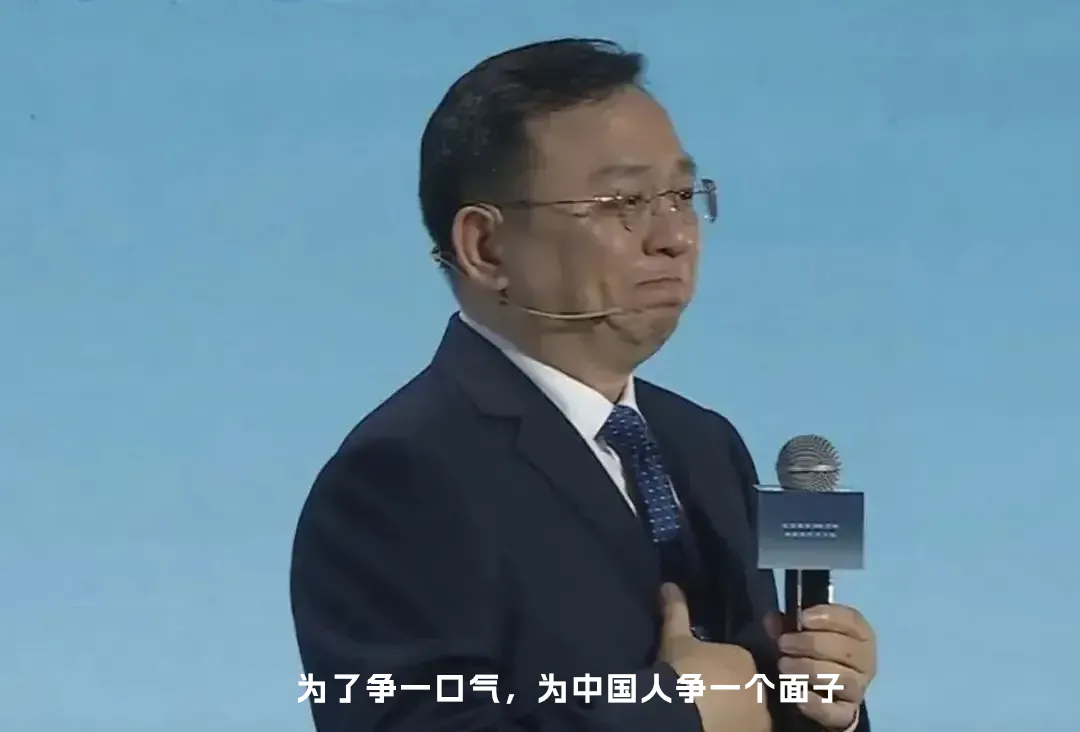 Image Source: Weibo",
While others are busy engaging in price wars to secure short-term orders, BYD is strategically setting up global factories. While others prioritize protecting their financial profits, BYD continues to invest in foundational technology research and development.
Reaching the top spot in global car sales by 2030 is a lofty goal, but BYD has already secured a stable three-year ticket on this journey.
For Chinese automakers to ascend to the pinnacle of the global automotive industry, this path has never been traveled before. Wang Chuanfu and BYD are attempting to blaze this trail.
Interactive Question: Do you think BYD can surpass Toyota and become the world's top-selling automaker in four years? Feel free to share your thoughts in the comments section.
Disclaimer: This article is solely a commentary on major automotive industry trends and does not constitute any investment advice. The enterprise data and regulatory events mentioned herein are derived from publicly available information and are for reference only. The specifics should be based on official releases. Images are sourced from the internet; if there are any copyright issues, please contact us for removal.
-
![]()
Blockbuster! Wang Chuanfu Appointed as BYD's Chairman, Sets Four-Year Goal to 'Reach for the Sky'
-
![]()
Blockbuster! Alibaba and ByteDance Launch Urgent Mystery Projects as Battle Looms
-
![]()
Why Does Apple Opt for Aluminum in Its Phone Cases? Beyond Lightness and Heat Dissipation
-
![]()
Securing a More Expensive Sum, Manus Returns to Beijing
-
![]()
Why Hasn’t eSIM Gained Traction in China Despite Years of Promotion?
-
![]()
How Much Internet Speed Boost Can Huawei's 'Pinhao Network' Offer on High-Speed Trains?
-
![]()
Why Did Axisystems Only Earn 29.09 Million Yuan After Selling 420,000 Automotive Chips in Six Months?
-
![]()
Chery’s Globalization 3.0: What Exactly Does It Entail?