JAC’s Stock Plummets to Limit Down! Dcd Auto Tests Zunjie V800, Three Consecutive Cars Experience Brake Failures: Extreme Testing or Defective Product? | Mingjingpro
 10/09 2026
 368
368
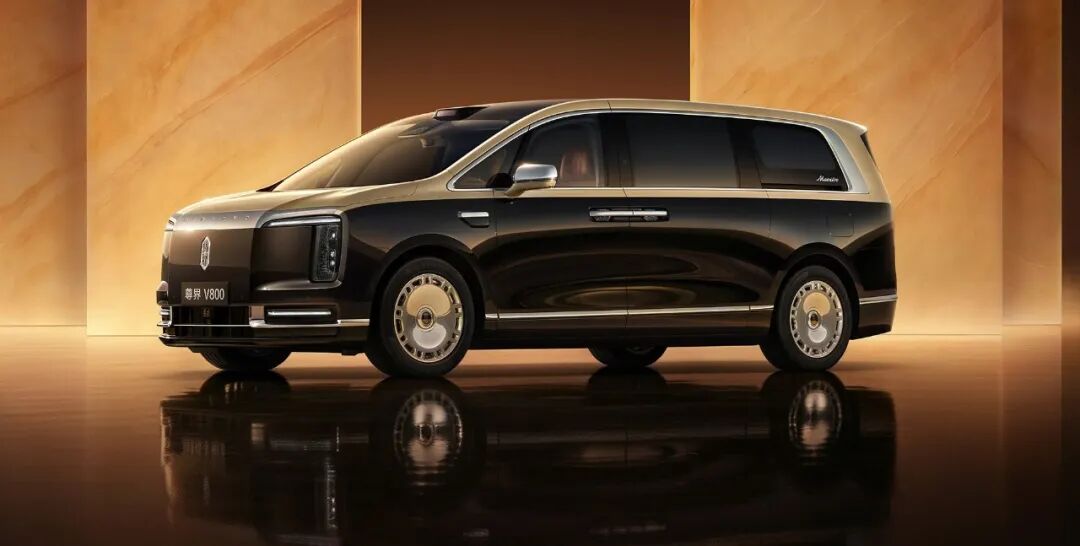
On October 8, shares of JAC Motors (600418.SH) plummeted to their limit down during trading hours, reaching RMB 24.72 per share by midday—a staggering 10.01% drop. This downturn is widely believed to be linked to reports of brake failures in the Zunjie V800 during Dcd Auto’s testing. On the same day, the automotive media platform Dcd Auto released a video revealing that three brand-new Zunjie V800 vehicles underwent a 100km/h-to-0 emergency braking test. During these tests, the brake pedal brackets of all three vehicles physically fractured between the second and fourth heavy braking attempts, with the fracture locations and patterns showing remarkable consistency.
Following the release of the video, topics such as “Zunjie V800 Brake Pedal Bracket Fracture” and “Zunjie Dcd Auto” quickly trended on social media platforms. The Zunjie V800, a luxury MPV developed through a collaboration between Huawei and JAC, is priced in the millions, with the Premium, Executive, and Flagship versions starting at RMB 766,000, RMB 866,000, and RMB 1,016,000, respectively. As of the time of writing, no official response has been issued regarding the incident, which continues to unfold and has sparked significant discussion within the automotive industry.
Currently, there are two primary viewpoints. Supporters of Zunjie, including netizens and automotive bloggers, argue that there were flaws in Dcd Auto’s testing methodology. Some bloggers alleged that the test driver “literally stood up and stomped” on the brakes, while others pointed out that “the average person’s emergency braking force is around 500N, with some stronger individuals reaching 700N. The national standard requires 1500N, but Dcd Auto’s test reportedly exceeded 4500N. How was this achieved? Did they employ some special technique?”
A professional automotive blogger with millions of followers commented, “In Zunjie’s test, the first brake application at 1596N was fine, but the second application at 4589N caused it to break. They then displayed a Porsche manual indicating a maximum bearable force of 3000N. It feels like a self-destructing truck. Additionally, the national standard for static load is three times the maximum braking force, which is 3x500N=1500N. What Dcd Auto did wasn’t just three times the maximum braking force; it was three times the national standard.”
On the other hand, critics, including netizens and bloggers, have lambasted Zunjie’s product design and quality. They accused Zunjie of pricing the vehicle between RMB 700,000 and RMB 800,000 while compromising on brake quality. They pointed out that “sensor records showed that the pedal force at the moment of fracture in the third vehicle was approximately 1612N, which is below the industry’s recommended standard and the mandatory national standard threshold of 2000N for static load.” Others stated, “It’s likely that the structural design at the pivot point is weak, featuring a single-layer support plate and an overly long pedal arm, combined with stress concentration, resulting in low safety redundancy. The fracture occurred at 1612N, far below the design threshold of 2700–4500N for first-tier luxury vehicles.”
However, from both perspectives, the core issue revolves around the force applied during braking. In response to allegations of a specific braking force exceeding 4500N, the driver from Dcd Auto denied the claim on Weibo, stating, “The machine’s frame rate is 50 frames per second, and small instrument displays typically have a refresh rate of just over 10 frames, so slower-updating numbers were captured.” He also insisted that it was impossible for him to apply a force exceeding 4500N.
Neutral bloggers argued that critical vehicle hardware should be designed to withstand user abuse, and finding three brake pedals breaking under normal testing conditions was incomprehensible. They suggested that either the testing party engaged in overly extreme behavior (which could warrant legal action) or the automaker failed to provide sufficient protection against user abuse (which could also warrant legal action). There is no middle ground in this debate.
Another blogger pointed out that FSAE (Formula SAE) regulations require brakes to withstand a pressure of 2000NM without failure. However, more consumers are calling for national testing agencies to verify the authenticity of Dcd Auto’s test results to clarify the situation.
Nevertheless, in emergency braking situations, it is indeed advisable to apply maximum force. On October 8, regarding the incident where the Zunjie V800’s brake pedal bracket fractured during Dcd Auto’s test, a representative from JAC Motors stated that the matter is under careful attention. Currently, the Zunjie is priced in the hundreds of thousands, and there have been no publicly reported cases of consumers experiencing brake failures during use—including emergency situations.
-
![]()
What is the boundary of collaboration between FAW Toyota and GAC Toyota behind FAW Toyota's 'independent survival'?
-
![]()
Optical Waveguide Route Selection and Performance Optimization: Four Questions Integrators Must Answer Correctly
-
![]()
The Collective Surge of Major AI Models Toward Public Listing: The High-Stakes Race Behind the Buzz
-
![]()
A Staggering $50 Billion Valuation! The Resurgence of a Tsinghua-Educated Engineer’s Venture
-
![]()
In His Inaugural Year, Porsche CEO Implements Three Daring Strategies: 9,000 Job Cuts, 20% Price Increase, and Reintroduction of Gasoline Cars
-
![]()
JAC’s Stock Plummets to Limit Down! Dcd Auto Tests Zunjie V800, Three Consecutive Cars Experience Brake Failures: Extreme Testing or Defective Product? | Mingjingpro
-
![]()
【Electric Equipment】Fengcheng Zhuoxin Logistics Signs Contract for 150 SANY Electric Heavy Trucks
-
![]()
[Intelligentization] Huawei and Seres Sign New Five-Year Cooperation