Is the Long-Anticipated Blockbuster from iCAR Going to Be the V25?
 10/23 2026
 575
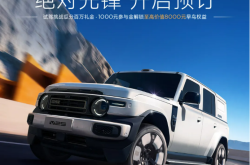
Recently, the iCAR V25 officially kicked off its pre-sales campaign, unveiling a total of four models with pre-sale prices spanning from 139,800 to 175,800 yuan. As the newest addition to the iCAR lineup, the V25 is showcasing its range-extending capabilities this time around. The exterior design of this new vehicle stays true to iCAR's hallmark retro square-box aesthetic. Boasting round headlights, broad fenders, an external 'mini backpack,' and a side-hinged tailgate, it emanates a robust and rugged off-road ambiance. The vehicle measures 4636mm in length, 1920mm in width, and 1855mm in height, with a wheelbase of 2820mm. This makes it larger than the V23, adding a practical touch for family use while retaining its unique charm.
Beyond its striking design, the iCAR V25 has also made substantial strides in terms of intelligence. The premium models are outfitted with the Super Falcon 700 and an advanced driver-assistance system. They feature the Horizon Journey 6P chip, boasting a computing power of 560TOPS, along with LiDAR technology. This enables functions such as urban and highway pilot assist, enhancing the driving experience.
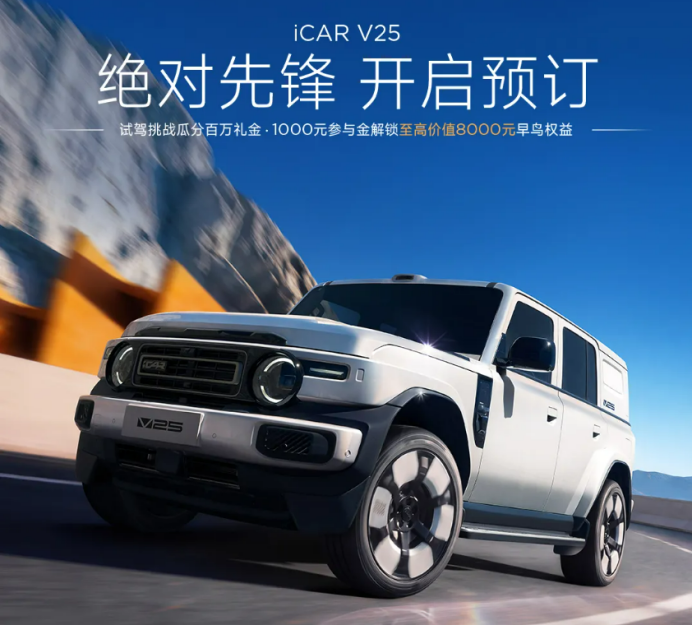
Notably, the iCAR V25 has transitioned to a 1.5T range-extending system, offering both rear-wheel-drive and four-wheel-drive variants. Among them, the four-wheel-drive version impresses with a total dual-motor power output of 335kW, accelerating from 0 to 100 km/h in just 5.8 seconds. It not only delivers exceptional power performance but also alleviates range anxiety during extended journeys, making it even more appealing to consumers who appreciate square-box designs. In terms of range, all variants of the new vehicle are equipped with a 33.67kWh lithium iron phosphate battery, providing a WLTC pure electric range of either 145km or 150km. It features a fast charge time of approximately 15 minutes for a 30%-80% charge and a maximum CLTC combined range of 1240km, more than sufficient for daily commutes and weekend getaways.
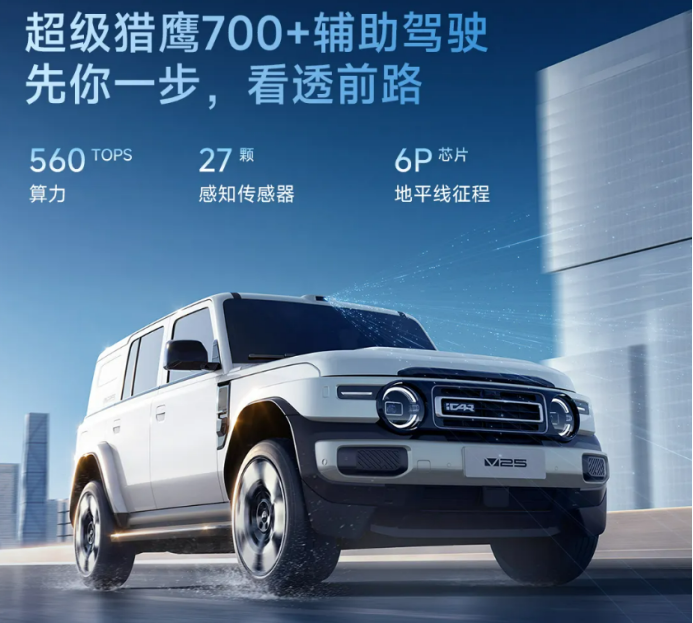
While the iCAR V25 boasts numerous highlights, when placed in the fiercely competitive 150,000-yuan-level new energy SUV market, several aspects warrant discussion. The range-extended versions of the Leapmotor C10 and C11, priced comparably, are equipped with 38.7kWh and 41.7kWh batteries, respectively. These are larger than the iCAR V25's 33.67kWh battery and offer corresponding CLTC pure electric ranges of 290km and 300km. Although a straightforward comparison of range figures may not be entirely fair, with a budget of around a hundred thousand yuan, consumers are naturally inclined towards models with larger batteries and longer pure electric ranges. Besides battery capacity and range, charging efficiency is also a crucial point of comparison among models in the same price bracket. The iCAR V25's fast charge time of approximately 15 minutes for a 30%-80% charge is commendable. However, the more budget-friendly ARCFOX Alpha T5, in some of its pure electric versions, already utilizes an 800V high-voltage platform and 5C ultra-fast charging technology, achieving a fastest charging time of approximately 9 minutes for the same range.
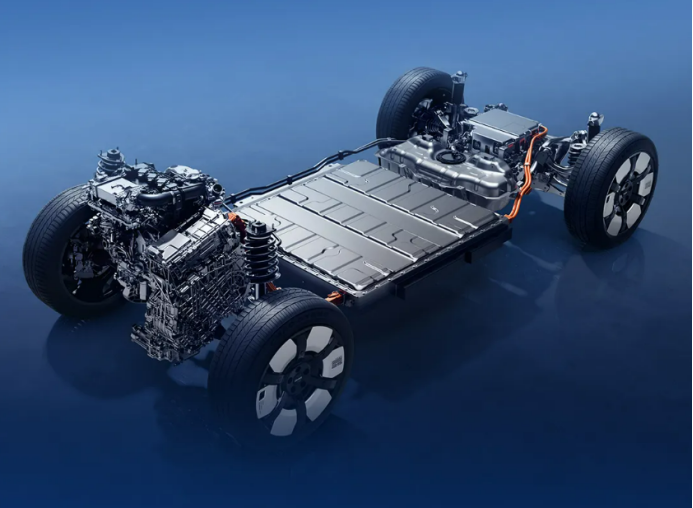
Furthermore, the chassis is another aspect worth discussing. The iCAR V25 employs a front MacPherson strut and rear five-link independent suspension, while many models in the same price range have already adopted a front double-wishbone and rear five-link setup. MacPherson struts do not necessarily equate to poor handling, but double-wishbones offer advantages in wheel control. For the V25, which emphasizes individuality and light off-roading capabilities, this chassis hardware may seem somewhat underwhelming. Although these models may not be direct competitors of the iCAR V25, with a budget of around a hundred thousand yuan, consumers are naturally inclined to compare different options.
However, while there are numerous square-box SUVs on the market, few truly align with the positioning and price point of the iCAR V25. For instance, the BJ40 range-extended version, although also rugged, is larger and more expensive, targeting a different consumer demographic than the V25. If one must find a model with a similar vibe to the iCAR V25, the Fangchengbao Titan 3 could be considered. Both vehicles emphasize personalized design and are similar in size and price, with the Titan 3's flash-charge version available for just over 140,000 yuan. The difference lies in the fact that the V25 adopts a range-extending approach, offering peace of mind for long-distance travel, while the Titan 3 relies on pure electric power and flash-charging technology, excelling in charging efficiency. Each has its unique selling points, and consumers' choices will ultimately hinge on their specific driving needs.
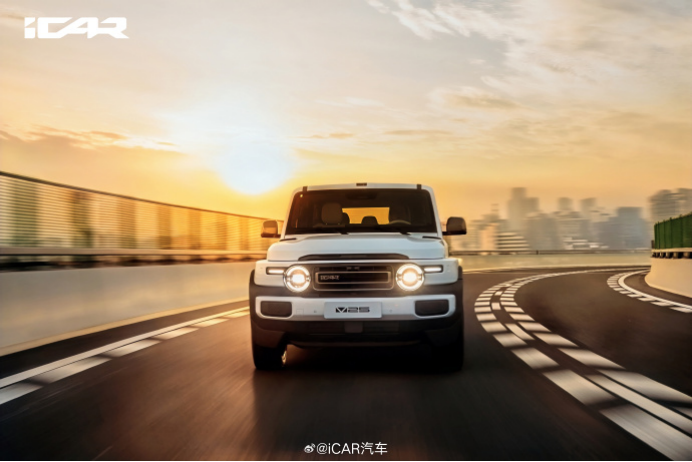
The configuration competition among models in the same price range, coupled with the relatively niche positioning of square-box SUVs, adds a degree of uncertainty to the future prospects of the iCAR V25. Reflecting on the previous sales performance of the iCAR series provides a better understanding of the pressure on the V25's shoulders. In recent years, Chery has invested significant effort into the iCAR brand, introducing a series of square-box models from the iCAR 03 to the V23 and V27. Yet, none have managed to become a blockbuster. The iCAR 03 sold 5,644 units in October 2024, but its sales volume steadily declined thereafter, dropping to just 86 units by December 2025. The subsequently launched iCAR V23 also failed to achieve a significant breakthrough. In the first three quarters of this year, it sold a total of 19,946 units, performing steadily but lacking that final push. Meanwhile, the higher-priced V27 sold 17,281 units during the same period, also failing to stand out.
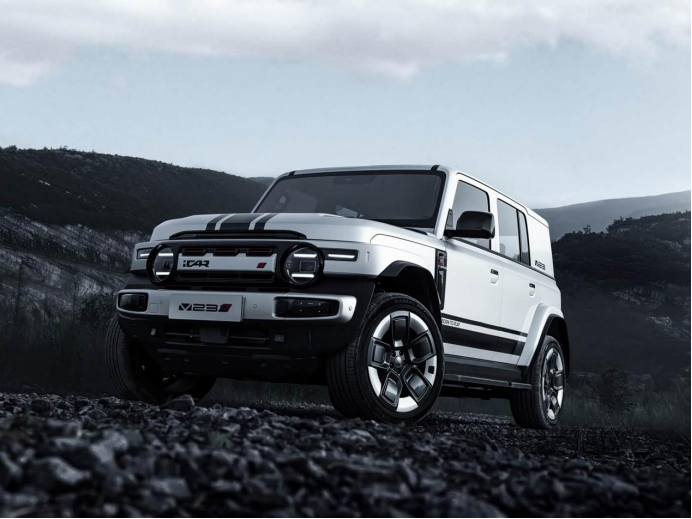
Now, the iCAR V25 precisely fills the gap left by the V23's smaller size and the V27's higher price, giving iCAR an additional card to play in the 150,000-yuan-level market. While its retro and rugged urban square-box design is certainly eye-catching, it targets a relatively niche market segment. Although direct competitors are few, whether it can win over consumers remains to be seen. Reflecting on iCAR's previous models, although each had its unique features, none have managed to gain widespread popularity. This may not be solely attributable to brand strength; the products themselves also warrant scrutiny. The V23's design is eye-catching, but its space and pure electric powertrain limit certain usage scenarios. The V27 addresses the range-extending and space shortcomings of the V23, but its starting price of 169,800 yuan and the 182,800 yuan starting price for the four-wheel-drive version expose it to even fiercer market competition. Ultimately, iCAR does not lack personalized products; what it lacks is a model that can both captivate consumers and truly drive sales volume. Moving forward, whether the V25 can help iCAR break out of its stagnant sales situation will hinge on whether its pricing demonstrates sufficient sincerity.
(Image sourced from the internet. Removal upon infringement.)
-
![]()
Is the Long-Anticipated Blockbuster from iCAR Going to Be the V25?
-
![]()
Profits Plunge by 40%, Yet Musk's AI Vision Stays the Course
-
![]()
Profits Plummet by 40%, Yet Musk's AI Ambitions Remain Undeterred
-
The Second Half of AI: The Crucial Battle for Trust
-
![]()
Japanese Car Companies' Local Alliance Faces Disintegration Amid Emulation of China's Rapid Development
-
![]()
When Each Car Brings Only 3,000 Yuan in Profit, How Long Can Upstream Auto Parts Suppliers Hold On?
-
![]()
Net Profit Tumbles! Musk Persists in Investing, Tesla Faces a ‘Crucial Challenge’ in 2027
-
![]()
Post-National Day Sales of Xiaomi Revealed, Netizens: Pengcheng's Sales Take a Dive!