Can Chuneng-Haima Joint Venture Forge a New “Realm”?
 10/23 2026
 434
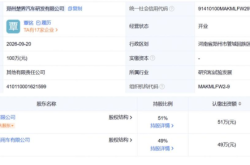
In recent years, the automotive landscape has seen a surge in brands incorporating “Jie” (realm) into their names, exemplified by Aito, Luxeed, Xiangjie, Zunjie, Shangjie, and Shijie. A new contender, “Chujie,” has recently joined the fray. However, this “Jie” diverges from those associated with Harmony Intelligent Mobility or Huawei. Public records indicate that “Chujie” is Zhengzhou Chujie Automobile R&D Co., Ltd., a joint venture formed by Wuhan Chuneng Passenger Vehicle Co., Ltd. (hereinafter referred to as “Chuneng Automobile”) and Haima Automobile Co., Ltd. (hereinafter referred to as “Haima Automobile”). The company completed its industrial and commercial registration in the Zhengzhou Economic and Technological Development Zone in September this year, with Haima holding a 51% stake and Wuhan Chuneng holding 49%, and a registered capital of 1 million yuan. Its scope of business encompasses the sale of new energy vehicles, R&D of automotive components, engineering and technical research, as well as the sale of batteries and charging piles. 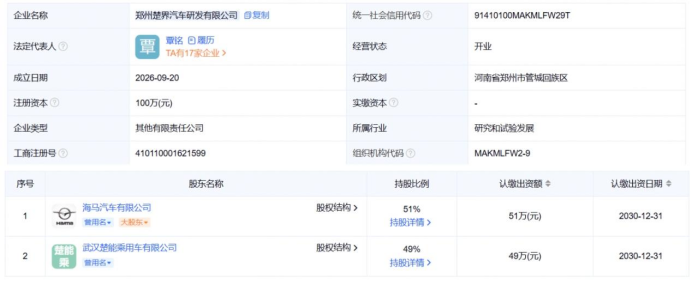
The formation of Chujie by Chuneng Automobile and Haima is fundamentally driven by the mutual needs of both entities. The mastermind behind Chuneng Automobile, Dai Deming, initially made his mark with Hengxin Automobile Group, a large automotive dealership group he established in 2012. By 2025, Hengxin's vehicle sales had surpassed 410,000 units, ranking it second among China's top 100 automotive dealership groups in 2026. However, the dealership business has encountered escalating challenges in recent years.
Consequently, Dai Deming founded Chuneng New Energy in 2021, the parent company of Wuhan Chuneng Passenger Vehicle Co., Ltd., with a focus on energy storage batteries and power batteries. According to data from global market research firm SNE Research, in the first half of 2026, Chuneng New Energy ranked seventh globally in energy storage cell shipments, with volumes nearing those of CALB and REEP. 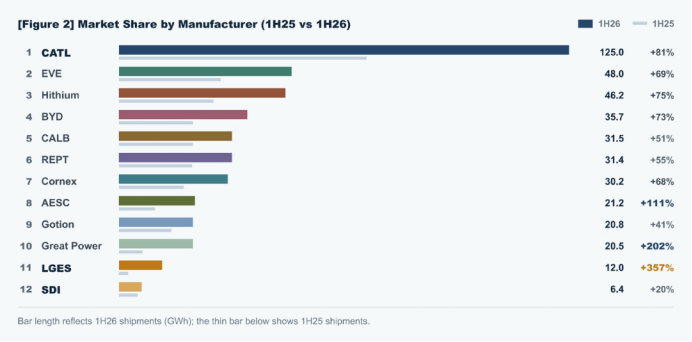
Three years later, Dai Deming ventured into the automotive sector by establishing Chuneng Automobile. Since May 2026, Chuneng Automobile has inked agreements with global leading Tier 1 suppliers such as Valeo, Aptiv, Fuyao Glass, Mahle, Schaeffler, and Brembo. In July, Chuneng Automobile's inaugural ET engineering prototype rolled off the production line in Jiangxia, Wuhan, marking its transition from engineering data to real-vehicle verification.
Reports indicate that its maiden model is positioned within the 150,000-200,000 yuan price bracket, with plans for mass production and market launch around mid-2027. Chuneng's journey from automotive sales to battery manufacturing and, ultimately, to complete vehicle R&D has positioned it uniquely in both battery production and distribution channels. However, vehicle manufacturing demands more than just financial resources and batteries; at that juncture, Chuneng Automobile still lacked the requisite vehicle production qualifications. 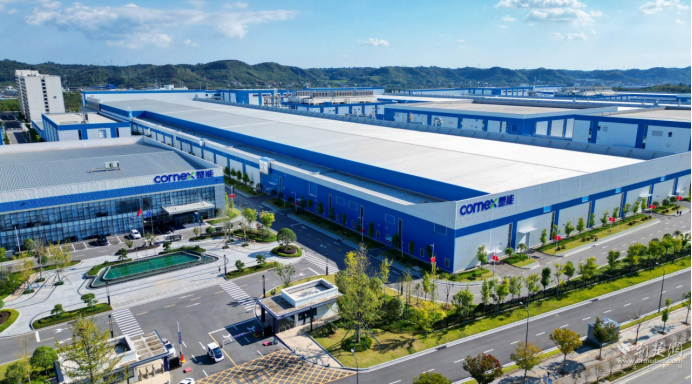
In 2022, the Ministry of Industry and Information Technology mandated that both the contracting and entrusted parties in new energy vehicle production must possess manufacturing qualifications, known as “dual qualifications.” In principle, no new new energy passenger vehicle production qualifications would be issued. This policy shift meant that Chuneng Automobile could not enter the new energy vehicle sector through contracted manufacturing. Market rumors suggested that Chuneng might acquire WM Motor's Xinghui factory in Huanggang, Hubei. However, this route would entail assuming substantial debt and production line modification costs, coupled with an extremely complex debt restructuring process. In contrast, securing qualifications through contracted manufacturing with Haima Automobile emerged as a more cost-effective and viable option. 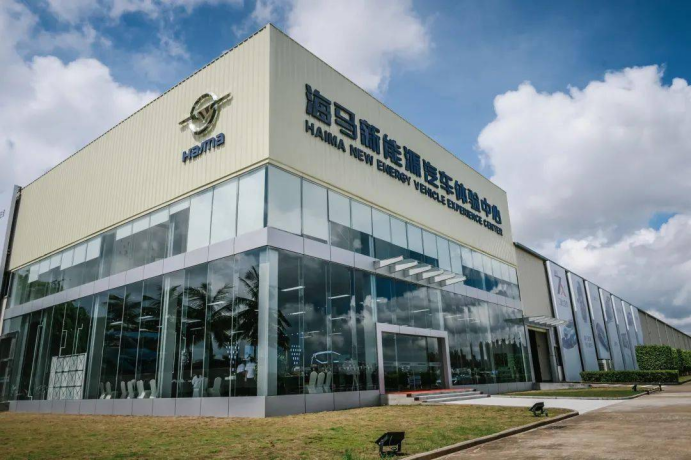
As a seasoned player in the independent brand sector, Haima Automobile possesses the coveted qualifications for both fuel and new energy vehicle production. In June of this year, Haima Automobile explicitly stated on an investor interaction platform that both its Haikou and Zhengzhou bases are qualified to manufacture both fuel and new energy vehicles. Moreover, Haima not only boasts vehicle manufacturing qualifications but also has experience in contracted manufacturing. From 2017 to 2021, Haima's Zhengzhou base manufactured the G3 for XPENG Motors. With an existing production line, a mature set of four major processes, and a workforce experienced in vehicle manufacturing, there was no need to start from scratch. 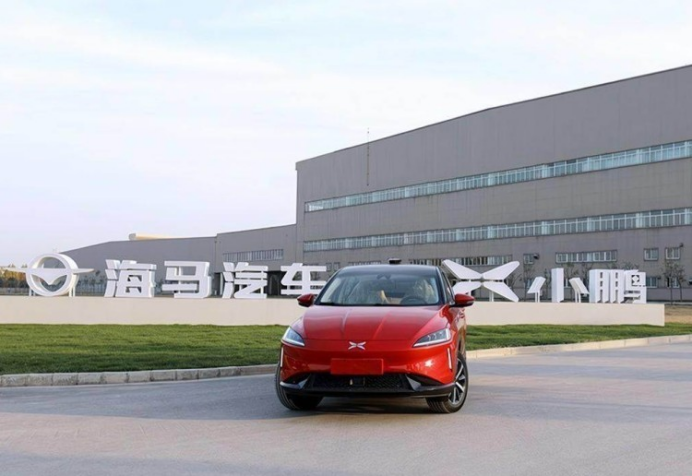
Furthermore, Haima Automobile has been grappling with persistent losses. Since 2022, Haima Automobile has incurred consecutive losses, totaling 2.064 billion yuan. In the first half of 2026, its revenue was 314 million yuan, a year-on-year decrease of 52.04%; its net profit attributable to shareholders was a loss of 97.36 million yuan, with the loss widening by approximately 31% year-on-year. As of the first half of the year, the total assets of Haima Automobile's Zhengzhou branch were 1.642 billion yuan, with total liabilities of 1.588 billion yuan.
The annual production capacity planning for both the Haikou and Zhengzhou bases is 150,000 units each, totaling 300,000 units. The capacity utilization rate hovers around 6%, with an idle rate of 94%. At such production and sales scales, operating revenue falls short of covering costs. In the fiercely competitive domestic automotive industry, it is arduous for Haima Automobile to stage a turnaround independently, making the infusion of external resources a more pragmatic choice. In this context, the “Chujie” collaboration indeed represents a win-win scenario for both Haima Automobile and Chuneng Automobile, with their strengths complementing each other. 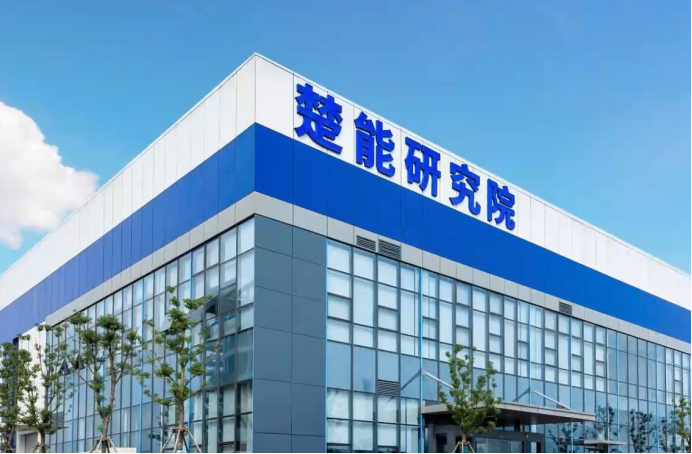
However, vehicle manufacturing is a capital-intensive endeavor. In addition to the substantial expenditures on complete vehicle R&D and production contracting, subsequent product definition, quality control management, brand marketing, and channel operations all necessitate continuous investment. Leading new energy vehicle players such as NIO, Li Auto, XPENG Motors, and Leapmotor have all invested hundreds of billions of yuan to establish their mass production and delivery capabilities. According to statistics, over the eight years from 2018 to 2025, NIO invested a cumulative 63.5 billion yuan in R&D, Li Auto 46.1 billion yuan, XPENG Motors 36.6 billion yuan, and Leapmotor 13.3 billion yuan. 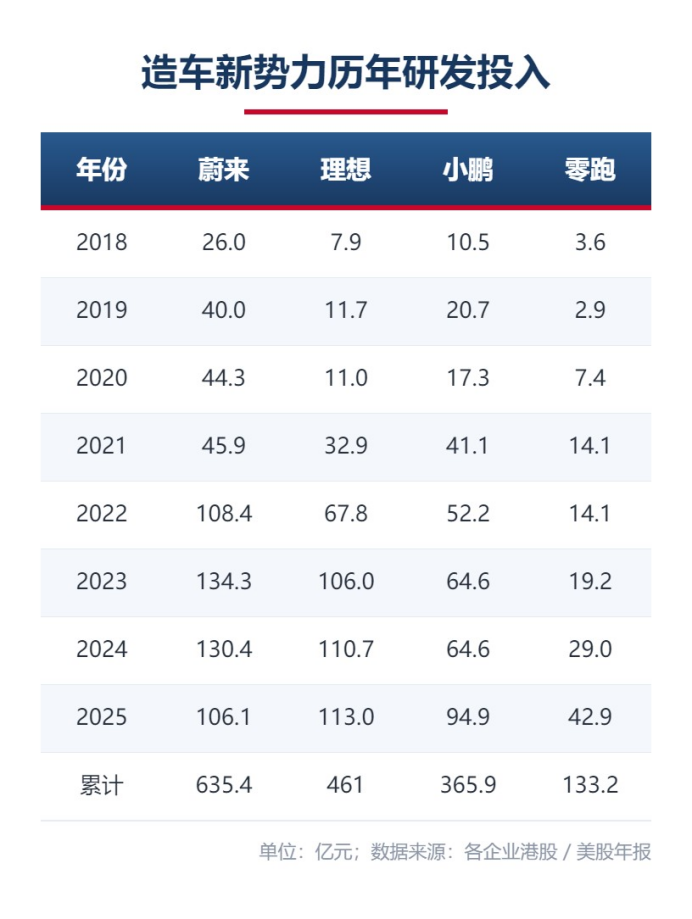
Simultaneously, numerous players in the vehicle manufacturing sector have depleted their funds and ultimately exited the market. From HiPhi to Aiways, from Seres to Byton, from WM Motor to Singulato, over the past few years, more than 20 new energy vehicle companies have ceased production, gone bankrupt, or entered restructuring. The automotive industry's elimination race is intensifying. Additionally, the disparity in brand recognition poses another hurdle for Chuneng's vehicle manufacturing ambitions.
Chuneng remains relatively obscure among consumers, and Haima's market presence has also been waning in recent years. Even established giants like Volkswagen, Mercedes-Benz, and BMW are experiencing sales slumps in the domestic market. For two relatively weak parent brands like Chuneng and Haima to forge a new brand and carve out a market niche, the challenges are evident. 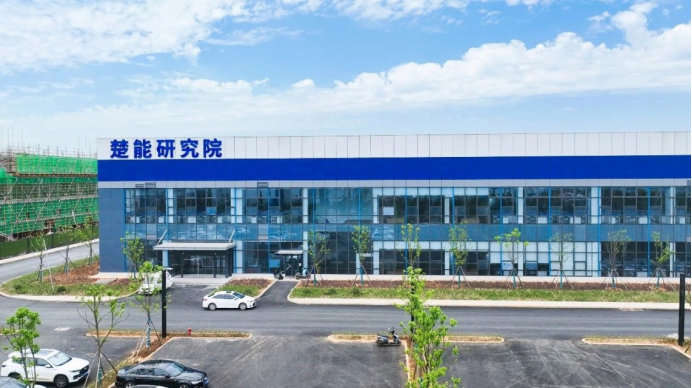
In recent years, the roster of cross-industry players venturing into vehicle manufacturing has been expanding. Each entrant brings unique strengths, yet the reasons for exit often converge. Chujie's strengths are not to be underestimated, but the intensity of competition in the domestic market today far surpasses that of a few years ago. Leading new energy vehicle players have already achieved monthly sales of 30,000 units, with Leapmotor's deliveries even surpassing 100,000 units. As a latecomer, Chujie faces a significant gap to bridge. While Chuneng has secured its entry ticket, whether it can establish a foothold after entering the market will only become apparent after the delivery of its first vehicle in 2027.
(Images sourced from the internet; removal upon infringement claim)
-
![]()
Tesla's Gross Profit Increased by 440 Million, Yet Operating Profit Fell by 900 Million: Where Did Tesla's Money Go?
-
![]()
While Competitors Struggle, GM Stands Firm with $4.1 Billion Profit
-
![]()
Three Presidents in Five Years: What Audi China Truly Needs is Decentralization
-
![]()
Can Chuneng-Haima Joint Venture Forge a New “Realm”?
-
![]()
Is the Long-Anticipated Blockbuster from iCAR Going to Be the V25?
-
![]()
Profits Plunge by 40%, Yet Musk's AI Vision Stays the Course
-
![]()
Profits Plummet by 40%, Yet Musk's AI Ambitions Remain Undeterred
-
The Second Half of AI: The Crucial Battle for Trust