The Vanished "Golden September and Silver October"
 11/02 2026
 408
Introduction
Foot traffic fell by only about 10%, but transactions dropped by 30%. It's not that no one wants to replace their car during peak season—it's that everyone is holding tight to their wallets.
"As for how business is... all I can say is, it's a bit better than June, July, and August!"
The person who answered me was a store manager on duty at a dealership for a whole-vehicle brand on Jiangyang South Road in Shanghai. Frankly speaking, similar answers have been repeated so often over the past week during my visits to multiple dealerships that I've grown tired of hearing them. Whenever I ask about recent business or the deals closed during this "Golden September and Silver October," the answers I get can roughly be summarized this way.
One thing is certain: the "Golden September," once seen by the industry as the last hope for a turnaround this year, has definitively cooled. The subsequent "Silver October," though not yet over, is basically more or less the same.
Sales consultants at dealerships feel the hot and cold of the auto market most personally. From visits to dozens of stores over the past week or so, I can roughly summarize the basic trajectory of this round of "peak season" based on the accounts of consultants from each store.
After entering September, until the 20th, most stores' business performance was generally "still okay." But the market declined very noticeably after September 20. Business picked up again through the National Day holiday, but turned cold immediately after the holiday ended. To borrow a sales consultant's phrasing, this year's "Golden September and Silver October" has actually become "Bronze September and Iron October."
Let's compare last year and this year from the data level.
According to statistics from the China Passenger Car Association (CPCA), in September last year, domestic narrow-sense passenger car retail sales were 2.244 million units, up 6.4% year-on-year and 11.2% month-on-month. That was the monthly sales high point of the past five years (2021 to 2025). But one year later, this September's retail data recorded only 1.618 million units, 626,000 fewer than last year, with a year-on-year decline reaching 28%.
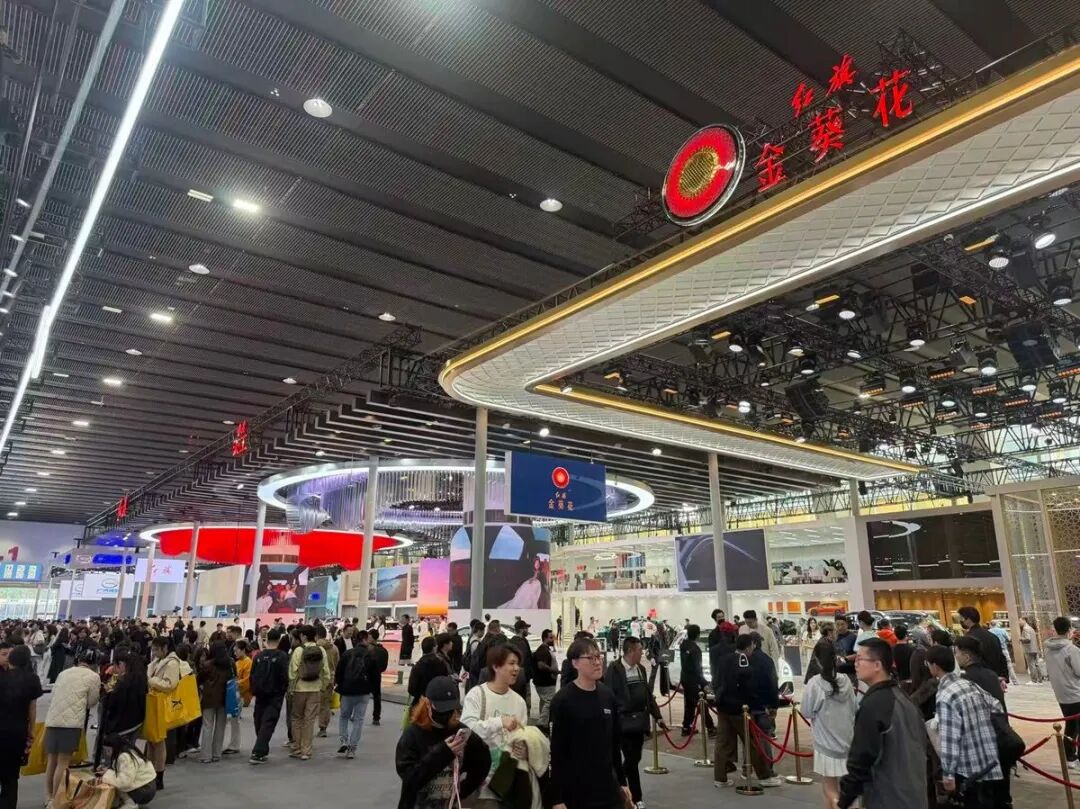
Image | Although last year's auto market was booming, many people actually had clear-headed awareness. Including Teacher Wei, editor-in-chief of Gongshe, and many other big names, they were predicting and analyzing at the end of last year how much the market would decline this year.
Switching to another statistical caliber, in data from the China Association of Automobile Manufacturers (CAAM), September domestic auto sales were 1.904 million units, also down as much as 26% year-on-year. And if we extend the timeframe to the first three quarters, cumulative passenger car retail sales were 13.334 million units, down 21.7% year-on-year. As for the not-yet-finished October, the CPCA already has early-month data. In the first week of October, average daily retail sales were 33,000 units, down 25% year-on-year. The second week looked slightly better, rebounding to 58,000 units per day, but still down 22% year-on-year.
Returning to the beginning of the article, after expressing to me that business was "a bit better than June, July, and August," that store manager actually had a second half to his sentence.
"Let me tell you something interesting. According to our store's statistics, from early September to now, whether it's actual foot traffic or the customer leads our sales consultants get, both have dropped noticeably compared to last year—but the decline is only a bit over 10%."
In short, those with purchase intentions and those coming to look at cars in stores have decreased not by much. What's actually lacking right now is people willing to open their wallets immediately. As for why prospective car owners only look and don't buy—that's the truly thought-provoking part...
01 Bought Too Early
"Just an old car owner, taking a casual look."
Last Wednesday afternoon, just as I stepped into an independent premium brand dealership on Jiangyang South Road in Baoshan District, I heard a customer who had entered just before me say this to a sales consultant who was approaching with a bottled water and a smile.
And this bro, upon entering the store, headed straight for a hybrid wagon on display that had launched at the end of June this year. Through subsequent conversation, I roughly understood this person's situation.
This bro had bought a B-segment hybrid sedan from this brand, placing the order last September in the form of a trade-in subsidy. His original ride was a compact joint-venture sedan, and the reason he rushed to place the order last year was that, as late September approached, news spread that the trade-in subsidy was about to end. According to his own account, he had always wanted to get a wagon.
But who could have predicted that the brand he favored would have news of a new-energy wagon the following year, launching at the end of June. When I joked about "just trading in again," this friend laughed and waved his hand, as if to cut off troubles and meaningless thoughts: "I'll have to drive it for three or four years no matter what. Do you think money grows on trees?"
Although having the idea to buy (trade in), not yet seeing a completely satisfactory model, and still being in two minds, with the final decision made early due to subsidies, promotions, and other factors—this is not rare within my perception. Besides the friend above, when I took my kid for a stroll at a commercial center in Minhang District on Sunday, I encountered a family of three at an in-mall space store of a sub-brand under a new-force automaker who had similarly "bought too early." Also because of rumors last September-October about the national subsidy being phased out, they immediately purchased the then-2025 model year vehicle.
As a result, not only did the national subsidy continue afterward, but in just over half a year, the 2026 model year vehicle launched, with the driving assistance system adding LiDAR to the pure vision solution, along with multiple hardware upgrades and so on.
"The kid has grown up, so the compact SUV at home seemed too small." As the couple lamented to me, their son was climbing in and out of every display car in the store. "We had originally planned to change cars this year, but after seeing all kinds of online rumors, we couldn't hold our nerve."
In short, these car owners who hastily replaced their cars last year all originally had their own plans and preferences. However, influenced by both last year's white-hot price war and official stimulus policies, they advanced their purchase or trade-in plans.
And such situations are not isolated cases. Right within my circle of friends, there are several examples of people who advanced their car purchase plans due to last year's various stimulus and preferential policies. I also believe that everyone reading this article has, to varying degrees, such friends around them.
02 The "Wait-and-See" Crowd
Opposite to "bought too early" is the "wait-and-see crowd." They likewise have clear purchase intentions, but due to various changes since the beginning of this year, they choose to hold onto their money at this juncture.
Let me give an example from around me. I know a post-95s person who has been clamoring to buy a car since late last year. From last December to now, this bro has researched almost every newly released model on the market over 11 months, and frequently goes to dealerships for test drives. So earnest and studious that his car talk quickly caught up to veteran auto media editors, and he can rattle off each brand's old debts, various anecdotes, and famous memes as if counting his own treasures.
But after learning, looking, and comparing so much, from last year to now he still hasn't decided what to buy, and has changed his target model five times along the way. He counted on his fingers for me: the car he first fancied launched at over 230,000 last year; this year's mid-cycle refresh added features, yet the guide price actually dropped by 12,000, and on top of that there are local subsidies at the dealership level. When asked why he doesn't pull the trigger, his reasoning is sound: nowadays almost every new car is cheaper than the old model, but features and build quality seem to keep shrinking. His exact words were: "What I fear isn't the price—it's buying and then seeing it drop. So I'd rather take taxis and the subway every day than get stabbed in the back."
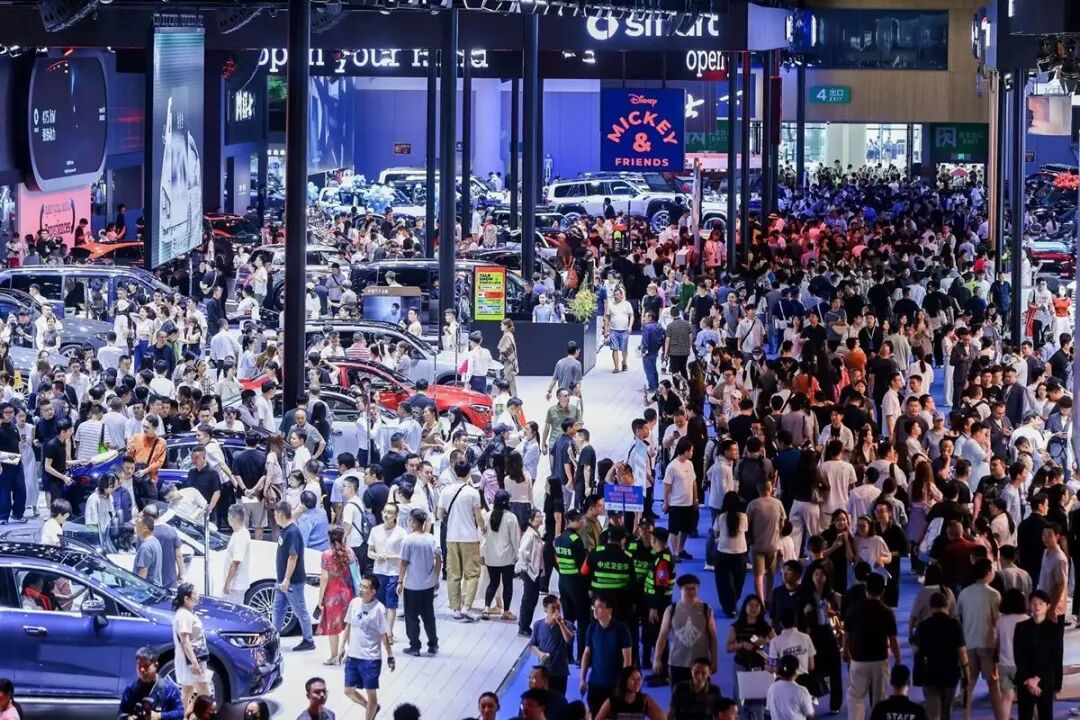
Image | When you simply can't keep up with the market's rhythm, holding tight to your wallet is most people's instinct.
Such customers are not isolated cases. The store manager mentioned earlier, as well as sales consultants I've chatted with in other stores, almost all mentioned having several people on hand with clear intentions who absolutely refuse to place an order.
At a joint-venture brand store in Putuo District, a sales consultant with six years in the business gave me a bitter smile, saying customers today know cars better than he does. Their phones store comparison charts of configurations across brands and models; upon entering the store they directly ask how many nanometers the chip is, which supplier provides the battery, and whether the smart driving is end-to-end. He hasn't even memorized the training materials as well as they have. According to him, this type of customer has visibly increased since the beginning of this year—they have the budget and clear needs, but just can't find something satisfactory and absolutely won't place an order.
At a store of a certain brand on a road in Zhabei, a sales consultant mentioned to me that one prospective customer's name had five test-drive records attached to it, having been followed from last October to now, with three salespeople's WeChat added. But every time asked whether they'll commit, the answer is always "let me look again" or "I'll decide at year-end." And according to his understanding, the customer's current car has already been driven for nine years.
"Even when I try to provoke him with 'gas prices are so high now,' this guy just furrows his brow and says, 'It's fine, I don't drive much normally'..." When telling me these details, the sales guy had a speechless expression.
It's not that there's no demand—it's that demand has been frozen. But the reasons for freezing aren't necessarily all the same. Because there's another type of car owner stuck on their own sunk costs.
At the beginning of last month, I saw a group member complain in a WeChat group: their B-segment joint-venture sedan, driven for six years, could get a trade-in value of close to just over 60,000 at this time last year. In September, they fancied a mid-to-large new-energy SUV from an independent brand to trade in, but when the same vehicle was re-appraised, the price was only under 50,000.
After learning the used-car price, this person's mindset exploded, and angrily declared they wouldn't change cars—they'd just "drive the current car until it falls apart, and then directly claim the scrap subsidy!"
Such car owners aren't unwilling to buy a new car—they just can't accept excessive depreciation of the asset in their hands. And while such people may seem overly sensitive, they are especially numerous this year. The residual value report for the first half of the year jointly released by the China Automobile Dealers Association clearly shows that the three-year average residual value of fuel vehicles has fallen to just over 46%. Back in 2022, that figure was still 67.6%.
03 The Bitter Fruit of Overdrawing
If we want to explain why this year's peak season has cooled so thoroughly, the root cause actually isn't this year.
Throughout last year, the national trade-in program exceeded 11.5 million vehicles. In other words, more than half of retail transactions were touched by subsidies. Add to that the ferocious price war that raged that year, and the final rush before the new-energy purchase tax exemption expired at year-end, and a massive amount of demand that should have materialized in 2026 or even 2027 was forcibly pulled forward into the 2025 sales table.
And last September's historic peak of 2.244 million units was pumped up exactly this way. But eating into next year's grain means the debt must eventually be repaid.
This year, subsidies were changed to proportional calculation with a cap, and the purchase tax went from fully exempt to halved. Squeezed from both ends, the demand that was force-ripened last year has collectively entered a digestion period this year. Cumulative passenger car retail sales in the first three quarters were 13.334 million units, down 21.7% year-on-year. This isn't an occasional fluctuation in any single month—it's year-round demand pressure. The CPCA's full-year forecast is 18.5 million units, which not only falls far short of 2025's peak of 23.74 million but even drops below the historical trough of 19.29 million in 2020.
However, overdrawing only explains the decline—it doesn't explain why, even with such a drop, no one is buying.
More and more models are being launched, refreshes are coming faster and faster, and prices are getting lower and lower. Public official price cuts, hidden benefits, local subsidies, financial interest discounts—there isn't a single month in the year without promotions. Once price cuts become the norm, they stop being a stimulus and become noise. There's a striking figure in McKinsey's 2026 China Auto Consumer Insights: consumers holding negative attitudes toward the price war account for 22.2%, actually higher than the 16.5% holding positive attitudes. Repeated price cuts haven't won orders—they've only won the response "wait a bit longer and it'll be cheaper."
"Chasing the rise and dumping on the fall"—these four characters have never been the exclusive patent of the stock market and real estate market. In real estate, the more prices rise, the more people rush to buy; the more they fall, the fewer takers. The auto market is the same. When the belief that "it will always get cheaper" is written into consumers' expectations, rigid demand likewise tightens its purse strings. Buying on the rise, not on the fall, is human nature—it has nothing to do with which specific industry. China's auto market is simply the first to act out this logic in full.
Back to "Golden September and Silver October" itself—it's actually not all that sacred. This phrase was never some immutable law handed down from ancient times; it began simply as a bit of consumption inertia from the post-harvest period in agrarian society, and at the turn of this century was first adopted as autumn promotional rhetoric by industries like real estate, home appliances, and IT. It wasn't until 2004, when the auto market suddenly went cold and "winter is coming" theories proliferated, that manufacturers and media jointly hyped it into a buzzword for the auto market.
In essence, it's really no different from "Double 11"—a mutually agreed-upon, mutually sustained annual promotional season. Creating a festival depends on consensus; once that consensus is diluted by year-round, nonstop price wars, the festival naturally ceases to be a festival.
So when China's auto industry transitions from the popularization period to the stock period, from a seller's market to a buyer's market, from fuel-vehicle dominance to new-energy dominance, an old set of rules exits the stage—this really is nothing earth-shattering. The era when a single time node could carry the entire year has already ended.
04 Epilogue: Is There Still Hope?
Yet in this autumn of widespread lamentation, it's not entirely without bright spots. At least two joint ventures seem to be feeling for the stones that will help them cross the river.
One is FAW-Volkswagen's ID. AURA T6. On October 20, FAW officially announced that this new model locked in 33,022 orders in its first sales month. What's more thought-provoking is that among the major orders, the LiDAR version accounted for over 90%—users weren't going for the cheapest entry-level trim, but were willing to pay real money for better intelligence.
The other is BMW Brilliance's new-generation iX3. According to multiple sources, domestic intended orders have exceeded 10,000, with single-store orders in many locations surpassing 100 units and top dealers reaching 150 to 200 units. It is expected to wash away at one stroke the informal negative perception that "BBA new energy is a knockoff brand."
But orders are orders, and sales are sales. The real test is whether, after official deliveries begin, monthly sales can be steadily maintained for six months or more. The "curse of breaking 5,000" for joint-venture new-energy monthly sales—only GAC Toyota's bZ3X has truly stood firm so far.
Some might think calling this level of thing "good news" is a bit much—after all, it only applies to certain brands. So, from the perspective of the overall domestic auto market, where is the turning point for reversing the current trend?
The judgment made by CPCA Secretary-General Cui Dongshu on October 26 may be the most apt. This year's decline is an abnormal deviation superimposed by several short-term factors—policy overdraw, oil price shocks, AI spillover costs, and diminishing subsidy effects—not a cliff-edge in the long-term trend.
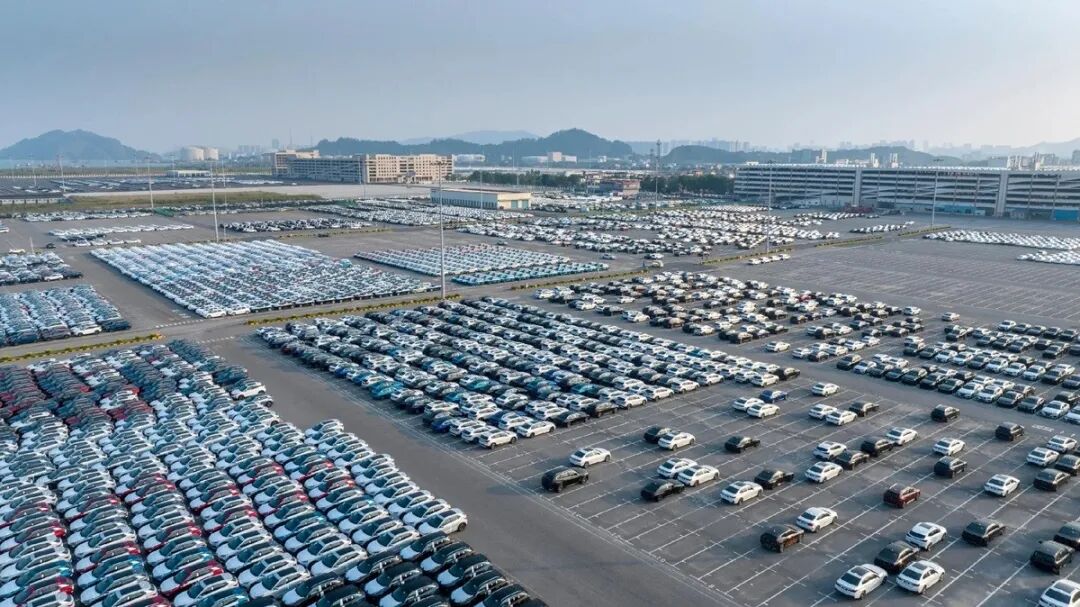
Looking ahead to 2027, Cui Dongshu believes the shock factors will reverse and repair. With the possible decline in lithium carbonate prices and weakening destocking efforts, the auto market is expected to bottom out and recover, with retail growth in the 0–5% range and an average of around 2%.
In short, at least it can stop falling and stabilize. That sounds a bit bland—not the V-shaped reversal many people hope for, but at most a mild recovery. And as the recovery begins, differentiation among brands will actually intensify.
For those who are still willing to build cars and sell cars in a down-to-earth manner, that is already a spring worth waiting for.
Responsible Editor: Li Sijia Editor: He Zengrong

THE END
-
![]()
Competing for the 2026 Auto Sales Crown Is No Longer Important
-
![]()
Xiaomi Invests 1.7 Billion Yuan for Stake in Sunwoda Power: Automakers Shift from "Buyers" to "Co-Definers"
-
![]()
Microsoft: High Investment, High Growth, Strong Cash Flow—Is It the Only Cloud Giant with True "Character" Deserving a Premium Valuation?
-
![]()
Zhuoyu Hands "Pay Stubs" to 40-Ton Trucks: Saving 20,000–30,000 Yuan in Fuel a Year—But Who Foots the Bill?
-
![]()
Building a "Chicken Farm" Together: Co-Building Charging Piles Becomes an Industry Trend
-
![]()
Computing Power Is No Longer the Ceiling for AI Agents—the Ecosystem Wall Is
-
![]()
BYD: Trading Price for Volume at Home, and Its Overseas "Savior" Is Starting to Falter Too?
-
![]()
The Vanished "Golden September and Silver October"