Competing for the 2026 Auto Sales Crown Is No Longer Important
 11/02 2026
 367
A story from 14 years ago is beginning to repeat itself among Chinese automakers.
Romance of the Three Kingdoms, the Spring and Autumn and Warring States periods—these are works familiar to many Chinese people, and many passages from them are savored. The trajectories and conclusions they leave behind are also very clear. In any case, the way of thinking they ultimately leave behind is that most of the time things must be ranked: who is first, who is second, who is third. But the world is obviously not that simple, because especially in a commercial society, there can also be win-win, or even triple-win outcomes.
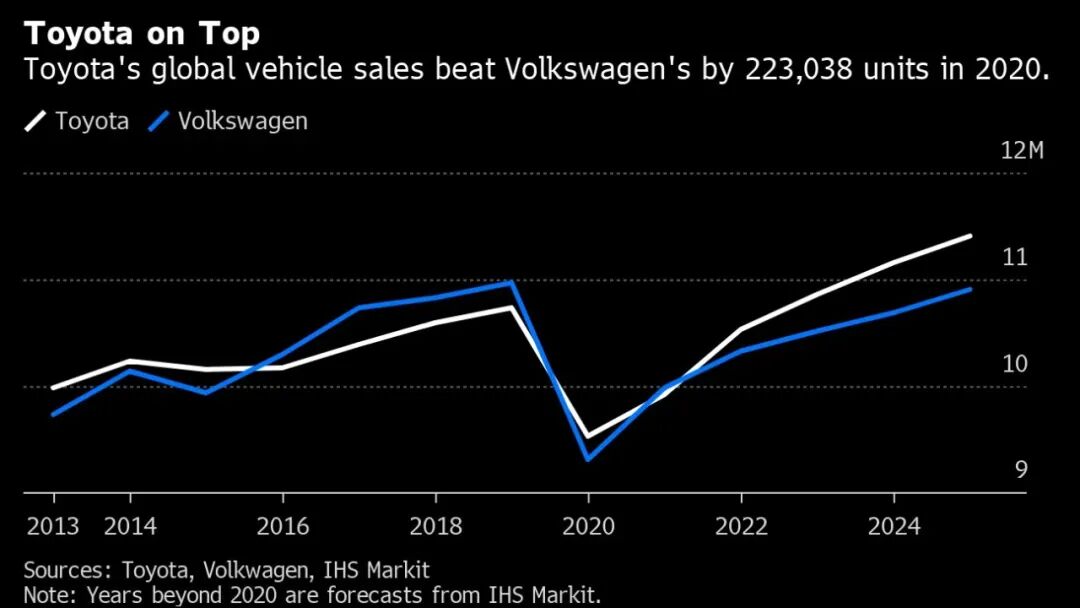
Fourteen years ago, in 2012, that was the first year Volkswagen and Toyota competed for the global sales crown. This story is very exciting. Volkswagen, by switching its carmaking philosophy, began to shift comprehensively from PQ or other single platforms to modular platforms such as MQB and MLB. The story that followed was extremely exciting.
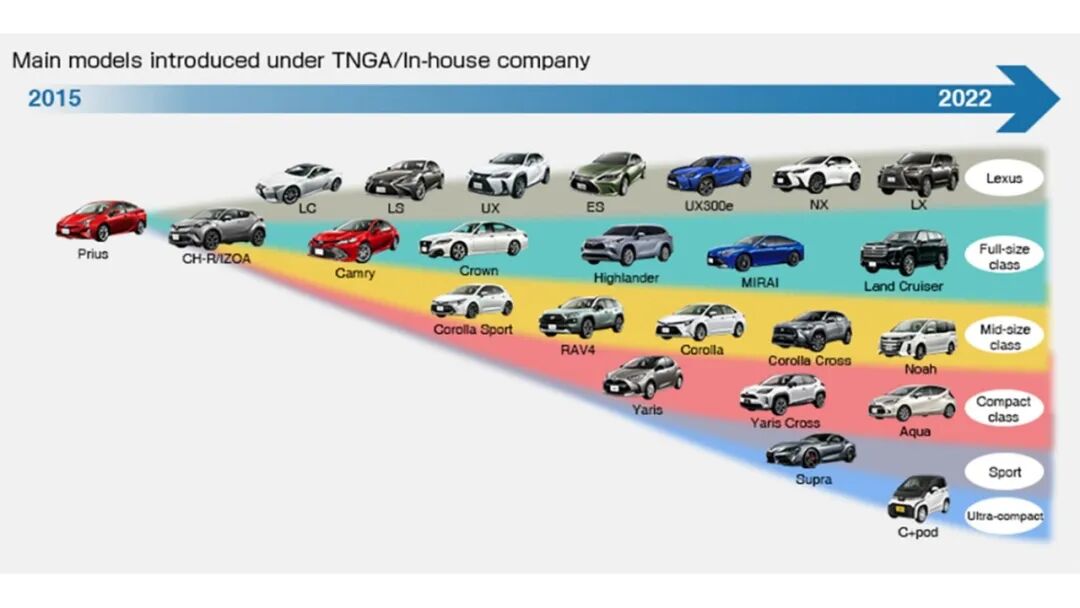
From 2012 to 2015, Toyota relied on its strong global layout, especially sales in North America, to withstand Volkswagen's counterattack. From 2016 to 2019, Volkswagen completed its comeback thanks to the surge in the Chinese market and the massive launch of SUVs, and ultimately forced Toyota to change its carmaking logic and launch TNGA. Even the valve issue at the end of 2015 could not stop Volkswagen's counterattack.
How similar this scene is to today's intelligent new energy. Automakers have launched a new challenge match, but behind this competition there is another main thread. As a large number of automakers have recently released third-quarter financial reports, it has begun to return to public view.
Sales champion or profit champion, that is the question
To be or not to be, that is the question.
The same question must also be answered in the auto market: sales or making money? From a short-term perspective, this may even be a question with the answer "I want both." But from a medium- and long-term perspective, sorry, when working backward from the results, in fact many times only one can be chosen.
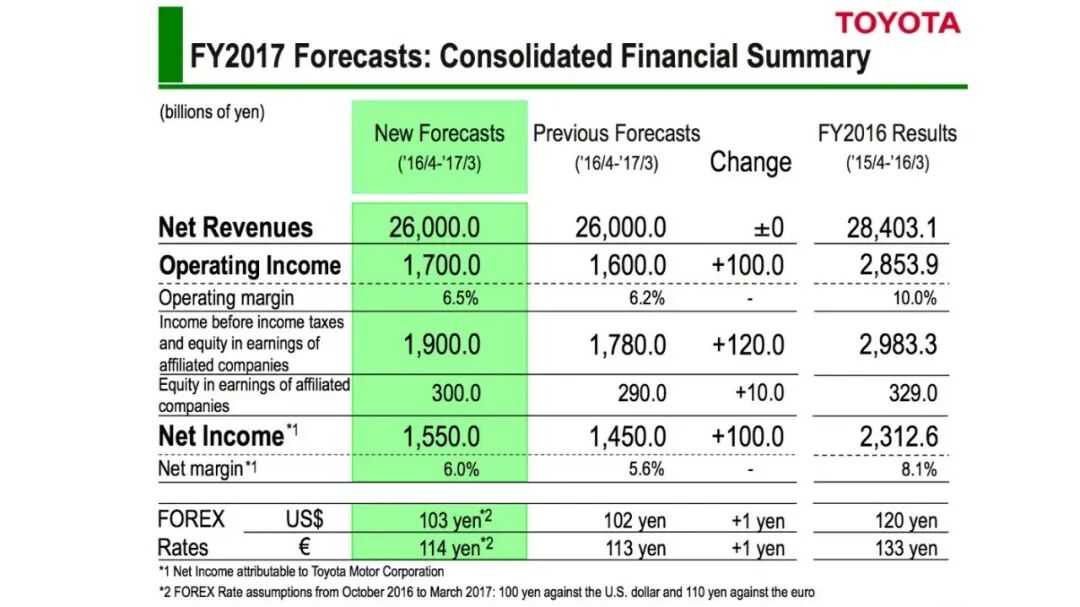
Taking publicly available financial data from 2016 to 2019 as an example, in 2016 Volkswagen overtook Toyota with 10.31 million vehicles versus 10.17 million, but in terms of profit Volkswagen made 5.7 billion U.S. dollars, compared with Toyota's 16.9 billion U.S. dollars. In the following years, using the same data basis, Volkswagen was able to lead Toyota by more than 230,000 vehicles in each year from 2017 to 2019, but at the profit level, Toyota led Volkswagen by 9.4 billion U.S. dollars in 2017, by 7.2 billion U.S. dollars in 2018, and by 3.6 billion U.S. dollars in 2019.
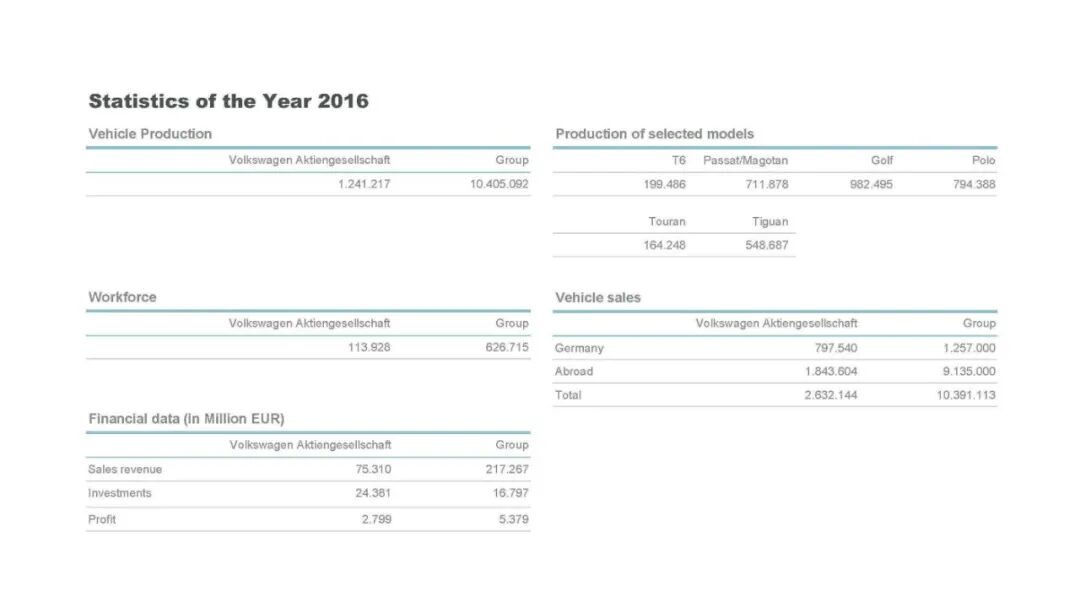
So for a long time, there was actually a joke that Volkswagen had to sell three cars to catch up with the profit from one Toyota. And from the time Toyota switched to TNGA, to the global black swan events that began in 2020, and to different automakers advancing the switch to intelligent electric vehicles at different paces, from 2020 to now Toyota's profit versus Volkswagen's has been a case of dimensional suppression.
In 2020, it led by 8.9 billion U.S. dollars; in 2021, by 7.5 billion; in 2022, by 1.1 billion; in 2023, by 12.3 billion; in 2024, by 16 billion; and in 2025, by 24.2 billion.
To have achieved world number one but not make money—that is obviously a bit too absurd.
Okay, let us return our attention to the automaker financial reports at hand.
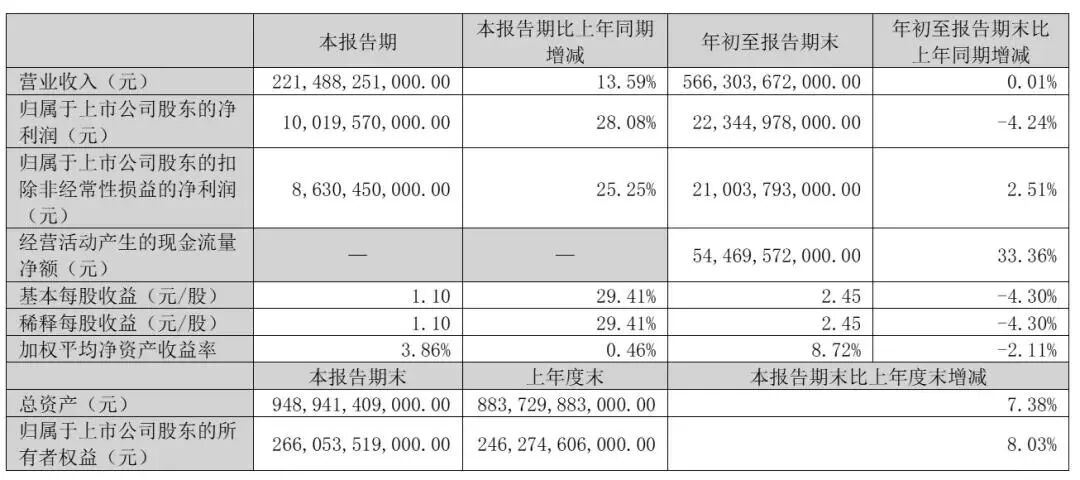
BYD released its third-quarter financial report for 2026 on October 29, with revenue of 221.488 billion yuan, up 13.59% year on year; net profit attributable to shareholders of the listed company was 10.019 billion yuan, up 28.08% year on year; single-quarter net profit returned to the 10-billion-yuan mark; net profit after deducting non-recurring gains and losses was 8.630 billion yuan, up 25.25% year on year; and net operating cash flow in the first three quarters was 54.470 billion yuan, up 33.36% year on year.
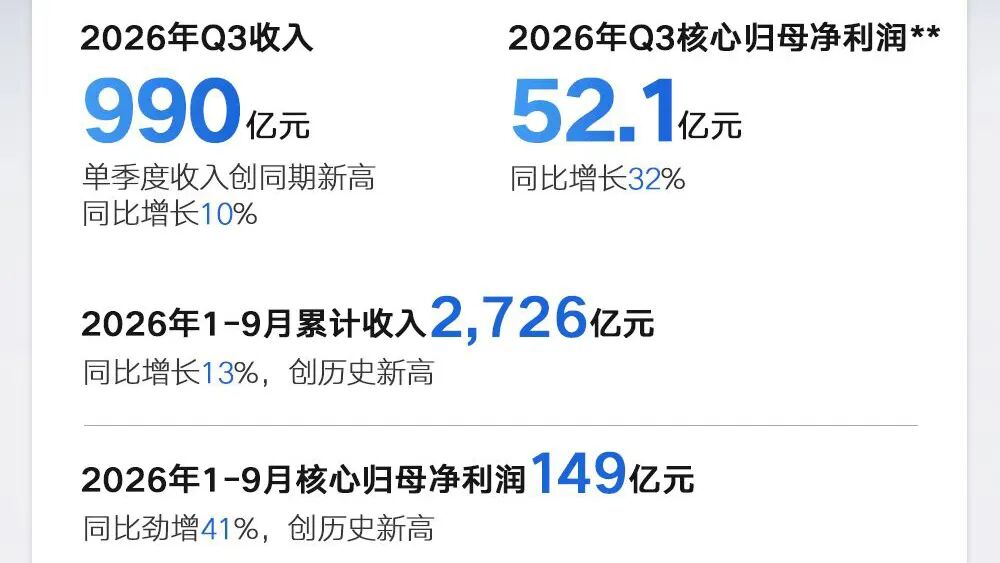
On the same day, Geely Holding also released its third-quarter financial report, with revenue of 99 billion yuan, up 10% year on year; core net profit attributable to the parent of 5.21 billion yuan, up 32% year on year; both revenue and core profit hit record highs for the same period. In the first three quarters, total revenue reached 272.6 billion yuan, up 13% year on year; cumulative core net profit attributable to the parent was 14.9 billion yuan, up 41% year on year; gross margin was 18%, up 1.5 percentage points year on year.
Both of these financial reports undoubtedly reflect very good, good, good trends, whether it is BYD's 10-billion-yuan profit or Geely's new highs. But beyond that, there are two things we should see more clearly. The first is that the trend of making money is changing. The second is that major automakers have by no means basically completed their transformation; rather, the entire market is undergoing a structural earthquake, and when it comes to choosing sales figures, choosing profit, and even many other things, automakers themselves may not be the ones who get to choose.
The importance of the words "sales champion" has fallen by at least half
For example, looking at BYD's financial report, revenue was 221.488 billion yuan, lower than the more than 240 billion yuan predicted by many analysts, and net profit attributable to the parent was lower than analysts' forecast of more than 11.1 billion yuan. In addition, overseas sales grew rapidly in the third quarter, accounting for more than 42% of total sales.
Looking at Geely's financial report again, sales in the first three quarters grew only 3%, but revenue grew 13%; core net profit attributable to the parent in the first three quarters grew 41%, far higher than revenue growth. At the same time, new car products capable of generating high value under brands such as Zeekr brought obvious profit improvement and operational stimulus. Also, like BYD, it achieved explosive growth in overseas markets. Based on export data of 797,700 vehicles in the first three quarters, year-on-year growth has exceeded 100%.
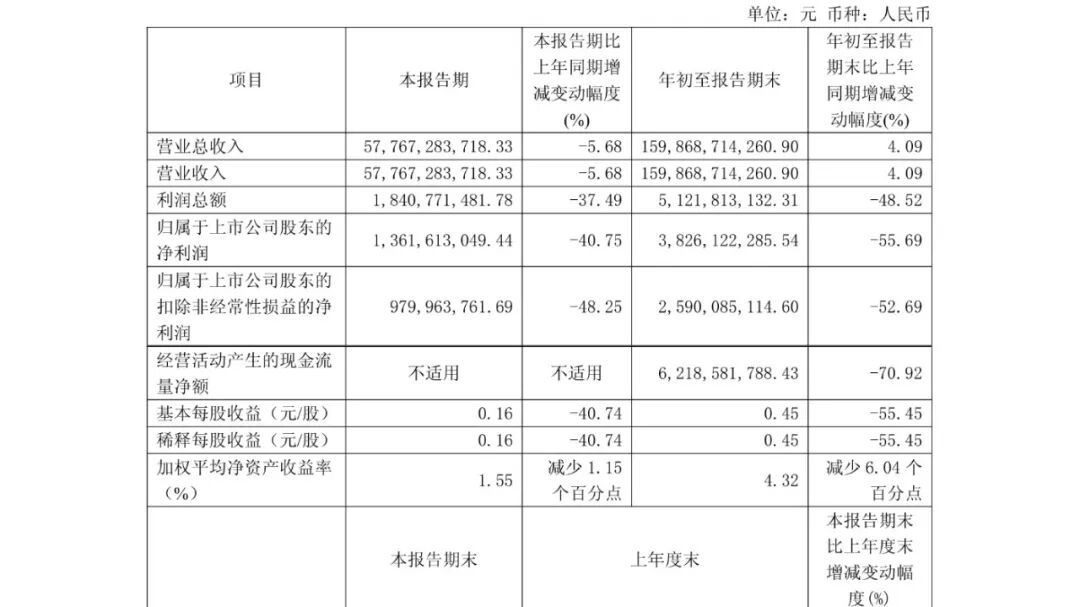
Looking at more of the latest financial reports, Great Wall Motor's third-quarter revenue was 57.767 billion yuan, down 5.7% year on year; net profit attributable to the parent was 1.362 billion yuan, down 40.8% year on year; first-three-quarter revenue was 159.9 billion yuan, up 4.1%; net profit attributable to the parent was 3.826 billion yuan, down 55.7%.
Changan Automobile: third-quarter revenue was 36.25 billion yuan, down 14.2% year on year; net profit attributable to the parent was -758 million yuan; first-three-quarter net profit attributable to the parent was about 59 million yuan, down 98% year on year.
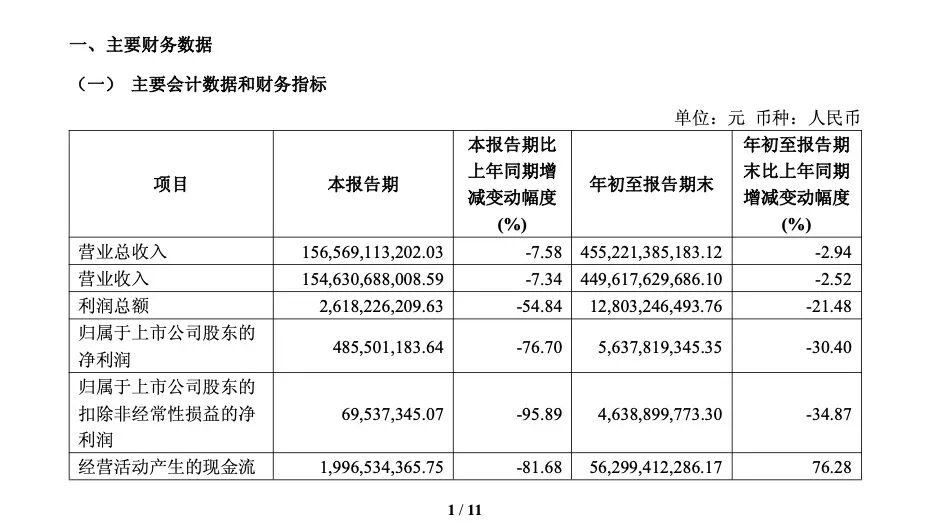
SAIC Motor: third-quarter revenue was 154.6 billion yuan, down 7.3% year on year; net profit attributable to the parent was 486 million yuan, down 76.7% year on year; first-three-quarter net profit attributable to the parent was about 5.64 billion yuan, down 30% year on year.
GAC Group: third-quarter revenue was 28.42 billion yuan, up 17.9% year on year; net profit attributable to the parent was -2.52 billion yuan; first-three-quarter net profit attributable to the parent was -6.987 billion yuan.
What new structural changes do the above financial reports reflect?
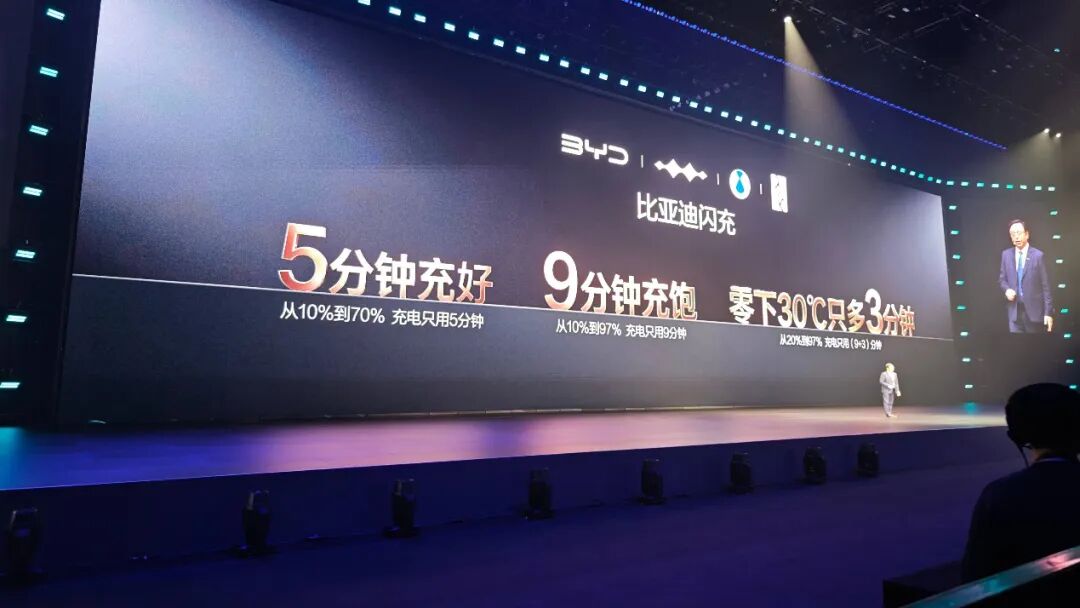
Broadly speaking, there are several points. First, more and more Chinese automakers are relying on overseas expansion to find new growth poles, whether in sales, revenue, or profit. There is no need to elaborate on this; in recent years it has already become an industry reality and a social consensus. Second, competition in the Chinese market is currently too intense, and development trends often undergo periodic fundamental reversals. For example, judging from this year's financial reports, BYD's pure electric sales have already surpassed plug-in hybrids. Combined with the current outstanding performance of automakers such as NIO, it is only a matter of time before transitional technologies move to the margins. In addition, premiums for intelligent driving assistance and autonomous driving are declining rapidly.
And the most important point is that the growth of auto sales figures is now different from the logic of the fuel vehicle era. It is no longer the case that profit grows year on year along with sales growth.
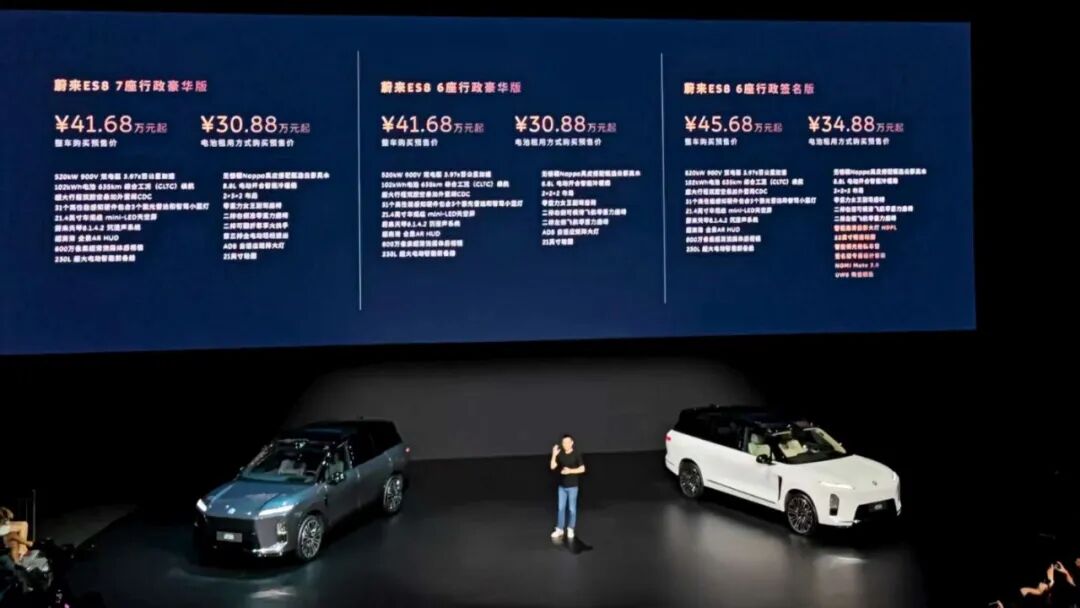
There are already several visible methods. One is to open up the market with highly profitable models, such as the current performance of the NIO ES8. Of course, there is only one NIO, and it is hard to replicate. Then there are overseas markets. The trend in 2025 is very good, and they have indeed become new battlegrounds for many automakers, but at present there is both exchange-rate pressure and new quantitative restrictions on imports into Europe. Or, like brands such as Porsche, give up rapid transformation and turn back to high-value models that can actually be sold. Of course, this depends on luck; once the window is missed, one may be left behind.
To make money now, one needs to show one's special prowess like the Eight Immortals crossing the sea, rather than simply expanding scale.
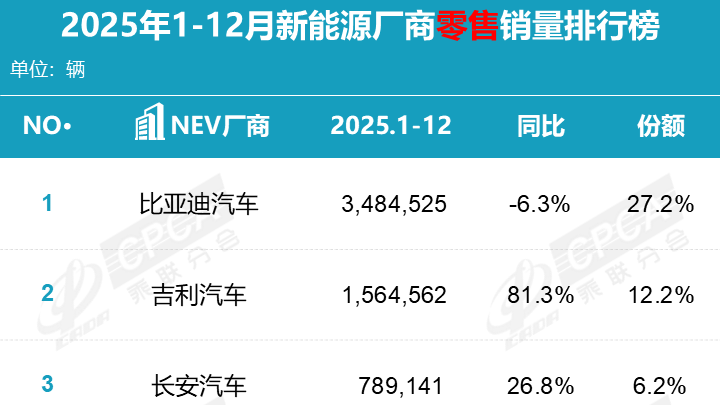
This is also why we judge that the practical significance of competing for the sales crown is becoming smaller and smaller.
For a long time, the sales crown has had two layers of meaning. One is internal: it can boost morale, prove that the company's development direction is right, unite the team, and also bring many benefits in the capital market. The other is external: it is a living advertisement.
Consumers have always had a natural inclination toward and goodwill toward sales-champion models. It is the same all over the world.
But in today's market environment, if deep collaborative reuse across multiple brands cannot be achieved, the significance of competing for the sales crown is actually becoming smaller and smaller.
Write at the end
If more profit can be earned, then like Toyota, being overtaken by Volkswagen in sales but selling one car for the profit of three Volkswagen cars is acceptable.
As for the various things shown in the financial reports in China's auto market today—some Geely executives have said they are dissatisfied, and more and more automakers find it hard to make profits in China's auto market—essentially these are all things that need to be slowly repaired after the price wars and homogenization of recent years.
In November, the financial reports of new carmaking forces will also be released one after another. By then, they will likely further corroborate the above views.
-
![]()
Competing for the 2026 Auto Sales Crown Is No Longer Important
-
![]()
Xiaomi Invests 1.7 Billion Yuan for Stake in Sunwoda Power: Automakers Shift from "Buyers" to "Co-Definers"
-
![]()
Microsoft: High Investment, High Growth, Strong Cash Flow—Is It the Only Cloud Giant with True "Character" Deserving a Premium Valuation?
-
![]()
Zhuoyu Hands "Pay Stubs" to 40-Ton Trucks: Saving 20,000–30,000 Yuan in Fuel a Year—But Who Foots the Bill?
-
![]()
Building a "Chicken Farm" Together: Co-Building Charging Piles Becomes an Industry Trend
-
![]()
Computing Power Is No Longer the Ceiling for AI Agents—the Ecosystem Wall Is
-
![]()
BYD: Trading Price for Volume at Home, and Its Overseas "Savior" Is Starting to Falter Too?
-
![]()
The Vanished "Golden September and Silver October"