Building a "Chicken Farm" Together: Co-Building Charging Piles Becomes an Industry Trend
 11/02 2026
 351
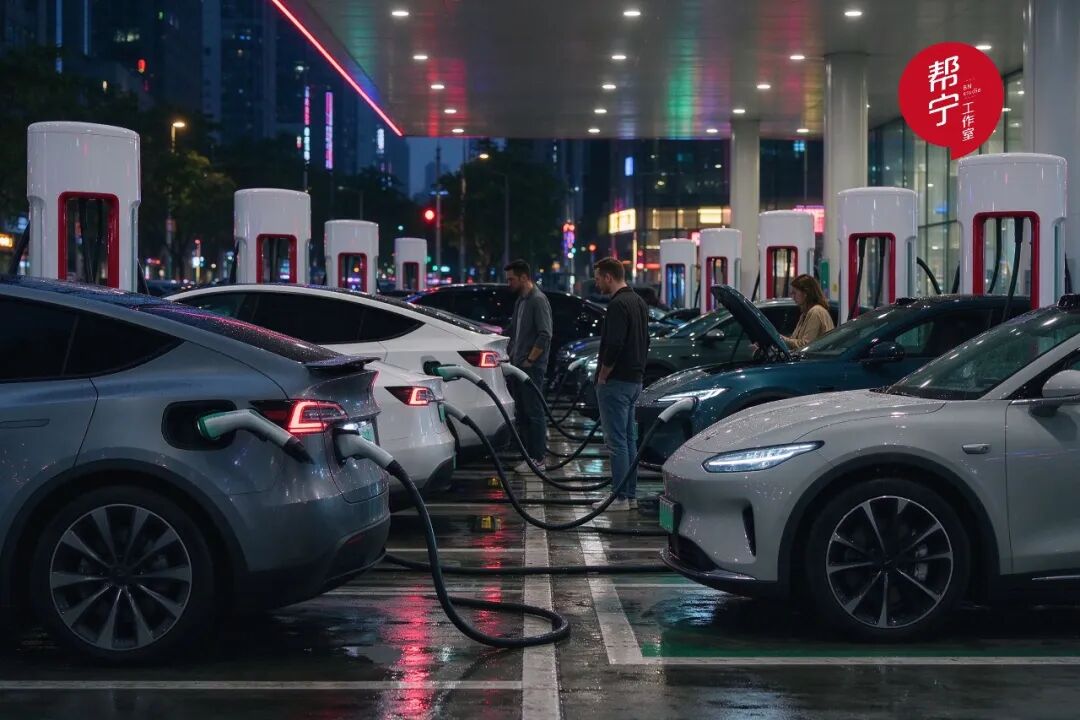
"Relying on software algorithms and networked scheduling to bring existing facilities to life"
The era of automakers building charging piles alone is drawing to a close.
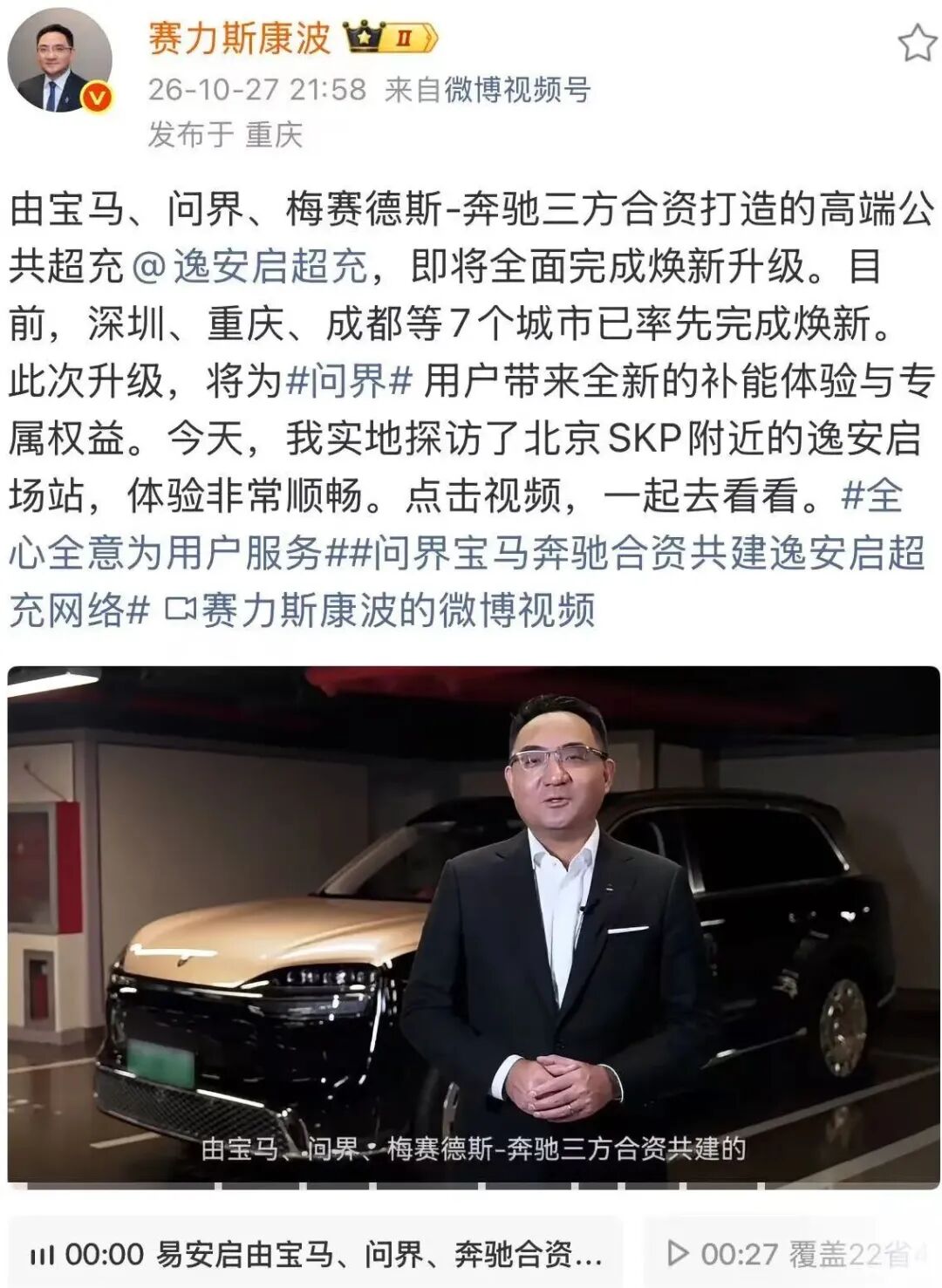
On the evening of October 29, Kang Bo, director and vice president of Seres Group, posted on social media: "The Yianqi supercharging network jointly built by AITO, BMW, and Mercedes-Benz has officially landed." He announced that AITO would join hands with Mercedes-Benz and BMW to help Yianqi set a new benchmark for China's premium supercharging network through the interconnection of charging facilities.
Two days earlier, he had just posted a video of an on-site visit to a Yianqi supercharging station. Looking through his social media account, he had rarely appeared in person in visit videos over the past year. This time, not only did he appear on camera, but he also deliberately highlighted a line of small text on the station sign—jointly built by BMW, AITO, and Mercedes-Benz. Previously, the sign had only displayed the brand logos of Mercedes-Benz and BMW.
In the comments section, some netizens' first reaction was surprise. One person said: "I always thought Mercedes-Benz and BMW only made fuel vehicles. Turns out they're building the new energy industry chain too." Another remarked: "Automakers' charging piles used to be mostly closed brand loops. Now luxury brands are interconnecting with each other. This is a new shift in the industry."
The industry trend behind this deserves attention.
In 2026, automaker launch events concentrated on competing over fast charging and instant charging technologies. In March, BYD released megawatt fast charging and planned to build 20,000 fast-charging stations within the year; in September, Geely launched an intelligent charging pile with a single-gun peak power of 2.25 megawatts; in October, Chery brought its Xunlong instant charging to the forefront at the Global Innovation Conference, announcing plans to build 20,000 V2G stations worldwide by 2029...
As the go-it-alone model of building stations gradually becomes unsustainable, automakers have begun to choose "marriages," such as BMW and Mercedes-Benz partnering with AITO, a new competitor among luxury brands, to open charging stations; and Geely and NIO swapping shares to merge their energy replenishment networks.
For consumers, the most intuitive change may be that in the future, charging a car will no longer require choosing a brand and recognizing a pile.
▍01 Staking Out Territory
This is a microcosm of the automakers' energy replenishment competition.
On March 5 this year, BYD released megawatt fast charging and proposed building 20,000 fast-charging stations within the year; as of early October, it had built 12,165 fast-charging stations nationwide, including 2,111 fast-charging highway stations, covering 341 cities across the country.
On September 23, Geely released its new-generation intelligent charging technology, with a single-gun peak power of 2.25 megawatts and support for AI ultra-fast charging; on September 29, the first batch of intelligent charging stations landed in five cities. According to official information, the Lynk & Co 10 model takes an average of 4 minutes and 30 seconds to go from 10% to 70% SOC, and an average of 8 minutes and 40 seconds to go from 10% to 97% SOC.
On October 20, Chery released Xunlong instant charging at the 2026 Global Innovation Conference, with a peak charging power of up to 1,440 kilowatts and a peak current of 1,500 amperes, adding 500 kilometers of range in 5 minutes, and announced plans to build 20,000 V2G stations worldwide by 2029.
On the same day, Li Auto announced that it would increase the scale of its 5C supercharging guns to 8,300 by the Spring Festival of 2027.
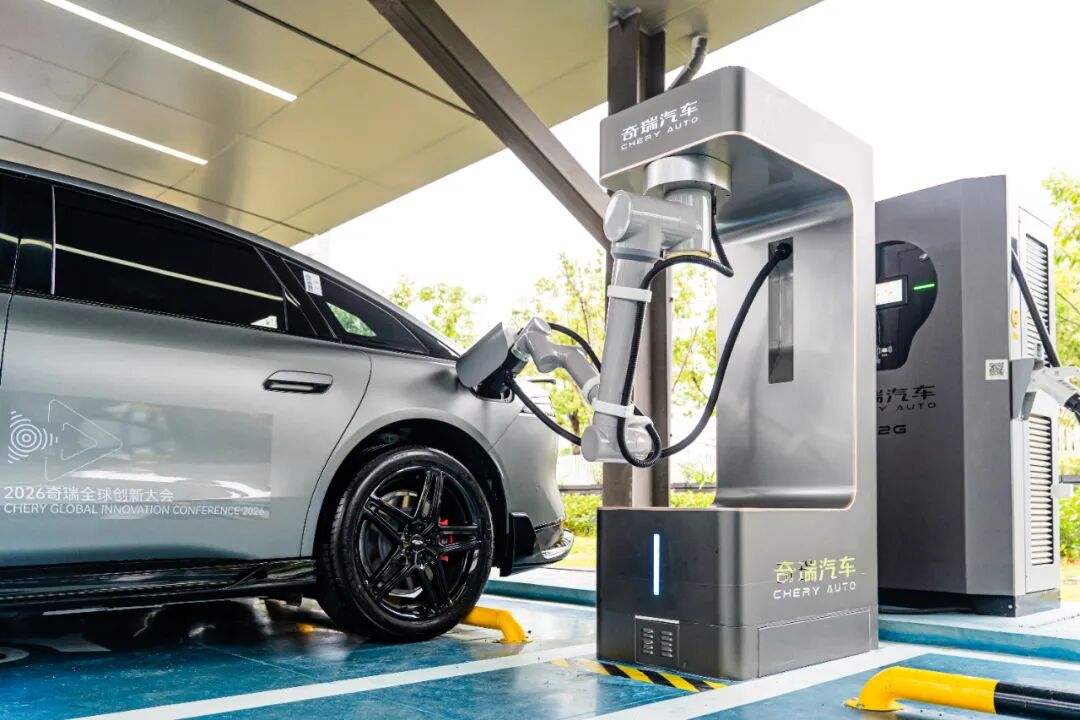
The purpose of these actions is to make charging time approach refueling time and turn the energy replenishment experience from usable to good to use. On major social platforms, car owners' real-world feedback is more convincing. Some BYD owners charging at fast-charging stations watched the battery percentage jump by the second and exclaimed at the efficiency; some battery-swapping owners also said after trying fast-charging piles that the experience was close to battery swapping.
From fast charging to instant charging, and then to making money from the charging business, what automakers are competing over is no longer just charging piles, but the entire energy replenishment ecosystem.
However, lively as it is, on a calmer look, very few megawatt-level dedicated stations are truly in operation, and stations that can steadily run at full 1 megawatt are few and far between, with most still in the first batch of commissioning.
For example, Chery's first batch of "Xunlong instant charging + V2G" charging stations will land in four cities by the end of 2026. Among BYD's more than 10,000 fast-charging stations, charging scenarios that can steadily run at full 1 megawatt are still a minority. Currently, only 10C models equipped with second-generation blade batteries can reach megawatt power, while the charging power of other brands' models is limited by protocols and battery capabilities.
There is still a distance between the products at launch events and the real road network. The other side of fast charging is the cruel ledger of this business.
On October 22, data released by the National Energy Administration showed that as of the end of September 2026, the total number of electric vehicle charging infrastructure (guns) nationwide reached 24.777 million, including 5.207 million public charging facilities, with an average single-gun power of about 51.1 kilowatts, and high-power supercharging accounting for a very low share.
According to data from the China Electric Vehicle Charging Infrastructure Promotion Alliance, in the first seven months of 2026, the total amount of public charging tenders nationwide fell 30% year on year; the industry's average charging service fee was only 0.2 yuan/kWh, below the break-even point, highlighting operating profit pressure.
Shi Jianhua, vice chairman of the China EV100 and dean of the EV100 Think Tank Research Institute, said publicly at the end of August that the charging track has excessively heavy assets, grows野蛮ly, has a single profit model, and, coupled with insufficient control of electricity price costs, generally suffers from involution. This means going it alone on this track is not cost-effective.
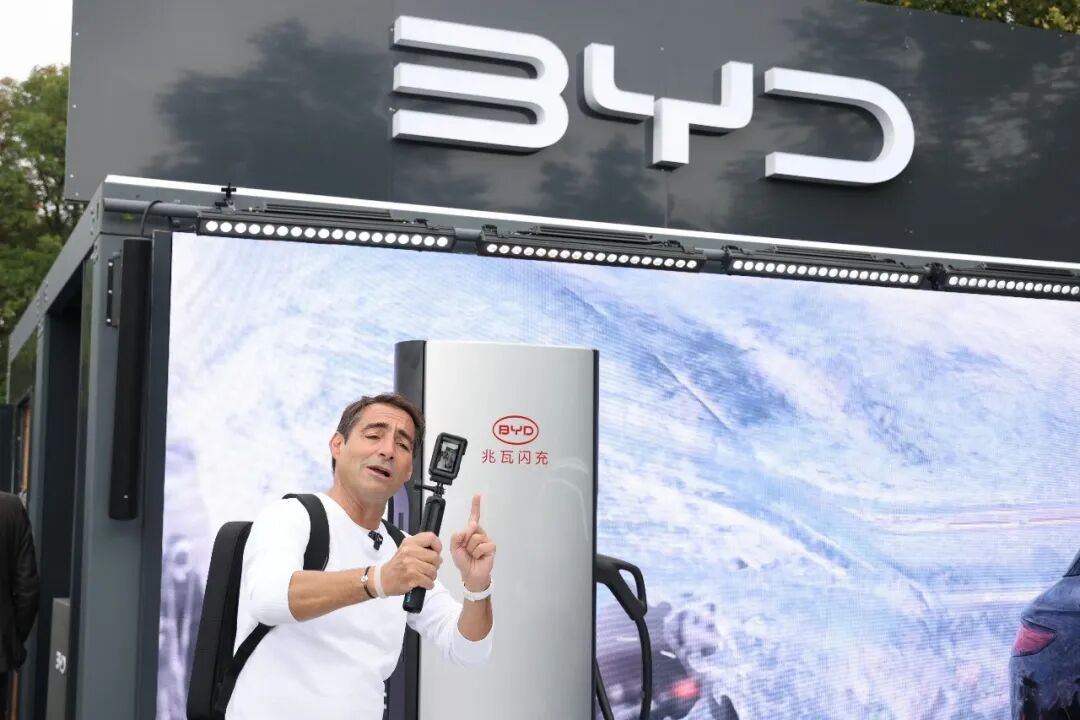
Construction costs are equally staggering. Li Yunfei, general manager of BYD's Brand and Public Relations Department, mentioned in an interview with the media earlier this year that a fast-charging pile including an energy storage module is not cheap, with each set costing hundreds of thousands of yuan; according to the plan to build 20,000 stations within the year, "tens of billions are no problem for BYD's current size. This money must be spent."
Going it alone is indeed difficult to succeed. Porsche once built about 200 "exclusive charging" high-power DC stations in China on its own, issued a suspension notice to car owners in December 2025, and gradually shut them down from March 1, 2026, mainly because the utilization rate of the exclusive network could not support the cost of self-building. Porsche China said the shutdown was based on in-depth analysis of real-time data on the "usage efficiency of various facilities."
Li Auto took a more tortuous path. Its single-gun 5C supercharging piles were once open only to Li Auto 5C models, requiring protocol verification and even ground lock coordination, and were complained about by many car owners as "visible but unusable."
On July 7, 2025, the General Office of the National Development and Reform Commission and three other departments issued the Notice on Promoting the Scientific Planning and Construction of High-Power Charging Facilities, making it clear that high-power charging facility networks built by new energy vehicle companies should in principle be open without discrimination.
This policy prompted Li Auto to adjust its business. Public information shows that as of October this year, Li Auto's single-gun 5C piles on highways in Chongqing and Zhejiang have been opened to all brands with differentiated pricing, and high-voltage platform models that pass safety certification can also use them.
The competition in fast charging is ostensibly a contest of parameters, but in essence a contest of capital and operations. Building piles is easy; sustained operation is hard. Marriage is the next stop in staking out territory.
▍02 Marriage
There are also different forms of marriage.
The first is joint venture co-construction, with Yianqi as a typical case.
In 2024, BMW and Mercedes-Benz each contributed 50% to establish the supercharging joint venture Yianqi in China. Two old rivals that had competed for a hundred years in the fuel vehicle era shook hands and made peace on charging piles in the new energy vehicle era for the first time.
On April 17, 2026, Seres took a stake, with the three parties holding equal shares. On September 30, AITO charging benefits were connected to Yianqi. On October 24, Yianqi's first batch of supercharging stations was put into operation. From Seres' stake purchase to the lighting of the first batch of stations, it took only half a year. In the heavy-asset business of energy replenishment, no one dares to go it alone.
In his visit video, Kang Bo introduced that as of the end of October, the Yianqi network had covered 22 provinces and 40 cities, built nearly 620 supercharging stations and nearly 3,500 charging piles, with liquid-cooled supercharging output power of up to 800 kilowatts, and many located in daily commercial districts.
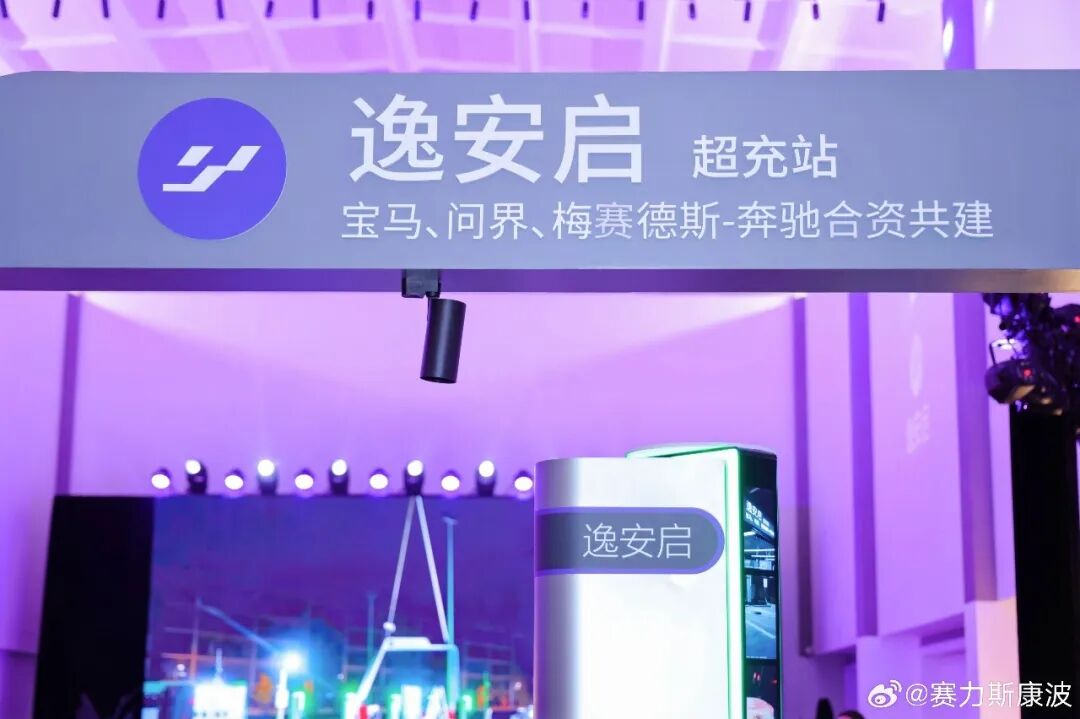
Car owners are the first to perceive the change. A Leapmotor owner recently went to a Yianqi supercharging station to charge and found that the LOGO on the station sign had changed from the original "Mercedes-Benz + BMW" to a sentence: jointly built by BMW, AITO, and Mercedes-Benz. Probably to prevent passersby from mistakenly thinking that only cars of these three brands can use it, the station operator also specially marked: "All cars can charge."
On social platforms, many AITO owners actively share their charging experiences. One owner added about 370 kilometers of range in 10 minutes, saying, "As expected of charging piles jointly built by several luxury brands, it feels very premium."
Interestingly, Kang Bo responded in the comments that Yianqi supercharging stations are open to all new energy brands, while AITO owners can enjoy brand-exclusive benefits such as reserved charging. The piles are everyone's, but the benefits are one's own. This is exactly the typical form of marriage.
The second is equity marriage. On September 28, Geely and NIO signed an agreement to cross-hold shares and advance coordination on battery-swapping technology, standards, and charging networks. At the recent 2026 World Intelligent Connected Vehicles Conference, Li Shufu, chairman of Geely Holding Group, said bluntly: "Geely builds one set, NIO builds another. This is duplicated construction and unnecessary, so they merged."
NIO founder, chairman, and CEO Li Bin said: "Reducing duplicate investment is actually also reducing waste and improving each company's operational efficiency. This is actually an important issue facing every Chinese auto company."
The third is ecosystem marriage. On April 21, CATL released its "integrated supercharging and battery-swapping station" strategy, planning to build 4,000 by the end of the year and 100,000 shared energy replenishment infrastructure facilities by the end of 2028, with the first batch of partner automakers including Changan, Chery, GAC, Seres, SAIC-GM-Wuling, and BAIC.
At that time, Yang Jun, general manager of CATL's battery-swapping business, said: "The energy replenishment industry faces great challenges, with almost the entire industry losing money." This may be the real reason automakers are banding together.
Looking at Europe, the IONITY network, jointly operated by Volkswagen, Mercedes-Benz, BMW, Ford, and Kia, has covered 24 countries and operates more than 4,500 charging stations. Mercedes-Benz and BMW's joint station opening in China is mirrored by their membership in the IONITY alliance in Europe.
The fourth is cross-industry marriage. BYD announced in 2025 that it would adopt a "station within a station" model and cooperate with TELD, Star Charge, Sinopec, and various highway operating units to build stations. Huawei, on the supply side, exports megawatt-level charging equipment and network-building solutions to automakers and station operators.
In this energy replenishment competition, the supply side is running faster than automakers. For example, CATL has drawn the map of integrated supercharging and battery-swapping stations all the way to 100,000 by 2028, while Sunwoda has set a goal of building 10,000 megawatt-level fast-charging stations by the end of 2027; Huawei sells megawatt-level equipment to automakers while laying its own network.
The industry has long reached a consensus on marriages between enterprises. Yu Dexiang, chairman of TELD, once said publicly: "The charging industry has moved from the charging era to the electricity era and then to the network era. The real competition in the future is not in investing in piles and building stations, but in the ecological construction capability of networking into a network."
Deng Jie, general manager of Sunwoda's fast-charging ecosystem business unit, also said at the 2026 New Energy Battery Industry Development Conference (Zaozhuang) held in late September: "Fast-charging stations often take five or six years to recover their investment, which requires participants to have strategic patience."
For companies that lack the patience to build their own networks, sharing costs through alliances is the better choice. An industry insider noted that the sector currently faces a chicken-and-egg dilemma: operators hesitate to build because there are too few supercharging-capable models on the road, while automakers that go it alone risk low utilization rates. A more practical path is to leverage software algorithms and networked scheduling to bring existing facilities to life.
Admittedly, full cross-brand compatibility is also hard to achieve. BYD's fast-charging piles, for instance, deliver limited power to non-fast-charging models—a Xiaomi owner measured a maximum charging power of 228 kilowatts—while Li Auto's 5C piles in some areas remain restricted to certified brands. Aligning interfaces, protocols, and benefits is proving harder than simply scaling up pile deployment.
The ideal charging ecosystem may still be a long way off. If piles cannot be connected into a network, even the highest power ratings amount to nothing more than isolated islands of information. When automakers begin to recognize each other's charging networks, the ultimate beneficiaries will be car owners who no longer have to pick a brand just to find a place to charge.
(The cover image was created with AI)
-
![]()
Competing for the 2026 Auto Sales Crown Is No Longer Important
-
![]()
Xiaomi Invests 1.7 Billion Yuan for Stake in Sunwoda Power: Automakers Shift from "Buyers" to "Co-Definers"
-
![]()
Microsoft: High Investment, High Growth, Strong Cash Flow—Is It the Only Cloud Giant with True "Character" Deserving a Premium Valuation?
-
![]()
Zhuoyu Hands "Pay Stubs" to 40-Ton Trucks: Saving 20,000–30,000 Yuan in Fuel a Year—But Who Foots the Bill?
-
![]()
Building a "Chicken Farm" Together: Co-Building Charging Piles Becomes an Industry Trend
-
![]()
Computing Power Is No Longer the Ceiling for AI Agents—the Ecosystem Wall Is
-
![]()
BYD: Trading Price for Volume at Home, and Its Overseas "Savior" Is Starting to Falter Too?
-
![]()
The Vanished "Golden September and Silver October"