Final word: Will consumers buy Audi cars without the four rings?
 11/06 2026
 532
On October 26, Audi China announced that it had signed new strategic agreements with China FAW and SAIC Motor respectively, completing the division of responsibilities for its dual brands in China. FAW Audi retains the four-ring logo and covers both fuel and new energy product lines; SAIC Audi adopts the AUDI letter logo and focuses on the pure electric track. According to the agreement, the transition period for SAIC Audi to sell four-ring Audi cars lasts until the end of 2027.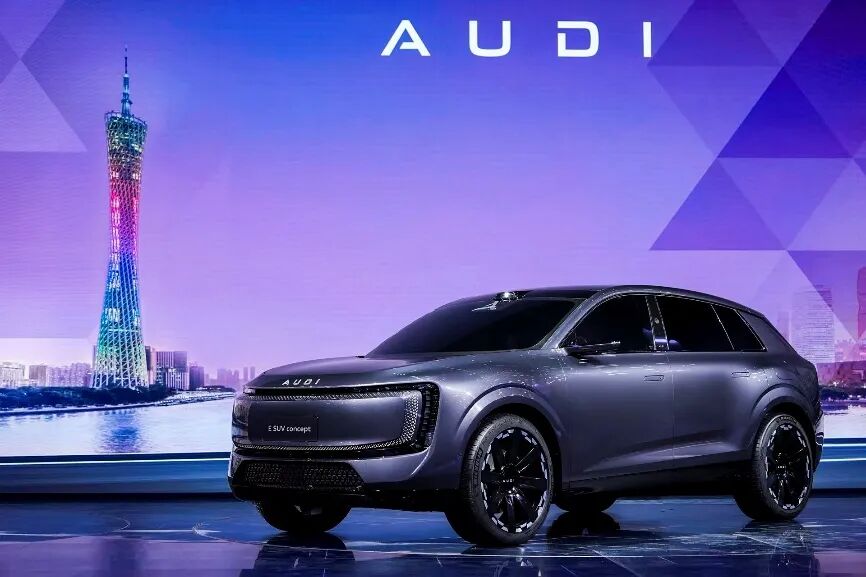
After the news was released, many people questioned whether consumers would still buy SAIC Audi without the four-ring logo.
SAIC Audi has gone through a bumpy 10-year journey
In November 1995, FAW, Volkswagen, and Audi signed a contract, and Audi was officially incorporated into the FAW-Volkswagen system, becoming the first international high-end automobile brand to be produced in a joint venture in China. In 2006, the FAW-Volkswagen Audi Sales Division was established, and domestically produced Audi began to operate independently. For a considerable period of time, Audi's sales in China were consistently higher than those of Mercedes-Benz and BMW, and the three were known as the ABB luxury car giants.
In October 2016, Audi China announced that Audi brand cars would be produced and sold by both FAW-Volkswagen and SAIC Volkswagen. After the news came out, it caused huge controversy and set off a wave of SAIC Audi turmoil. The FAW Audi dealer alliance strongly resisted, collectively refusing to take delivery of new cars, causing Audi brand car sales in China to plunge. The FAW Audi dealer alliance launched a strong boycott, collectively refusing to take delivery of new cars and jointly controlling prices. The direct consequence was that in January 2017, Audi's sales in China fell by about 35% year-on-year.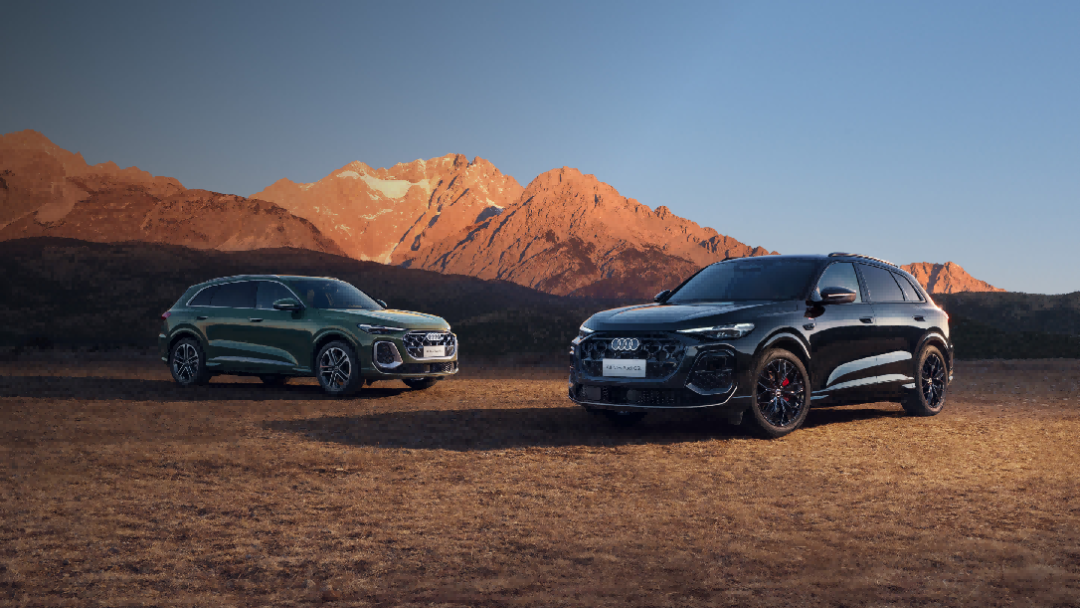
Later, Audi China, FAW Audi, SAIC Audi, and FAW Audi dealers reached a negotiated settlement and issued the Sanya Statement, stipulating that SAIC Audi could only sell Audi cars produced in Shanghai starting in 2022, with unified channel management.
On September 26, 2021, SAIC Audi's first model, the Audi A7L, was officially put into production. Sales began in 2022. It can be said that SAIC Audi was born at the wrong time. 2021 and 2022 were the last two years of the three-year pandemic. In 2022, SAIC Audi's sales were less than 10,000 vehicles. In 2023, sales were about 30,000 vehicles, about 36,000 in 2024, and 47,300 in 2025. In the first three quarters of this year, sales were about 31,900 vehicles. Annual sales have never exceeded 50,000 vehicles, far behind FAW Audi.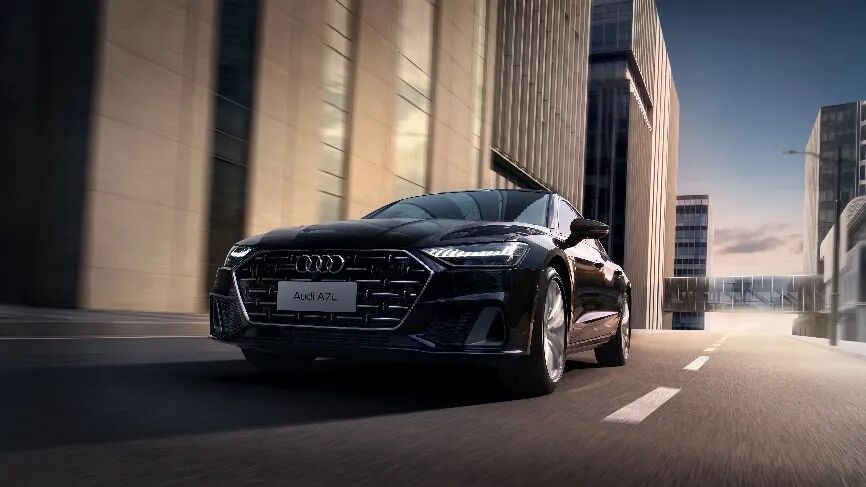
Back then, Final Word published three consecutive articles questioning SAIC Audi. Ten years later, it seems that the judgment back then still made sense.
Can one Audi with two logos succeed?
The market share of new energy passenger vehicles in China is growing, and traditional fuel luxury brands are also under great threat, with their market share continuously declining. Under the new circumstances, Audi decided to change its previous approach. FAW Audi retains the traditional four-ring logo, focusing on fuel vehicles and the traditional luxury market, maintaining high-end brand positioning and identity premium. SAIC Audi no longer uses the four-ring logo and only uses the AUDI letter logo, focusing on the high-end intelligent pure electric track.
Some analyses believe that if newly launched low-priced, high-configuration pure electric Audi models continued to carry the four-ring logo, they would lower the high-end value of the Audi brand, undermine the premium of main fuel models such as the A6L, Q5L, and A8L, and cause internal cannibalization among models and brand devaluation. Using a dual-logo system to separate the fuel and new energy markets allows Audi to preserve the face of traditional luxury on one side while freeing up pricing and positioning for new energy products on the other, directly confronting domestic high-end new energy vehicles.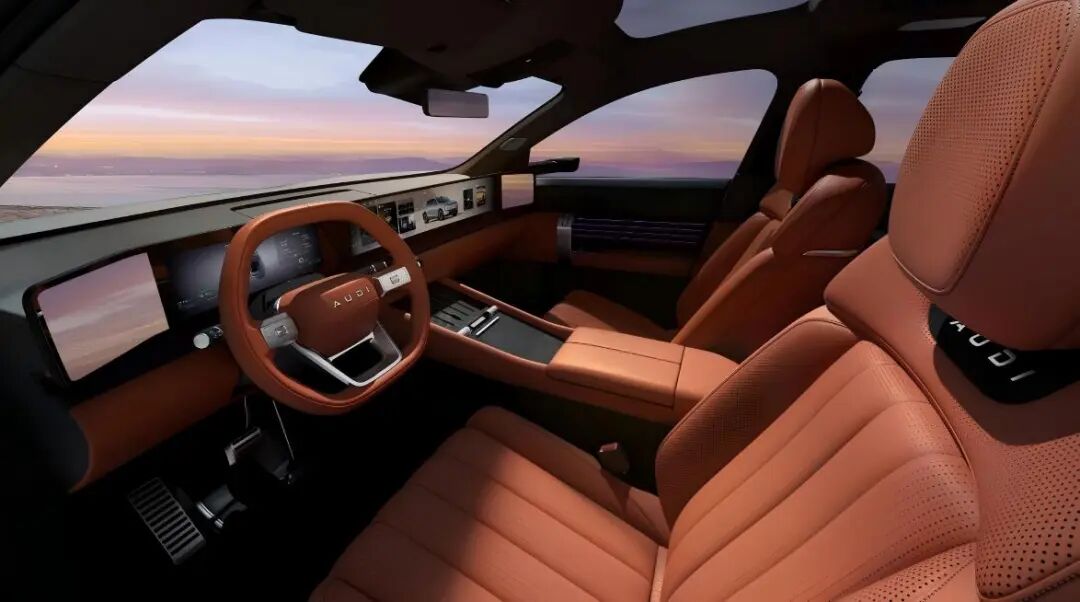
Judging from domestic sales data in the first three quarters of this year, SAIC Audi models with the AUDI logo delivered market results exceeding expectations.
According to first-half data, SAIC Audi's four-ring fuel models sold only about 9,800 vehicles, while the two pure electric models with the AUDI letter logo had cumulative sales exceeding 12,100 vehicles, with the new energy lineup overtaking the traditional fuel lineup.
Among them, the hit model SAIC Audi E7X performed particularly impressively, with deliveries exceeding 4,000 vehicles in its first month on the market and sales exceeding 10,000 within 100 days, becoming the first model in the BBA luxury pure electric camp to break 10,000 in 100 days.
This proves that high-end users do not reject Audi models without the four rings. However, it should also be noted that sales of another model carrying the AUDI logo, the E5 Sportback, are not ideal, starting strong but declining, with the lowest monthly sales at only about 100 vehicles.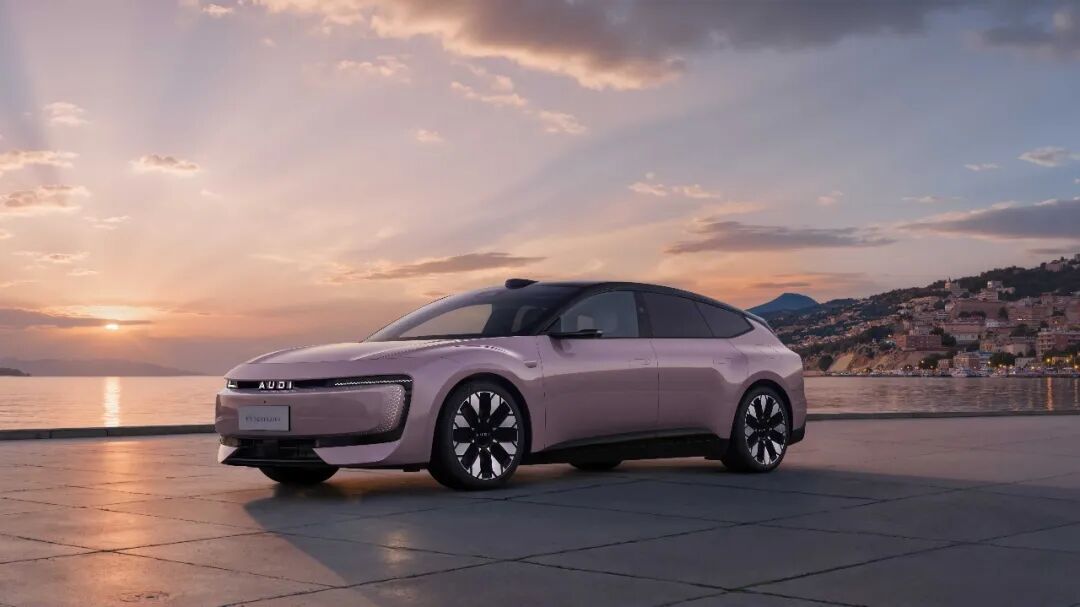
The starkly different performances of the two models carrying the AUDI logo show that what users reject is not the absence of the four-ring logo, but product strength. Audi models without the four rings that truly have explosive product strength can still sell extremely well.
But it should also be noted that for consumers who value business scenarios and social circle identity, Audi's core value has never been the chassis, power, or configuration, but the label conferred by the four-ring logo.
In the eyes of these consumers, four-ring Audi is widely recognized as a symbol of steadiness, dignity, and understated luxury. The AUDI letter logo, by contrast, lacks recognition, heritage, and prestige. An Audi without the four rings has lost its core luxury premium and does not count as an authentic Audi, so they will not buy it.
Consumers mainly made up of young families, tech enthusiasts, and urban commuters focus on hard product strength when buying cars. They believe that the AUDI letter logo still represents pure Audi bloodline, sharing Audi chassis tuning, four-wheel-drive technology, vehicle craftsmanship, and quality control standards, and is not a rebadged model.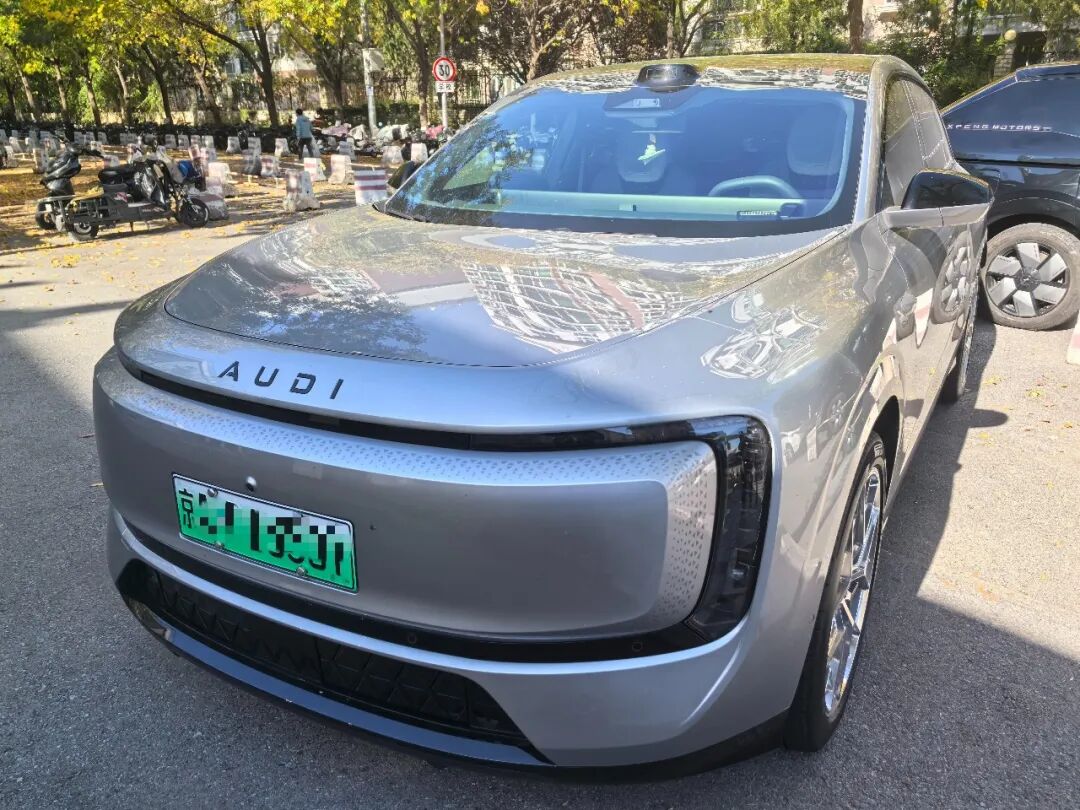
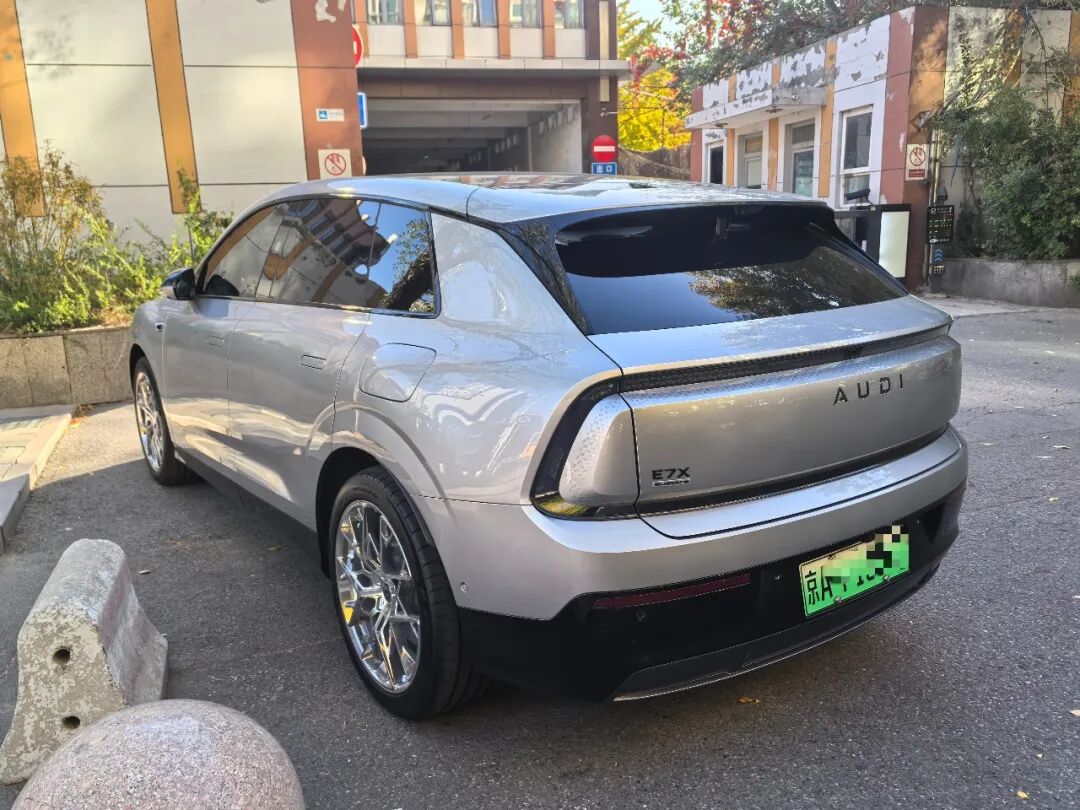
SAIC Audi E7X with AUDI logo on the streets of Beijing
For these users, the face value of the car logo is far less important than the driving experience. Removing the four rings sheds the label of traditional business stodginess and is younger, simpler, and more in line with new energy aesthetics, which is a plus rather than a minus.
Of course, Audi without the four-ring logo has a fatal weakness: rebranding in consumers' minds is too difficult.
The awareness accumulated by the four-ring logo over nearly a century cannot be replaced in just a few years. In the public perception, an authentic Audi will always have four rings.
In the future, Audi will form one Audi with two logos: the four-ring logo will hold the traditional luxury base, while the letter logo will compete for incremental new energy market, with the two systems running in parallel to serve two different groups of consumers.
Whether this strategy can succeed still needs to be tested by time. (End)
-
Agents Are "Redoing" Databases
-
![]()
SAIC and Audi: Building the Purest-Blooded AUDI Electric Cars
-
![]()
Yiwu Is on a Tear Again! GDP Grew 7.9% in the First Three Quarters, and Foreign Trade Is Still Surging
-
![]()
Driving Momentum in Atomic-Level Ultra-Precision Optical Manufacturing: Lingding Optics Secures New Round of Financing
-
![]()
Q3 Non-Recurring Net Profit Surges 686%, Yet Aopu Optoelectronics Burns Through 240 Million Yuan in First Three Quarters
-
![]()
One Person, 11 Labs: The "Pick-and-Shovel" Gold Rush of AI-Driven Science
-
Volkswagen Recalls 610,000 Vehicles as Profits Plunge 98.7%—Is There Still Hope?
-
![]()
Li Jiaqi Moves 2 Trillion Tokens: AI Starts Landing in Shopping Carts