Yu Chengdong "Takes Advice": the "Crown Prince" Returns as the New AITO M8 Rolls Back into Huawei Stores
 11/06 2026
 566
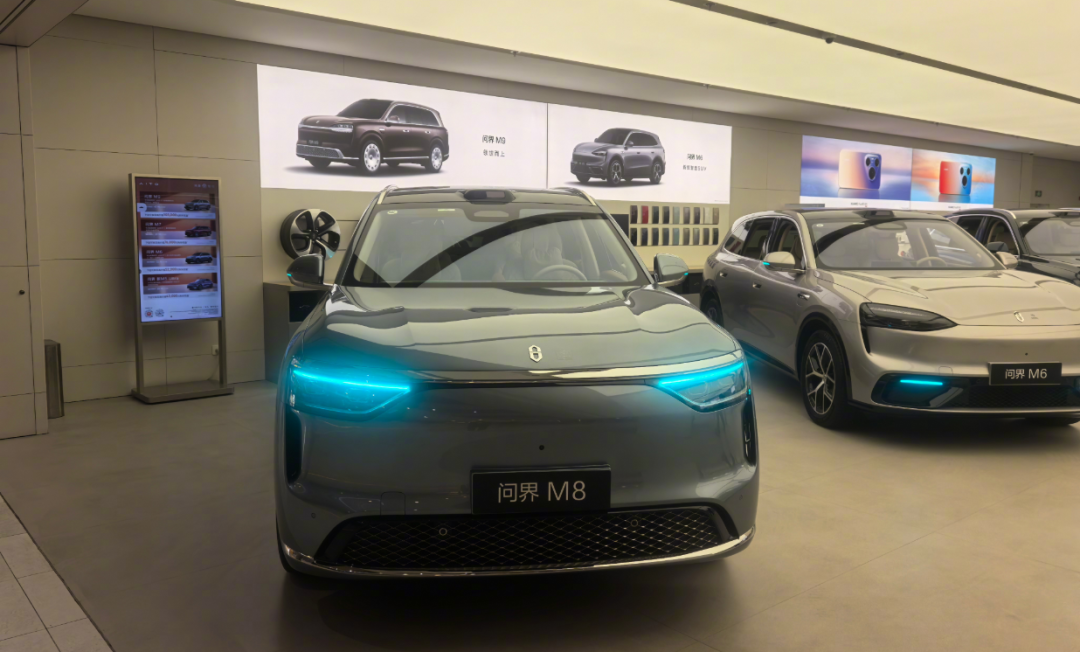
Image source: Weibo
On November 5, the new AITO M8 began appearing in Huawei stores in person.
The first batch of cars reached stores in waves. Salespeople's WeChat Moments lit up first, curious shoppers filed in one after another, and some even made a special trip just to check it out.
Let's set the pleasantries aside. Check-ins, onlookers, and questions about configurations were the scene at stores that day—not sales data. How many cars arrived, how many cities were covered, and how many orders were locked in that day—so far there is no official word.
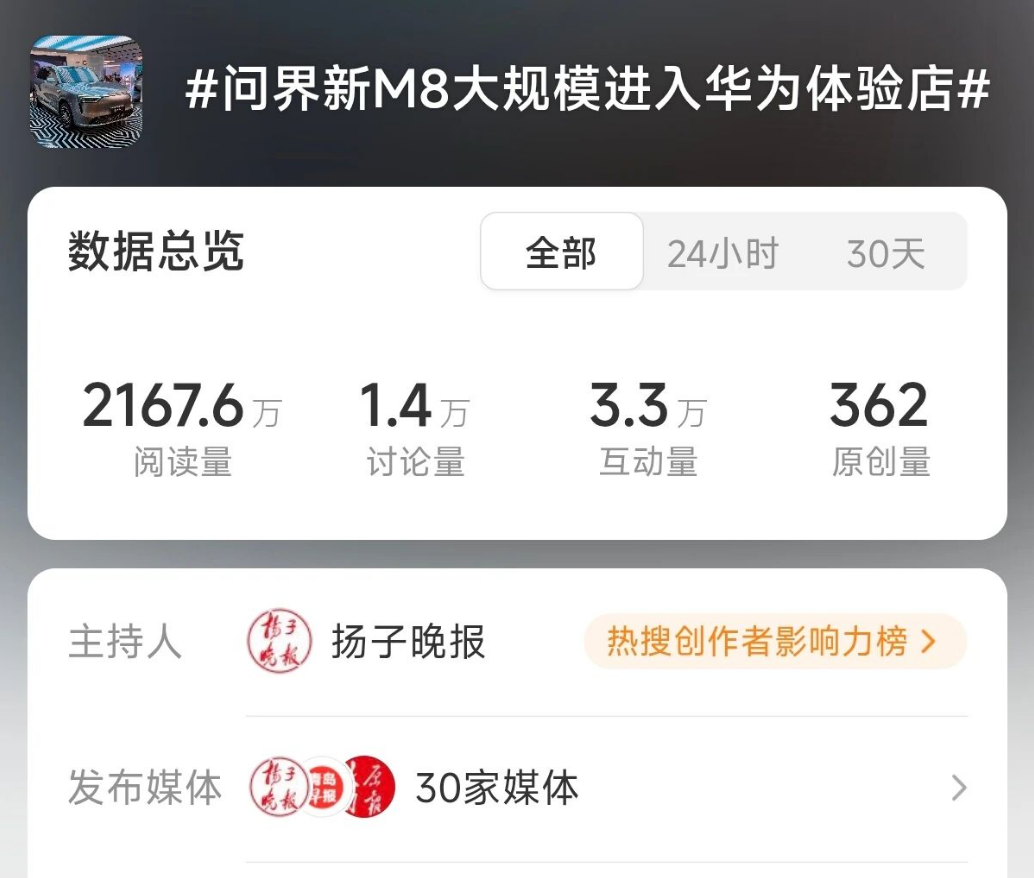
Image source: Weibo
To put it plainly, a crowded showroom and actual orders are two different things.
01 The Car Really Entered Stores, but Bustle Does Not Equal Sellability
On November 5, the official Weibo of HarmonyOS Intelligent Mobility released a teaser for the new AITO M8, stating that the new car is gradually arriving at AITO authorized user centers nationwide, with experience and configuration selection opening simultaneously.
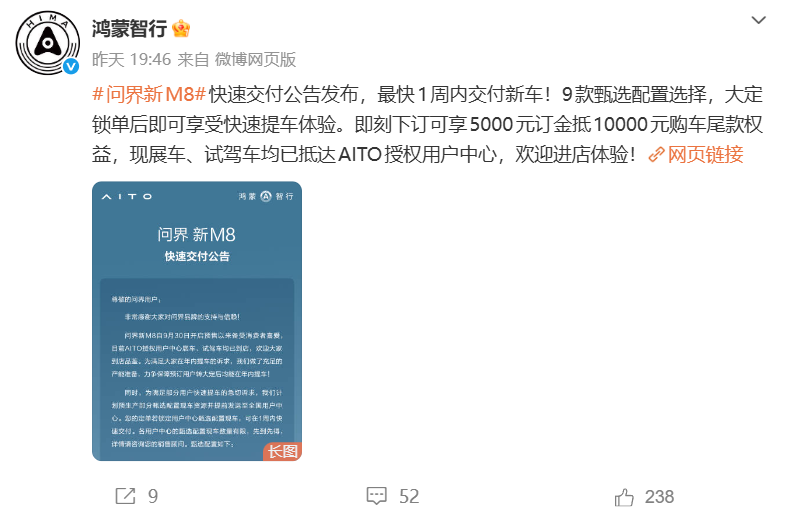
Image source: Weibo
The new M8 is scheduled to launch on November 13. Configurations opened first on October 30, with three versions—Max, Max+, and Ultra—presented together.
Its position is very clear: a RMB 400,000-class family mid-to-large SUV, filling the segment between the M7 and M9, built on the Tuling platform, offering both extended-range and pure electric options, with both large five-seat and six-seat choices.
When the old M8 was first launched in April last year, it held the sales champion title in the RMB 400,000-class SUV segment for a while, but it has been declining all the way into this year.
What AITO is doing this time, plainly put, is moving the car back into Huawei stores—the shelf with the richest traffic in HarmonyOS Intelligent Mobility's hands.
For the channel, the benefit is direct: letting people touch the real car before launch can reduce hesitation.
But "buy with confidence, use with peace of mind" is rhetoric. How many years of warranty, what first-owner benefits are offered, and where after-sales outlets are covered all have to wait for the benefits document to land.
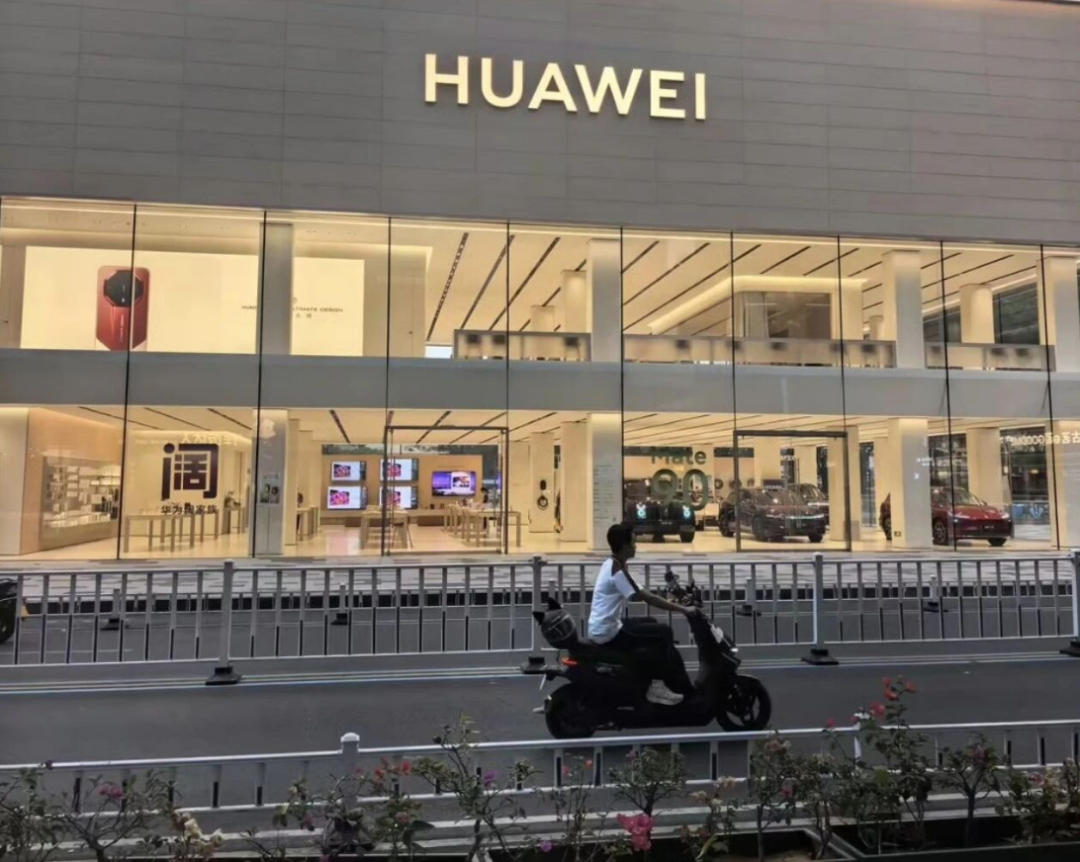
Image source: Weibo
What is hot in the showroom is emotion; what lands on the wallet is the terms.
02 With RMB 1.5 Billion Poured In, Only Half Can Be Clearly Explained
The official R&D investment figure is RMB 1.5 billion, described as "comprehensive evolution across six major dimensions."
After going through all public releases, only three were named and elaborated: intelligent driving, chassis, and safety. The remaining three were not expanded on.
So this statement can only be half-believed for now; do not treat "six major" as six that have all landed.
For intelligent driving, the claim is aimed at the problems of large vehicles: big cars are hard to drive, and families riding in them easily get carsick. The direction is right, but there is not a word about which sensors are used, which chip, how large an area urban navigation can cover, or under what conditions it can operate.
"Building a solid guarantee for family travel" is an attitude, not a capability boundary.
The same goes for chassis and safety—only adjectives. What suspension form, whether there is air suspension, what the body rigidity is, and which active safety items are listed—not one item was laid out. What level should be delivered at the RMB 400,000 class? Wait for the configuration sheet.
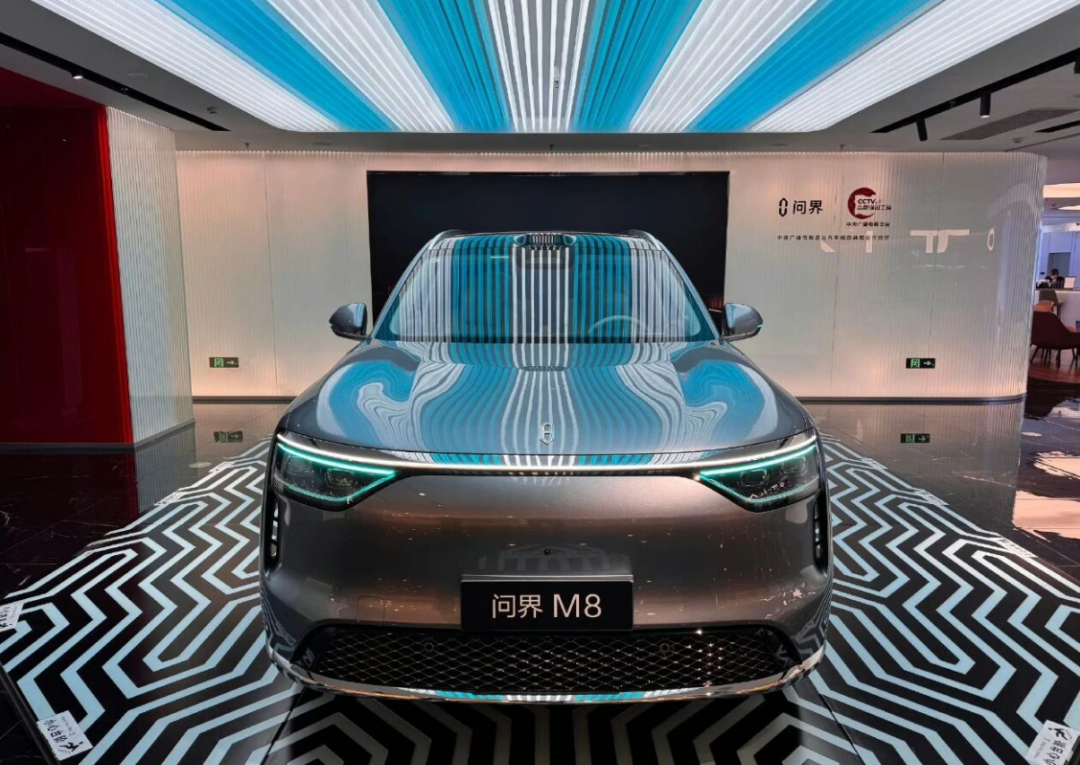
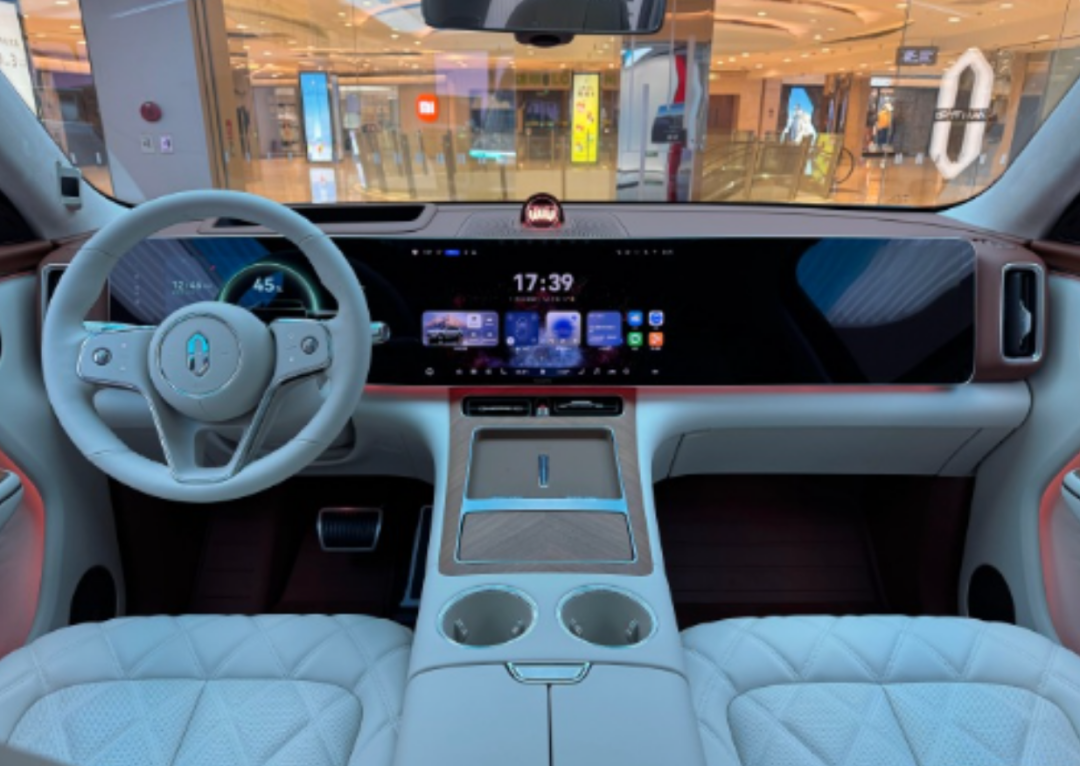
Image source: Weibo
What can be confirmed about the cabin is still the HarmonyOS Intelligent Mobility system. Flagship texture and a "first-class cabin" throughout the car all sound nice. How big the screens are, what chip the infotainment uses, and how many speakers there are were not detailed.
The points that truly affect how a family chooses—up to which row ventilation, heating, and massage extend; six seats or seven; whether the second row has captain's chairs; whether the third row can be adjusted electrically—are all up in the air.
03 Three Lines Drawn over Seven Years; These Two Were Never a Straight Line
This relationship has not been smooth sailing.
In April 2021, the Seres Huawei Smart Selection SF5 was launched at the Shanghai Auto Show and went directly into Huawei flagship stores. The Smart Selection model started here, and Huawei put cars into its own stores for the first time.
On March 31, 2023, Ren Zhengfei signed an internal document reiterating that Huawei does not build cars, valid for five years, and explicitly prohibiting "Huawei/HUAWEI" from appearing in vehicle promotion and exterior branding. The next day, "HUAWEI AITO" materials in stores nationwide were taken down overnight, and sales scripts were no longer allowed to mention "Huawei cars."
This was the first line drawn—on appearances.
The second was drawn over money and property rights. In July 2024, Seres spent RMB 2.5 billion to buy 919 AITO trademarks and 44 design patents from Huawei, with an appraised value of RMB 10.233 billion. In August, it paid another RMB 11.5 billion to take a 10% stake in Yinwang, completed payment in September 2025, and obtained a board seat. The brand belongs to Seres, and the equity was straightened out.
The third was on September 15 this year, when operational leadership was handed over, leaving Huawei Terminal only with technology empowerment.
All three lines were drawn in the direction of pulling back.
04 No Mention of AITO for 35 Days—Why Suddenly Want It Back
The first three were all about pulling back. This time it is about expanding outward.
The announcement landed on September 15: product definition, marketing, channel retail, and user services were all handed to Seres to lead, with Huawei Terminal retaining empowerment. On September 24, Yu Chengdong came out and said, confirming that Seres itself proposed to lead brand operations, that Huawei chose to support it, and mentioned that subsequent resources would tilt toward Zhijie, Xiangjie, Zunjie, and Shangjie. On October 1, the two sides signed a new five-year strategic cooperation.
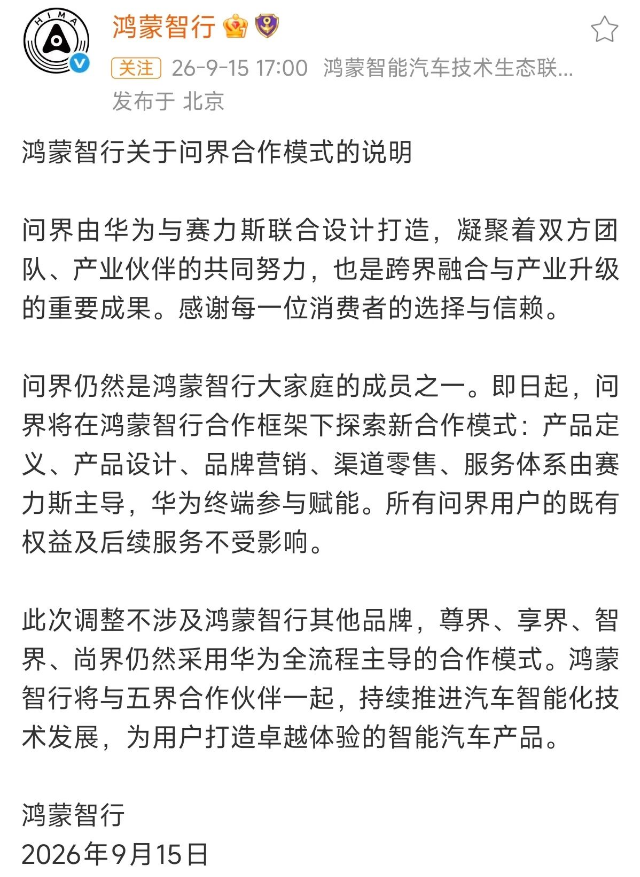
Image source: Weibo
Then, HarmonyOS Intelligent Mobility's official Weibo did not mention AITO for a full 35 days. The previous post was still the cooperation announcement from October 1.
On September 24, Yu Chengdong publicly responded, saying that Seres proactively proposed to independently lead brand operations and that Huawei chose to support it. That day, Yu Chengdong's Weibo mentioned that subsequent resources would tilt toward Zhijie, Xiangjie, Zunjie, and Shangjie. As of now, his Weibo has not posted anything related to AITO.
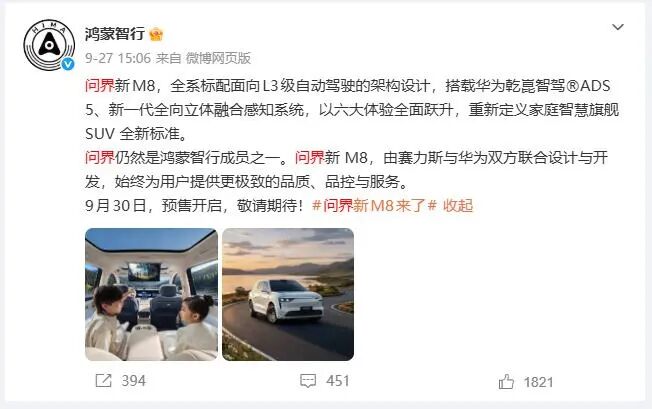
During this period of silence, bad news came one after another.
The production and sales bulletin on November 1: in October, HarmonyOS Intelligent Mobility delivered 33,537 units, down 50.8% year-on-year and down 10.5% month-on-month. Last year in the same period it was 68,216 units, setting a record high; this year it was directly halved. On the AITO side, October deliveries were 22,105 units, down 54.69% year-on-year and down another 12.9% month-on-month.
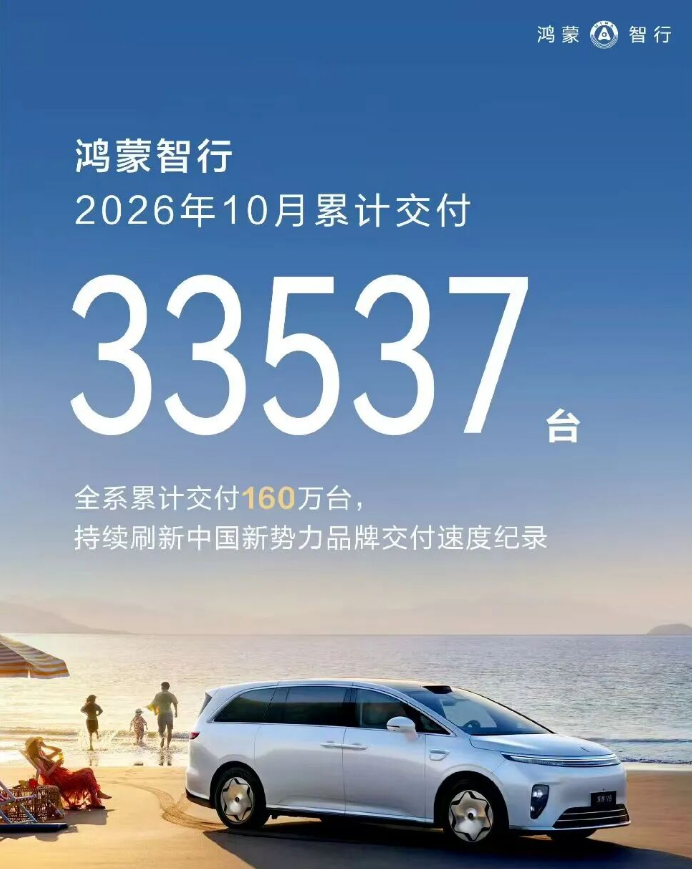
Image source: Weibo
On October 17, an AITO vehicle in Shenmu, Shaanxi, crashed unilaterally and caught fire, killing the driver. Officials said it was manual driving at the time, with a speed of 139.1 km/h, and denied battery explosion and intelligent-driving impact. But the EDR was not made public, and public anger online has not subsided.
The model was just adjusted, sales are falling, and the accident is still hanging there. With these three things stacked together, what the market worries about is not really the car, but trust: after the channel change, do people recognize Huawei or Seres? Who will upgrade the infotainment in the future, who will provide after-sales support, and who will step forward if something happens to the brand?
One month of exclusive operation, and the answer is already written in sales.
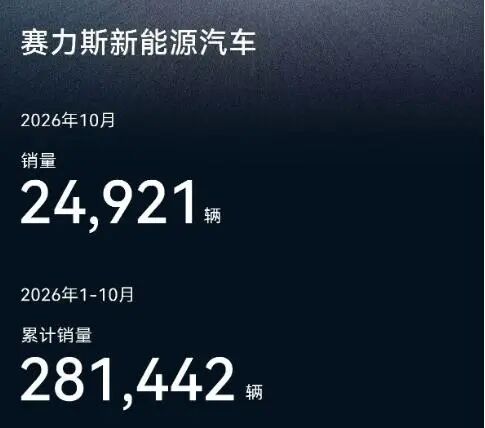
As sales halve, the identity of the new M8 that Seres is preparing to launch seems somewhat special.
So when the M8 returns to stores and is described as "Yu Chengdong listened to advice" and "the crown prince returns," it is not without reason. At least it immediately suppressed the rumor that "AITO has completely left Huawei channels and Huawei no longer backstops it."
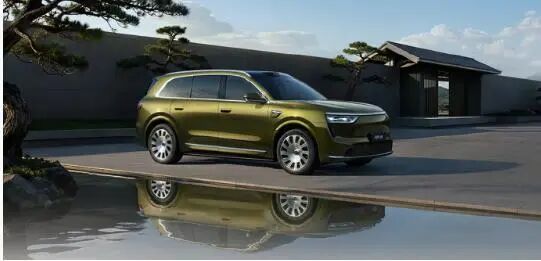
Image source: Weibo
But the underlying rules have not changed: AITO is still led by Seres, and Huawei Terminal only provides empowerment. What changed is where it is displayed and sold.
For Seres, this is about restoring momentum—the trust that Huawei stores inherently carry is the most valuable thing right now. For HarmonyOS Intelligent Mobility, this is about protecting the base: more than 60% of October deliveries came from AITO, while the other four Jie brands have not yet achieved stable volume. This ballast stone cannot flip.
AITO cannot be absent from Huawei stores—not just for traffic, but also because the high average price makes store returns look good. If there is a real change, it may be the settlement method behind the scenes.
The problem follows: with five Jie brands and more and more cars being spread out, can Huawei stores' limited display space fit them all?
05 Returning to Position Is Only the First Step; Pricing Is the Final Answer
RMB 1.5 billion is this car's biggest card. In the industry, a facelift for a hit model usually costs around RMB 500 million; this is three times that. Officials say the money was spent on the complete vehicle, including chassis, styling, cabin, intelligent driving, and electric drive, and that safety is not just passing national standards but leaving redundancy.
That is not wrong. For a RMB 400,000 family car, safety should be standard equipment, not a bonus.
The "future-oriented L3 architecture" is also being used as a selling point, and claims of being standard across the lineup have spread widely. Seres itself left room when answering investors: for L3 conditional autonomous driving to truly land, it must first pass national regulations, product access, scenario policies, compliance verification, and several other gates, and specific models and filing information are subject to official release.
Meaning: the direction is there, but the timing is not set.
So do not treat this return as a victory celebration. It is more like a stabilizing card in a headwind game: telling the outside world that cooperation has not broken, AITO is still part of HarmonyOS Intelligent Mobility, and the channel adjustment is not a split but a running-in.
The real answer is on November 13. The price range, what differs between versions, the range of extended-range and pure electric models, and what level of intelligent-driving hardware is provided—only when these four are laid out will it be clear whether it is worth it compared with those large SUVs at the same price.
The bustle in stores lasts only a few days; in the end, the market recognizes only orders and deliveries.
Interactive topic: Would you go to a Huawei store to take a look at the new M8 before launch, or wait until the price comes out?
Disclaimer: This article is only a financial commentary on major companies and does not constitute any investment advice. The corporate data and regulatory events mentioned in the article all come from public information and are for reference only; specifics are subject to official releases. Images are from the internet; if there is any copyright issue, please contact us for deletion.
-
Agents Are "Redoing" Databases
-
![]()
SAIC and Audi: Building the Purest-Blooded AUDI Electric Cars
-
![]()
Yiwu Is on a Tear Again! GDP Grew 7.9% in the First Three Quarters, and Foreign Trade Is Still Surging
-
![]()
Driving Momentum in Atomic-Level Ultra-Precision Optical Manufacturing: Lingding Optics Secures New Round of Financing
-
![]()
Q3 Non-Recurring Net Profit Surges 686%, Yet Aopu Optoelectronics Burns Through 240 Million Yuan in First Three Quarters
-
![]()
One Person, 11 Labs: The "Pick-and-Shovel" Gold Rush of AI-Driven Science
-
Volkswagen Recalls 610,000 Vehicles as Profits Plunge 98.7%—Is There Still Hope?
-
![]()
Li Jiaqi Moves 2 Trillion Tokens: AI Starts Landing in Shopping Carts