Dealerships' Plea: Survive, Make a Profit, Live with Dignity
 11/17 2026
 379
Introduction
The auto dealer community, once riding high, now finds itself at the icy bottom of an industry cycle.
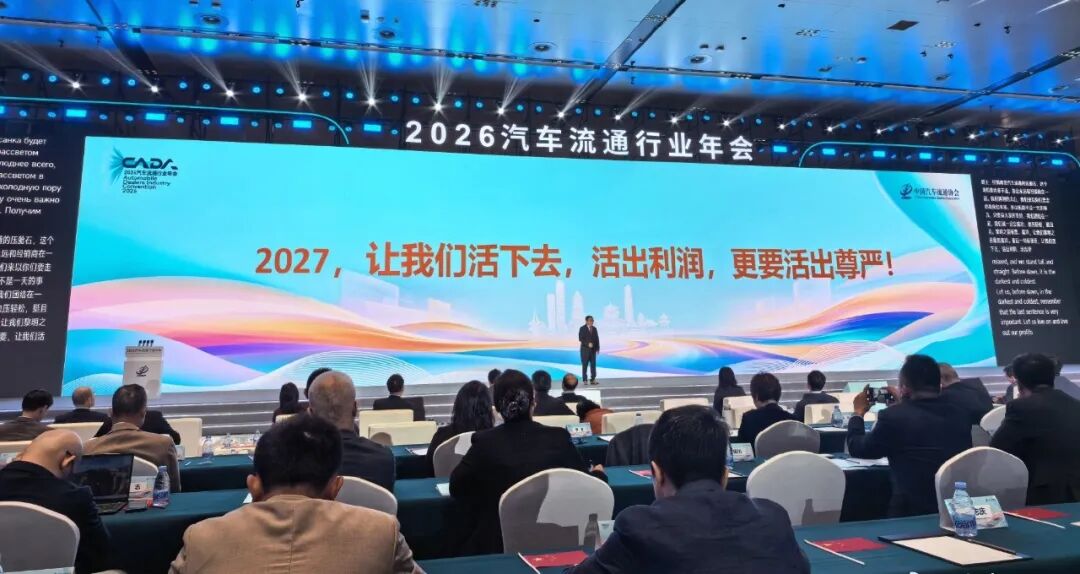
On November 12, in Fuzhou, at the venue of the 2026 Automotive Distribution Industry Annual Conference, the air was thick with the industry's unmistakable sense of gloom.
A few PPT slides were quietly photographed and quickly circulated, echoing through WeChat groups of automotive practitioners.
"Price inversion, high inventory, broken rebate promises, and lack of voice—these are the four great mountains weighing on auto dealers."
"Dealers of luxury brands such as Porsche, Mercedes-Benz, and BMW have formed dedicated chapters to stay warm together, giving dealers leverage at the negotiating table."
"Without scale, without core technology, without profit—OEMs that treat dealers poorly will only be eliminated or merged and restructured."
"Industry governance has moved from 'shouting' to 'having teeth.' Abnormal OEM behaviors such as rebates and inventory are now linked to anti-involution mechanisms and bound by laws and regulations."
……
These blunt words, set against the current automotive industry downturn, seem to push the entire dealer ecosystem into opposition against automakers, charged with tension.
In particular, the cry "2027, let us survive, earn a profit, and above all live with dignity" reminds many in the industry of Vanke's striking 2018 slogan "Live On." Eight years later, that survival warning from real estate has been transposed onto the automotive distribution industry in 2026, carrying an equally heavy weight.
The tide of the times has turned. The auto dealer community, once riding high, now finds itself at the icy bottom of an industry cycle.
01 Stores Close, People Flee
When the pen landed on the signature line on the last page of the acquisition agreement, Lao Zhang let out a long breath. The weight that had hung on his shoulders for sixteen years suddenly lifted the moment the pen tip touched the paper.
He was the head of an auto dealer group in Shanghai and the largest dealer of a leading independent brand in the city. He entered the business back when the brand sold only 200,000 to 300,000 vehicles a year, struggled alongside it through thick and thin, and watched it grow from a local automaker into a giant selling three million vehicles annually.
More than a dozen stores were scattered across Shanghai's districts and counties, and the lights of one brand showroom after another had shone in this city for many years. This dealer group was a business he had built brick by brick with his own hands. At its peak it had hundreds of employees and had cumulatively sold to and served about 100,000 customers and families—it was the battlefield of half his life.
A few months ago, he quietly packaged and sold these dozen-plus 4S stores to the largest dealer group in the country.
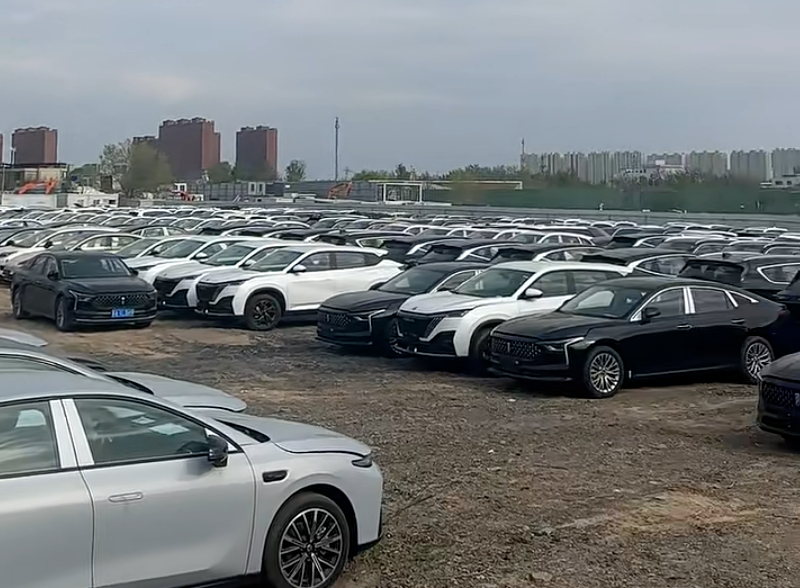
Few outsiders knew about the news, and there were no media reports. Recently, on automotive vertical media platforms, those 4S stores had changed names, meaning the handover was finalized and the new owner had formally taken over this business territory.
In recent years, he had not escaped any of the mountains weighing on dealers. He was a veteran who had grown up with independent brands, had seen the golden days when stores were packed with customers and margins were fat, and had personally lived through this brutal round of involution, watching new-car prices keep sliding and store profit margins being gnawed away bit by bit.
He did not launch fierce public accusations; he simply chose to exit. The relief at the moment of signing had nothing to do with the joy of cashing out—it was that he finally no longer had to carry those day-after-day torments forward.
Many peers did not understand: this leading independent brand was still moving upward, so why hand over the business at this point? But in his judgment, the present might already be a cyclical high, and the auto market ahead would only become more brutal.
This was a vote cast through his own choice by someone who had been steeped in the industry for decades. He had seen the industry's cycles of rise and fall, understood the changes taking place in distribution channels, and recognized that behind the automakers' aggressive advance, channel risks were being continuously amplified.
The once-symbiotic partnership is becoming unbalanced.
In fact, Lao Zhang's 4S stores being able to find a buyer and complete the handover was already very lucky, because in recent years dealership closures and network exits have become the industry norm.
Liuliu in Pingdingshan, Henan, represented a Fengxing 4S store. During the very difficult July-August period this year, she still wrote on her video account, "Everything is heaven's will, keep trying harder," to encourage herself, and kept trying to attract customers through videos. Recently she said that after more than twenty years in the auto industry, she would completely close the store at the end of this month.
In the first half of 2026, the number of authorized 4S stores shut down nationwide reached 1,800, which translates to an average of 10 4S stores disappearing from the market every day. Over a longer time span, nearly 15,000 4S stores have exited the network over the past five years, and in 2025 alone, 5,000 stores sadly left the market.
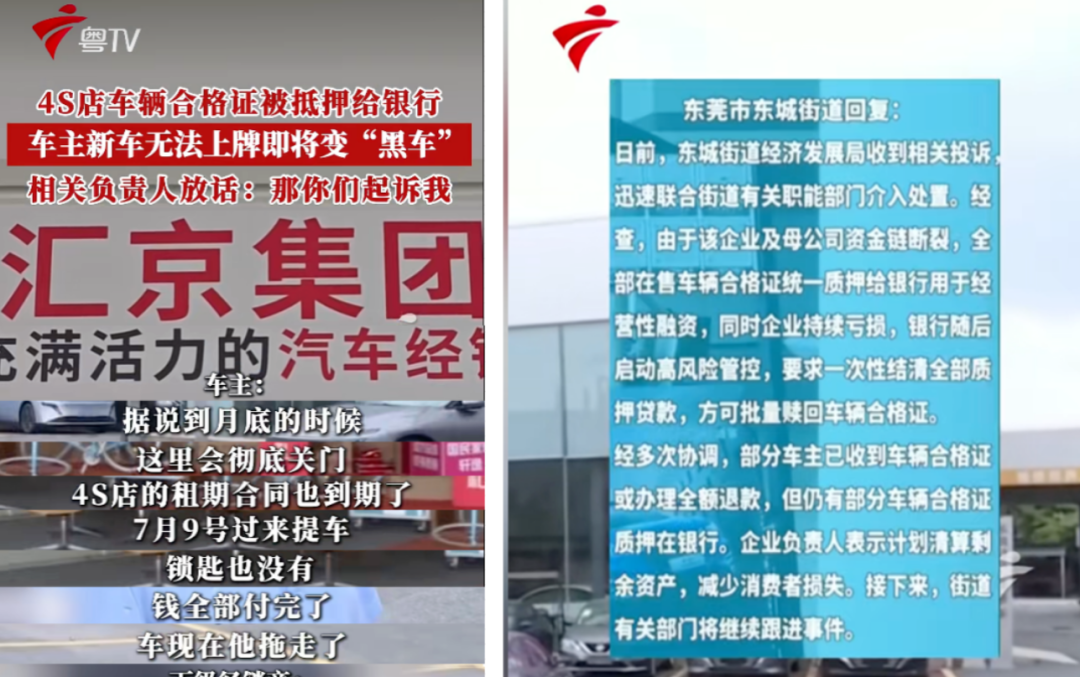
Huijing Group, which at its peak held more than sixty 4S stores, was reported mid-year to have suffered capital chain breaks at stores in multiple locations. Vehicle certificates of conformity were pledged at banks and could not be redeemed, and consumers who paid in full could not obtain registration documents, falling into a trough of rights protection.
Oulong Group ranked 13th among China's top 100 dealers. In June this year, a certificate scandal broke out at its Wenzhou store. Subsequently, 92 subsidiaries submitted pre-restructuring applications, repayment of the 200 million yuan "Happiness Fund" issued to employees came to a complete halt, and the stores were left empty.
Recently, car owner Mr. Chen was still seeking redress through the media, saying that a group of owners had taken delivery three to four months earlier but still had not received certificates of conformity and could not register their vehicles. Cars bought for more than 100,000 yuan could only sit there as decorations. The company involved was Guizhou Changfeng Auto Sales Group, a long-established dealer group for the largest independent auto brand.
Later, media reported that the group had been receiving customers normally one day, and the next day the stores were empty, vehicles inside were moved out overnight, and the actual controller lost contact. Customers who had already paid for their cars and employees waiting for wages all had their rights left hanging, making this a typical microcosm of the large-scale clearing out of new energy vehicle channels.
From national top-100 dealer groups to regional leaders, from joint venture brands to luxury brands, and even to hot-selling independent brands, it seemed no one could stay unaffected.
02 Under Market Contraction, the Front Line Bears the Pressure
Store closures and network exits are only the result; what causes that result is the downturn in the auto industry.
Over the past two months, the automotive industry's "Golden September and Silver October" has thoroughly become a thing of the past. In previous years, September and October were the busiest season of the year for 4S stores, with crowds flowing through showrooms, orders pouring in, and sales consultants routinely working overtime to sign deals. But in 2026, this industry convention completely failed.
In September, domestic passenger vehicle retail sales fell 28% year on year, and in October retail sales fell 27% year on year. The peak season did not arrive as expected, leaving only the cold reality of a "peak season that is not peak."
Cui Dongshu, secretary-general of the China Passenger Car Association, publicly stated that going forward, there may no longer be a traditional "Golden September and Silver October."
The overall market data is cold. The industry predicts that domestic passenger vehicle retail sales for the full year of 2026 will be about 18.5 million units, and the industry's retail scale may fall by about 20% compared with previous years. This figure means that the scale of China's auto retail market has fallen back to the level of twelve years ago.
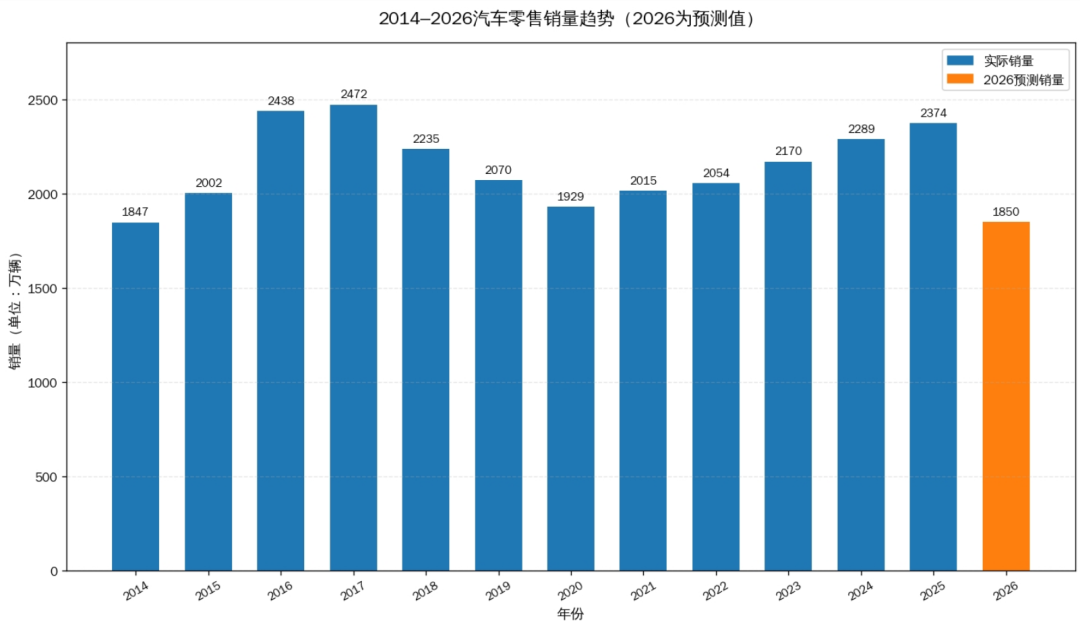
As the market pie suddenly contracts, dealers at the very front end of auto consumption are "the first to bear the brunt" and absorb the full impact. The crisis is no longer an industry report floating on the surface, but real suffering that lands squarely on every dealer group's books, every store, and every salesperson.
Industry statistics show that 82% of dealers are trapped in new-car price inversion, with new-car gross margins falling to -25.5%, making it a common reality to lose money on every car sold. Losses at luxury brands are even more severe: some Porsche stores lose an average of 70,000 to 80,000 yuan per car sold, and for Mercedes-Benz, BMW, and Audi, once riding high, the models that can actually make dealers money are now few and far between.
Other data show that only 23.5% of dealers across the industry can achieve profitability, while more than half are in a state of sustained losses. The new-car business can no longer generate returns, and many stores can barely keep operating almost entirely on life support from after-sales maintenance and repair business.
The shockwave of the industry downturn travels down the supply chain to millions of frontline practitioners. Over the past five years, about 110,000 people in the automotive distribution industry have chosen to leave this track they struggled on for years.
A car salesperson from Guangdong posted his salary online, saying that earning more than 10,000 yuan a month used to be the norm, but now his monthly salary is only a little over 1,000 yuan, even less than an ordinary retiree's pension, and he has completely given up.
Recently, a salesperson at an Audi store in Guizhou posted a video complaining that they had been put under intensified pressure: a 10 yuan fine for failing to invite customers and another 10 yuan fine for failing to close a deal. The store launched a "crowdfunding assessment" for long-inventory cars, requiring each person to crowdfund 10 yuan per day for unsold vehicles, and the money would be returned to the salesperson only after the vehicle was sold.
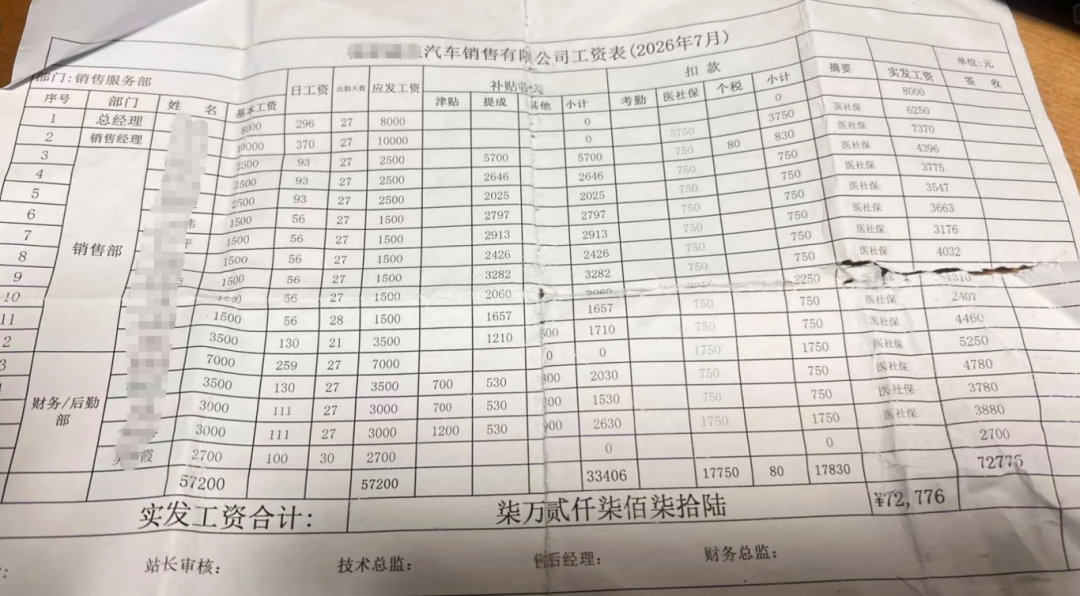
"When luck is bad, working 25 days a month and being docked thirty yuan a day means paying out 750 yuan a month." Even more brutal is that this store operates a zero-base-salary system for sales positions. With daily commuting by car and breakfast expenses, this salesperson's mandatory daily spending alone is seventy or eighty yuan.
"It's not that we don't want to sell cars. We give customers all the preferential policies, but the market simply won't move." He sighed helplessly that coming to work every day actually meant paying out of his own pocket, and if told to others, it sounded utterly absurd.
Still having a job is, for laid-off salespeople, still lucky. Not long ago, an anonymous authorized dealer of a certain brand disclosed its situation to the media, saying the store had already completed a 20% staff reduction to prepare in advance for the long off-season winter.
To boost sales, the manufacturer had raised the dealer rebate ratio from 4.5% to 5.4%, an increase of two tenths, and nearly one percentage point of rebate is by no means a small sum for a store. But policy can only mobilize dealers' willingness to sell cars; it cannot reverse the objective situation of sharply reduced store traffic, shrinking orders, and rising order cancellations. Terminal sales continue to decline.
03 Seeking a Rebalance in the OEM-Dealer Relationship
As November arrives, the familiar annual script—manufacturers concentrating inventory loading onto channels—is staged once again. The China Passenger Car Association summarizes the current market feature as "strong manufacturers, weak dealers; production determines sales," meaning production no longer follows real terminal consumer demand. Automakers prioritize keeping production capacity running and completing annual performance targets, mass-produce vehicles, and then use commercial policies to shift inventory pressure layer by layer onto dealer channels.
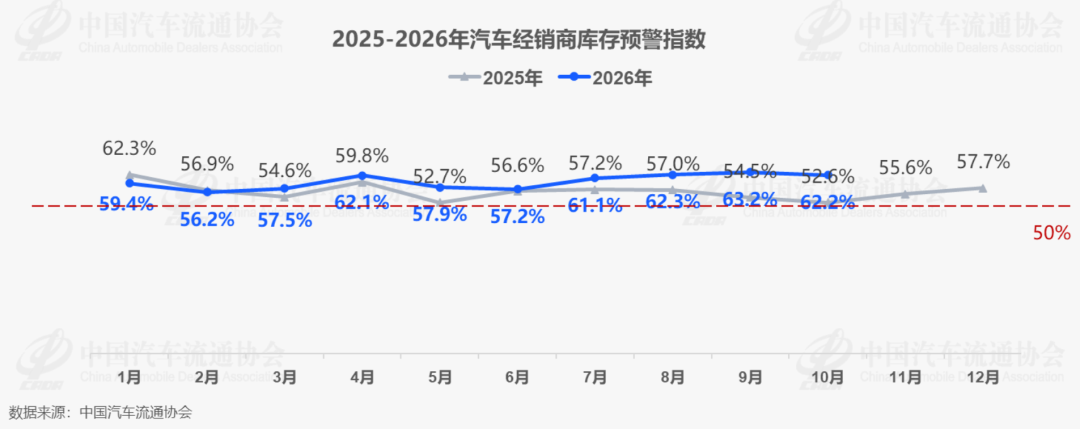
The latest "Automotive Dealer Inventory Warning Index Survey" released by the China Automobile Dealers Association shows that the auto dealer inventory warning index for October 2026 was 62.2%, up 9.6 percentage points year on year, with the inventory index remaining above 60% for four consecutive months, significantly above the boom-or-bust line.
Why, when the market clearly cannot sell, do manufacturers still ship cars so aggressively? Do manufacturers not know the pressure on the industry's front line? The answer is certainly that they know, but it is truly a result they have no choice but to accept.
On the one hand, the fourth quarter has arrived, the year-end assessment countdown is on, and many automakers give priority to wholesale data in their KPIs and financial report sales assessments. With limited time before the year-end window and huge gaps in earlier tasks, whether customers buy is not important; shipping cars to dealer warehouses makes the report numbers deliverable.
On the other hand, it is inextricably tied to hefty quarterly and annual rebates and monthly vehicle pickup quotas. When dealers miss the pickup targets assigned by manufacturers, annual rebates worth hundreds of thousands—or even millions—of yuan are wiped out outright. Dealers know full well that the more cars they take, the more money they lose, yet to keep a whole year's effort from going down the drain, they are forced to swallow unsalable vehicles and then figure something out.
In such an environment, new cars continuously rolling into 4S stores push dealers through one dead end after another. Massive amounts of capital are locked up tight in inventory, and capital interest, warehousing, vehicle depreciation, insurance, and miscellaneous fees mean that every day a vehicle sits in the warehouse racks up pure carrying costs.
Inventory turnover days keep stretching longer and inventory age keeps climbing. Long-inventory vehicles can ultimately only be sold at steep price cuts to stop the bleeding, with per-vehicle profit dropping to zero or even turning into a loss; high inventory combined with tight cash flow inevitably sets off brutal year-end price wars, in which low-price order grabbing and cross-brand and intra-brand price undercutting further intensify price inversion.
That is why, at the Fuzhou Automotive Distribution Industry Annual Conference, the association's tough stance against automakers—its "uprising"—can also be read as a clear drawing of the reasonable boundary of demands for the channel group in the face of a survival crisis. Behind that cry also lies the opportunity for a reconstruction of the underlying operating rules between automakers and dealers.
For a long time, vehicle pickup, assessments, rebates, and inventory have all been unilaterally set by automakers, and dealers could only passively accept them. Looking ahead, the formulation of commercial policies, inventory allocation, and rebate settlement should all be placed under a regulatory framework and move toward two-way constraints and shared risk.
Dealers are no longer merely a "reservoir" absorbing production capacity, and automakers cannot pursue only the shine of wholesale reports while dumping operating risks onto downstream stores. Prosperity and loss are shared; when channels collapse on a large scale, automakers cannot remain untouched either.
Returning to that most piercing cry—"survive": survival is the most basic bottom line, profit is a return to the logic that business should have, and dignity should be the shared pursuit of legitimate rights by automotive people. The reality is that, under current conditions and environment, not one of these can be guaranteed.
Responsible Editor: Shi Jie Editor: Wang Yue

THE END
-
![]()
AR Anti-Reflection Coating: "Reduce Reflection, Increase Transmission" — But the Essence Is Systems Engineering
-
![]()
The Year Computing Power Was Tightest: Baidu's Full-Stack Bet Begins to Pay Off
-
![]()
Metalenz Acquires Israeli Startup PxE Imaging to Advance Optical Metasurface Technology
-
![]()
Business Focus: Optical Giant ams OSRAM Posts €829 Million in Q3 2026 Revenue
-
Jet Fuel Price Surge Inflates Costs, Net Profit Falls Over 20%; Spring Airlines Issues 10 Billion Yuan in Bonds to Fund 27.6 Billion Yuan Aircraft Purchase
-
![]()
A $5 Trillion Foreign Trade Hub Hosts a Landmark Gathering of Chinese and Global Titans
-
Baidu's AI Revenue Tops 50% for the First Time, Yet Shares Hit Record Low—Baidu Is Still Essentially Selling Computing Power
-
![]()
China's 6G Communications Breakthrough: Q/V-Band Experiment Hits 27Gbps, Setting New Domestic Record