100,000 Yuan Cheaper Than the V9—Is Huanjie Building an MPV the Li Auto Way?
 11/23 2026
 535
"5C and 6C are essentially no different." "With L3, you can sleep—just don't sleep to death." At the Huanjie V8 launch event, Yu Chengdong once again delivered a string of headline-grabbing remarks.
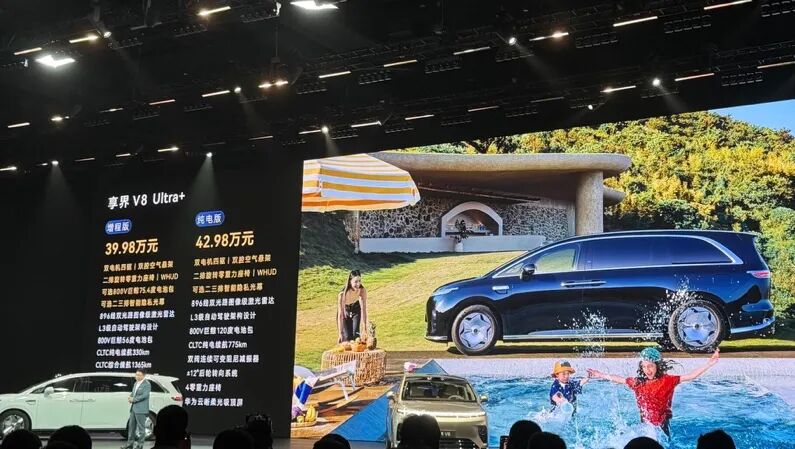
As the first pure electric MPV from HarmonyOS Intelligent Mobility, the pure electric Huanjie V8 is priced 30,000 yuan above the extended-range version. Yu Chengdong lamented, "Batteries are too expensive—the cost alone exceeds 30,000 yuan." He noted that the Huanjie V8 pure electric version, which comes standard across the lineup with a 120 kWh battery pack, carries a battery cost approaching 100,000 yuan—roughly 30% of the vehicle's total cost.
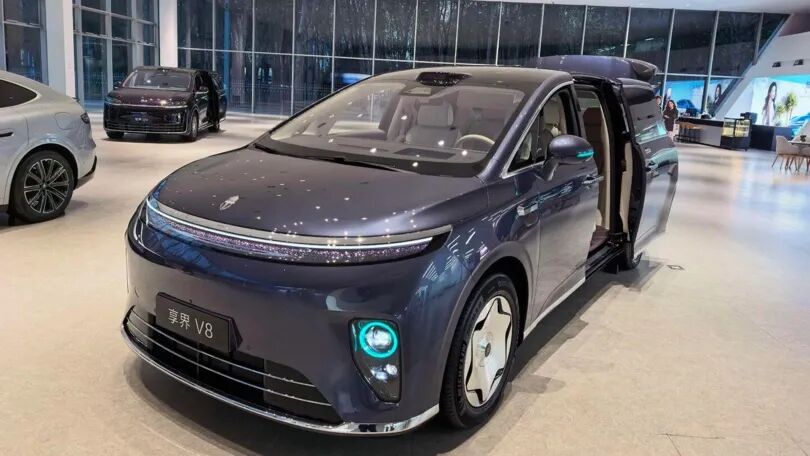
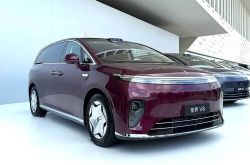
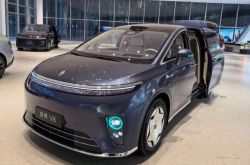
Nearly 100,000 yuan cheaper than its sibling the Zhijie V9, the Huanjie V8 breaks away from the HarmonyOS Intelligent Mobility family front face and focuses on a family-oriented positioning. Its bullet-train-inspired design inevitably brings the Li Auto i series to mind.
The First Pure Electric MPV from HarmonyOS Intelligent Mobility—With Battery Costs Accounting for a Third?
Yu Chengdong said bluntly at the launch event that the price gap between the Huanjie V8 pure electric version and the extended-range version is essentially all down to the battery.
The Huanjie V8 pure electric version comes standard with a 120 kWh CATL ternary lithium battery pack, delivering a CLTC range of up to 830 km. The extended-range version offers two battery capacities—56 kWh and 75.4 kWh—with a CLTC pure electric range of up to 430 km and a combined range of up to 1,465 km. The pure electric version's battery capacity is more than double that of the base extended-range variant. A 120 kWh ternary lithium battery pack costs close to 100,000 yuan—a figure that already accounts for about one third of the vehicle's selling price.
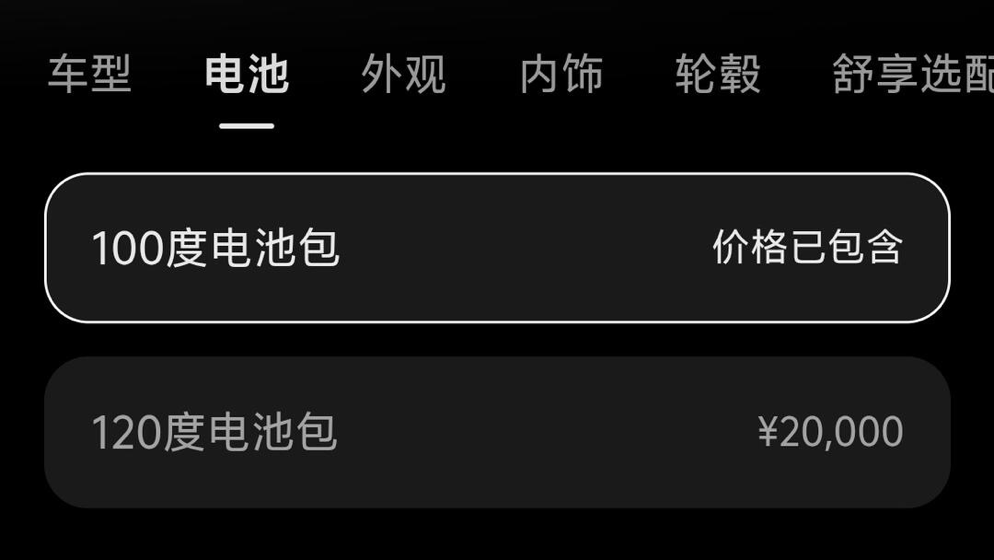
For reference, the recently launched new AITO M8 requires an additional 20,000 yuan to upgrade to a 120 kWh battery pack.
Yu Chengdong also shared an interesting detail at the launch event: with the same 120 kWh capacity, switching to a lithium iron phosphate battery would significantly reduce costs—but the pack would gain about 240 kg in weight.
What does 240 kg mean? It is equivalent to the weight of three adults. For an MPV measuring 5,335 mm in length with a 3,250 mm wheelbase, an extra 240 kg not only means higher energy consumption but also directly affects chassis tuning, braking distance, and handling agility. Ultimately, the Huanjie V8 pure electric version went with ternary lithium.
The Huanjie V8 pure electric version comes standard across the lineup with an 800V high-voltage platform. According to official figures, it can add 400 km of range in 15 minutes. Yu Chengdong also specifically addressed why they are not pursuing 5C and 6C ultra-fast charging: "Whether it's flash charging or supercharging, the actual charging speed is about the same. Because you're not the only one charging—grid capacity is limited, and the real-world result ends up the same."
Whether this claim is entirely accurate is debatable, but he did point to a real pain point: the current power-sharing problem at public charging piles greatly undercuts the experience of ultimate fast charging.
Of course, the Huanjie V8's competitiveness does not rest solely on a 120 kWh battery. What is smarter is that it directs costs toward aspects MPV users perceive every day.
Take flexibility, for example. For an MPV over 5.3 meters long, the entire lineup comes standard with ±12° rear-wheel steering, achieving a minimum turning radius of just 5.09 m. Combined with the Huawei Tuling platform, dual-chamber air springs, and dual-valve continuously variable damping shock absorbers, it addresses precisely the psychological barrier of "not daring to drive a big car and struggling to turn in underground garages."
Another example is getting in and out. The 730 mm electric sliding door opening, 380 mm low floor, and 340 mm B-pillar grab handle may look less eye-catching than LiDAR, but they directly determine whether elderly passengers need to lift their legs high and whether children can climb in on their own. The effective interior space is 3,697 mm, and the trunk still offers 674 L with all seven seats occupied. The second-row seats support electric rotation and lateral movement—also centered on family scenarios rather than simply cultivating a business image.
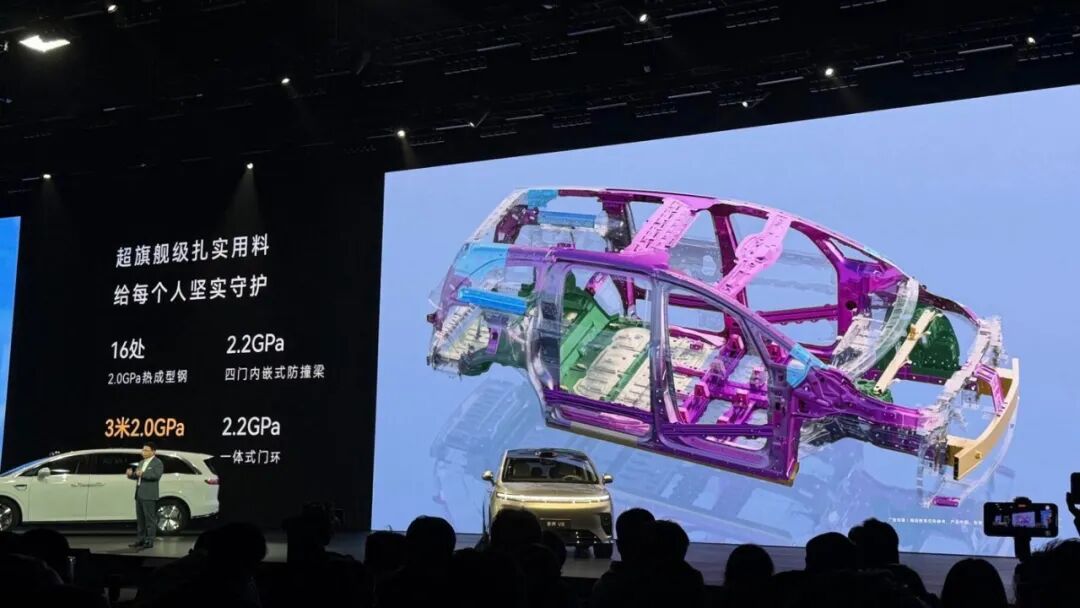
The third row is not treated as a "temporary seat" either. The rear windshield airbag comes standard across the lineup, and combined with features such as active return of the third-row seats and an integrated metal back panel, it attempts to address the long-standing safety weakness of the third row in MPVs.
Is It Worth Spending an Extra 40,000 Yuan for L3?
At the launch event, Yu Chengdong once again brought up L3.
The Huanjie V8 has taken the lead in launching China's first 120 km/h L3 autonomous driving cross-city highway road test. Previously, within the HarmonyOS Intelligent Mobility camp, the Huanjie G9 and Zhijie RX had already obtained 120 km/h highway L3 road test licenses, but the test scope was limited to a single city. The word "cross-city" means that road testing has begun to expand from one city to the intercity highway network.
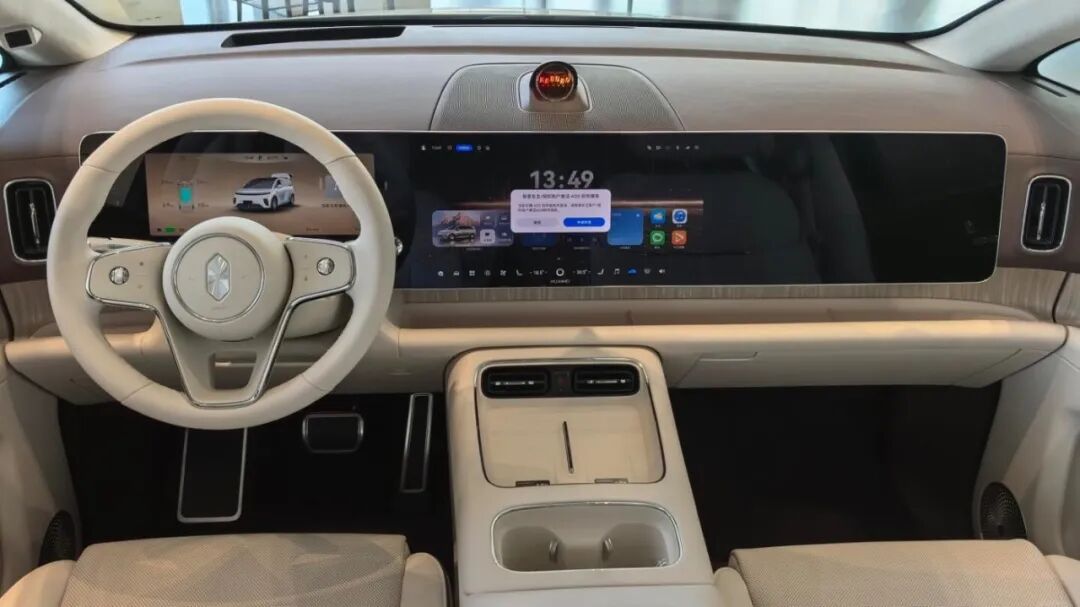
The hardware supporting this capability is quite aggressive. The Huanjie V8 Ultra and Ultra+ versions adopt a four-LiDAR solution, including an 896-line dual-optical-path image-level LiDAR, with 38 high-precision sensors arranged throughout the vehicle. There is also a common-optical-path in-cabin LiDAR version equipped with 33 sensors. Beyond perception, the vehicle features redundant designs across eight major systems, including computing, steering, braking, power supply, communication, positioning, and interaction.
What really sparked controversy was a remark from Yu Chengdong on site: "After L3 autonomous driving arrives, you won't need to touch the steering wheel while driving. You can sleep while driving—just don't sleep to death." He then added that the system can wake the driver within tens of seconds. The remark was shocking, and the director urgently switched the live broadcast feed.
After the launch event, Yu Chengdong corrected himself via social platforms: the Huanjie V8 currently enables L2-level assisted driving. Although the hardware already has L3 capability, the L3 function has not yet been officially activated.
Regardless of whether it was confidence or a joke at the launch event, on the Huanjie V8, for just 40,000 yuan more, you can buy the L3 architecture. It includes more sensors, stronger perception coverage, and more complete redundancy. These investments have practical value for active safety and the upper limit of assisted driving, and also leave room for subsequent upgrades.
But when L3 will be activated, on which roads, at what speed, and how takeover responsibility and regulations will be implemented—these are not things a piece of hardware alone can decide.
Another unavoidable issue for the Huanjie V8 is its relationship with the Zhijie V9. The Zhijie V9 is more business-oriented, while the Huanjie V8 adopts a more streamlined "bullet-train" posture and is nearly 100,000 yuan cheaper than the former. At this point, HarmonyOS Intelligent Mobility has formed an MPV echelon comprising the 300,000-yuan-class Huanjie V8, the 400,000-yuan-class Zhijie V9, the 600,000-yuan-class Zunjie V680, and the million-yuan-class Zunjie V800, with internal positioning basically separated.
But what end consumers actually compare may not necessarily be sibling models. Channel feedback shows that the Huanjie V8 is more often compared with the Li Auto i series and the Voyah Dreamer. The latter is easy to understand—both are Chinese-brand MPVs. The former is because it also focuses on family scenarios.
This also means that the Huanjie V8 cannot rely solely on the technology stories Huawei is good at telling. What Li Auto excels at is precisely translating family needs into specific experiences: where the child sits, how the elderly get in and out, how luggage is placed, and who suffers the most on long trips. The Huanjie V8's proposal of "100 designs born for the family" is essentially answering the same set of questions. 2,216 firm orders in two hours is a good opening—but not yet the final answer.
-
![]()
Mid-to-Large MPV Starting at 319,800 Yuan: How Competitive Is the Xiangjie V8?
-
![]()
Starting at ¥339,900—Can the Latecomer Lexus ES Electric Hold Its Own?
-
![]()
100,000 Yuan Cheaper Than the V9—Is Huanjie Building an MPV the Li Auto Way?
-
![]()
Guangzhou Auto Show: Are Joint Ventures Poised for a Sure Win?
-
![]()
Leapmotor: Selling More, Earning Less—Has "Trading Price for Volume" Run Its Course?
-
![]()
Anthropic: Can't Escape "Brain Deflation"—Will the Endgame Be an "AI Version" of Google or AT&T?
-
![]()
Pony Ma Has Found the Right Direction: Betting Big to Buy AI's Future
-
![]()
Globalization of Auto Parts 2.0: It's No Longer About Competing on Price