Starting at ¥339,900—Can the Latecomer Lexus ES Electric Hold Its Own?
 11/23 2026
 467
In the era of internal combustion engines, the Lexus ES—Lexus's bread-and-butter model—could fairly be called a "wealth-management miracle." Underpowered and overpriced though it was, Toyota's "hunger marketing," ultra-long warranty, and "pure import" status kept the ES selling at a markup for years, and its resale value among domestic luxury sedans far outstripped that of BBA rivals in the same class.
Were it not for the rapid rise of new energy vehicles, one suspects the ES would still be commanding a premium in the domestic market today. But reality allows no "ifs." In recent years, domestic NEVs have seized considerable share from joint-venture and imported fuel vehicles, and even a strong model like the ES has been unable to put up a fight against same-class domestic NEVs. To compete, the ES—shorn of any product advantage—had no choice but to trade price for volume. In the Beijing area, the 2025 Lexus ES was discounted by a full ¥100,000, bringing it within reach for under ¥200,000. One can only imagine what owners who paid over ¥300,000 for a bare car back then must feel at today's discount levels.
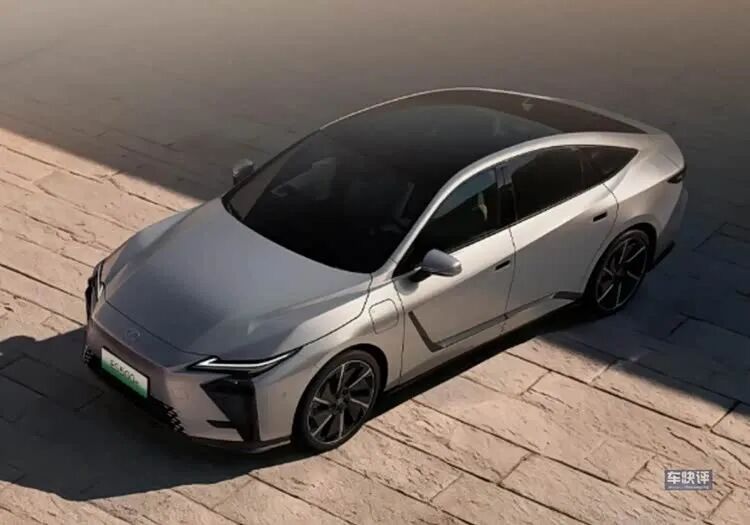
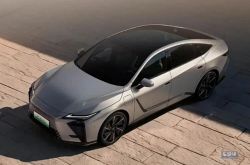
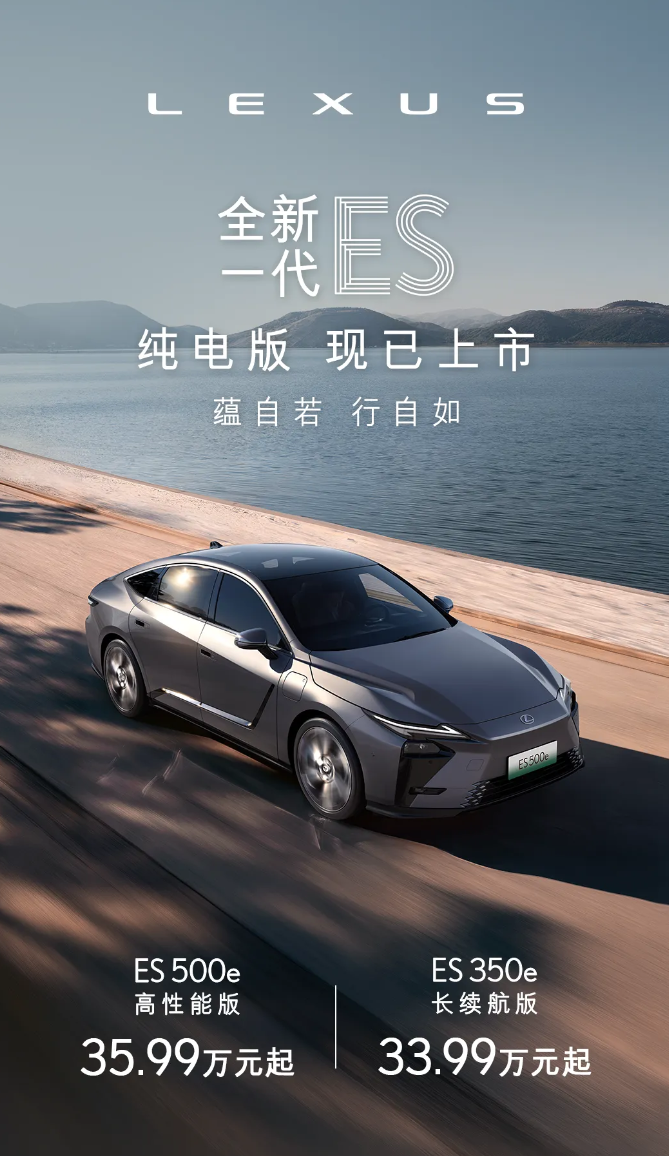
Beyond price cuts, the all-new Lexus ES has also accelerated its electrification push. On November 22, the all-electric ES was officially launched in two trims—Long Range and High Performance—priced at ¥339,900 and ¥359,900 respectively. Let's examine whether this latecomer can still carve out a slice of today's NEV market.
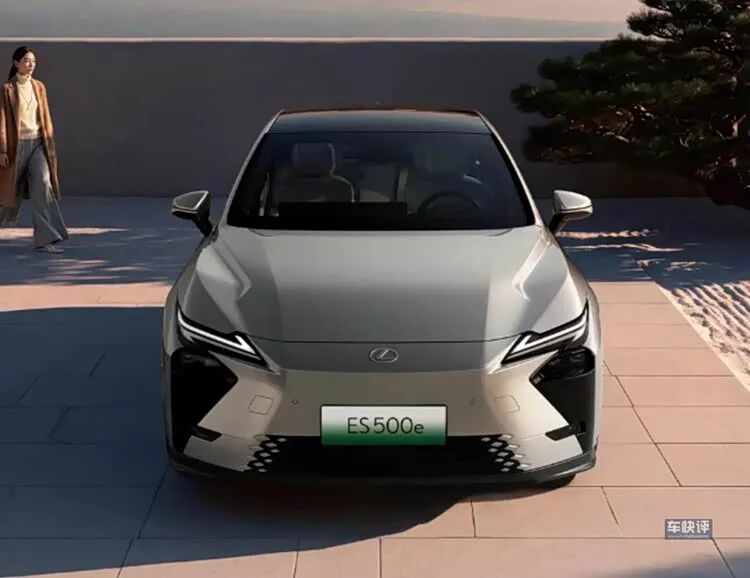
Externally, the electric ES closely mirrors the all-new ES in design, with essentially identical dimensions: 5,140/1,920/1,555 mm (L/W/H) and a 2,950 mm wheelbase. Length, width, and wheelbase match the fuel version exactly; only height has been lowered.
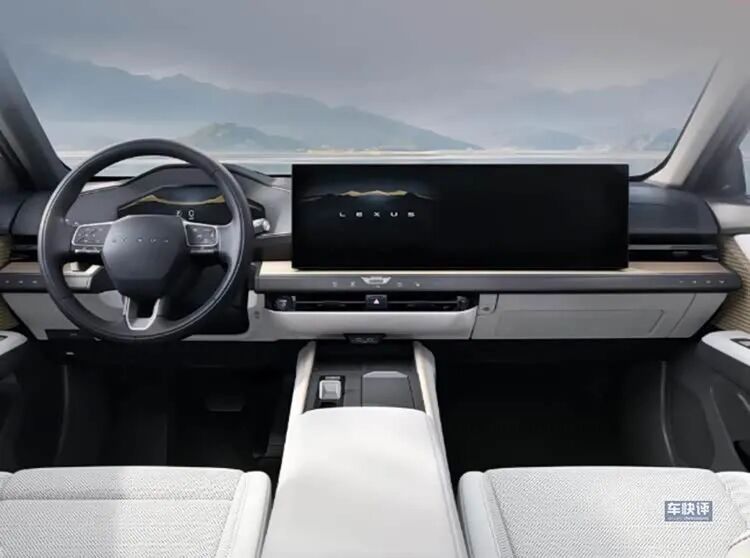
Inside, the electric ES comes standard across the lineup with dual 14-inch connected screens and a richer infotainment suite. Voice control supports four-zone recognition, and features such as gesture control, in-car karaoke, and a biometric monitoring system have been added. The Mark Levinson audio system—optional on the fuel version—is standard across the electric lineup, with noticeably better sound quality. Multi-layer acoustic glass for both front and rear rows and a photosensitive panoramic roof further elevate the ride experience.
On the intelligent driver-assistance front, only remote parking has been added over the fuel version; there is no highway or urban navigation assist whatsoever.
In terms of equipment, the Long Range and High Performance trims are identical save for power output. Both use CATL ternary lithium batteries and support fast charging (max 105 kW on a 400V platform) and 3.5 kW vehicle-to-load discharge. The Long Range variant has a front-mounted single motor, 707 km of CLTC range, and a 0–100 km/h time of 8 seconds. The High Performance variant adds a rear motor, delivering 651 km of range and a 0–100 km/h time of 5.5 seconds.
From the above, it's plain that against same-class Chinese NEVs, the electric ES holds no product advantage whatsoever—and costs considerably more. As for how it will sell post-launch, what's your take? Let's hear it in the comments.
Copyright notice: This article is original content by Che Kuai Ping. Please contact us for authorization before republishing. Unauthorized reproduction is strictly prohibited, as is any form of plagiarism or misappropriation of text and images; violators will be held legally liable. Some images are sourced from the internet and remain the copyright of their original authors. If your work has been used, please contact us to claim compensation or request removal.
-
![]()
Mid-to-Large MPV Starting at 319,800 Yuan: How Competitive Is the Xiangjie V8?
-
![]()
Starting at ¥339,900—Can the Latecomer Lexus ES Electric Hold Its Own?
-
![]()
100,000 Yuan Cheaper Than the V9—Is Huanjie Building an MPV the Li Auto Way?
-
![]()
Guangzhou Auto Show: Are Joint Ventures Poised for a Sure Win?
-
![]()
Leapmotor: Selling More, Earning Less—Has "Trading Price for Volume" Run Its Course?
-
![]()
Anthropic: Can't Escape "Brain Deflation"—Will the Endgame Be an "AI Version" of Google or AT&T?
-
![]()
Pony Ma Has Found the Right Direction: Betting Big to Buy AI's Future
-
![]()
Globalization of Auto Parts 2.0: It's No Longer About Competing on Price