Li Auto Officially Announces New Cars to Get Facelifts Every Two Years — Is China's Auto Facelift Wave Coming to an End?
 11/27 2026
 343
Is involution slowing down? Is the auto industry about to return to rationality?
Li Auto has officially announced that future model updates will slow to once every two years. Does this signal that the auto industry's facelift fever is coming to an end?
During the Q&A session at Li Auto's third-quarter earnings conference on November 25, when answering a Morgan Stanley analyst's question about the 2027 new product plan and the facelift and model-change cadence, Li Auto CEO Li Xiang said that the company's "overall model update cadence will change from once a year in the past to about once every two years. We believe this adjustment is more meaningful for users, the industry, suppliers, and ourselves."
He also outlined three positive aspects of the shift: compliance with the relevant national ministries' "two winters and one summer" testing requirements, a more user-friendly experience with higher resale value, and better capacity planning and quality assurance for suppliers.
As for the specific 2027 update plan, Li Xiang said that in 2027 Li Auto will add one or two standalone models but will not carry out a large number of facelifts.
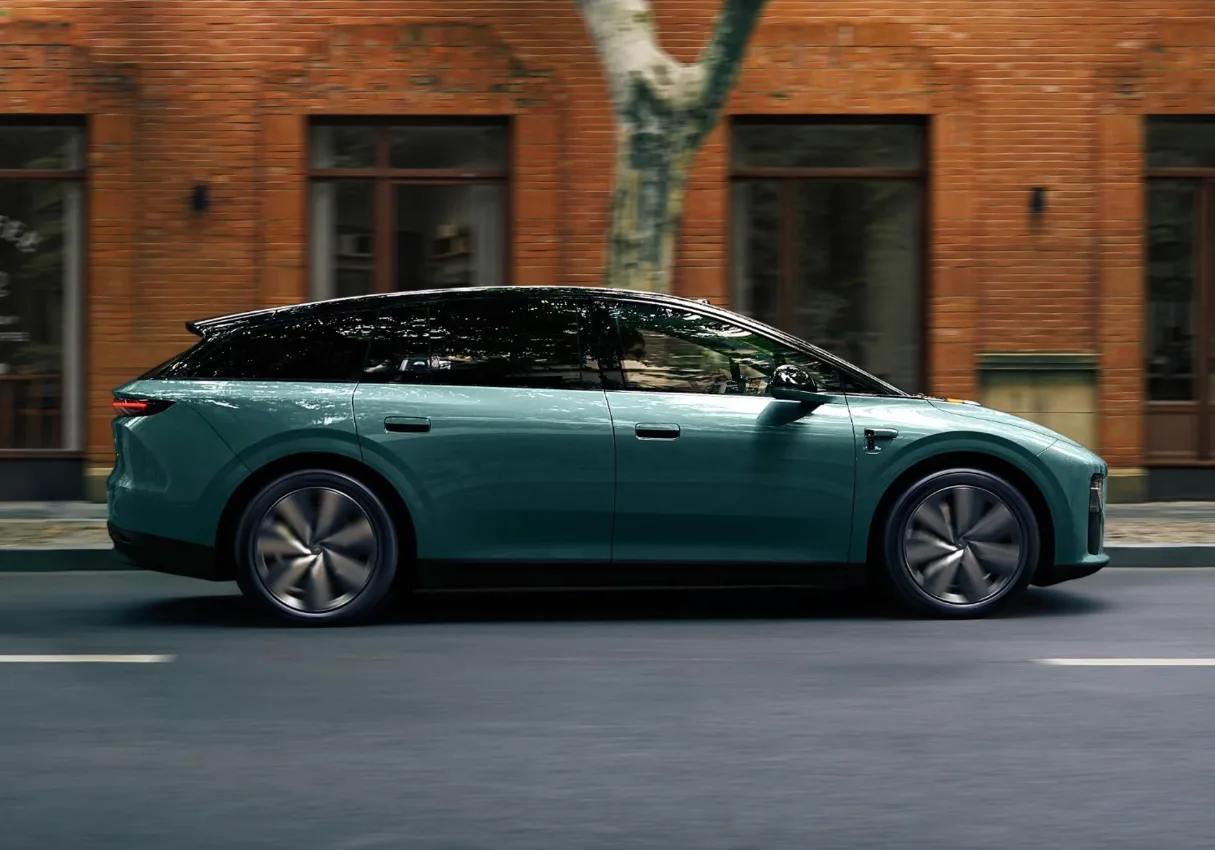
(Image source: Li Auto)
When a leading new-force brand abandons the "annual update" route, does this mean the trend of domestic automakers competing on facelifts and launch speed is slowing? Will other automakers follow Li Auto's facelift cadence?
After a big product year, Li Auto chooses to cool down proactively
2026 is a big product year for Li Auto.
So far this year, Li Auto has replaced the L9, L8, L6, and Li MEGA, carried out an annual facelift for the Li i6, launched the rear-wheel-drive long-range version of the i8, and introduced the new Li i9. In other words, apart from the L7, every model Li Auto currently sells has been updated this year.
Had it followed the mainstream approach of automakers in recent years, Li Auto would have launched 2027 models of the L series and i series next year — meaning a car delivered this year would become an old model in less than a year.
Instead, Li Auto has decisively put an end to this trend. Next year, apart from all-new models, Li Auto will not carry out large-scale facelifts and will not repeat the dense new-car cadence it had this year.
At this point, some may ask: if Li Auto chooses to update once every two years, will the brand's presence decline? Will product sales fall accordingly?
In the view of Dianchetong (ID: dianchetong233), whether a car sells well has little to do with how frequently it is facelifted. On the contrary, if a car really has to rely on frequent facelifts and model changes to boost sales, then that car may truly have problems; facelifts and model changes are merely keeping it on life support.
Take Li Auto's i6 as an example. Even though it received a major facelift in October, its monthly sales from January to August this year remained above 15,000 units, with only some decline in September, the month before the facelift, and in the month of the facelift itself.
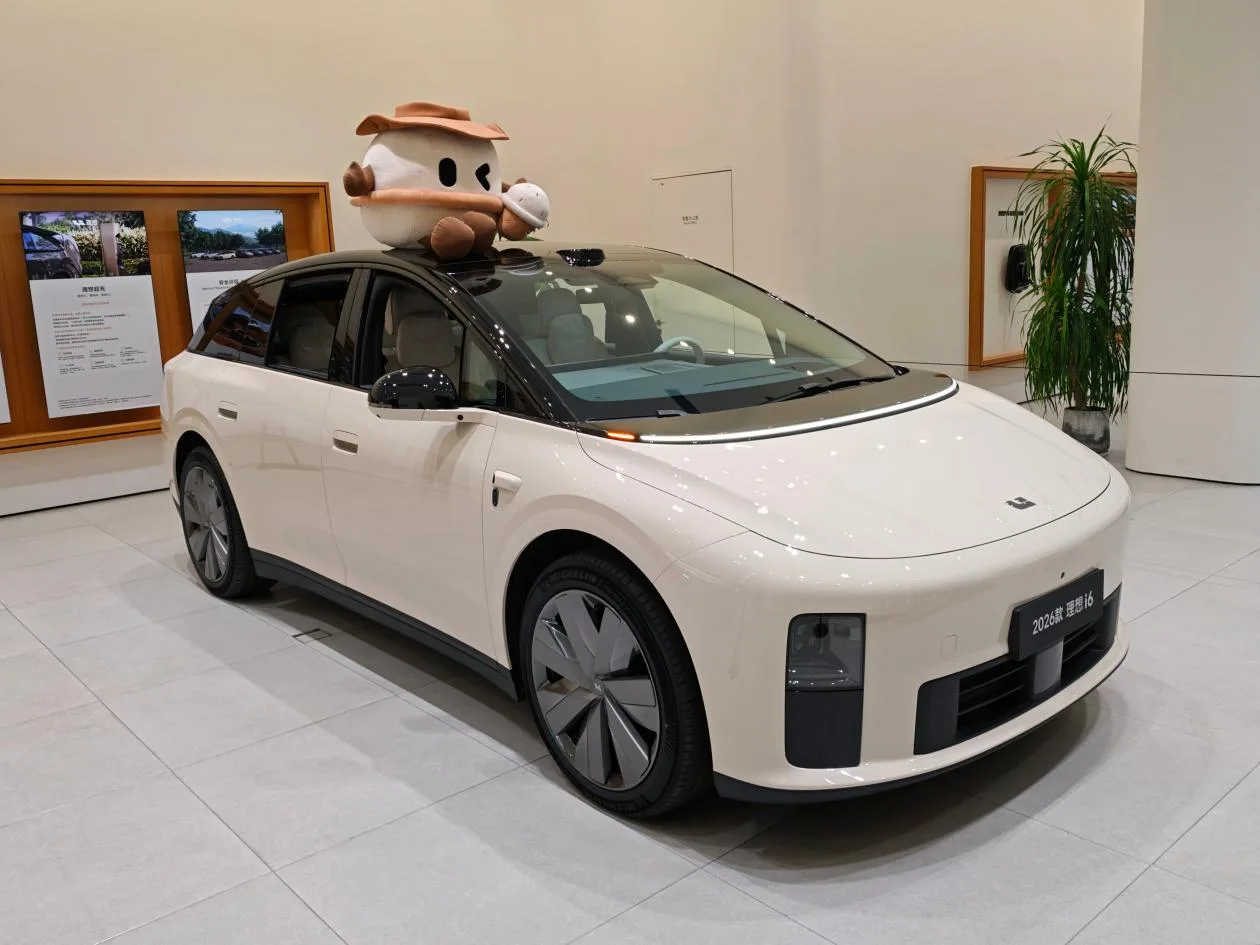
(Image source: photographed by Dianchetong)
Besides Li Auto's i6, the Xiaomi SU7 also maintains a product update cycle of once every two years. In 2025, only a small number of configurations were slightly adjusted, and this still did not affect its hot sales throughout the year. Even after Xiaomi officially announced that the new-generation SU7 would go on sale this year, the old SU7 on sale at that time still maintained monthly sales of more than 10,000 units — enough to show the model's popularity.
As for Tesla, even less needs to be said. The Model 3 and Model Y are updated with new configurations or versions at irregular intervals, and the core architecture of the three electric systems of both models is still basically the same as when they first went on sale several years ago, yet this still does not affect consumers' purchases.
Therefore, for an excellent model, a facelift is the icing on the cake and should be done selectively rather than frequently; while for a model with mediocre qualifications, a facelift is almost like treating a dead horse as a live one — maintaining a few months of prosperity through a facelift is always better than having none.
Back to Li Auto itself: is updating products once every two years a bit slow? The answer is no. Because Li Xiang himself said the update cadence would slow to once every two years and did not specify whether it would be a minor or major facelift.
Let us look back to last October. According to 36Kr, at Li Auto's autumn closed-door strategy meeting held last October, Li Auto reflected on its past cadence of one major platform iteration every four years, saying that this cadence could no longer keep up with the current intensity of competition. Therefore, it would shorten the previous major platform iteration cycle from once every four years to once every two years.
That is to say, although the annual minor facelifts are gone, the product update once every two years is expected to be upgraded to a larger-scale facelift. In other words, Li Auto's product update cadence is beginning to resemble Xiaomi's, with a major update about once every two years.
In Dianchetong's view, although Li Auto's overall iteration cycle has become faster and appears more "involuted" on the surface, precisely because annual minor facelifts no longer exist, Li Auto can focus more on sharpening one sword over two years, devoting energy to technical upgrades and road testing for major facelifts, and bringing consumers models with more advanced technology and better quality.
Then, for the entire auto industry, can this change by Li Auto drive an overall "cooling down"?
Is the intensity of involution in the auto circle about to come down?
At this stage, the auto industry seems to have treated facelifts and new launches as routine. In addition to annual facelifts and product replacements every few years, new versions are even added from time to time or upgrades are made to a particular configuration, causing production, sales, marketing, and other links to struggle to cope, while consumers also have to constantly guard against being "stabbed in the back."
In the current situation of continuous involution, where both buyers and sellers are exhausted, although the surface data of the auto industry still looks prosperous, in fact many consumers have grown tired of this industry playbook and begun to hold their money and wait, which to some extent has also affected overall auto sales.
Therefore, whether for regulators or leading automakers, cooling down the auto industry at a crossroads and pointing out a correct direction is more practical than everyone being involved in involution together and causing continuous internal friction of resources.
In fact, since the second half of this year, regulators have already strengthened supervision over various chaos in the auto industry. For example, the Ministry of Industry and Information Technology and other departments launched a one-year "Special Action for Production Consistency and Quality Improvement," and four departments issued the "Notice on Further Strengthening the Management of Innovative Design and R&D Test Verification of Automotive Products (Draft for Comments)," regulating the R&D and testing cycles of automobiles and gradually guiding competition in the auto industry to become more rational from various aspects, avoiding intensifying involution and ultimately falling into disorder and harming the interests of consumers and upstream and downstream industries.
It is precisely because of the strong intervention of regulators that Li Auto dares to "slam on the brakes" now and reduce vehicle facelift frequency. If this were one or two years ago, had Li Auto dared to extend its product iteration cycle to two years, it would inevitably have had its market share eaten away by a large number of homogeneous products.
Now, disorderly competition in the industry is showing a trend of slowly cooling down. "Quickly made cars" are gradually being stopped, and the product update cadence of automakers is also beginning to change. At this time, Li Auto's official announcement of reducing product update frequency has a certain positive significance for the entire industry.
(Image source: Li Auto)
Perhaps in the future, more and more automakers will extend product iteration from once or even twice a year to once every two or three years, and brands will pay more and more attention to product quality. Industry chaos such as "sharpening three swords in one year" that appeared before will no longer exist. By then, perhaps another spring for China's auto industry will arrive.
How should consumers choose?
In Dianchetong's view, at this critical period of transformation in the auto industry, what consumers should do is sharpen their eyes and choose models with reliable quality and stable sales.
Because this industry transformation will inevitably trigger another round of major reshuffling among relevant companies and even their brands. Many models may disappear in this round of transformation, and many brands may be merged or adjusted as a result. Therefore, this round of changes will also affect the future resale value of various models and automakers' vehicle maintenance and repair capabilities, and to some extent affect consumers' interests.
So Dianchetong believes that during this new round of change, if there is an immediate need for a car, then when purchasing, one needs to evaluate the brand, the possibility of the model's future existence, and the quality of the vehicle itself. Simply put, buy brands and models with relatively good sales as much as possible, stay away from brands with a "shamate" temperament, and choose models with relatively good quality, so as to avoid brand closure, model discontinuation, and vehicle quality crises, and keep one's interests as unaffected as possible.
But Dianchetong also believes that such a painful period will not last too long. As the adjustments of various brands gradually land, the auto industry will also gradually move toward rational competition. For consumers, is this not a good thing?
Source: Leikeji
Images in this article are from: 123RF licensed image library Source: Leikeji
-
Another Stinging Reality Check: iPhone 18 Pro Sales More Than Double the Combined Total of All Domestic Flagship Phones
-
![]()
Li Auto Officially Announces New Cars to Get Facelifts Every Two Years — Is China's Auto Facelift Wave Coming to an End?
-
![]()
Dong Mingzhu Is Pointing the Way Again
-
![]()
Why Is There No "Pinduoduo Narrative" in the AI Era?
-
![]()
Wall Street's "Big Short" Investor Suddenly Boosts Chinese Holdings -
![]()
Memory Price Hikes, Spec Cuts, and Incremental Upgrades: The Smartphone Spec War Hits a Memory Wall
-
AI Is Rewriting the Pricing Logic of Office Software — Kingsoft Software's Bid for the Enterprise Productivity Entry Point
-
![]()
Priced from Over 300,000 Yuan with L3 Architecture: Is the Xiangjie V8 Gunning for the Tengshi D9's Lunch?