Memory Price Hikes, Spec Cuts, and Incremental Upgrades: The Smartphone Spec War Hits a Memory Wall
 11/27 2026
 410
Author | Xie Jiabaoshu
The smartphone industry has long followed an upgrade strategy of "more for the same price." As memory prices soar, this iteration logic is collapsing.
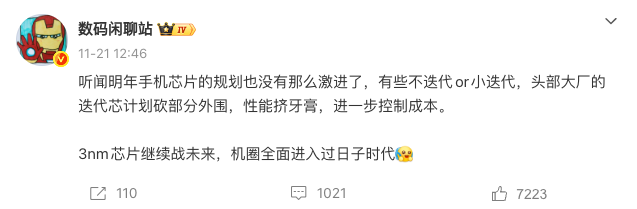
Image source: Weibo
Recently, according to digital blogger "Digital Chat Station," the 2027 smartphone chip roadmap will no longer be aggressive, with some chips skipping iteration entirely or receiving only minor updates. Flagship manufacturers' iterative chip plans will cut some peripheral configurations, deliver incremental performance gains, and further control costs. "3nm chips will continue to fight for the future, and the phone industry is fully entering an era of getting by."
In fact, to avoid significant price increases, some flagship phones in 2026 have already begun to slow the pace of core configuration upgrades. Take the OPPO Find X10 E, launched in September this year, with a starting price of 4,999 yuan and equipped with the Dimensity 9500s processor. Although this processor was released in January 2026, judging from its process, architecture, and clock speed, it looks very much like a rebadged version of the Dimensity 9400+ released in April 2025.
This problem is not isolated. On November 23, Honor CEO Li Jian said in an interview with the media that memory prices have soared this year, cost pressure across the industry has continued to increase, and to hold prices, many products in the industry have had to make trade-offs again. "Some chips go backward, some imaging goes backward, some memory goes backward, and balance is found by piecing together specs."
First price increases, then spec cuts, and now even chip roadmaps are becoming incremental. The impact of memory price hikes is spreading from prices to the products themselves and further upstream. When cost pressure cannot be absorbed through price increases, the spec-stacking logic that the smartphone industry has followed for years is facing an unsustainable challenge.
01
Smartphone upgrade budgets are being eaten away by rising memory prices
With the explosion of AI technology, high-margin AI storage is crowding out general-purpose memory capacity, and memory prices in the smartphone industry have been rising all year.
TrendForce data shows that in Q1-Q3 2026, DRAM contract prices rose 90%-95%, 58%-63%, and 13%-18% quarter over quarter, respectively; NAND flash contract prices rose 55%-60%, 70%-75%, and 10%-15%, respectively. It is expected that in Q4, DRAM and NAND contract prices will continue to rise 10%-15% and 8%-13% quarter over quarter, respectively.
In June 2026, in an interview, then-Apple CEO Tim Cook said this supply crisis was like a "once-in-a-century flood," and said, "In more than 40 years, I've never seen anything like this in any field." At the third-quarter earnings call, Xiaomi Group partner and president Lu Weibing also said this quarter felt like the hardest quarter of his career.
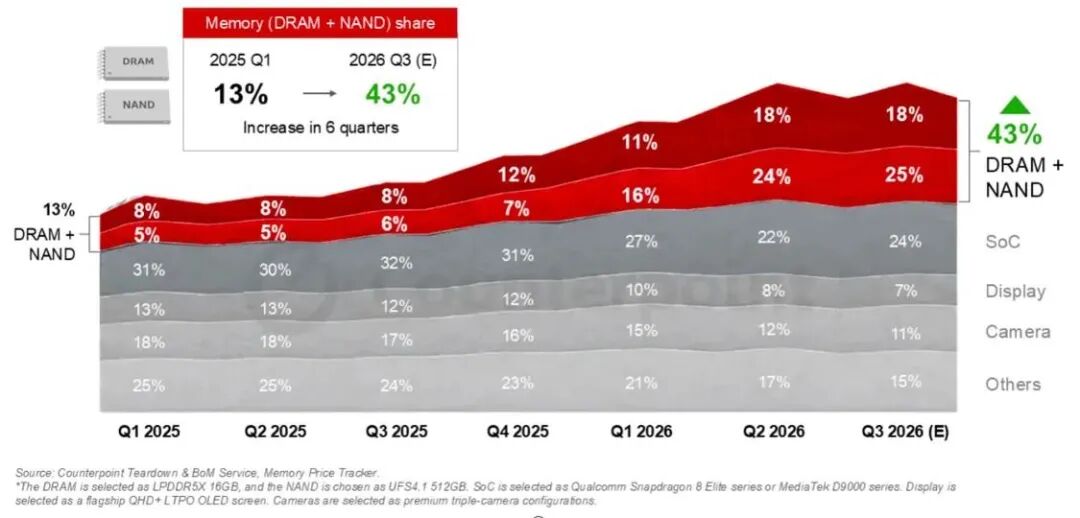
Image source: Counterpoint
The continued rise in memory prices has completely overturned the cost structure of smartphones. In Q2 2026, in the BOM of flagship phones, DRAM and NAND accounted for 24% and 18%, respectively, totaling 42%, up 29 percentage points from Q1 2025 and making them the largest cost item. By comparison, from Q1 2025 to Q2 2026, the share of SoC in the BOM of flagship phones fell from 31% to 22%, already surpassed by DRAM.
At the same time, to cope with the pressure of continued supply chain cost increases, Qualcomm also raised its product prices in September 2026, with increases reaching double digits. According to TrendForce, Qualcomm adopted a tiered pricing strategy this time, with high-end flagship chips expected to rise 10%-15%, mainstream mid-range chips 5%-7%, and entry-level chips 0%-2%.
As then-OPPO Find product line general manager Li Yingming said in 2021, making phones is the art of balance between trade-offs. Mature product series target specific price bands and have a natural budget ceiling, and smartphone manufacturers need to make trade-offs based on consumer needs.
Under the influence of Moore's Law and economies of scale, with each smartphone iteration, although different configurations have different upgrade magnitudes, overall all configurations can advance in parallel.
Previously, the orderly iteration of smartphones was mainly built on a stable cost structure. Now, with memory prices soaring, under limited budgets, smartphone manufacturers can only choose to sacrifice other configurations to ensure a basic storage experience.
02
Layer upon layer of price increases, lukewarm market response
Facing ever-rising memory prices, smartphone manufacturers have not sat idly by, but have chosen to pass cost pressure on to the consumer market. Since March 2026, OPPO, vivo, Xiaomi, and other smartphone manufacturers have raised prices for their products.
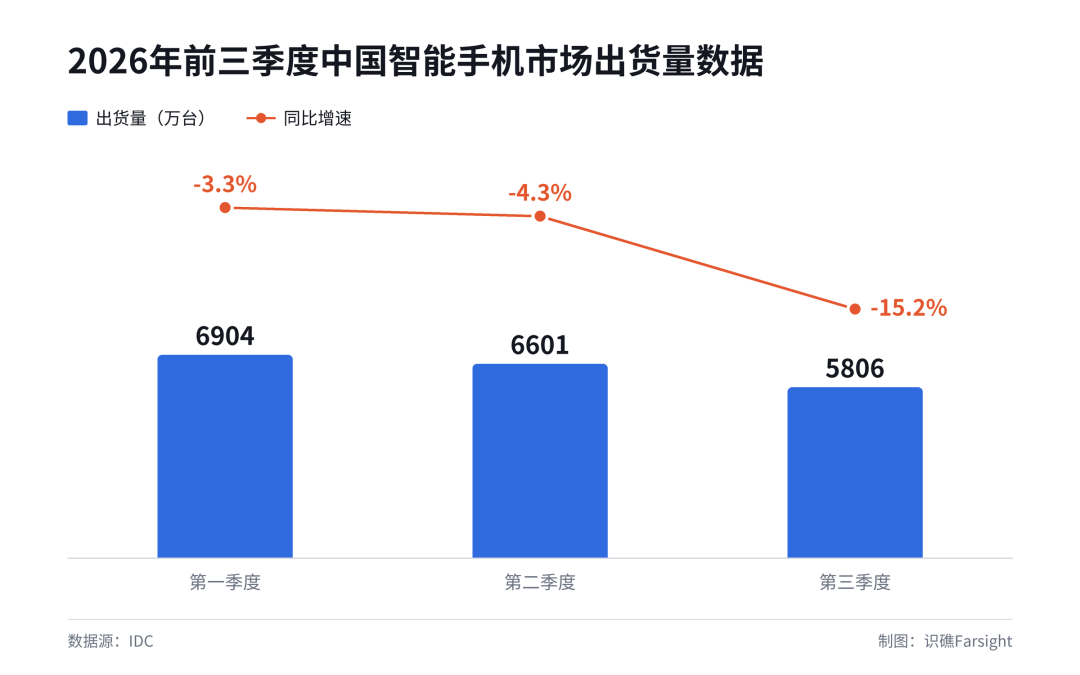
Chart: Shijiao Farsight
Unfortunately, the market has not bought into it. IDC data shows that in Q1-Q3 2026, China's smartphone market shipments were 69.04 million, 66.01 million, and 58.06 million units, respectively, down 3.3%, 4.3%, and 15.2% year over year, with the decline gradually widening.
The reason is that memory price hikes have turned "more for the same price" into "higher price for no more." On the one hand, new phones have generally become more expensive; on the other hand, memory has eaten up the upgrade budget, and the experience of new phones is not far removed from older ones. Smartphone manufacturers find it hard to persuade consumers to pay for new products with limited upgrades.
Due to the lukewarm market response, neither upstream suppliers nor downstream smartphone manufacturers have managed to gain a firm foothold through price increases.
Qualcomm's financial report for the fourth quarter of fiscal 2026 (ended September 27, 2026) shows that the company's semiconductor chip business (QCT) revenue was $9.015 billion, down 8% year over year. Among that, mobile phone chip revenue was $5.137 billion, down 26% year over year and below analysts' expectation of $5.25 billion; QCT pre-tax margin was 24%, down 5 percentage points year over year.
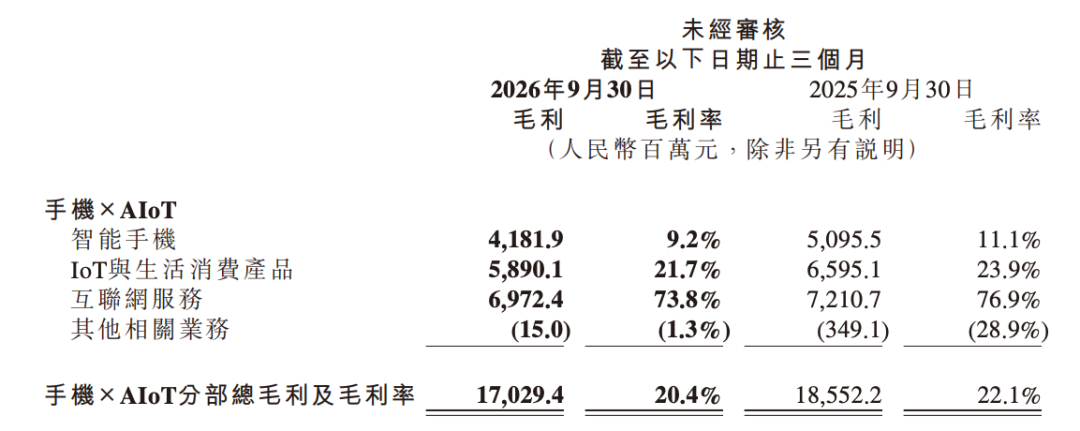
Image source: Xiaomi's Q3 2026 financial report
In the third quarter of 2026, Xiaomi's phone shipments were 30.7 million units, down 29.1% year over year. However, thanks to a 39.8% year-over-year increase in average selling price to 1,486 yuan, Xiaomi's smartphone business revenue was 45.6 billion yuan, down only slightly by 0.8% year over year.
However, the sharp rise in memory prices still squeezed the profit space of Xiaomi's smartphone business. This quarter, Xiaomi's smartphone gross margin was 9.2%, down 1.9 percentage points year over year.
From this perspective, chip manufacturers and smartphone manufacturers slowing the pace of performance upgrades in unison has its inevitability. Costs cannot be fully passed on to consumers through price increases, so manufacturers can only work together to lower the cost of product upgrades.
03
Specs can no longer be pushed, so they start pushing form factors
On the earnings call, Lu Weibing said, "We still judge it as a high-probability event that DRAM costs will rise in 2027." Since the memory price increase cycle will last for some time, it will be difficult for the smartphone industry to restore its original "more for the same price" iteration model in the short term.
How to persuade consumers to upgrade their phones and accept higher prices without improving configurations will become a major problem that smartphone manufacturers need to solve for some time to come.
Form factor is one of the few differentiation points not directly driven by memory prices and visible to users at a glance. Recently, many smartphone manufacturers have focused on appearance, launching innovative forms such as wide bar phones, wide foldables, and rear screens.
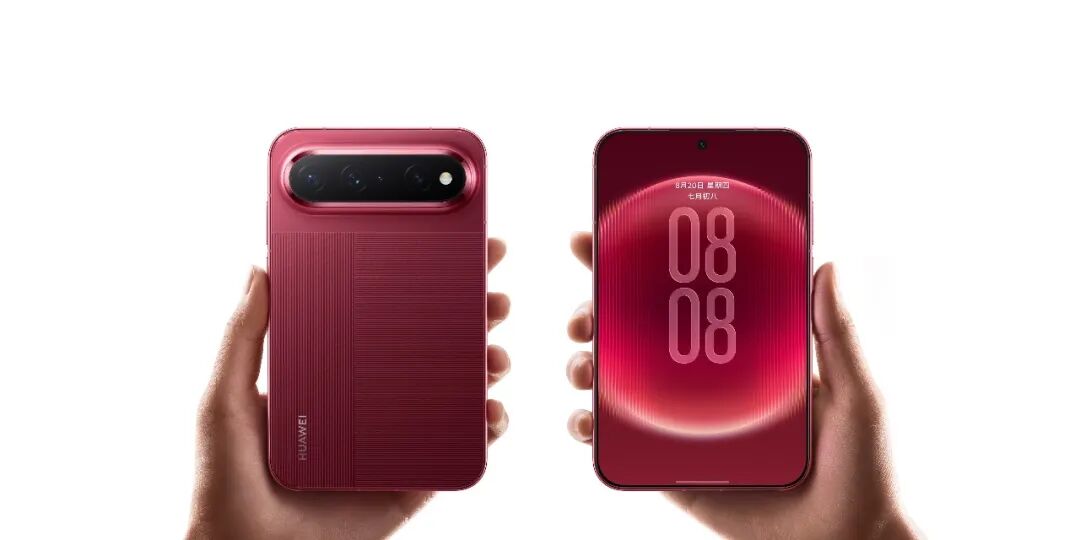
Image source: Huawei
For example, in September 2026, Huawei released the wide bar phone Huawei Pura X View, which uses a 16:9.5 screen and offers a stronger immersive experience when watching videos, reading, and gaming. Thanks to its distinctive form factor, the Huawei Pura X View became a hit product after launch. According to digital blogger "RD Observation," as of November 15, cumulative sales of the product were about 1.0612 million units.
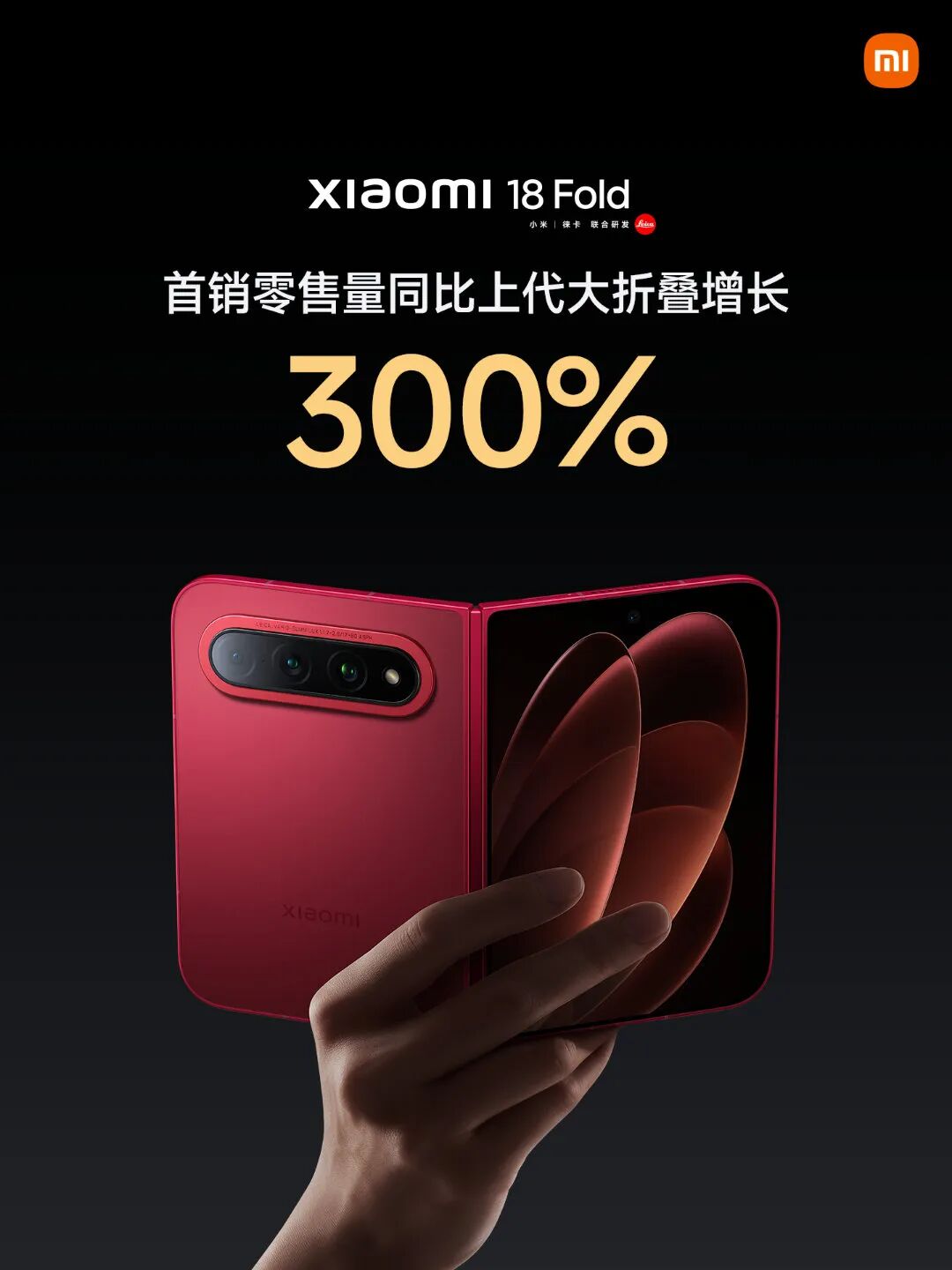
Image source: Xiaomi
Similarly, the Xiaomi 18 Fold, which also adopts a short and stout design, has achieved impressive sales. Official information shows that the first-sale retail volume of the Xiaomi 18 Fold increased 300% year over year compared with the previous generation of large foldables. In this regard, Lu Weibing said, "In a cycle of sharp memory cost increases, only innovative products can meet users' phone purchase/upgrade needs."
To seize the wide-screen phone trend, according to "Digital Chat Station," mainstream smartphone manufacturers will all build wide bar and wide foldable phone products next year. For example, Li Jian revealed that Honor's wide foldable phone is planned to debut in March 2027, "with absolutely no crease."
New forms are worthy of recognition, but their freshness does not last long. Just two months after the Huawei Pura X View went on sale, Coolpad lowered the price of a wide bar phone to 999 yuan. Once an innovative form is validated by the market, it quickly becomes an industry-wide public template.
Foldable phones are a cautionary tale. IDC data shows that because the marginal effect of innovation in traditional forms continues to diminish, China's foldable phone shipments in Q3 2026 fell 32.7% year over year, having declined for four consecutive quarters.
Forms can converge, but the core competitiveness behind products is hard to buy. Even a company as strong as Apple paid an expensive tuition, with the iPhone Duo encountering setbacks in screen reliability and software adaptation after launch. In contrast, the two best-selling products are backed by self-developed capabilities: behind the Huawei Pura X View are the self-developed Kirin chip and HarmonyOS, while the Xiaomi 18 Fold is equipped with the self-developed Xuanjie O3 chip and HyperOS 4.
Wide screens can only attract users' attention; whether consumers are willing to pay more and whether they will stay depends on chips, systems, and application ecosystems.
This also means that the battle over form factors will not erase gaps, but only amplify differences. Brands with pricing power can use new forms to seek higher profits; brands without pricing power have only one path left: cutting specs.
"More for the same price" was once regarded as a capability of smartphone manufacturers. This round of price increases proves that it stemmed more from supply chain dividends. Now the dividends have shifted: memory manufacturers are prioritizing capacity for AI servers, and Qualcomm also expects that in fiscal 2027 the mobile phone business will account for less than half of its total revenue. Smartphones are no longer the most important customer in the semiconductor supply chain.
When memory costs fall back, the spec war may return, but the lengthened replacement cycle may not shrink back with it. By then, what can set companies apart is what smartphone manufacturers accumulated during the downturn: self-developed chips, systems, and ecosystems, or merely a wider screen.
Interactive topic
Have you changed to a new phone this year? What upgrades have you experienced?
This article is original content by Shijiao Farsight. Reproduction without authorization is prohibited.
-
![]()
Why Is There No "Pinduoduo Narrative" in the AI Era?
-
![]()
Wall Street's "Big Short" Investor Suddenly Boosts Chinese Holdings -
![]()
Memory Price Hikes, Spec Cuts, and Incremental Upgrades: The Smartphone Spec War Hits a Memory Wall
-
AI Is Rewriting the Pricing Logic of Office Software — Kingsoft Software's Bid for the Enterprise Productivity Entry Point
-
![]()
Priced from Over 300,000 Yuan with L3 Architecture: Is the Xiangjie V8 Gunning for the Tengshi D9's Lunch?
-
![]()
How Will Automakers Fight the Final Battle in a Tough 2026?
-
![]()
Automakers Burdened by Collective Debt Double Down on AI Investment
-
![]()
Li Auto to Launch Only 1–2 New Models in 2027