Li Auto to Launch Only 1–2 New Models in 2027
 11/27 2026
 439
On November 25, Li Auto released its unaudited financial report for Q3 2026. During the subsequent earnings call, Chairman and CEO Li Xiang announced that the company will adjust its model update cadence from once a year to roughly once every two years. In 2027, Li Auto will introduce only one to two all-new standalone models, with no large-scale facelifts planned.
Li Xiang noted that this adjustment will be more meaningful for users, the industry, suppliers, and Li Auto itself.
On the financial side, Li Auto reported Q3 2026 revenue of 28.834 billion yuan, up 5.4% year-on-year and beating the 28 billion yuan estimate. Adjusted net loss attributable to shareholders narrowed to 117.3 million yuan, compared with a loss of 360.3 million yuan in the same period last year and well below the estimated loss of 667 million yuan. Gross margin came in at 16.7%, up from 16.3% a year earlier and ahead of the 13.6% estimate. Free cash flow reached 1.96 billion yuan, a sharp reversal from -8.9 billion yuan in the same period last year.
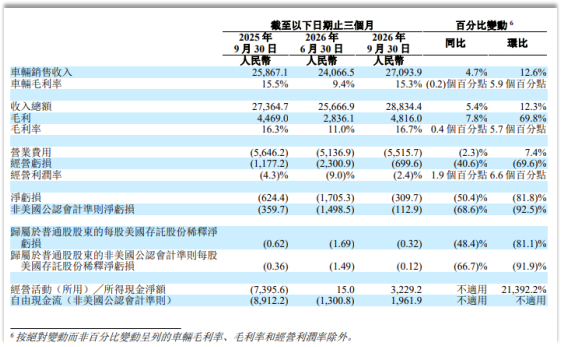
Judging from the disclosed core financial indicators, Li Auto delivered solid operating performance in Q3. The previously strained cash flow situation has been fundamentally reversed, and losses have narrowed significantly, giving the company ample operating buffer to slow its model iteration pace and build up long-term R&D investment.
On the sales side, Li Auto delivered 99,964 new vehicles in Q3 2026, up 7.2% year-on-year and a slight 1.7 percentage point increase quarter-on-quarter.
Li Auto CFO Li Tie said during the earnings call that net profit is expected to turn positive in Q4 2026. The company also issued Q4 guidance in its financial report: deliveries of 110,000–115,000 new vehicles are expected, with revenue of 31.7–33.1 billion yuan, up 10.1%–15.1% year-on-year.
Overall, Li Auto's business fundamentals have now entered a stable recovery track. Under the adjusted product cadence, Li Auto will no longer rely on a dense wave of new launches and large-scale facelifts to sustain market heat in 2027. Whether it can maintain stable operating fundamentals and achieve higher-quality long-term growth will be a real test of its operational resilience.
-
![]()
Why Is There No "Pinduoduo Narrative" in the AI Era?
-
![]()
Wall Street's "Big Short" Investor Suddenly Boosts Chinese Holdings -
![]()
Memory Price Hikes, Spec Cuts, and Incremental Upgrades: The Smartphone Spec War Hits a Memory Wall
-
AI Is Rewriting the Pricing Logic of Office Software — Kingsoft Software's Bid for the Enterprise Productivity Entry Point
-
![]()
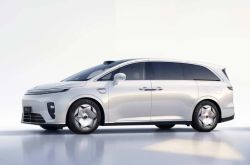
Priced from Over 300,000 Yuan with L3 Architecture: Is the Xiangjie V8 Gunning for the Tengshi D9's Lunch?
-
![]()
How Will Automakers Fight the Final Battle in a Tough 2026?
-
![]()
Automakers Burdened by Collective Debt Double Down on AI Investment
-
![]()
Li Auto to Launch Only 1–2 New Models in 2027