AI Is Rewriting the Pricing Logic of Office Software — Kingsoft Software's Bid for the Enterprise Productivity Entry Point
 11/27 2026
 412
Following the recent surge in U.S. AI hardware stocks, global investors are shifting their attention to the returns on trillions of dollars in computing power investment.
The commercial monetization of AI applications is poised to become the next main theme of the AI industry.
Among the hottest scenarios are B2B office applications such as advertising and marketing, document processing, data analysis, and enterprise collaboration.
Over the past few months, Microsoft has continued to deepen Copilot across its office suite; Anthropic has expanded into cross-application AI work assistants; and Tencent, ByteDance, and Alibaba have successively called off internal "horse racing" and consolidated their scattered AI product lines into unified office entry points. WorkBuddy, Doubao Work, and Qianwen Office have each secured significant resource commitments from their parent tech giants.
The AI office battle is in full swing. As a veteran Chinese software group, how is Kingsoft Software responding — and what is it changing?
On November 25, Kingsoft Software released its Q3 report, offering a window into the AI office track.
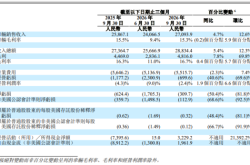
Group revenue totaled 2.439 billion yuan, a slight increase of 1% year-over-year. The net loss attributable to shareholders of 204 million yuan stemmed from book adjustments in the stock prices of listed companies it holds. Excluding investment effects, adjusted net profit attributable to shareholders was 301 million yuan, up 12% year-over-year. Within that, office software and services revenue reached 1.766 billion yuan, up 16% year-over-year, accounting for over 70% of group revenue.
Kingsoft Software has already layered AI charges on top of existing subscriptions, and the AI contribution to its office software and services business continues to climb.
So, as AI Agents enter office scenarios, can the users, document ecosystem, and enterprise customers accumulated by traditional software companies increase in value in the AI era? How will the pricing logic that the software industry has relied on for decades change?
Office Becomes the Outlet for Token Monetization — and the Revaluation of AI Applications Begins to Rotate
The commercialization of AI applications is, without a doubt, "marching toward money."
Advertising and marketing are leading the charge.
AppLovin's algorithm system directly determines advertisers' return on investment; results are quantifiable, and payment follows naturally. In Q3 2026, AppLovin's revenue reached 2.18 billion US dollars, up 55% year-over-year, with an adjusted EBITDA margin as high as 84% — and its market value surged after the earnings report.
Image source: AppLovin
After the previous round of sharp gains and the "SaaSpocalypse" software stock selloff at the beginning of the year, the market has reignited its enthusiasm for AI applications, placing a premium on "AI embedded in commercial scenarios."
Who is next?
Tech giants have already pointed the way: office.
Office is one of the few scenarios with high frequency, rigid demand, and mature payment habits. Individual users have long paid for office software subscriptions, and enterprises already maintain mature software procurement budgets.
When CNR recently examined "who is helping enterprises turn tokens into cash flow," it cited a securities analyst's judgment: office and programming are the two categories of "AI+" applications that first achieve large-scale payment. WPS 365, aimed at enterprises, has seen revenue grow over 60% for six consecutive quarters. Microsoft 365 Copilot paid seats, meanwhile, have reached 30 million.
Image: Microsoft Copilot
Behind commercial monetization lies the increasing maturity of the underlying technology.
In 2026, model capabilities are crossing the critical threshold. AI is advancing from executing tasks continuously for several seconds to working autonomously for dozens of hours — and office is precisely the scenario with the densest concentration of "long-horizon tasks."
A CITIC Securities research report shows that office Agents are evolving from content generation tools into complex task execution platforms.
This indicates that office will become one of the outlets with the densest token consumption and the highest monetization efficiency.
As a result, WorkBuddy, Doubao Work, and Qianwen Office are arriving one after another.
In this battle for entry points, Kingsoft Software's position is undoubtedly unique.
On the one hand, the group's core asset, Kingsoft Office (WPS), is the leader in domestic office software, generating AI revenue on a considerable existing base.
Existing users and enterprise customers are being converted into AI payers.
On the individual side, with the launch of the AI-native Lingxi Professional Edition, a closed loop is formed — from understanding needs, to executing tasks, to delivering results — that directly produces editable, reviewable, and traceable documents. AI products drive growth by increasing paid conversion rates and average revenue per user. WPS monthly active devices grew only 1.3% year-over-year, while individual subscription revenue grew 17%.
On the enterprise side, WPS 365, which supports metered AI usage, grew 34%, while the traditional one-time license software business grew only 6%.
On the other hand, Kingsoft Software does not develop its own foundation models. The company pursues a strategy of "integrating third-party models + developing proprietary vertical small models."
AI, positioned as a value-added layer on top of mature subscription channels, does not require the company to shoulder the computing power bills of model training alone — allowing it to focus more sharply on implementation. In this sense, it is a relatively pure AI application company.
As a result, Kingsoft Software's financial reports offer the market a clearer lens through which to understand the growth prospects of AI applications themselves.
From Office AI to AI Office: The Office Ecosystem Enters a Phase of Revaluation
Investors are gradually realizing that software companies hold the most valuable asset in this round of competition.
At the beginning of the year, when the AI Agent concept was at its hottest, the market worried that Agents would do the work for people and enterprises would no longer need software seats — triggering a round of indiscriminate selling across the U.S. software sector.
But by year-end, AI office had staged a major reversal. The deployment of more and more AI Agents has proven that for AI to truly work, three things are needed: documents it can understand, systems it can access, and permissions it can be trusted with.
None of these three key elements are in the hands of model vendors.
AI has not eroded the moats of veteran software companies; instead, it has activated the customers, data, and processes they have accumulated over many years. This is the true main line of AI industrialization.
In U.S. stocks, Salesforce's AI and data products have annualized revenue approaching 3.9 billion US dollars, up 210% year-over-year, with 3.2 billion "agent work units" delivered in a single quarter — and enterprise customers continue to pay for production-grade usage.
In the AI office track, Kingsoft Software has validated a similar logic.
Today, with ByteDance, Alibaba, and Tencent each launching enterprise products — and Feishu, DingTalk, and WeCom all pursuing AI office — the document foundation, government and enterprise channels, Xinchuang (domestic IT) adaptation, and privatization experience remain Kingsoft Software's moat.
As of the end of Q3, WPS Office had 678 million global monthly active devices. WPS 365 continued to penetrate central state-owned enterprises and the government and enterprise market, with Q3 revenue of 270 million yuan, up 34% year-over-year; the company has deployed overseas data centers in Germany, Singapore, and Japan.
Unlike the path of internet giants who "build an entry point from scratch," Kingsoft's choice is to grow AI capabilities on top of its existing office software base — moving from "Office AI" to "AI Office."
WPS's approach is to let AI grow directly inside documents — executing tasks within contracts, reports, and meeting minutes — with results remaining in the file itself, formats preserved, and versions traceable. In the Xinchuang environment, deployment capability and long-term service are critical. When large enterprises change office systems, they need to migrate historical documents, reshape employee habits, and adapt permissions and business systems.
This is clearly different from the logic of Agent product dialog boxes. An MIT survey shows that about 95% of enterprise generative AI pilots failed to produce measurable financial returns — and the core bottleneck is precisely that AI is difficult to integrate into enterprises' existing workflows.
Therefore, whether enterprise AI applications can be embedded in organizational workflows is the deciding factor.
To this end, Kingsoft Software launched the enterprise-level AI office platform WPS Comate in July this year — an organization-level AI collaborative office entry point that truly enters business sites and connects data and processes.
According to company disclosures, WPS Comate has now been implemented in 26 typical scenarios across 11 fields including human resources, finance, and legal affairs, serving hundreds of medium and large enterprises. After the company's legal department used Comate to build a contract pre-review process, the approval cycle was compressed from 5–7 days to 1–2 days, AI risk identification accuracy exceeded 90%, and thousands of AI skills were spontaneously created by business departments.
Kingsoft Software is accelerating exploration of a model in which basic subscriptions cover the office suite, with AI usage and agent services forming incremental revenue.
Although it has just started — and there is still a distance from co-creation and pilots to large-scale payment — Kingsoft Software reveals the inflection point of AI office shifting from "selling document licenses" to "selling organizational efficiency."
From the perspective that technological progress must ultimately land on productivity improvement, this is a sign of the enterprise office track transforming into the next-generation AI productivity platform.
If subsequent financial data can verify that paying customers continue to use, expand usage, and renew, then the AI office track will usher in a moment of revaluation.
The Anchor of AI Office Pricing Shifts from IT Budgets to "Intelligence Budgets"
The emergence of AI collaborative office entry points is a key variable for the capital market's revaluation of AI applications. The traditional pricing anchor of office software is IT budgets.
Individual subscriptions cost just over 100 yuan a year, and enterprise seats are purchased per person. In the cost structure of most enterprises, software spending does not account for a particularly high proportion.
But AI is embedding more deeply into enterprise value creation, thereby carrying higher value.
Tsinghua Management Review argues that if the core logic of digitalization over the past thirty years was still an extension of "Taylorism" — emphasizing "people adapting to machine rules" and filling automation gaps through standardized processes and system operations — then in the era of large models, this one-way adaptation model can no longer meet organizations' dual requirements for efficiency and flexibility.
In the high-end manufacturing field, when NASA's Jet Propulsion Laboratory (JPL) designed the structure of an extraterrestrial lander, engineers transformed into collaborative decision-makers with algorithms, and "human-machine improvised dialogue" created hundreds of unconventional structural solutions in a short time that traditional design would be hard-pressed to achieve.
Human judgment and AI's "intelligence" work together to release greater productivity.
In the enterprise office field, similar changes may appear in the future. In the AI era, "intelligence" becomes a service that can be purchased on demand for the first time. Based on the next-generation enterprise AI office platform, the core requirement enterprises place on employees is the ability to make decisions and create collaboratively with AI.
The pricing logic of enterprise-level AI applications is thus being rewritten.
Kingsoft management has made it clear that the individual side is exploring "subscription + AI usage," and the enterprise side WPS 365 is implementing "seats + AI usage," with tiered pricing based on task complexity and resource consumption.
The change in pricing logic has already shifted the value coordinates that the software industry has relied on for decades.
The capital market is revaluing software stocks. Data from Software Equity Group shows that in Q3, the median EV/TTM revenue of SaaS index constituent companies rebounded from 3.3x to 4.1x, while companies with revenue growth exceeding 30% had a median valuation as high as 12.7x.
Beyond subscription users and renewal rates, AI paid conversion rates, enterprise AI contract amounts, task invocation volumes, and workflow penetration rates will all enter the new valuation formula.
Looking ahead, Kingsoft Software needs to use subsequent financial reports to verify that the new model can run through a commercial closed loop.
Model inference, privatization deployment, and system integration all incur costs. Only when new revenue can cover inference and service costs is the model a closed loop.
Kingsoft Software is still in the investment period of AI office technology R&D and product iteration. The group holds about 27.5 billion yuan in cash resources, does not participate in mainstream large model competition, and focuses on the application layer — making it an important observation target for the new business model of AI applications.
As AI becomes deeply embedded in enterprise workflows and more and more enterprises pay for "intelligence," the office application track is at a key window of switching between old and new valuation logic. Once the business model runs through, new growth imagination will open up.
Source: Hong Kong Stock Research Society
-
![]()
Why Is There No "Pinduoduo Narrative" in the AI Era?
-
![]()
Wall Street's "Big Short" Investor Suddenly Boosts Chinese Holdings -
![]()
Memory Price Hikes, Spec Cuts, and Incremental Upgrades: The Smartphone Spec War Hits a Memory Wall
-
AI Is Rewriting the Pricing Logic of Office Software — Kingsoft Software's Bid for the Enterprise Productivity Entry Point
-
![]()
Priced from Over 300,000 Yuan with L3 Architecture: Is the Xiangjie V8 Gunning for the Tengshi D9's Lunch?
-
![]()
How Will Automakers Fight the Final Battle in a Tough 2026?
-
![]()
Automakers Burdened by Collective Debt Double Down on AI Investment
-
![]()
Li Auto to Launch Only 1–2 New Models in 2027