Zuckerberg, the Eyewear Seller, Becomes the Fourth Richest Person in the World
 10/12 2026
 456
456
On September 24 (Eastern Time), Mark Zuckerberg's net worth soared, surpassing Michael Dell, making him the fourth richest person globally with approximately $266.4 billion (about 1.78 trillion RMB). On the same day, Meta's stock price rose to $777.59, marking a new year-to-date closing high. Meta's stock has surged by about 36% in September alone, representing its strongest monthly performance since 2013, with its market value nearing $2 trillion once again.
The market's rationale is clear: The AI intelligent agent Muse, launched on September 8, saw its daily active users grow approximately tenfold to 700,000 in less than 20 days, with downloads topping the charts for two consecutive weeks.
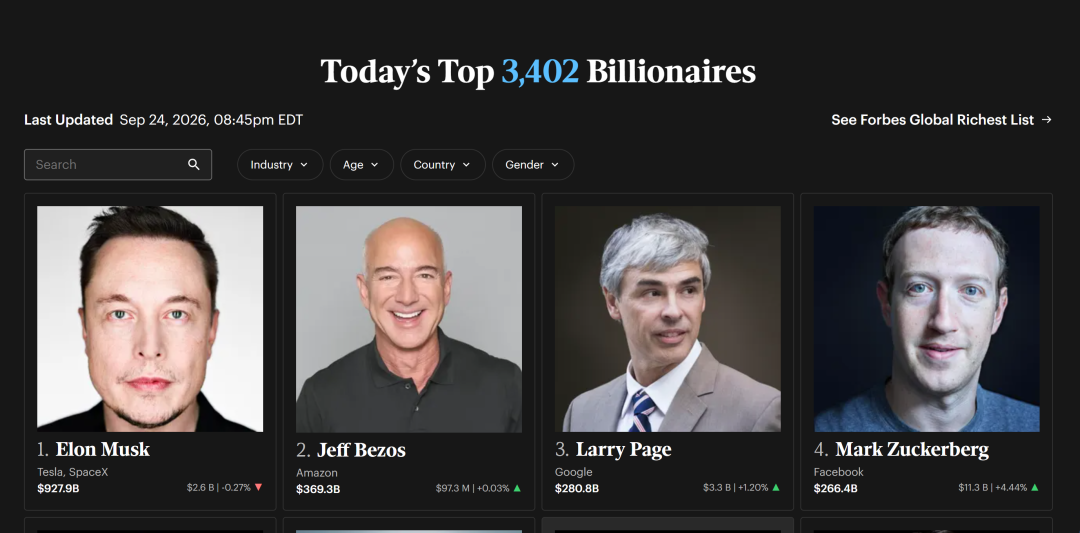
However, interpreting this event merely as 'an AI assistant going viral' would overlook more significant structural changes. What truly warrants attention in the XR industry is that Muse's popularity, the sales growth of multiple Meta AI glasses, and the planned release of Meta VR Glasses in spring 2027 are all converging into a single picture. Meta is no longer just a 'VR company' or a 'social media company'; it is becoming one of the few companies that simultaneously holds personal superintelligence portals (AI) and spatial computing portals (XR), with the two feeding into each other.
01
Bidirectional Drive: From 'Two Lines' to
'One Flywheel'
In recent years, outsiders have been accustomed to viewing Reality Labs and AI as two separate narratives: one is the 'metaverse gamble' losing $4-5 billion annually, and the other is the 'AI arms race' with staggering capital expenditures.
However, signals from Connect 2026 indicate that these two lines have already been integrated at the product level: Ray-Ban Meta Display will upgrade the glasses-end AI from single-answer interactions to being able to summon Muse, carry complete context, and perform tasks in the background; Muse Spark has also been gradually rolled out to two generations of glasses, Ray-Ban Meta and Oakley Meta.
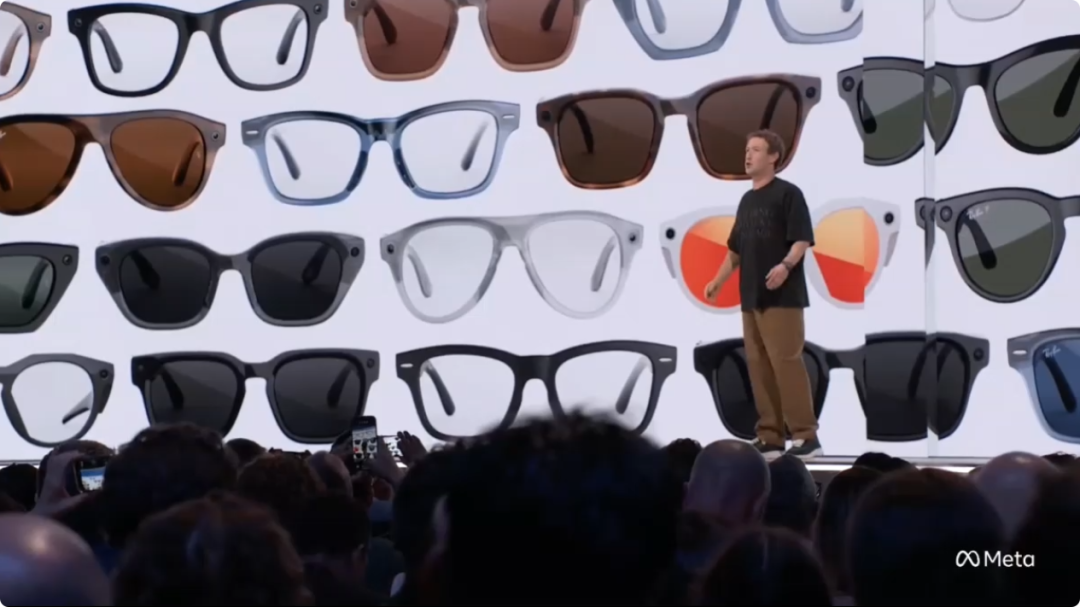
A pair of glasses without a screen has limited repurchase logic if they can only take photos, play music, or check the weather. However, if they can 'see what you see and act on your behalf,' the duration of wear gains commercial significance. At this point, AI glasses are no longer just an early stage of the metaverse but a display terminal for personal superintelligence.
Zuckerberg has clearly stated that Reality Labs is shifting towards 'building the best devices for personal superintelligence,' reducing focus on the metaverse and VR devices, releasing them only when there are true breakthroughs. Similarly, the modular and lightweight Meta VR Glasses are not made for VR itself but to integrate Muse into the VR operating system.
This is the essence of bidirectional drive: AI provides XR with 'why to wear,' and XR provides AI with 'where to wear and what to see.' Alone, Meta is not an absolute winner in either line; together, they form a closed loop that is difficult for competitors to replicate at a single point.

02
The True Significance of Muse:
It Transforms AI from 'Answering' to 'Fulfilling'
The most noteworthy aspect of Muse is not its 700,000 daily active users but three design choices:
First, each user gets a dedicated, persistent virtual machine (2 vCPU/8GB/100GB SSD + independent browser) that continues running in the background even when the app is closed. This means Meta has chosen an extremely heavy, expensive, but difficult-to-replace path—making the agent a 'long-term digital avatar managing your affairs' rather than a chat window.
The cost is clear: free tier offers 100 million tokens per week, subscription tiers offer 500 million tokens per week for $20, and 3 billion tokens per week for $100. As user numbers increase, CPU, memory, and storage requirements rise linearly. This marks the first large-scale exposure of the triangular conflict between 'computing power—experience—pricing' in the agent era.
According to Cantor Fitzgerald's estimates: Muse's current cost per task is approximately $0.25, translating to about $11 per average user per month. It is expected that AI processing costs will drop by more than 80% over the next 18–24 months, making profitability feasible through subscription tiers and commission models.

Second, trust mechanisms are prioritized. Sentinel monitoring, user confirmation for critical actions, credential isolation, one-time card numbers, and non-sharing of dialogues with advertising systems—these designs may seem to slow down efficiency but are prerequisites for Muse to handle transactions. For AI to spend money on behalf of users, it must first convince users that it won't misuse funds. Meredith Whalen, Chief Research Officer at IDC, publicly stated, 'The real issue is trust.'
Third, it has triggered a 'platform war.' Less than two days after Muse topped the App Store's free chart, Amazon blocked Meta's Muse AI agent from shopping permissions, citing lack of notification about accessing and storing login credentials and bypassing personalized recommendations. This reflects the disruption of Amazon's $68.6 billion advertising revenue chain by 'one-sentence ordering.' Thus, Amazon's reaction was expected.
Meanwhile, hundreds of mainstream U.S. e-commerce, aviation, hotel, and OTA websites have directly blocked Muse (about one-third), set up verification challenges or restrictions (about one-third), with only about one-third allowing smooth navigation. Meta is collaborating with Walmart, Stripe, Sierra, Genesys, and others to establish the Personal Agent Protocol (a standard for agent identity and authorization similar to SMTP) to counter these blockades. This indicates that the battleground for agents lies not in models but in each platform's 'access control'—interface openness, authorization rates, and task success rates will determine whether Muse becomes a portal or an island.
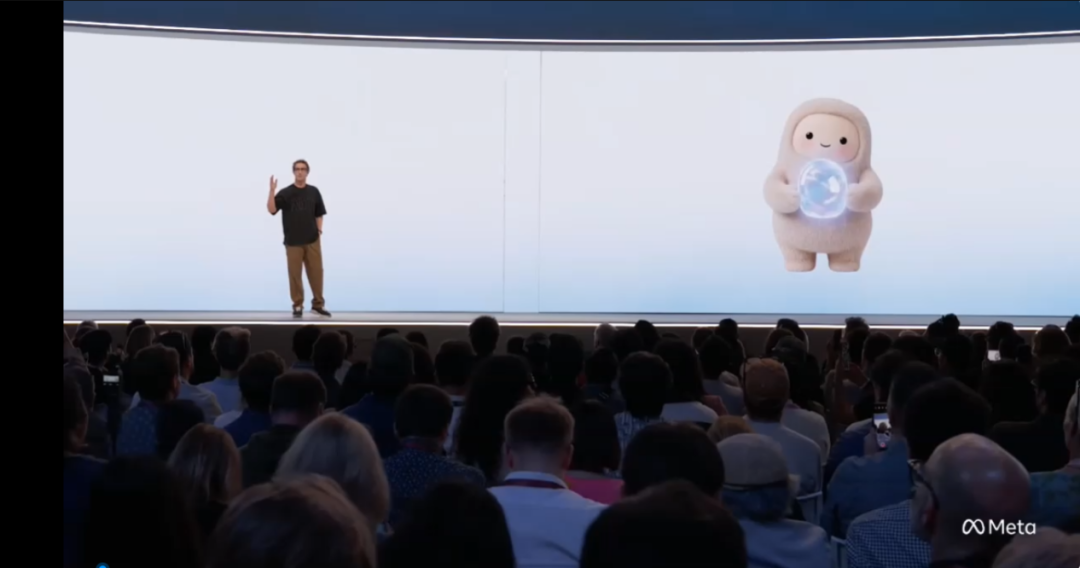
In summary, for XR, Muse's significance lies in providing glasses with a value proposition beyond information overlay: 'The glasses see, and Muse fulfills.' Standing in front of a shelf, you can compare prices, place orders, and manage delivery queues with a single sentence—this is the scenario where AI overlay finally becomes monetizable and the one that terrifies physical retailers the most.
03
Everyone is Making AI Hardware,
Why is Meta Winning?
Omdia data shows that global XR headset shipments reached 1.9 million units in the first half of 2026, a 38.7% year-over-year decline, marking the fourth consecutive year of market contraction since the 2021 peak. Meta's share dropped from 71.3% to 48.2%, with weak demand for Quest 3/3S failing to replicate the breakthrough of Quest 2.
Under Omdia's definition, global AI glasses shipments reached 4.2 million units in the first half of the year, a 127% year-over-year increase, with Meta accounting for 81%. This share is much healthier than its 48.2% in headsets. Why?
When Ray-Ban Meta first emerged, its success was attributed to factors such as Europe and America 's sunglasses culture, EssilorLuxottica's brand heritage, and channel resources. Ray-Ban Meta simply enhanced a mature eyewear brand with technology rather than completely transforming it; it turned the device into a 'daily wearable' rather than a 'digital toy.'
In contrast, early domestic smart glasses lacked the cultural soil of Europe and America 's sunglasses culture, had limited compatibility with Local 's 'prescription glasses culture,' and lacked the brand heritage of EssilorLuxottica, making it difficult to compete with Ray-Ban Meta.
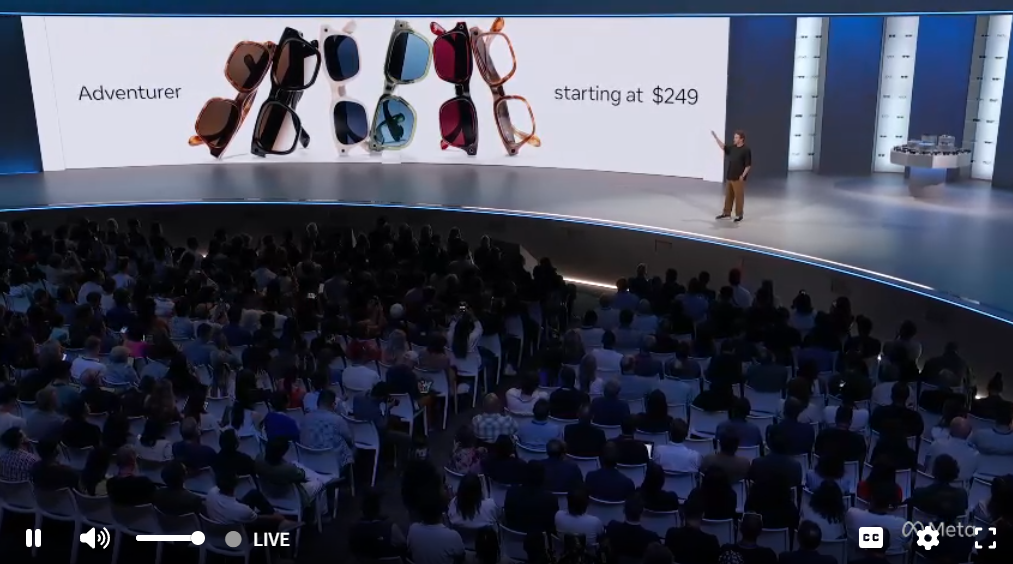
But now, Meta's smart glasses competitiveness extends beyond this.
Muse's popularity and Meta's stock surge reflect the recognition that Meta can access exclusive multimodal data: first-person perspectives, voice commands in real-world scenarios, and actual purchasing and task-fulfillment behaviors—data that smartphone manufacturers and cloud providers cannot obtain. What Meta accumulates through glasses is 'person-object-intention' triplet-aligned data, the most scarce training material for spatial intelligence.
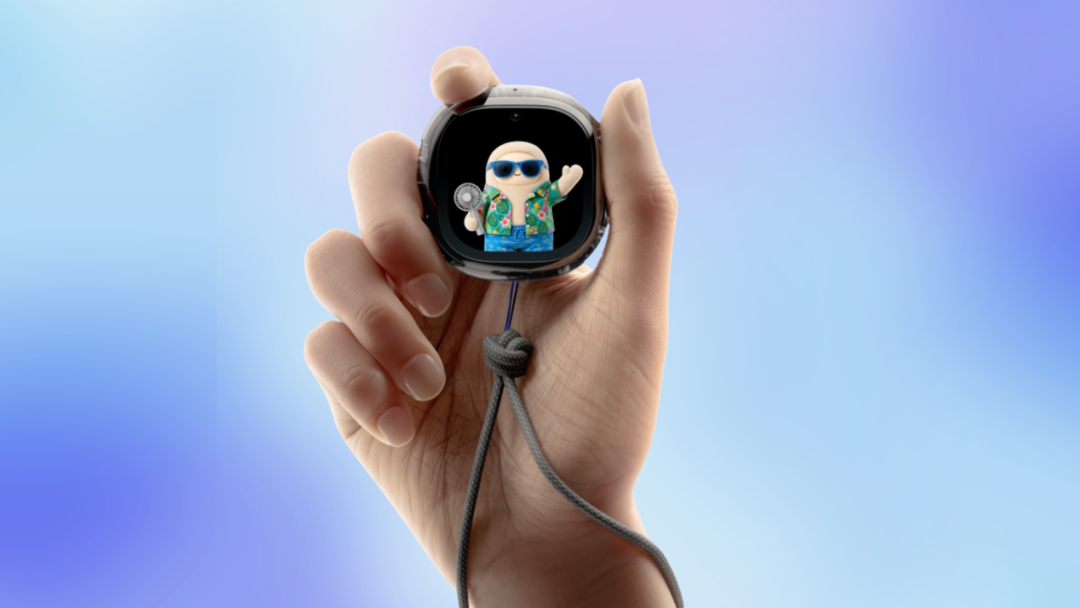
Meanwhile, Meta's lead is not just based on a single hardware product but also includes channel scale, brand recognition, and cross-product-line AI capabilities. These barriers are harder to replicate than a single product launch. Meta has built a complete matrix of price points and functionalities using Audio for hearing assistance, third-generation Ray-Ban Meta, Ray-Ban Meta Display, neural wristbands, VR Glasses, and Muse Charm, allowing it to hedge against competitors at any single price point.
04 Will the
'Fourth Richest Person' Block
the Path for Domestic AI Glasses?
The four-year contraction of VR indicates that requiring users to enter an environment disconnected from reality is not viable in the mainstream market for now. In contrast, the rapid growth of AI glasses shows that integrating AI and spatial computing into daily wearables, shifting from occasional immersion to high-frequency lightweight use, and converging product lines toward 'all-day wearability' is the current path for the mainstream market.
Here, let's conduct a thought experiment: Suppose the 'fourth richest person' brings his entire ecosystem to China, with all functionalities applicable. Could he block the path for domestic AI glasses?
First, he could invalidate hardware differentiation through portal differences. The parameter ceiling for audio glasses is low; the real moat is who can embed their agent into the glasses and secure third-party service authorizations. Domestic smart glasses have seen remarkable growth this year, but domestic glasses-end agents still lag behind Meta's ecosystem in third-party service authorizations, transaction closures, and cross-platform execution. Once Muse-like capabilities reach the glasses end, the gap will widen rapidly.

Second, he could accumulate actionable data and control bargaining power. Click-through, dwell time, and viewing data have been exhausted in the smartphone era; 'who completed what transaction in what scenario' is a new goldmine. If Meta establishes a seamless loop for agents, authorizations, and transactions, hardware manufacturers' bargaining space will shrink.
Third, he could raise competitive barriers with resident VMs and subscription systems. Muse's service degradation serves as a warning: resident VMs alter the marginal cost structure per user, with profitability paths still unverified. Meta might sustain 100 million free tokens per week, but can domestic companies making glasses + agents withstand such computational cost pressures?
However, recent media scandals have exposed that Meta's AI is not truly 'intelligent' but 'manual.' In mid-September, Meta officially launched the public beta of Muse AI agent's new feature, which can proactively call merchants to help users complete reservations, appointments, and other daily tasks. However, reports revealed that Meta added a layer of human customer service to handle all AI call tasks, routing them to dedicated personnel in call centers for actual execution.

As the controversy escalated, Meta urgently suspended Muse's outbound calling feature. According to a recent Reuters report, a vice president at Meta's superintelligence lab admitted that the feature launch was a major mistake, as it began public testing without truthfully informing users about the involvement of human operators, which was unreasonable.
Thus, Meta's trust crisis has not ended, and the future of the intelligent agent Muse remains uncertain. Moreover, Meta still cannot operate unrestricted in China. Nevertheless, not just Meta but major tech giants are recently ramping up AI autonomous task-fulfillment capabilities. Just this week, Google also launched a daily calling service for its Gemini agent.
Regardless of whether Muse holds the discourse power in the future, the domestic XR industry should still ask itself: If smart glasses are forced into the agent era, what irreplaceable value does your product offer?
Text by Qingniao Yinqin
-
Kimi Valued at $50 Billion, Yang Zhilin's Past Disputes Reach IPO Threshold
-
Founder from Generation Z Leads 14-Member Team to Challenge Meta
-
![]()
Over 1 Billion Yuan in Series C+ Funding Secured! Kunyu Optoelectronics’ 12-Inch Optical Production Line Slated for Operation by 2027
-
![]()
Can AI Be Integrated into Smartphones, or Will It Completely Transform Them?
-
FDE Suddenly Becomes a Topic ‘No One Wants to Discuss’
-
![]()
Android Takes the Lead, Honor Makes a Comeback
-
![]()
Android Takes the Lead, Honor Makes a Comeback
-
![]()
Virtual Humans Now Have Official Identification! AI Idols with Certificates Can Participate in Commercial Performances, But Who is Liable if Issues Arise?