In-Depth Analysis: First Batch of L3 Autonomous Driving Vehicle Models Secures Market Entry Approval
 12/18 2025
 634
634
Recently, China has granted market entry approval to its inaugural batch of L3 autonomous driving vehicle models.
What precisely does this landmark event entail?
What implications does it hold for the progression of China's intelligent connected vehicle sector?
What are the defining features and constraints of L3 autonomous driving?
What foundational measures are imperative for the future deployment and widespread adoption of L3 and advanced autonomous driving technologies? 
This article delves into the core perspectives from the following dimensions:
L3 Market Entry: A Paradigm Shift for the Industry and a Pivotal Regulatory Milestone
L3 as the Gateway to 'Genuine Autonomous Driving': According to national standards, automotive autonomous driving is categorized into six tiers, ranging from L0 to L5. Only vehicles attaining L3 (inclusive of L3, L4, and L5) can truly be considered autonomous.
At present, nearly all vehicles on the market fall below the L2 threshold, indicating that China has yet to produce vehicles that are truly autonomous in the strictest sense. 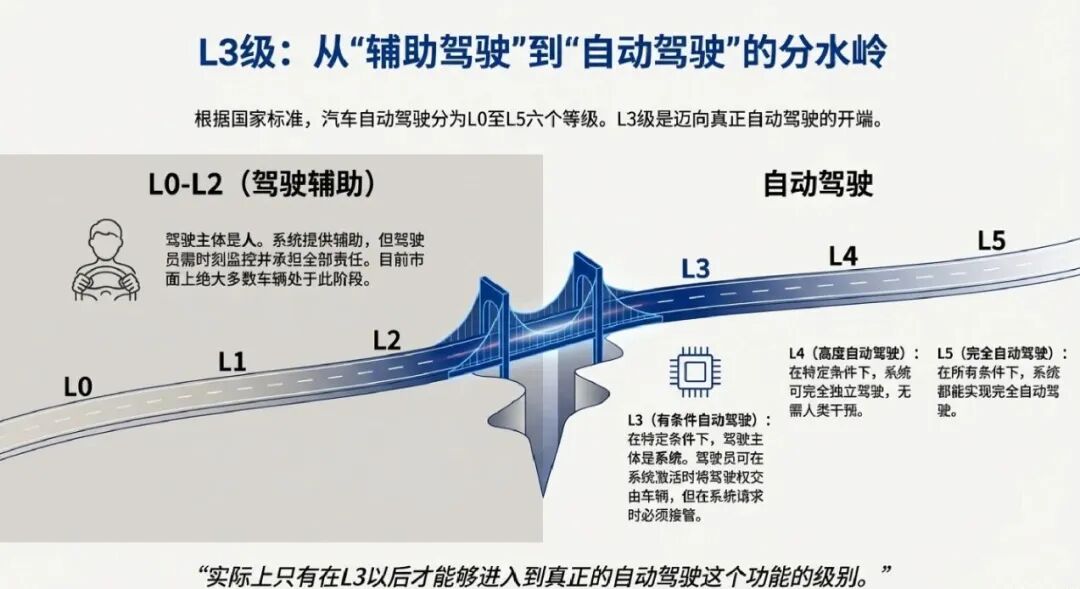
The announcement of market entry approval for the first batch of L3 autonomous driving vehicle models is widely regarded as a watershed moment, marking China's autonomous vehicle industry's official transition from technological validation to mass production deployment.
This entry pilot represents a significant leap forward in fostering industrial innovation while prioritizing safety, signaling a major stride in China's autonomous driving regulatory framework and carrying profound significance for the entire industry.
Definition and Technical Constraints of L3 Autonomous Driving
L3: Conditional Autonomy, Not Full Autonomy: L3 autonomous driving is conditional, not fully autonomous.
Driver Readiness for Takeover: The essence of L3 is that when the autonomous driving system surpasses its operational limits, it issues a takeover request in advance, necessitating prompt driver intervention.
Specific Approved Models and Limitations: The two models approved are the Changan all-electric sedan and the Arcfox pure electric sedan. 
During the pilot phase, they are subject to clear restrictions on road conditions and speeds:
The Changan all-electric sedan can operate autonomously on highways and expressways under traffic congestion, with a maximum speed capped at 50 kph.
The Arcfox pure electric sedan can reach a maximum speed of 80 kph under identical road conditions.
Pilot Operation Model: L3 vehicles will initially be deployed in specific regions as ride-hailing, dedicated, or leased vehicles, operated by professionally trained commercial entities. Ordinary consumers can access them through reservations. 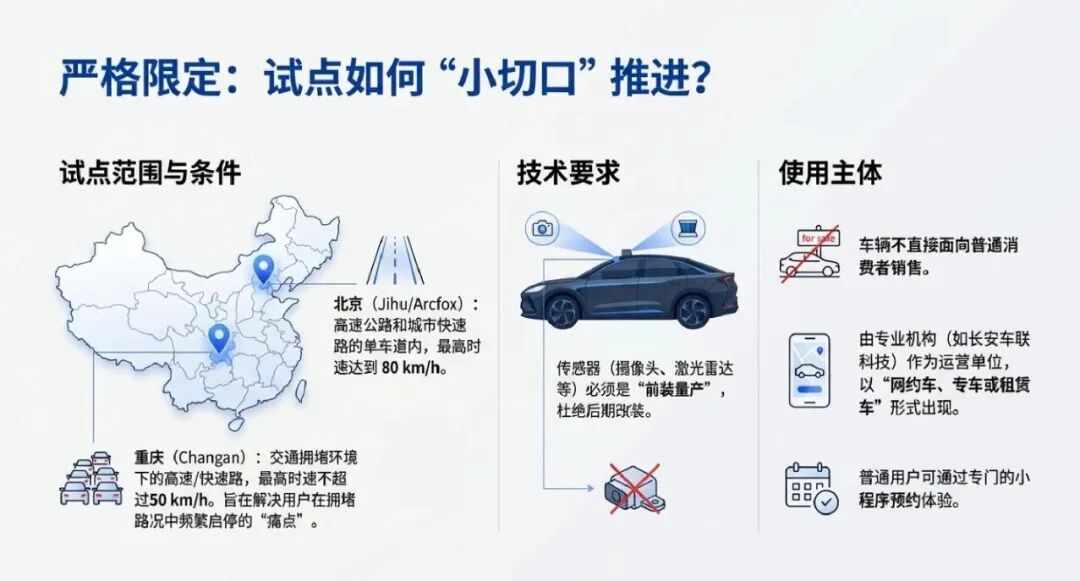
Distinctions Between 'Entry Pilot' and Previous 'Road Testing'
Divergent Objectives: Previous road testing and demonstration applications, primarily organized at the local level, aimed to enhance product functionality and safety. The current entry pilot, however, builds upon these efforts to facilitate the transition of autonomous driving technology from testing demonstrations to mass production deployment. 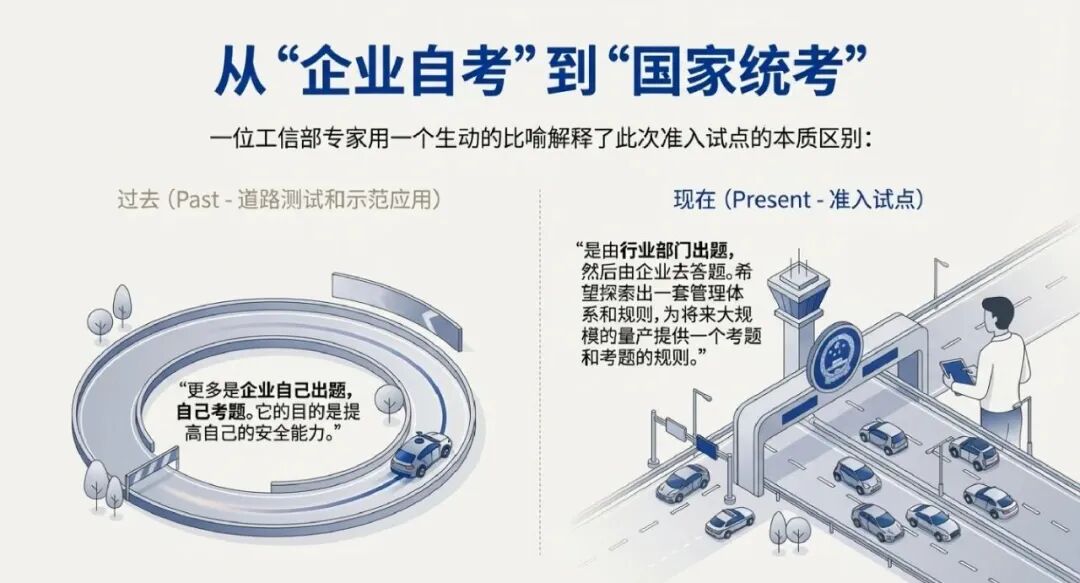
Varied Regulatory Entities: If road testing can be likened to 'self-assessment by companies,' then the entry pilot is overseen by industry regulatory authorities, who aim to establish a management system and rules, providing a framework and guidelines for future large-scale mass production. This pilot also signifies that the participating models have undergone multiple stages, including solution verification, testing assessment, and expert review. 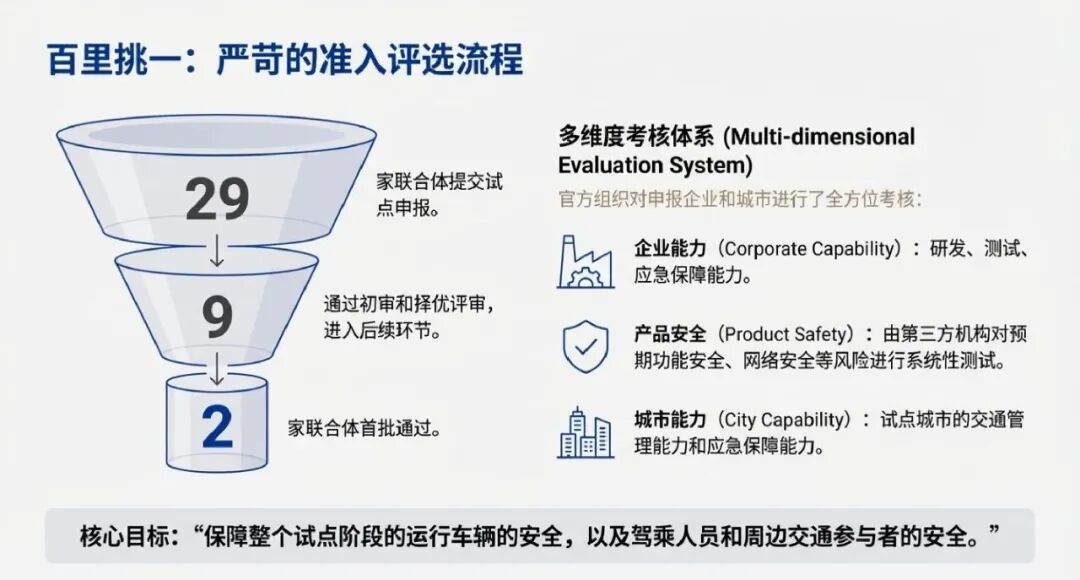
Technical Specifications: The cameras, radars, and other equipment on approved L3 autonomous driving vehicles must be factory-installed for mass production. Vehicles retrofitted with sensors are ineligible for the entry pilot.
Supporting Measures for L3 Autonomous Driving Implementation
The deployment of L3 autonomous driving necessitates not only technological advancements but also comprehensive regulatory follow-up, particularly in legal and infrastructural domains. 
Legal and Regulatory Revisions (Responsibility Allocation): L3 autonomous driving requires a redefinition of responsibility allocation. Traditional driving tasks are the driver's responsibility, whereas in L3 autonomous driving, accountability may vary depending on the operational scenario, with both the user and the autonomous driving system potentially being held liable.
There is an urgent need to revise the Road Traffic Safety Law to clarify the responsibility allocation mechanism for autonomous vehicles. The legal concept of 'takeover' must also be defined, specifying whether it is a right or an obligation for the driver to assume control in emergency situations. 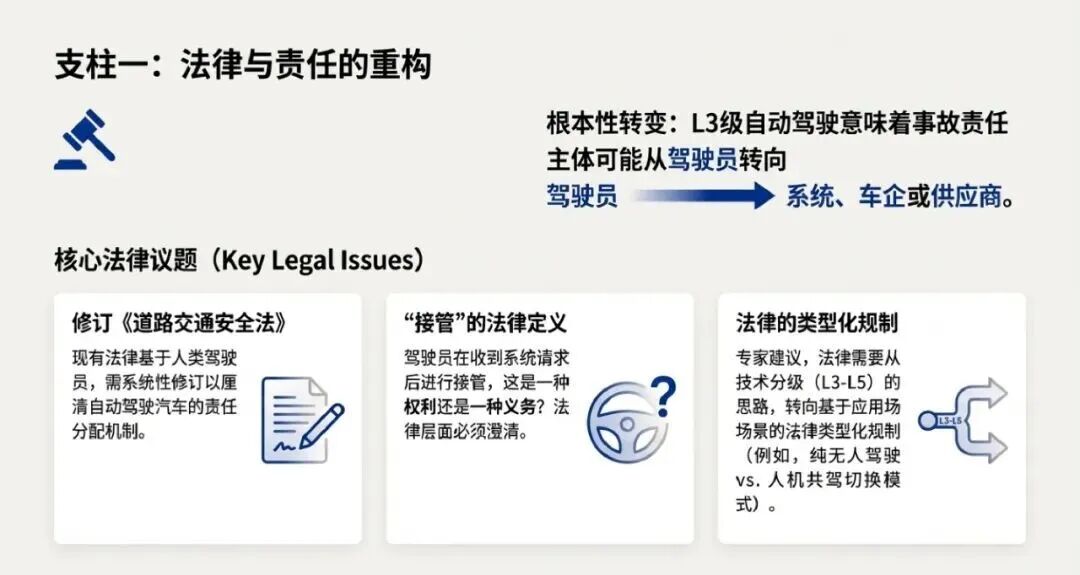
Traffic Management and Infrastructure Development: Cities must enhance the intelligent construction of roadside infrastructure.
There is a need to systematically advance the construction of 'dual intelligence cities,' clarifying the progression of intelligent roadside infrastructure, communication networks, high-precision maps, and accident handling platforms. Beijing has led the way in planning and constructing a high-level autonomous driving demonstration zone, achieving full coverage of intelligent roadside infrastructure across 600 square kilometers. 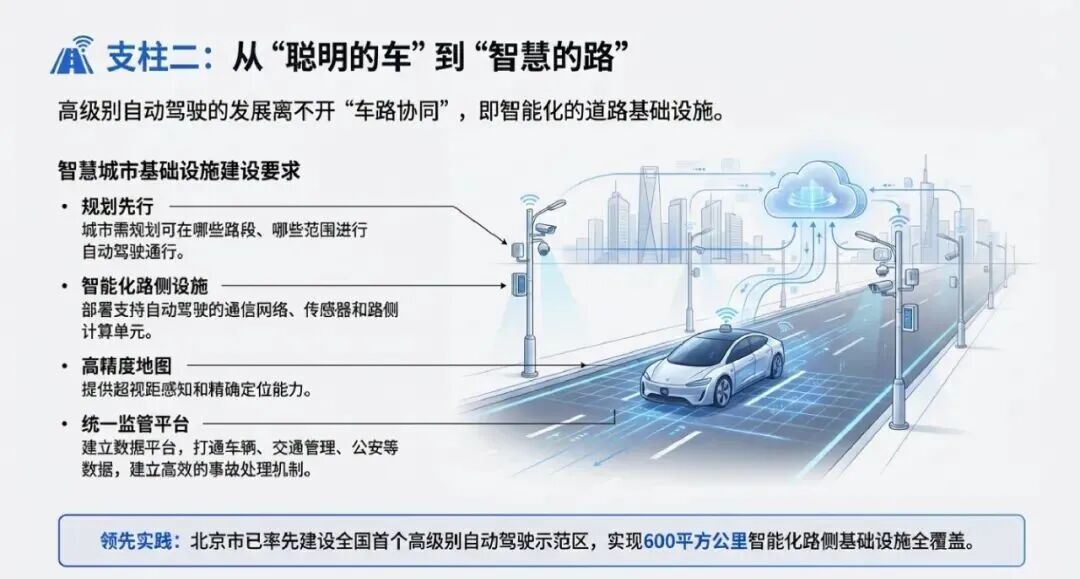
Driver Training: L3 autonomous driving imposes new demands on drivers' attention allocation and emergency response capabilities. The Ministry of Public Security has indicated its intention to incorporate knowledge about autonomous driving assistance technologies into driver training curricula in future revisions of the Road Traffic Safety Law. 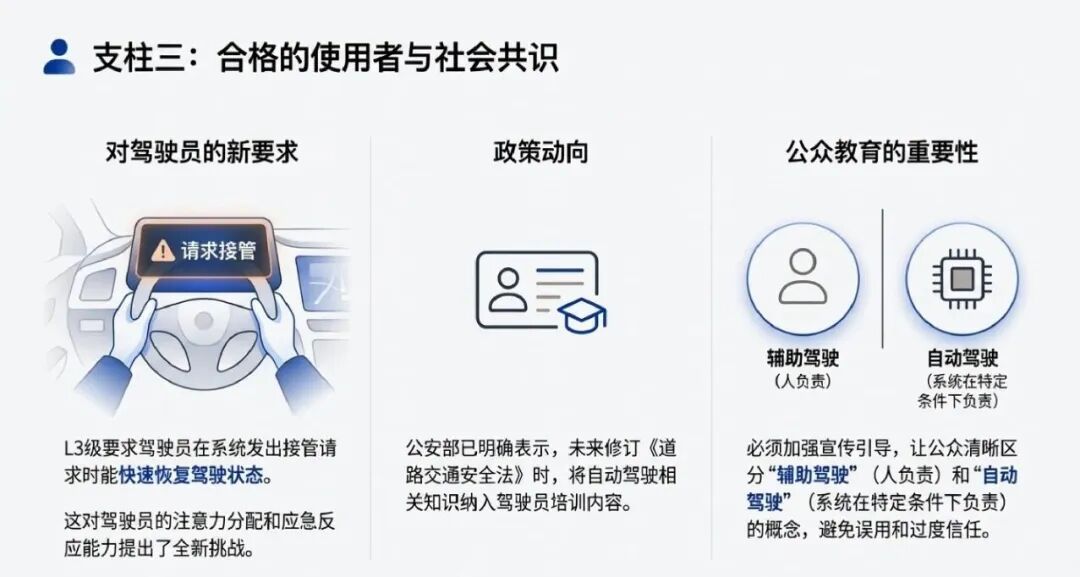
Conclusion
In summary, the approval of L3 autonomous driving represents a qualitative leap, propelling autonomous driving technology from research and development testing to the brink of commercial application. However, given the involvement of life safety, the progression must be 'steady and orderly.' The next critical step is to establish comprehensive laws, regulations, and supporting facilities to ensure the safety and standardization of large-scale mass production applications.
This process is akin to constructing a bridge across a river: technological breakthroughs have laid the foundation of the bridge, while laws and supporting facilities act as the safety norms and foundational engineering that ensure the bridge deck is smooth and its load-bearing capacity meets standards.
References and Images
*Unauthorized reproduction and excerpting are strictly prohibited-*
-
![]()
Why Hasn’t AI-Driven Payment Flourished Despite Tech Giants’ Push?
-
![]()
Intensify Efforts in the High-End Optoelectronic Semiconductor Sector! Aipu Dingchun and Jiangsu Meidong Forge a New Joint Venture
-
![]()
From Endoscopes to Optical Interconnects for AI Computing Power: A Veteran Optical Company's Strategic Shift
-
![]()
Behind the Scenes of Token Factories' Rise as a Capital Market Sensation
-
![]()
What Does MaaS Ultimately Bring to Chinese Cloud Providers? | In-Depth Industry Analysis
-
![]()
China’s Auto Resale Value Report Unveiled: AITO M9 Electric and Hybrid Variants Dominate Rankings
-
![]()
Dialogue with Huang Yangming: On the Eve of the Physical AI Boom, the Value of Data Infrastructure Begins to Materialize
-
![]()
The Experience is a Bit Unusual! Logitech G Cloud Review: Great Feel, but Not Ideal for Cloud Gaming