OpenClaw's Two-Week Craze Awakens Hardware and Agent Vendors
 02/13 2026
 498
498

The exploding popularity of OpenClaw has split the world in two.
One half consists of enthusiastic “drifters” who use OpenClaw to handle various tasks: writing code and finding files are just the basics; the advanced users are figuring out how to make it truly work for them to earn money. The other half, drawn by the hype, tries it out only to find it both costly and not as user-friendly as imagined.
Users who love it and those who don’t are clearly divided, but the OpenClaw effect is far from over.
As a true prototype of an AI assistant, OpenClaw has already established its own ecosystem, attracting upstream and downstream vendors to adapt for it: Cloud vendors like Alibaba, Tencent, and Baidu swiftly launched one-click OpenClaw deployments; AI PCs and smart glasses are vying to announce “OpenClaw compatibility”; the Mac mini 16GB version sold out, and tech enthusiasts, not limiting their experiments to computers, have started creating a “ClawPhone” for voice-controlled smartphone experiences.
OpenClaw is like a catfish, stirring up the long-stagnant AI hardware pool. Similar to how DeepSeek once popularized all-in-one machines, vendors are now trying to persuade skeptical users by equipping OpenClaw with computing power and environments: To have such a powerful assistant, you need to give it a dedicated physical form.
Why has OpenClaw sparked a hardware boom? And will hardware truly become a necessity for Agents in the future? From OpenClaw, we see many possibilities worth discussing.
Born on the hardware side, OpenClaw has grown “limbs”
To discuss hardware issues, we must first clarify what OpenClaw does right to make it so “useful.”
For a long time, our expectations for Agents have been inspired by movie characters like “Jarvis”: handling schedules effortlessly and even taking over workflows. Yet, for a long time, various Agents have struggled to make these scenarios a reality.
AI's shortcomings stem not only from limited model capabilities but, more critically, from a lack of permissions and context.
“The biggest difference is that it runs on your computer. Everything I’ve seen runs in the cloud, and it can do some things. But if it runs on local hardware, it can do anything.” OpenClaw founder Peter Steinberger explained OpenClaw’s success.
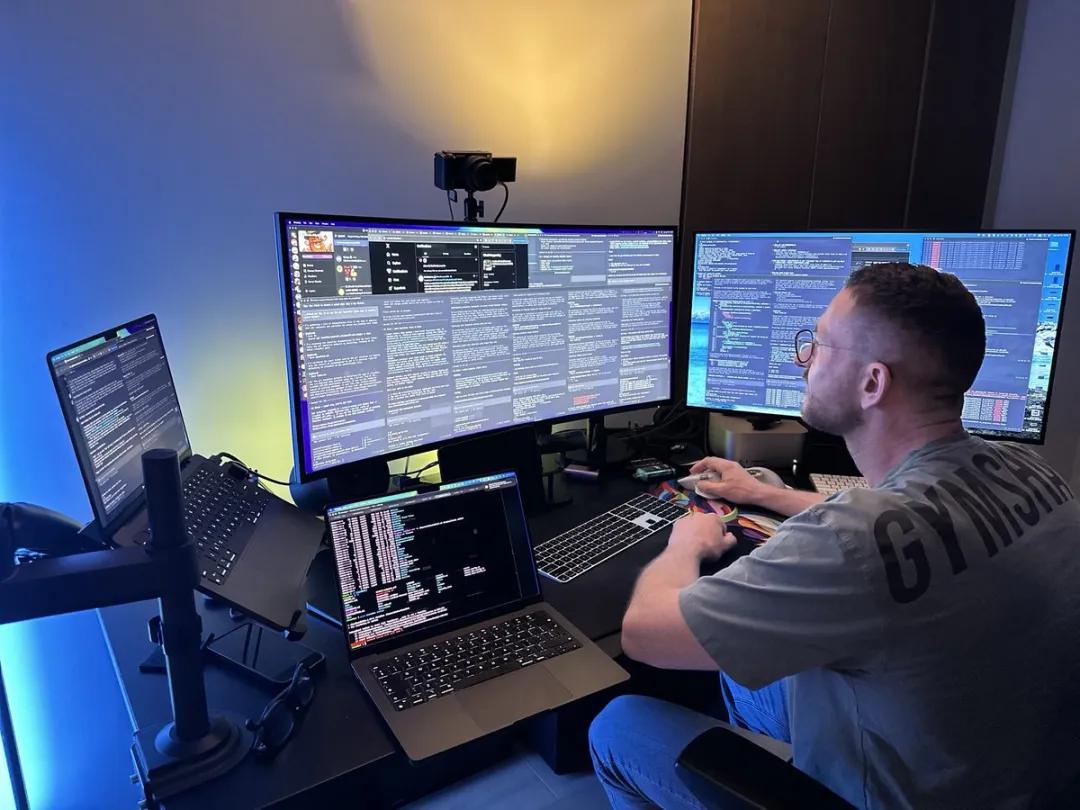
Simply put, ChatGPT is a superbrain floating in the cloud, but to handle simple, grounded tasks, it needs “hands and feet.”
By locally deploying the Agent on a computer and leveraging hardware-level permissions, this “shrimp” finally has the right tools to accomplish tasks that large models could theoretically do but were hindered by permission constraints.
For example, if an Agent wants to sync your schedule, it needs access permissions for emails and Outlook on your computer. If it needs to help you find a file you don’t know where you placed, it requires read access to all data on your computer’s hard drive to search freely through your files.
This is also why the previous “Doubao Phone” was more impressive than AI PCs. Compared to the latter, the former achieved cross-app operations by combining open phone permissions, linking functionalities scattered across multiple apps. While phones gave AI a “crack in the door,” AI PCs had yet to achieve such permission integration.
Beyond simple function calls, assigning data-intensive tasks like writing an annual summary to OpenClaw yields better results than direct AI calls.
Unlike previous methods requiring individuals to upload files to the cloud for processing, OpenClaw resides directly on your computer. Your hard drive, browser history, and more serve as its readily accessible databases.
Peter himself gave an example: A friend asked OpenClaw to write an annual summary, and the result exceeded his expectations. To understand what the AI did, Peter checked the operation logs and discovered that OpenClaw had found irregular weekly recordings on his computer, capturing his daily thoughts. OpenClaw located these recordings and used them to compile the annual summary. In essence, it had access to better information sources than the user himself knew existed.
Besides permissions, OpenClaw’s other ace is its Skills ecosystem. Compared to direct model calls, Skills—as manually written “plugins”—are more “human-like” than large models themselves.
This is also why OpenClaw has a stronger impact on non-technical users. Without programming skills, users must craft precise prompts or even manually debug to make large models perform tasks. However, Skills consist of predefined human-written workflows, with AI executing according to set procedures. This “large model + workflow” combination elevates task accuracy to a more usable level.
OpenClaw is a strong open-source framework. By placing the “brain” in the cloud and the “body” on hardware terminals, it has brought the dream of AI assistants to life. For this dream to materialize, hardware is the most crucial component.
OpenClaw’s first spark ignites the hardware side
While OpenClaw’s intelligence entices many, deploying it has become users’ first major hurdle.
OpenClaw lacks an installer; as an open-source project, it requires users to configure the environment themselves on GitHub, where each step risks errors, and command-line operations clash with general user habits.
Beyond deployment complexity, fully open computer permissions pose unacceptable risks. For instance, it might accidentally delete important files during disk cleanup or hog CPU resources in the background, freezing the computer.
Given OpenClaw’s potential to “overdo” things, most users hesitate to deploy it directly. Their options typically boil down to two: either allocate a separate spare computer for it or back up their data before letting it “take over.” Unrestricted permission access means OpenClaw can either help or hinder.
Thus, the Mac mini became the earliest “digital body” to sell out. OpenClaw’s popularity first boosted Mac mini sales.
Since OpenClaw’s development environment is optimized for macOS, and more Skills are designed for Apple devices, coupled with its affordability and plug-and-play convenience, it became the ideal OpenClaw host. Driven by demand, Mac mini prices have risen. Originally priced around 2699 with government subsidies, it recently adjusted to approximately 3000.
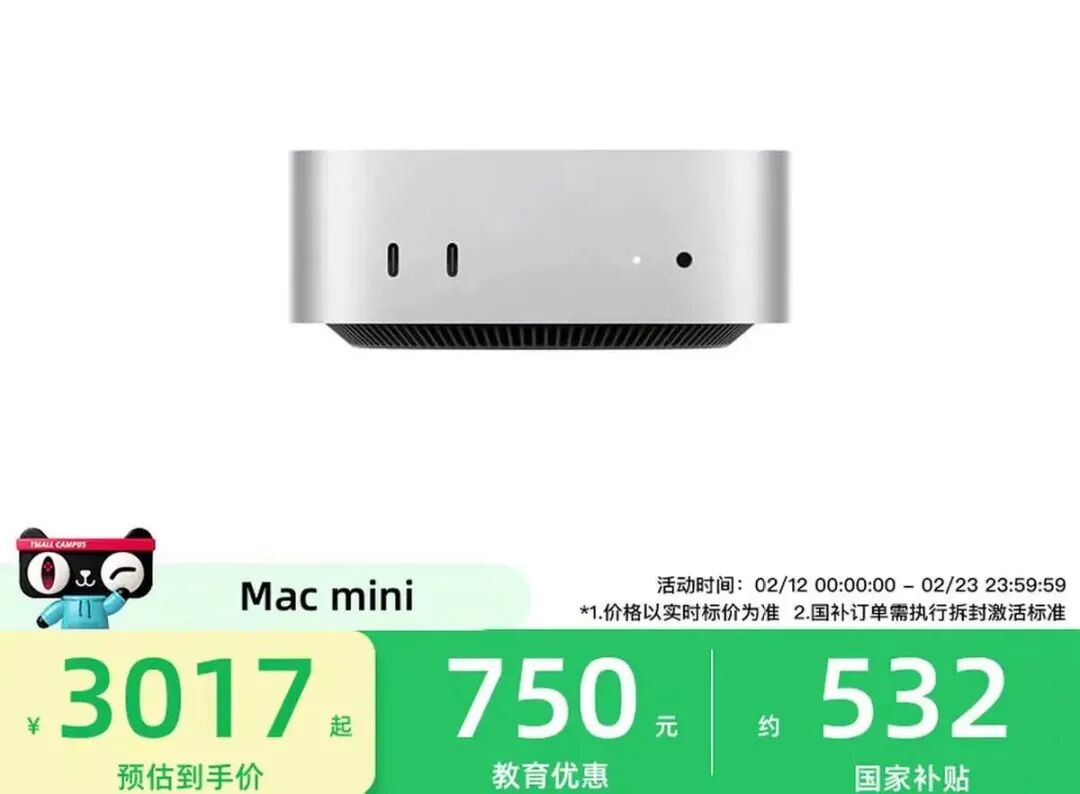
Taobao shows the Mac mini price after government subsidies
OpenClaw’s influence extends beyond computers to other smart devices.
As Peter said, OpenClaw can not only operate your computer but even control your phone, LED strips, or even your oven.
Based on cloud versus local differences, we see two distinct OpenClaw approaches:
One approach still relies on cloud model APIs + hardware-side Agent deployment, enabling low-cost hardware to access Agent capabilities and experience AI assistance.
Take smartphones, for example: This week, geek user Ethan showcased a “ClawPhone” modification on X. He connected OpenClaw to a secondhand phone, running it through an Android emulator to enable OpenClaw on the mobile side.
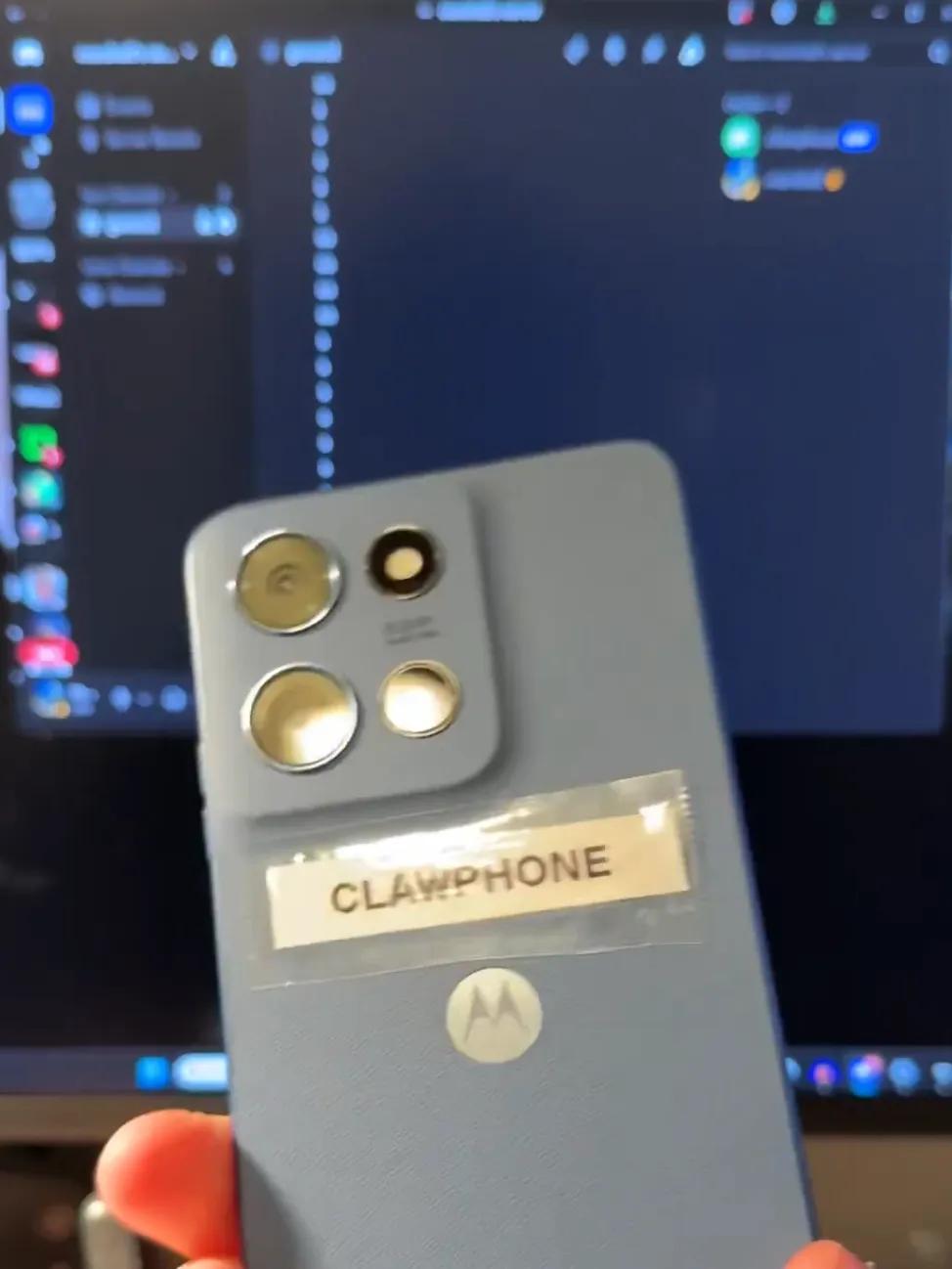
Using Discord (a community app) as a communication window, Ethan directly issued voice commands to the phone, successfully toggling the flashlight on and off and having the phone “see” and describe its surroundings through photos.
However, the current handmade version has limited effects on phones. As a hardware-native product, OpenClaw needs more permissions to truly enable arbitrary calls.
For instance, permission integration remains an issue in the phone ecosystem. Ethan admitted that to let OpenClaw access microphone audio or send voice commands, the phone needs root access. His phone wasn’t rooted, so this wasn’t possible, as Android strictly sandboxes permissions for calls and audio.
The other approach directly deploys OpenClaw on local devices to run a small on-device model. Such products are generally more cost-effective but demand higher hardware specifications.
This is where Infra vendors come into play. For example, by launching various hardware and chips, Infra vendors solve the most painful deployment issues for users while promoting chip computing power for OpenClaw’s on-device models.
On February 10, Thundersoft announced full-stack deep adaptation and large-scale deployment of OpenClaw on its Magic Cube Pi 3 and AIBOX. It encapsulated environment configuration, deployment, and network debugging into pre-processed programs, helping users achieve “install and run” simplicity.
This design philosophy prioritizes sufficient on-device model computing power before addressing deployment configuration details, much like the original DeepSeek all-in-one machines.
Some vendors also attempt to let users experience a stripped-down OpenClaw via cloud-deployed Agents.
Recently, smart glasses found an opportunity to ride the hype. For instance, on February 11, smart glasses vendor Rokid announced the opening of its Lingzhu platform’s “custom intelligent agent” feature.
However, note that while Rokid claims developers can connect a locally deployed OpenClaw to the glasses, the official setup steps demonstrate the need for cloud server public network configuration and explicitly discourage using local OpenClaw with the glasses.
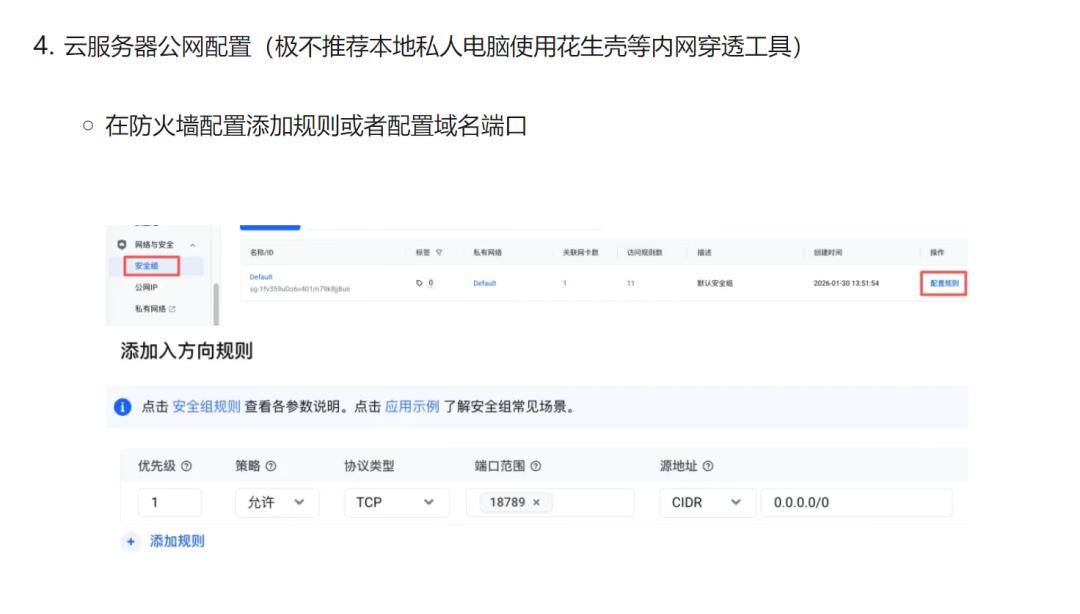
Rokid's official deployment recommendations
In short, Rokid’s method of connecting OpenClaw still relies on cloud deployment. If you deploy OpenClaw this way, you can’t call files on your computer desktop via hardware permissions or transmit data directly locally, as it must pass through cloud servers.
The above approaches still involve locally deploying OpenClaw on various hardware. However, some are already developing AI Native hardware designed for Agents.
In other words, beyond business opportunities around OpenClaw deployment, new commercial prospects are emerging based on Agent gameplay.
Take Distiller Alpha, a native hardware comparable to OpenClaw. Priced at 1700 RMB, this product encapsulates Agent capabilities into a standalone hardware device.
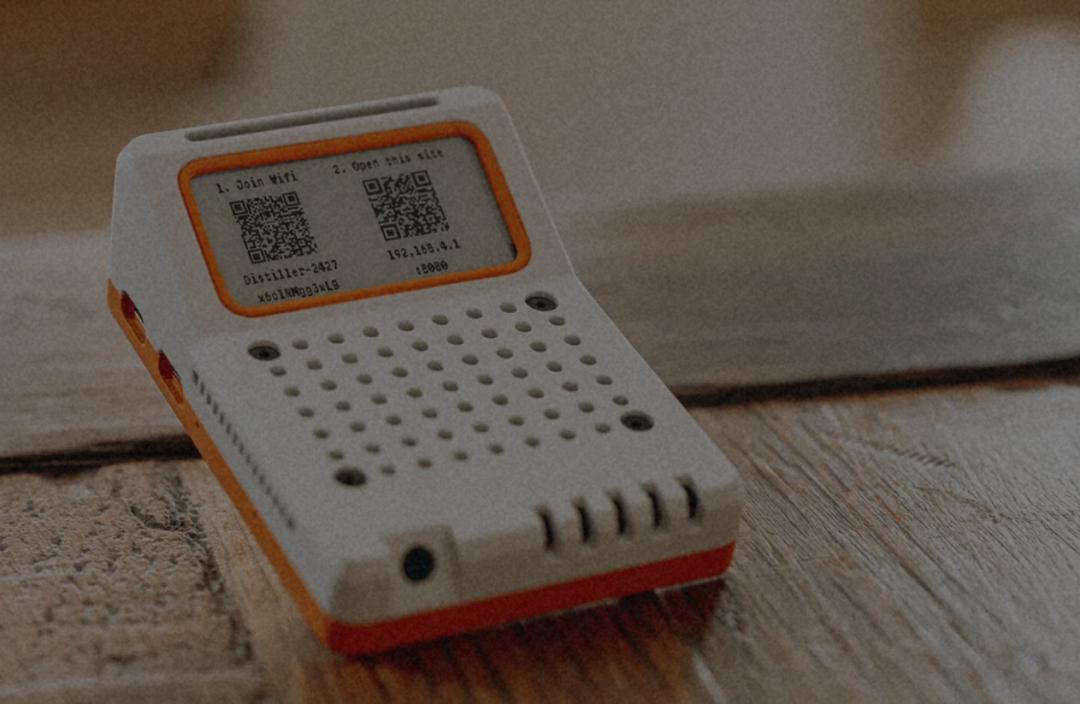
In demonstrations, users issue commands via other devices, and the pre-deployed Agent completes tasks. Simply put, it lowers deployment barriers for ordinary users. Like a “hardware version of Docker (sandbox),” it lets novice users plug it in, connect to the internet, and have a secure, physically isolated Agent environment. As a standalone hardware product, it can also integrate with other devices like robot vacuums or computers.
Arguably, starting with OpenClaw, from the Mac mini shortage to phone modifications and native hardware, a hardware ecosystem chain centered around Agents is rapidly evolving.
OpenClaw is a key, but the new world requires multipartite (multiple participants)
OpenClaw’s impact isn’t limited to the hardware side. Domestically, its popularity has put major vendors on edge.
After OpenClaw went viral, cloud vendors behind major companies unanimously launched cloud-deployed versions. The last product to stir cloud vendors this much was DeepSeek.
Cloud vendors excel at one-click deployment + cloud space, creating secure cloud environments for users unwilling to purchase hardware. These spaces can mimic computers or phones. For example, Alibaba Cloud offers Wuying Cloud Computer enterprise and personal editions, while Baidu Cloud chose to create a mobile OpenClaw version—Red Finger Operator, a customized OpenClaw cloud phone.
While cloud deployment can’t replicate local file access and permission control, major vendors have leveraged their ecosystems to implement features that resonate more with individual users.
What may most impress individual users is integrating OpenClaw into apps.
Besides connecting to iMessage, Telegram, and WeCom, initial differentiation came from integrating proprietary apps. For example, Tencent Cloud’s strength lies in exclusive QQ support. More vendors have synchronized with commonly used domestic office software, like Alibaba Cloud and Baidu Cloud integrating with Feishu and DingTalk.
Although cloud vendors are the quickest way for everyone to experience OpenClaw, stepping back to the core value of OpenClaw itself, the most critical aspect—the integration of local permissions—is somewhat diminished due to its complete deployment in the cloud.
It can be seen that OpenClaw, as an open-source framework, opens up possibilities for a multitude of vendors: an Agent that can run locally becomes smarter and more user-friendly. It is no longer just an open-source tool but a 'catfish' Break into a school of sardine (intruding into the shoal of sardines) that disrupts the status quo. It provides hardware and Agent vendors with a preview of a future path.
A product that is difficult to deploy and not sufficiently secure also presents an opportunity for major players to find breakthroughs. Who can be the first to transform OpenClaw's 'wild growth' capabilities into a more stable, secure, and callable product?
When we shift our gaze away from the bustling hardware and cloud battlefields, we find that Silicon Valley's software giants have already begun making their final moves.
Compared to OpenClaw's unrestrained open permissions, Claude's Coworker offers a more mature solution.
Although it also uses virtual machines, Coworker itself is exploring a more conservative approach, which involves confirming file access permissions with users and only proceeding with files that have received consent. During the operation, it also confirms with the user whether to execute. Although the current version is not yet perfect, it represents a more conservative solution.
Hardware vendors have even more considerations. If future versions of Coworker can perfectly resolve permission and security issues in software form, will the current surge of 'buying hardware for Agents' become a bubble?
The fire ignited by OpenClaw is just the beginning. From the celebration of hundreds of thousands to that of millions, OpenClaw and its counterparts have left questions for players across various ecosystems.
-
![]()
Li Bin Claims, 'Denying the Pure EV Trend is Like Ostrichism.' What's Li Xiang's Take?
-
Lenovo: Liu Jun Turns Left, Yang Yuanqing Turns Right
-
Lenovo: Liu Jun Goes Left, Yang Yuanqing Goes Right
-
![]()
MiniMax Shares Unlock: Cornerstone Shareholders Show Long-Term Optimism, Yet Stock Plummets Nearly 30% in Two Days; Zhipu Also Sees Nearly 20% Drop Today
-
![]()
Single-Day Plunge of 40%: The 'First AGI Stock' Faces More Than Just Share Price Concerns
-
![]()
Ricoh and Fuji Hike Prices on Legacy Edge; Insta360 Poised to Disrupt Mirrorless Camera Market
-
![]()
Ricoh and Fujifilm Raise Prices in Tandem, Relying on Established Reputations; Insta360 Poised to Disrupt Mirrorless Camera Market
-
![]()
Strategic Shift in Photoelectric Sensing: Maxvision Secures Controlling Stake in CAS Optotech