What’s Afoot as Tesla Suspends Production of Its Iconic Models?
 02/13 2026
 519
519
Shift Towards an 'AI and Robotics Powerhouse'
Tesla recently unveiled its financial results for the fourth quarter and full year of 2025. The highlight was CEO Elon Musk's official announcement that production of the Model S and Model X will cease in the upcoming quarter.
'As we advance towards a future centered on autonomous driving, it's fitting for these two models to step aside gracefully,' Musk remarked, signaling the end of two flagship models that have defined Tesla's presence in the market for over a decade. This move also underscores Tesla's strategic pivot from being merely an automaker to becoming an 'AI and robotics powerhouse.'
Currently, both the Model S and Model X are manufactured at Tesla's Fremont factory in California. Musk disclosed that following their discontinuation, the factory will redirect its efforts towards producing the Optimus humanoid robot. Tesla has assured ongoing after-sales support for existing owners. For those still keen on purchasing these models, Musk candidly advised, 'Now is the ideal time to make your move.' He acknowledged that this transition is tinged with 'a hint of sadness' but is integral to the company's broader vision of embracing autonomous driving.
The End of an Era for Iconic Models
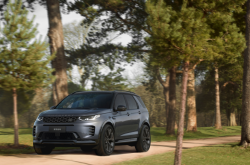
The Model S and Model X, which have been market mainstays for over ten years, can be regarded as Tesla's 'hero models.'
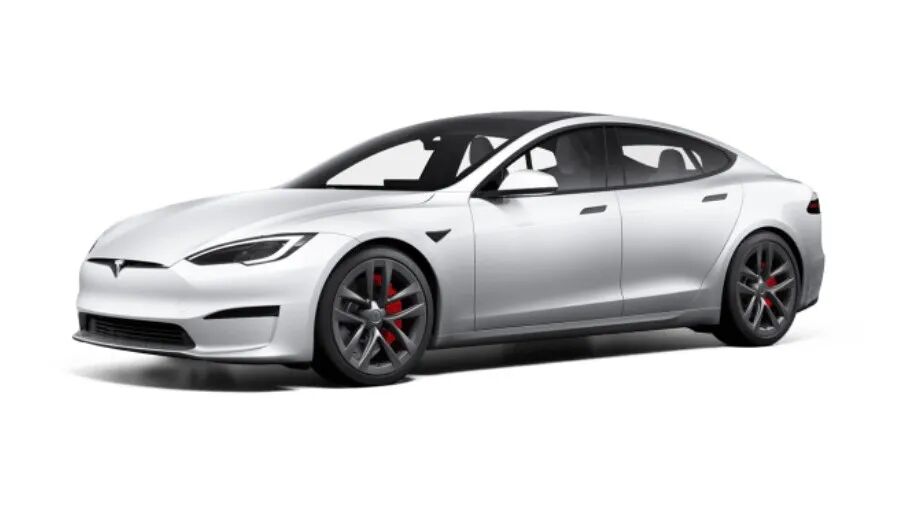
Image Source: Tesla Official Website
Introduced in 2012, the Model S was soon followed by the Model X in 2015, which captivated audiences with its distinctive falcon-wing doors. These models played a pivotal role in transforming Tesla from a fledgling startup into an industry titan, with cumulative sales surpassing 2 million units. They not only garnered invaluable technical expertise and brand recognition for Tesla but also spurred the growth of the luxury electric vehicle sector.
Now, these models are nearing the end of their product lifecycle. Tesla store representatives reported that only a limited stock of these flagship models remains. While prices may see slight adjustments from the official list price, significant discounts are not anticipated.
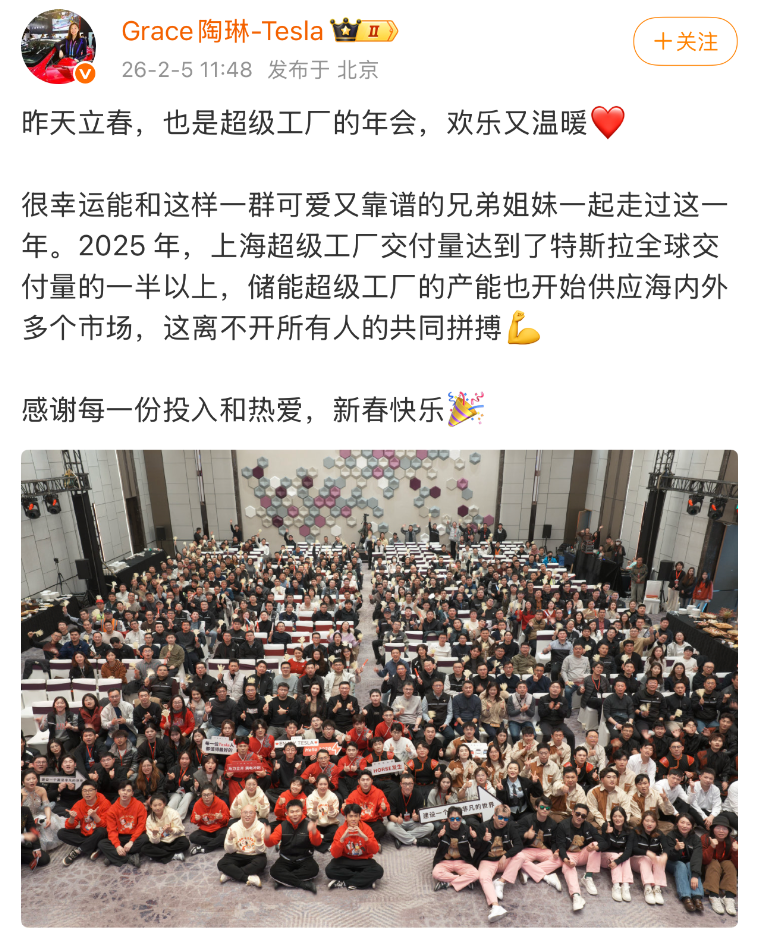
Image Source: Sina Weibo @Grace Tao Lin - Tesla
The Model S and Model X have fulfilled their historical roles. Today, the Model Y and Model 3 have emerged as the cornerstones of Tesla's sales. On February 5, Tesla's Vice President, Tao Lin, announced on Weibo that in 2025, the Shanghai Gigafactory accounted for over half of Tesla's global deliveries. Meanwhile, the energy storage Gigafactory commenced production to supply multiple markets both domestically and internationally.
Behind the discontinuation of the Model S and Model X lies a significant transformation in market dynamics and Tesla's ongoing business adjustments.
Emerging competitors, particularly Chinese brands, have rapidly ascended, gradually encroaching on Tesla's market share through technological innovation and precise market positioning. For instance, NIO's four-seat executive flagship sedan, the ET9, entered the executive sedan segment priced at RMB 788,000 and is seen as the pinnacle of NIO's decade-long technological advancements. The AITO M9 continues to dominate the luxury SUV segment priced above RMB 500,000, with its Huawei-powered intelligent cockpit and autonomous driving features becoming key selling points. BYD's Yangwang U8 and U9 have successfully penetrated the ultra-premium market with their groundbreaking 'Easy Four-Wheel' technology and 'Yunzhan' chassis system. The Zunjie S800, co-developed by Huawei and JAC, has achieved remarkable success, becoming the best-selling model in its segment priced above RMB 700,000 for three consecutive months and surpassing 10,000 cumulative deliveries within less than eight months of its launch. Meanwhile, in North America, where Tesla once held a competitive edge, traditional luxury brands like the BMW i7 and Mercedes-Benz EQS are also gaining traction in the electric vehicle market.
Data reveals that Tesla's total revenue in 2025 reached USD 94.827 billion, marking a 3% year-on-year decline; net profit stood at USD 3.794 billion, a 46% decrease. In terms of market performance, Tesla produced 1.655 million electric vehicles and delivered 1.636 million units globally in 2025. Notably, BYD's sales of new pure electric vehicles soared to 2.25 million units in 2025, a 28% year-on-year increase. This marks the first instance where Tesla has been outpaced in annual electric vehicle sales by the Chinese automaker BYD.
Betting on the Future
Within Musk's 'first principles' thinking framework, Tesla is not primarily an automaker but an 'AI and robotics powerhouse.' Vehicles are merely one platform for Tesla's technology, not its entirety. As autonomous driving technology matures and humanoid robots reach mass production, Tesla's true potential will be realized. Based on this vision, discontinuing the Model S and Model X to focus resources on autonomous driving and humanoid robotics has become an inevitable strategic move for Tesla. According to the plan, Tesla will commence mass production of the Cybercab in the first quarter of 2026 and introduce the third-generation humanoid robot.
To facilitate its transition into an 'AI and robotics powerhouse,' Tesla is making unprecedented capital investments. In 2025, Tesla's operating expenses surged by 23% year-on-year to USD 12.7 billion, with a substantial portion earmarked for autonomous driving R&D and AI infrastructure development. In 2026, the company plans to significantly boost its capital expenditures from USD 8.53 billion to over USD 20 billion for constructing six new factories and expanding AI training computing infrastructure. Concurrently, Tesla also announced a USD 2 billion investment in xAI, an AI startup under Musk's purview, further solidifying its foothold in the artificial intelligence sector.
The humanoid robot Optimus represents a core aspect of Tesla's transition, with Musk considering it 'a future product more pivotal than cars.' According to the plan, Tesla will unveil the third-generation version of its humanoid robot in the first quarter of 2026. This iteration will feature notable enhancements over the 2.5 generation, including the latest hand design, more agile joint movements, and improved AI interaction capabilities. Musk stated that the third-generation humanoid robot will be exceptional, 'almost indistinguishable from a human, making it easy for people to mistake it for one.'
Meanwhile, autonomous driving remains a pivotal battleground for Tesla's transition. In 2025, the Robotaxi autonomous ride-hailing service commenced operations in Austin, Texas, and the Bay Area, California, utilizing the in-production Model Y as the operational vehicle. Data indicates that by the end of 2025, Tesla Robotaxi had accumulated over 400,000 kilometers in Austin and over 1.6 million kilometers in the Bay Area, surpassing a combined total of 2 million kilometers.
For Tesla, the commercial potential of the Robotaxi business is immense. According to Musk's vision, the future operating costs of Robotaxi will be substantially lower than traditional taxis, with fare standards around half those of conventional taxis, which will fundamentally revolutionize urban transportation. It is estimated that once Robotaxi achieves large-scale operations, Tesla's revenue structure will undergo a radical transformation, with service revenue gradually overtaking automobile sales to become the company's new profit growth engine.
Discontinuing the Model S and Model X is not the end for Tesla but a strategic wager on the future. Musk employed the phrase 'retiring with honor' to commemorate the end of these two distinguished models, aiming to propel Tesla from a traditional automaker into a future-leading 'AI and robotics powerhouse.'
After the transition, can Tesla still captivate us?
-
![]()
Model Giant Jieyue Xingchen Steps into Smartphone Arena: A Strategic Alliance with Huaqin Technology
-
![]()
Big Model Firm Dives into Phone Market: StepFun and Wingtech Forge a ‘Dynamic Duo’
-
![]()
Zhongrun Optics Makes a Bold Move with 1 Billion Yuan Investment: Is a Turning Point on the Horizon for the Precision Optics Industry?
-
![]()
Deploy CLBO Crystals and YIG Single Crystals! Erythritol Leader Invests 30 Million in Youwei Optoelectronics
-
CXMT’s July 16 Subscription: Leading Domestic Memory Manufacturer—What’s the Earning Potential per Lot?
-
![]()
Rhythm Discrepancy and Premium Value Erosion: Foreign Luxury Brands Must Re-evaluate Their China Strategy
-
![]()
Half-Year, 1 Billion Yuan Financing, 7 Billion Yuan Valuation: A New Dark Horse Emerges in the Embodied AI Sector
-
![]()
Strong Rebound for Tech Stocks in Hong Kong Stock Market: Is It Time to Bottom-Fish?