Game Industry Leaders Depart En Masse to Pursue Blockbuster Ventures
 04/03 2026
 735
735
Author|Wei Jie
Editor|Li Xiaotian
The year 2026 stands as a pivotal moment for the gaming industry, undeniably so.
Yet, beneath the industry's surface boom, a clandestine and tumultuous undercurrent is silently reshaping the entire landscape.
On March 24th, industry behemoth Epic Games circulated an internal email to all staff, announcing the layoff of over a thousand employees, representing 16% to 20% of its global workforce.

Epic Games CEO Tim Sweeney Issues Apology for Layoffs Affecting Cancer Patients
Almost simultaneously, Microsoft Xbox also witnessed significant staff turnover, with two key executives announcing their exits: Zhang Haiyan, General Manager of Xbox Game AI, will transition to Netflix's gaming division; Lori Wright, Vice President of Global Partnerships and Business Development, will also depart.
Domestic giants are not immune to these abrupt changes.
In late February, Tencent officially terminated its five-year AAA project bet, disbanding the highly anticipated TiMi Montreal studio and marking the end of an era where Chinese game companies sought to "build overseas teams to aggressively pursue AAA titles."
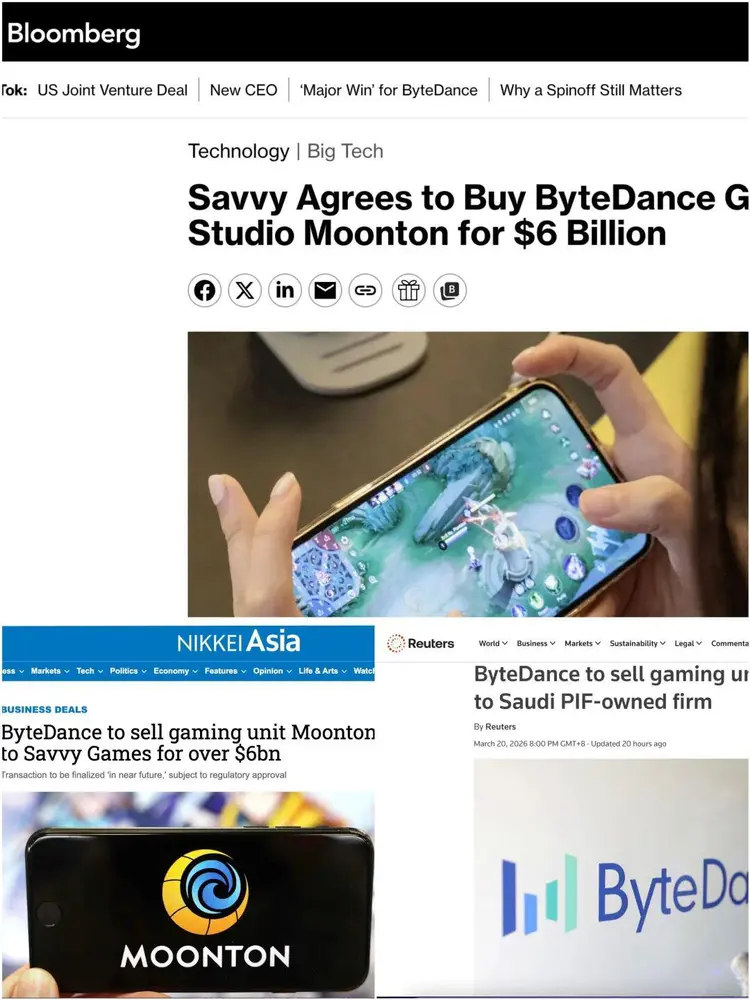
The long-pending acquisition of Moonton Technology has also reached fruition: On March 20th, Savvy Games Group, a subsidiary of Saudi Arabia's Public Investment Fund (PIF), finalized a deal with ByteDance to fully acquire Moonton Technology for over $6 billion (approximately RMB 41.4 billion).
Are these series of upheavals stemming from a collective anxiety over AI within the gaming industry?
The answer may not be so straightforward.
"The company's operating conditions are so dire that AI isn't even the primary source of anxiety," a senior planner from a domestic mid-sized game company candidly told Xiaguang Society.

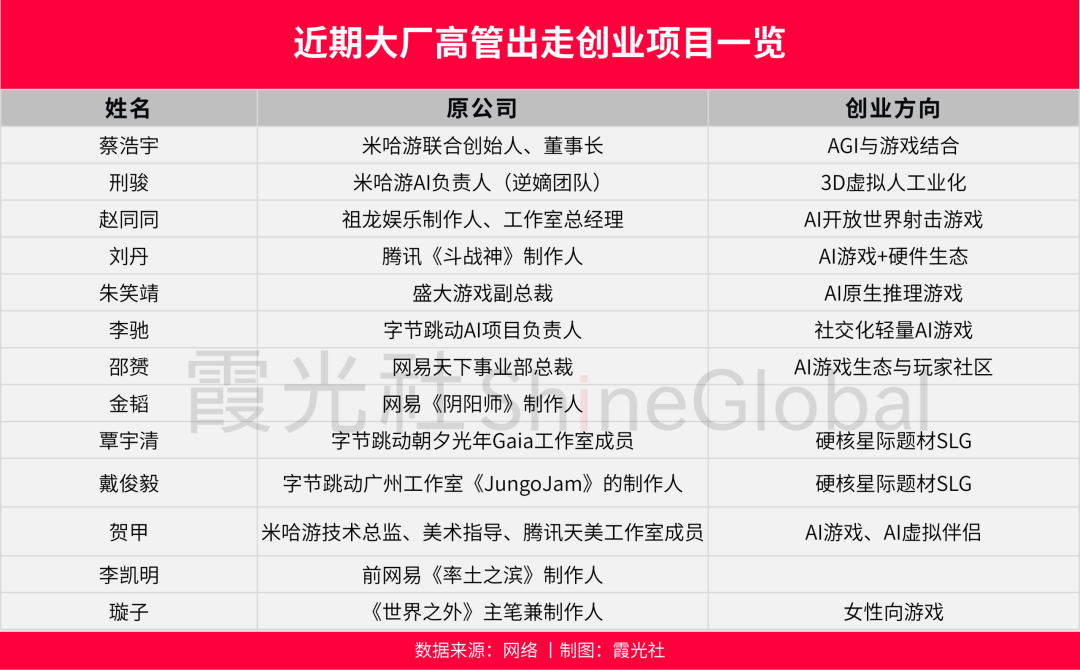
From October 2025 to March 2026, the exodus of high-level executives from major game companies has become increasingly prevalent.
Around October of the previous year, Li Kaiming, head of NetEase Interactive Entertainment's 10th Business Division and creator of "Here Be Monsters," announced his departure from NetEase for long-term personal career development; Xuanzi, lead writer and producer of "The World Outside," proposed resignation in response to internal job adjustments; Fantastic Pixel Castle studio, led by Greg Street, former designer of "World of Warcraft" and "League of Legends," declared the end of its tenure as a NetEase Games studio; Zhang Dong, general manager of Giant Network with an annual salary of RMB 3.3 million, also abruptly resigned.
Prior to them, Zhu Yuan, head of NetEase's overseas investments; Shao Yun, former president of NetEase's Tianxia Business Division; and Jin Tao, producer of "Onmyoji" and former head of Zen Business Division, had all left one after another.
Regardless of their reasons for leaving, these departing executives ultimately converged on a common path: entrepreneurship.
Interestingly, within just half a year, this group of departing executives seems to have achieved seamless entrepreneurial success, swiftly becoming the most favored potential investments by investors.
Li Kaiming and Liu Boyu, former senior director of overseas publishing at NetEase Games, officially registered "Weixiao Technology" in January and secured investments from MiHoYo and IDG in March, with a post-investment valuation exceeding $100 million.

Fenglan Games, founded by Qin Yuqing, with experience at NetEase Leihuo, FunPlus, and other major companies, along with Dai Junyi, former producer of "JungoJam," has secured two rounds of financing.
Xuanzi established a new company in Guangzhou's Tianhe District, planning to develop 2D, female-oriented, story-driven games, and received investments from MiHoYo and Monolith (Lithic Capital).
Jin Tao and Yi Xiuqin, former director of NetEase's Art and Design Center, began preparing Jiezi Games in October of the previous year. In just half a year, they have secured tens of millions of dollars in financing, and their team has grown to over 60 members.
"Great works are born in an environment of freedom and respect," Yi Xiuqin wrote in a lengthy public recruitment post.
Behind the successive departures of executives lies a complex interplay between major companies' strategic choices and the challenges of the era.
For leading companies, the era of relying on blockbusters for rapid monetization and short-term performance spikes has ended. Bound by investor expectations and employee interests, achieving sustainable growth across industry cycles no longer requires fleeting single-product miracles but replicable, long-term stable profitability mechanisms. "SLG games can still deliver impressive data, and many Guangzhou-based developers can launch a casual game in a week—making quick money has always been their forte," an SLG game operations supervisor admitted.
This also implies that the gaming industry's production logic and accountability system are quietly shifting from a producer-centric model to a headquarters-centric one. Creative decision-making power is increasingly centralized, with former core producers reduced to executive roles. Under an efficiency-first approach, the industry has fallen into extreme internal competition centered around "IP replication + reskinning iterations." Approval processes for innovative projects have become increasingly stringent, original creative space is being squeezed, and the costs of trial and error and sunk investments continue to rise, making talent attrition almost inevitable.
As the contradiction between "escaping the confines of major companies" and "adhering to creative ideals" intensifies among gaming professionals, the wave of resignations and entrepreneurship since 2025 has been further propelled by a new era's window of opportunity—the duality of AI-induced anxiety and technological democratization has become an unavoidable core issue for all.
"Ordinary and even professional developers should consider changing careers," as early as 2023, Cai Haoyu, co-founder and former chairman of MiHoYo, warned in a LinkedIn post: In the AIGC era, 99% of gaming professionals may be eliminated.
We are currently in a "pseudo-hype" phase where AI is frenziedly pursued by capital and the industry, anxiety is widespread, yet no true large-scale implementation or structural transformation has occurred. One-person studios and extreme efficiency-driven approaches have become sensational topics, conveniently serving as justifications for major companies to optimize their workforce.
Thus, a generation of seasoned "gaming veterans" has been pushed to the crossroads of being washed out or eliminated.

Looking back at the entrepreneurial paths of these departing executives, they can be roughly divided into two categories.
The first is boldly advancing into AI+: ranging from industrialized 3D virtual humans to AI+shooting/social/community platforms and AI UGC content creation platforms.
Most of these explorations occurred around 2023, with these individuals initially praised as "pioneers at the forefront of the trend." However, being ahead in awareness does not guarantee success. At a time when large models were not yet mature, many fell into AI entrepreneurship pitfalls, investing significant time and resources into model development rather than the games themselves, falling into the trap of "technology requiring research."
This typically incurred enormous costs.
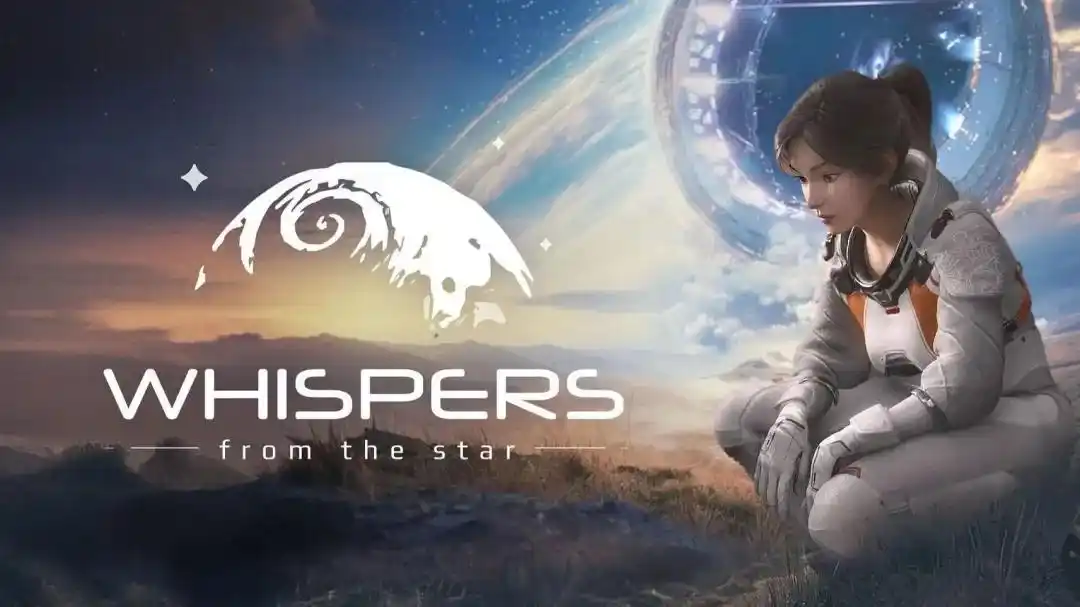
A typical example is Cai Haoyu's costly establishment of the AI gaming company Anuttacon.
The company's debut title, "Whispers from the Star," although marketed as an AI game and featuring a custom large language model, failed to demonstrate AI's autonomous understanding and responsiveness in the "conversing with an AI girl" gameplay experience. Instead, it remained trapped in a linear narrative, requiring players to input specific keywords to advance the plot.
From today's perspective, such text-support-based AI assistance could be easily achieved with existing large models. However, Anuttacon paid a high price, employing former technical luminaries from Microsoft Research Asia, former heads of distributed computing at MiHoYo, and Bilibili's youngest former vice president. Even their recruited "AI trainers" (responsible for data labeling) earned hourly wages of $20 to $30.
High salary investments demand greater returns, so for these "all-in-AI" entrepreneurs, cost reduction, efficiency gains, and enhancing the gaming experience may not be the top priorities, as these do not constitute core elements for differentiating products and cultivating audiences.
As Shao Yun, former senior vice president of NetEase Games, once argued, "Current AI applications in gaming mostly remain at the stage of 'empowering existing genres' (e.g., optimizing NPC interactions), but this is putting the cart before the horse. AI-native gameplay deserves more attention—reconstructing game logic from the ground up through AI technology."
Since last year, more departing executives have chosen to return to their roots, focusing on SLG/female-oriented/open-world games they excel in.
In a sense, this type of entrepreneurship resembles an alternative studio mechanism, where fewer but experienced decision-makers more rapidly determine the feasibility and implementation methods of creative ideas.
Inspirations from professionals can be quickly realized through a few computer commands and 10,000 tokens, allowing for rapid evaluation and modification. This lowers the sunk costs of decision-making, maximizing the release of inspiration and freeing creativity from being held hostage by practical constraints. Truly valuable and feasible proposals gradually come to the forefront of capital, gaining autonomy.
Arguably, the AI era and the structural exodus of executives are driving the gaming industry toward a "multi-centered" process, offering professionals more "small but beautiful" choices.
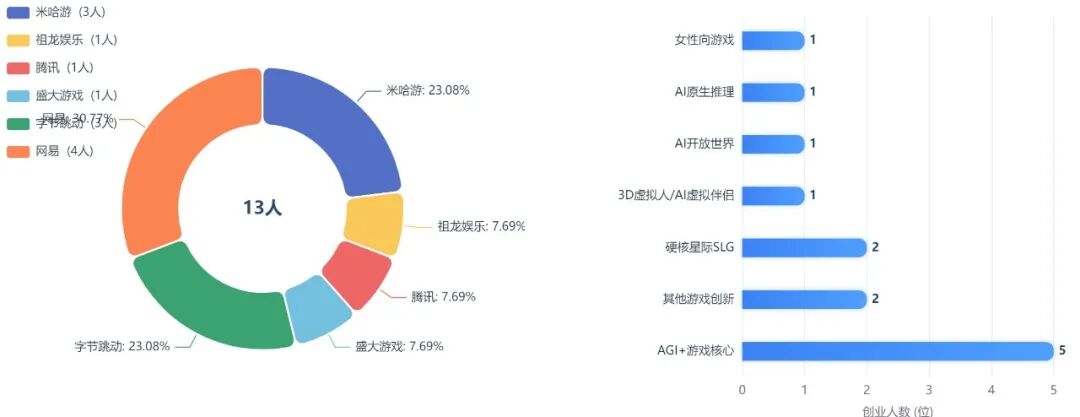
Proportions of Original Company Affiliations and Entrepreneurial Trends Among Major Companies' Executives in the Past Three Years
Rather than saying the gaming industry is experiencing growing pains due to AI, it's more accurate to say that AI is providing the industry with an opportunity to transition from major company monopolies to an ecosystem that values both talent and creativity.
AI and gaming have never been opposites, nor have they been in a dominated relationship.
"The biggest shock to the gaming industry isn't AI; our company's operating conditions are so bad that layoffs were happening without needing AI as an excuse," Zhouzhou, a game planner at a mid-sized company, lamented to Xiaguang Society.
In his view, AI anxiety is most concentrated in blind faith in cost reduction and efficiency gains: Investors may favor AI products with lower costs and higher returns, but currently, using AI doesn't truly align with transformation—sometimes, prices must even be actively reduced due to AI implementation.
"As AI technology advances, AI games may emerge as a new product form with a specific audience. But no truly intelligent investor would think a AAA title is just about AI-generated graphics, sound, and text," Zhouzhou quipped.

The restructuring of the industry landscape has also profoundly rewritten the ecosystem of gaming globalization.
Since last year, there has been a noticeable increase in small and medium-sized teams achieving remarkable success in overseas markets.
Changsha Youpin Technology's "Cell Survivor" ranked among the top 15 in overseas revenue growth in February, with its overseas IAP monthly revenue exceeding RMB 70 million, according to Data.ai estimates.
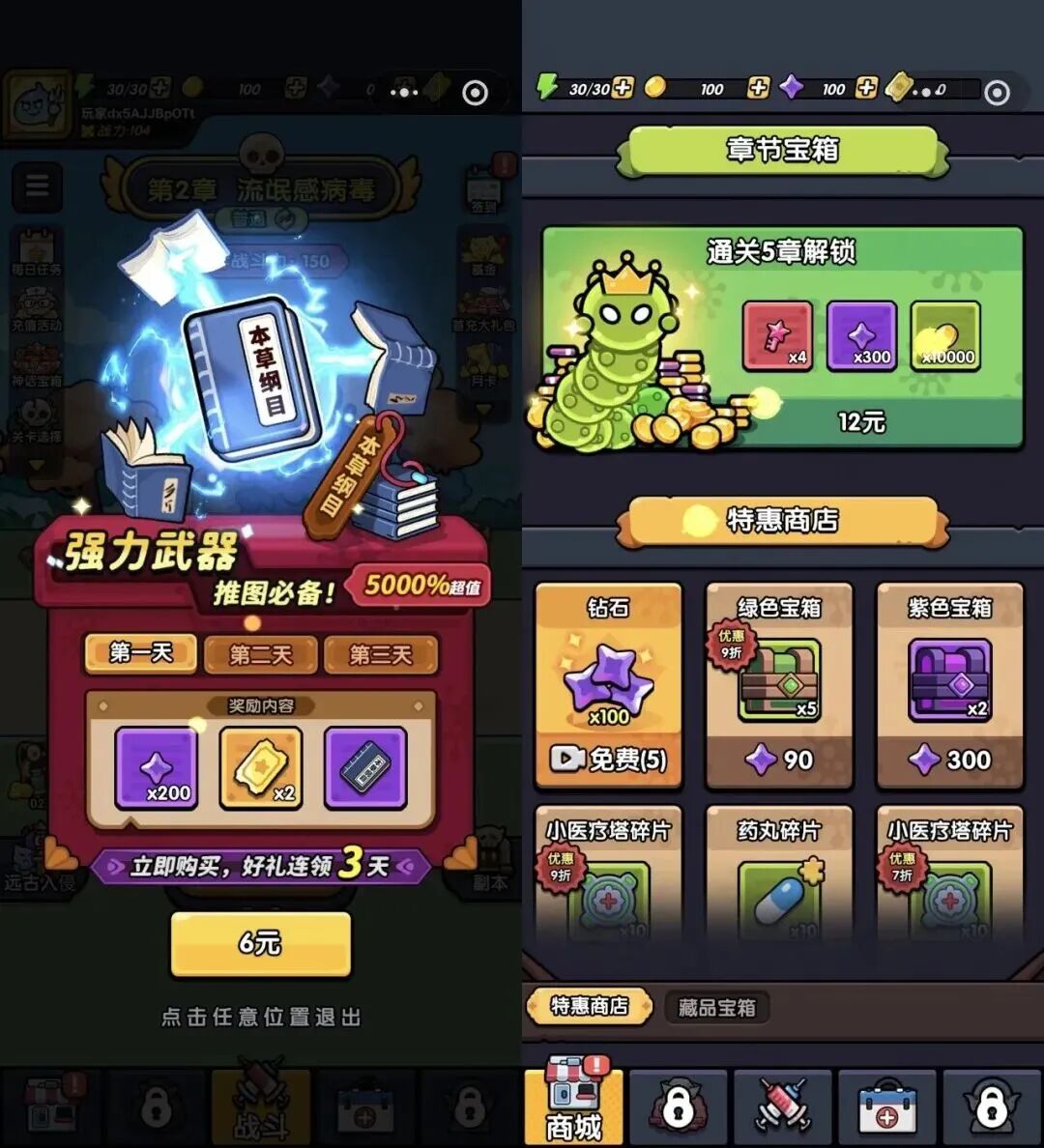
Bestplay Games' "Happy Screw Trip 3D" broke into the top 150 on the US iOS bestsellers list with its screw-tightening + dressing ASMR gameplay, generating over RMB 20 million in monthly revenue, per Sensor Tower data.
Habby's "Archero 2" and "Adventurer's Diary" both entered the top 10 of China's overseas mobile game revenue charts in January 2025.
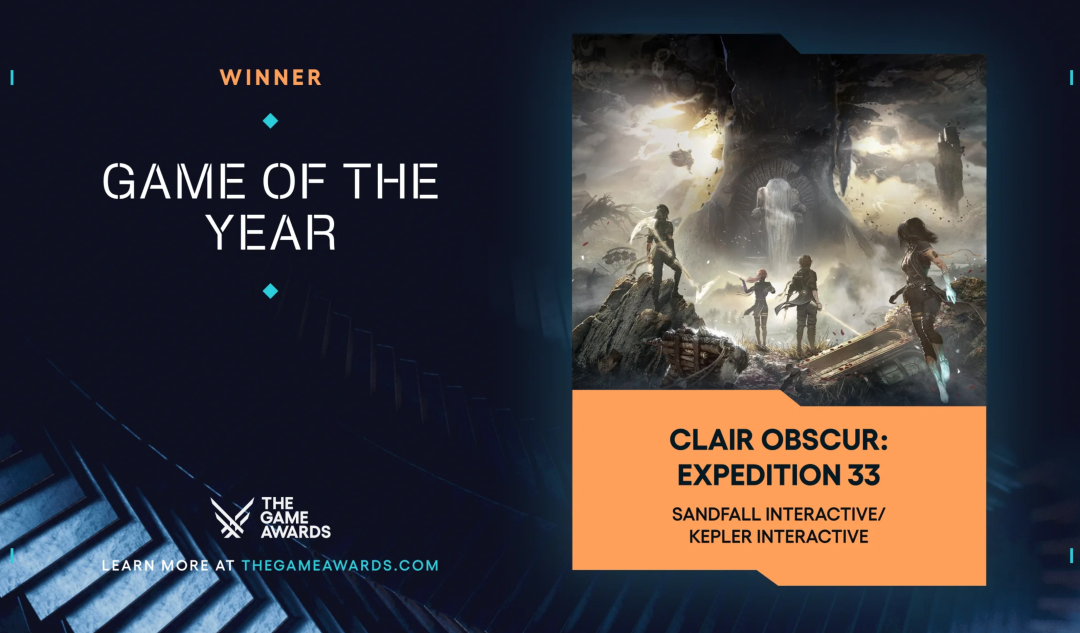
"Light and Shadow: Expedition Team 33," which won nine TGA 2025 Game of the Year awards and sold over 3 million copies in its first month, was developed by a team of just 33 at Sandfall Interactive.
Qichacha data shows that more than 80,000 new game companies were established nationwide in 2025. Industry insiders revealed that nowadays, over half of the small and medium-sized entrepreneurial teams target the global market from the inception of their projects. Successful cases have emerged in categories such as lightweight SLG, card puzzle games, and pet companionship games, providing a clear path for latecomers.
Capital flows have also shifted accordingly, forming a stark contrast to the industry's structural layoffs.
Take MiHoYo as an example. Since 2022, it has redirected its investment priorities towards AI and chip sectors. Yet, by 2026, it has made successive investments in three game companies established by executives from leading enterprises. The emerging industry division of labor, wherein "major firms undertake infrastructure and investment responsibilities, while entrepreneurial teams concentrate on product innovation," is revolutionizing the landscape of Chinese games' global outreach.
Simultaneously, major firms are also taking decisive action to shutter inefficient overseas studios. For instance, NetEase has discontinued funding for the Nagoshi Studio, and Tencent has shut down TiMi Montreal, which had failed to produce any output over five years.
These frequent strategic shifts are underpinned by an increasingly pragmatic market rationale. Beyond merely following technological trends, players' genuine fondness for and emotional connection to products have rendered the expertise of seasoned industry veterans a scarcer and more dependable asset.
Overseas capital is also stepping up its involvement, either by linking Chinese teams to capital markets and localized resources or by directly acquiring established entities. The acquisition of Moonton Technology by Saudi Arabia's Savvy Games Group, backed by the PIF, for over US$6 billion, serves as a prime illustration.
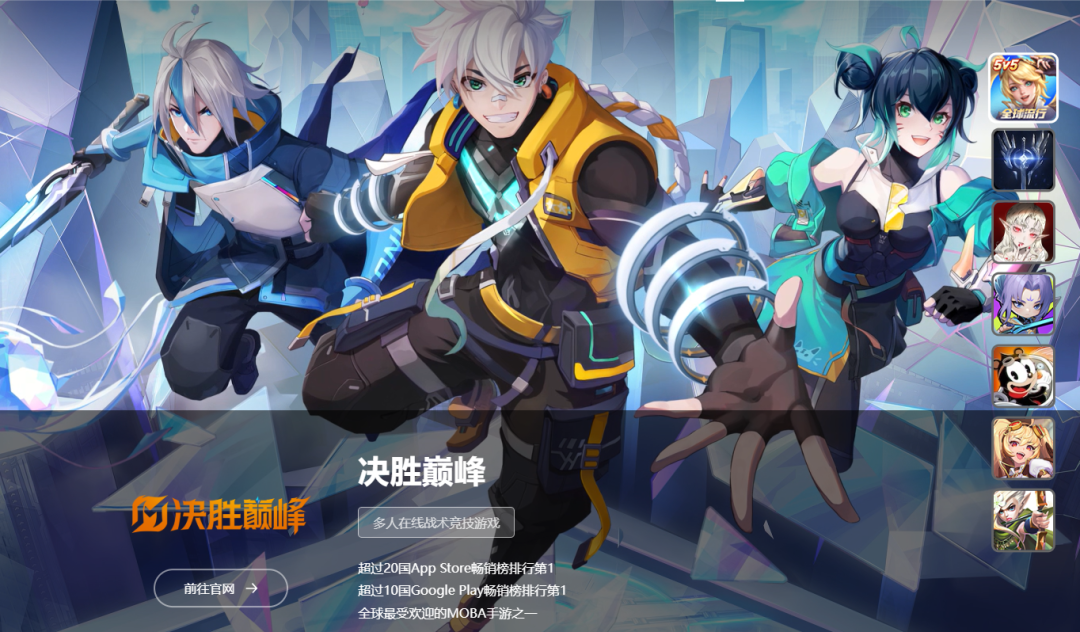
Moonton Technology's "MLBB" (Chinese version: "Mobile Legends: Bang Bang")
However, structural realignments are not the final destination. At an AI + Gaming Industry Seminar, Zhang Haoyang, the founder of AutoGame, presented a set of real-world data: A AAA title typically demands a workforce of 200–500 individuals, a development period of 3–5 years, and an investment of hundreds of millions of dollars. Nevertheless, players' average completion time for the main campaign hovers around 50–100 hours, with casual gamers investing even less time.
"Most individuals will promptly uninstall the game thereafter. While we employ strategies such as seasonal updates, paid DLCs, community events, and MOD support to prolong its lifespan, fundamentally, these measures merely postpone its decline rather than invigorate it."
Even after breaking free from the clutches of major firms, the gaming industry continues to grapple with the ultimate challenge of "how to craft evergreen products."
At present, the most groundbreaking innovations within the industry frequently emanate from small and medium-sized teams. Nonetheless, they stand in greater need of harnessing top-tier platforms to access overseas resources and channels, curtail non-core expenditures, mitigate risks, and draw upon the long-term operational acumen of major firms to devise solutions that genuinely transcend product lifecycles.
-
Alibaba’s Earnings Soar with Triple Catalysts: Full-Stack AI Hits Maturity, Capital Efficiency Drives Sustainable Growth
-
![]()
Raking in Big Profits Overseas! Chery’s Overseas Revenue Makes Up 70% in H1, with Gross Margin Climbing to 16.1%
-
![]()
Alibaba’s New Fiscal Quarter: 45% Revenue Surge in Alibaba Cloud, Enhanced Profitability in AI Cloud, but Widening Losses in the Application Layer
-
![]()
The AI Version of 'PayPal Mafia' Has Arrived: 20 AI Startups Raise Over $4.6 Billion in Funding
-
![]()
Wang Jian's Vision: Paving a Pathway for Alibaba Through AI
-
![]()
Hyundai Motor Workers Strike Today, Fearing Job Losses to Robots
-
![]()
Embracing 'Light': O-film Unveils Its 'Illuminating the Future' Strategy
-
![]()
SenseTime’s SenseNova U1.5 Lite Goes Open Source: Ushering in a New Era of Predictable AI Image Generation