Qianwen App Faces Financial Struggles Amidst Competition with Qianwen Office—Wu Jia Under Increasing Pressure
 08/26 2026
 543
543
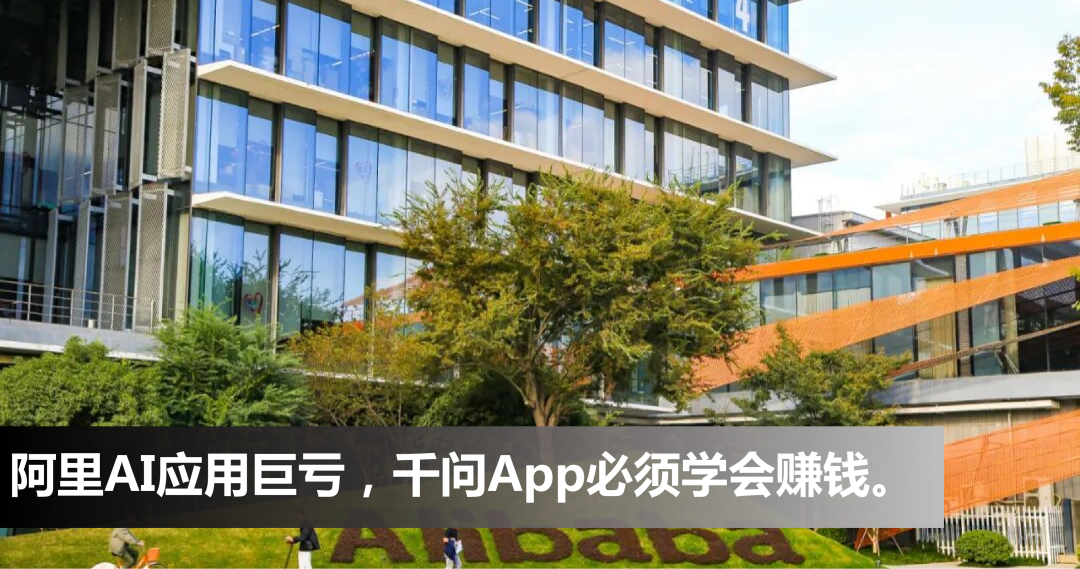
Alibaba's AI Lab and Applications Division reported a staggering loss of 13.9 billion yuan in the second quarter. The once lavishly funded Qianwen App is now compelled to find ways to generate revenue.
On August 10, Qianwen App discreetly introduced paid memberships for its office assistant feature, with Premium membership priced at 19 yuan/month, Elite at 49 yuan/month, and Flagship at 128 yuan/month. Annual subscriptions are available for up to 1,499 yuan. This marks the inaugural instance of Qianwen App charging C-end users since its inception.
Ten days later, Alibaba's financial report shed light on the rationale behind this decision. Released on August 20, the report revealed that in Q2 2026, Alibaba's newly formed "AI Lab and Applications" division—comprising the Model Lab, Qianwen C-end Division, and Qianwen Office—generated 3.338 billion yuan in revenue but incurred an adjusted EBITA loss of 13.861 billion yuan, representing a 330% year-on-year increase.
The report attributed the losses to escalated investments in AI capabilities, such as model development, and the rising inference costs associated with the Qianwen App.
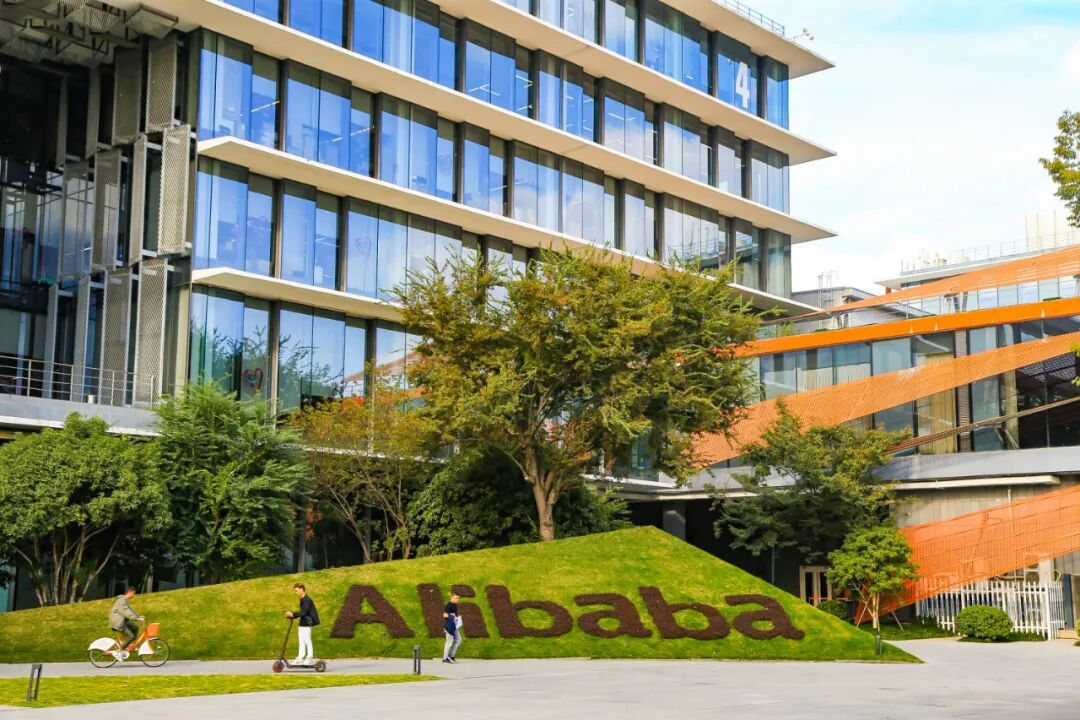
Image Source: Alibaba Group Official Website
Alibaba is also grappling with significant financial pressure. Around the same time, the company announced a share placement to raise funds—the announcement disclosed that Alibaba plans to issue 710 million new shares at 112.70 HKD each, aiming to raise a total of 80 billion HKD. After deducting commissions and expenses, the net proceeds are estimated to be approximately 79.7 billion HKD, all earmarked for AI infrastructure development.
This marks Alibaba's first new share placement since its return to the Hong Kong stock market in 2019. The news triggered a decline in stock prices, with Alibaba's Hong Kong-listed shares plummeting over 10% intra-day on August 24.
Alibaba can no longer sustain boundless investments in AI; future expenditures must be more judicious and strategic.
Meanwhile, Qianwen App—a super entrance project once prioritized with top-tier resources and a 3 billion yuan New Year marketing campaign—must now demonstrate something far more challenging than simply burning money: its ability to generate profits.
For Wu Jia, leader of the Qianwen C-end Division, the challenges do not end there. Just a week before Qianwen App launched its membership program, another "Qianwen"-branded product, Qianwen Office, entered public beta testing. Despite the similar name, Qianwen Office has no affiliation with Qianwen App: it integrates DingTalk, connects directly with Alibaba's senior leadership, and targets the exact office scenarios Qianwen App aims to monetize.
Under the external pressure to generate revenue and internal competition with a "sibling" product, Wu Jia is facing mounting pressure.
01 Qianwen App Burns Money Without Significant Results
Looking back at the past year, Qianwen App has received nearly unparalleled support from Alibaba.
Starting in the second half of 2025, major tech companies shifted their focus toward AI-to-C: Doubao's DAU stabilized at over 100 million, far ahead of competitors; Tencent Yuanbao rapidly gained traction leveraging DeepSeek. AI assistants were widely seen as the next era's traffic distribution hub, with C-end dominance equating to control over the AI era's "app store." Subsidies for growth became the default strategy in this arena.
Alibaba did not want to be left behind. In November 2025, Alibaba officially announced the "Qianwen" project; a month later, the Qianwen C-end Division was established, integrating the former Smart Information and Smart Connectivity segments. Qianwen App, Quark, AI hardware, UC Browser, and Shuqi were all placed under this division, led by Group Vice President Wu Jia.
Qianwen thus evolved from an AI project into a standalone strategic unit on par with Taobao and Alibaba Cloud.
This was followed by unprecedented synergy within Alibaba. In January 2026, Qianwen App fully integrated with Taobao, Alipay, Fliggy, Amap, and other ecosystem services, launching over 400 AI-powered functionalities and claiming to be the "world's first AI assistant capable of completing complex real-life tasks."

Image Source: Qianwen Official Weibo
Wu Jia publicly stated at the time: "We hope to make Qianwen App sufficient for most daily tasks in the future."
This was Wu Jia's period of greatest influence. Qianwen carried Alibaba's ambition for a super entrance, granting him significant authority and nearly unlimited resources. During the New Year holiday, Qianwen App set an industry record with a 3 billion yuan investment, offering free orders across categories from milk tea to groceries. Within nine hours of launch, milk tea orders surpassed 10 million, and Qianwen App's DAU soared from 7.06 million to a peak of 73.52 million.
However, Qianwen became increasingly costly. Subsidies were just the visible part of the expense. Beyond marketing costs for user acquisition, inference costs were likely even higher—every free invocation of the large model incurred computational expenses, and the more active users were, the longer the bills became.
Additionally, ongoing investments in ecosystem integration and model post-training were indispensable. This was a machine that spent money as long as it operated.
But once the money was burned, did users stay?
According to a Morgan Stanley review of New Year AI applications in March, Qianwen App's average daily usage time was 6.3 minutes before the campaign. After the peak, usage time dropped to a minimum of 3 minutes (a 51% decline) as user behavior focused on coupon collection and orders. The DAU peak of 73.5 million nearly halved when subsidies ended.
Six months later, the trend had not reversed. QuestMobile data showed Qianwen App's MAU at 167 million in June 2026, down from over 300 million in February, when the group heavily promoted it.
More strikingly, user engagement lagged: Qianwen recorded 17.4 uses and 22.9 minutes per user in June, while Doubao achieved 76.7 uses and 143.7 minutes per user in the same month.
Alibaba's vertical expertise in e-commerce, local services, and travel should have been Qianwen's greatest asset.
Yet the results showed that "integration" did not equate to "usage": adding food delivery and shopping merely provided existing services with a new AI entrance, offering no better experience than opening the original apps directly. Users lacked incentives to switch.
The group's attitude shifted accordingly. In January, Wu Jia publicly stated it was "too early" to discuss monetization for life services like food delivery and ticketing on Qianwen App. By August, memberships, open platforms, and merchant integrations rolled out in rapid succession. The shift from "too early" to "urgent" in six months reflected not product changes but a deteriorating situation.
Now, the entire industry is pivoting from subsidy-driven growth to paid services and business models—the subsidy story has ended, and Qianwen App must learn to generate revenue independently.
02 Monetization Is Harder Than Burning Money
Judging by its monetization efforts, Qianwen App aims to pursue both C-end and B-end strategies, but neither footing is solid.
The C-end approach relies on a subscription model targeting office scenarios. The three professional membership tiers offer doubled, quintupled, and twentyfold increases in office assistant and AI PPT usage quotas. Pricing starts at 19 yuan/month for Premium, 49 yuan/month for Elite, and 128 yuan/month for Flagship, with annual prices at 200 yuan, 568 yuan, and 1,499 yuan, respectively.
This "free basic, paid office" strategy clearly mirrors competitors. Doubao launched a three-tier professional version in June, priced from 68 to 500 yuan, while Tencent WorkBuddy's personal paid tiers range from 99 to 999 yuan.
The rush to office scenarios is simple: purely free large models are financially unsustainable—inference costs rise linearly with user scale, and advertising models in chat products remain unproven. Subscriptions are currently the only way to cover computational costs and identify high-value users. Office scenarios, in particular, have the strongest willingness to pay.
However, Qianwen App lacks an office-centric user perception. Over the past year, it has been seen primarily as a life assistant for food delivery and shopping links. Suddenly selling office memberships feels incongruous.
Qianwen's solution is to lower barriers: the 19-yuan tier doubles quotas, undercutting market averages to reduce trial costs. Yet long-term success depends on whether office functionalities truly meet high-frequency, rigid demands and whether quota designs align with actual workflows.
Competitors have already completed initial market education in these areas. Qianwen App must prove not that it is "cheaper" but "worth renewing."
The B-end opportunity hinges on merchant ecosystems. In August, Qianwen launched an open platform, attracting third-party services like SF Express, Tian Goose Home, Shansong, and Ziru, aiming to turn "AI services" into a commission-based business.
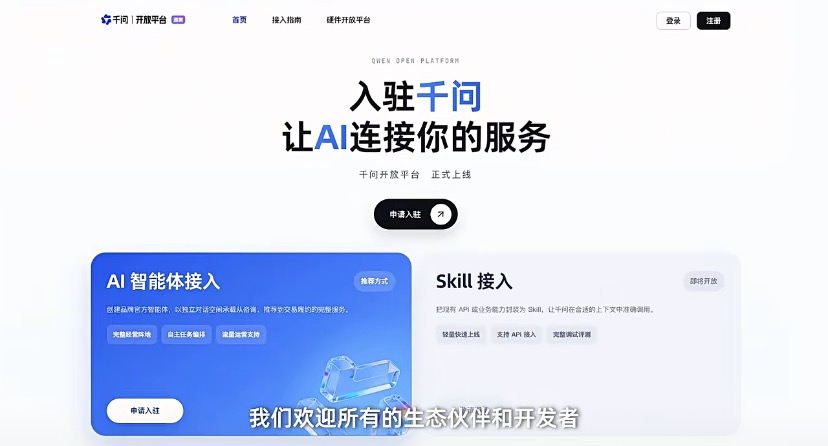
Image Source: Qianwen Official WeChat Account
Take parcel delivery as an example: a user tells Qianwen, "Send a package to Hangzhou," and Qianwen invokes SF Express's Agent to complete the order, earning a commission per transaction—similar to mini-programs or app store revenue splits, where the AI entrance shifts from traffic referral to transaction channel.
Other players are exploring similar commission models. In August, media reported that Doubao began charging a combined 12% commission on hotel bookings referred to Douyin Laike. The news sparked discussion, but Doubao PR head Liu Xing clarified that night: Doubao doesn't charge advertising fees for hotel recommendations; merchants cannot influence recommendations or rankings through payment, only paying commissions post-transaction.
For merchant ecosystems, the core variables are traffic sources, conversion rates post-recommendation, and commission per order.
Qianwen App struggles on all fronts. With declining traffic, its order volume for merchants is limited; AI recommendation-to-order conversion rates remain low industry-wide; and most transactions involve low-value categories like food delivery and errands.
Merchants won't commit to uncertain traffic commissions, while Qianwen must invest upfront to build and maintain the ecosystem—likely operating at a loss until revenues scale.
Qianwen is also exploring potential fees from ecosystem partners like Apple. Reports suggested Apple might choose Alibaba for AI services in China, leading to speculation that Qianwen could earn fees from such partnerships. However, no revenue announcements have materialized.
For Wu Jia, these experiments are unavoidable. Market trends show that purely free AI assistants lack viability; only those achieving paid monetization can survive. Internally, a business that consumes resources without proving value risks strategic downgrades.
Especially with Qianwen Office looming as an internal threat.
03 Qianwen App vs. Qianwen Office: Wu Jia and Chen Yusen Race Internally
Many confuse Qianwen App and Qianwen Office—understandably so. Both use the "Qianwen" brand, target office scenarios, and charge individual users.
Yet they operate as separate entities with distinct teams. Qianwen App falls under Wu Jia's Qianwen C-end Division, positioning itself as a personal AI assistant for work, life, and learning. Qianwen Office, led by DingTalk CEO Chen Yusen, evolved from three internal Alibaba Agent product lines—built on QoderWork, integrating DingTalk's Wukong and Chen's own MuleRun—as an enterprise-grade AI productivity platform.
Qianwen App accounts cannot access Qianwen Office, which supports only DingTalk scanning. However, account separation is just the surface.
Deeper divides lie in data permissions. Qianwen Office natively integrates with DingTalk, accessing chats, documents, and knowledge bases directly. Qianwen App relies on one-way API authorization for "connections" to DingTalk, allowing message reading and document editing but lacking deep access to enterprise data.
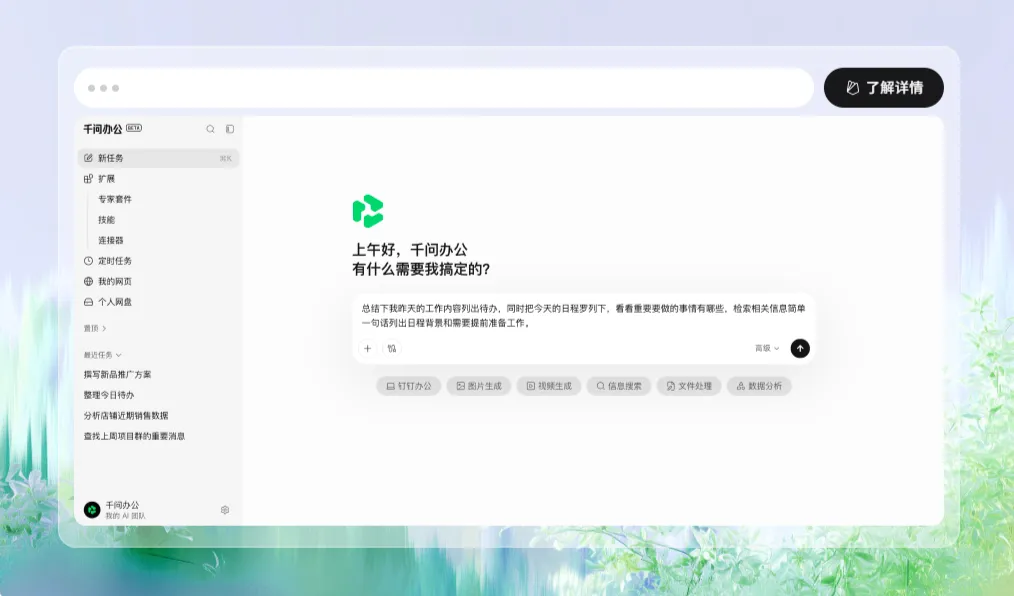
Image Source: Qianwen Office Official Website
This division may not be chaos but a deliberate internal competition. Embedding office services in an AI assistant versus creating a dedicated office product represent two distinct strategies: the former bets on entrance stickiness, the latter on professional depth. Alibaba chose to let both run in parallel.
Meanwhile, the leaders' backgrounds reflect these paths.
Wu Jia is an Alibaba-grown generalist. He joined Alibaba Cloud as a technical expert in 2010, led the UC Division in 2017, incubated Quark from UC, and pivoted it into an "AI super frame." In late 2023, he briefly oversaw Taobao & Tmall User Platform and Alimama, diving into e-commerce.
Chen Yusen follows a different trajectory. Born in 1992, he founded cybersecurity firm Changting Tech at 22, sold it to Alibaba Cloud at 27, and led Alibaba Cloud's Southeast Asia expansion. In 2025, he launched the AI Agent product MuleRun within Alibaba Cloud, gaining paying users across 43 countries, with 34% spending over 200 USD monthly. In June, he succeeded Chen Hang as DingTalk CEO, becoming Alibaba's youngest division head.
One has proven C-end management capabilities; the other holds B-end entrance and monetization expertise.
In office scenarios, the balance tilts toward Qianwen Office.
Backed by DingTalk, Qianwen Office offers unified entrance and accounts, direct access to chats, documents, and knowledge bases, and integration with Alibaba Cloud's To B sales network.
Qianwen App receives no such preferential treatment. Its office assistant relies on one-way API authorization with DingTalk, handling basic message reading and document editing but struggling with complex multi-step tasks. This highlights the gap between an embedded organizational product and an external add-on. Meanwhile, Alibaba has limited experience monetizing individual users through memberships—its C-end subscription efforts with Youku and Xiami have never reached significant profitability.
The timing also works in Qianwen Office's favor. AI-driven office tools represent a universally acknowledged growth sector in 2026. Data from Analysys reveals that Tencent WorkBuddy witnessed a month-on-month surge in visits exceeding 800% in March. Among various AI applications, enterprises' willingness to invest in productivity tools has been the first to be confirmed. Qianwen Office is poised to capitalize on this boom, leveraging DingTalk's organizational framework.
From a model perspective, Alibaba has given priority to Qianwen Office. The launch of Qwen3.8 on August 3 was centered on bolstering coding and professional office functionalities, with Qianwen Office being the first to benefit; the Qianwen App was subsequently released on August 7. This four-day gap underscores a strategic emphasis.
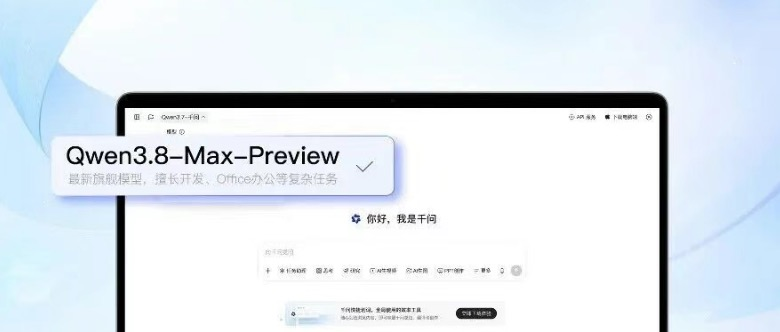
Image source: Qianwen's official WeChat account
As one product's prominence wanes, the other's ascends, rendering the positioning of Qianwen App's office services somewhat precarious. Given the existing internal priorities and resource distribution, it is challenging for Qianwen App to vie with Qianwen Office.
The two are fated to compete for a certain duration but may ultimately converge.
ByteDance opted for the latter approach. On July 30, the Feishu product team was fully integrated into Doubao, under the unified leadership of Doubao's head, Zhao Qi. The products are now categorized into a personal paid version and an enterprise version, precluding the possibility of the two teams vying for users from the outset.
Should Alibaba follow suit, the ultimate leader will hinge on Alibaba's strategic decisions.
Nevertheless, in this contest, Wu Jia is under considerably greater pressure. The consumer-side (C-end) path is arduous. He must address three questions concurrently: how to sustain traffic after cutting marketing expenditures; how to persuade users to pay for office scenarios with a product lacking an inherent office focus; and how to demonstrate the commercial viability of a C-end entry point that commenced with subsidies.
This time, the evaluators are not solely the market but also Alibaba itself. The timeframe Wu Jia has to address these questions is likely shorter than anticipated.
Note: The header image for this article is sourced from Alibaba Group's official website.
-
![]()
The Dazzling Yet Impractical Internet-Famous Smart Driving Features
-
![]()
The Prequel of AI's Entry into Factories: Why Did the Previous Generation of Industrial Internet Platforms Falter?
-
![]()
Field Test of 'Doubao Work': Hiring a Diligent AI Worker for Just 68 Yuan
-
![]()
Why Did the Doubao Mobile Phone Face a Ban Shortly After Its Release?
-
[In-Depth] Breaking Overseas Technological Monopoly: Horizontally Opposed Engine Ushers in Era of Independent Chinese Mass Production
-
![]()
Mercedes-Benz GLE Now Boasts a 'Full-Power' Six-Cylinder Engine! Netizens Wonder: What Took Them So Long?
-
![]()
Global and Chinese Market Research Report on Autonomous Logistics Delivery Vehicles
-
![]()
Qianwen App Faces Financial Struggles Amidst Competition with Qianwen Office—Wu Jia Under Increasing Pressure