Why Did the Doubao Mobile Phone Face a Ban Shortly After Its Release?
 08/26 2026
 550
550
At the close of 2025, the technical preview version of the inaugural Doubao mobile phone assistant, integrated into the Nubia M153 engineering prototype, made its debut. Its standout feature was AI-powered mobile phone control.
Users could simply utter commands like, "Book me the cheapest flight to Shanghai tomorrow afternoon," and the AI would seamlessly open relevant apps, search for flights, fill in the necessary details, submit the order, and finally present it to the user for confirmation before payment.
Throughout this entire process, there was no need to manually open any app interfaces; the AI interacted with the screen and buttons as if it were a human user.
Despite its relatively modest specifications, this engineering prototype was priced at 3,499 yuan. The initial batch of approximately 30,000 units quickly sold out, and on secondhand platforms, prices soared to nearly 10,000 yuan at one point.
However, this innovative technical approach soon encountered significant obstacles from super apps.
Initial user testing revealed that when the AI attempted to operate apps like WeChat, its high-frequency automated simulated clicks were flagged as abnormal, non-human behavior. This triggered client environment alerts and, in some cases, led to restricted account logins for users.
Subsequently, mainstream apps such as WeChat, Meituan, and those affiliated with Alibaba banned the AI operational capabilities of the Doubao mobile phone. Doubao eventually took the initiative to voluntarily disable relevant operational scenarios.
Among 23 mainstream apps, eight have imposed restrictions on the Doubao mobile phone. Login is blocked on Taobao, Meituan, Alipay, Pinduoduo, and Maoyan, while WeChat, Gaode, and Damai permit login but reject AI-driven operations.
01 The Divergence of Two Technical Approaches
The first-generation Doubao mobile phone embraced the GUI (Graphical User Interface) approach.
The AI would read the screen, identify buttons, navigate through pages, and perform clicks, essentially mimicking human behavior.
The primary advantage of this method lies in its universality. In theory, the AI could accomplish any task that a user could perform on an app.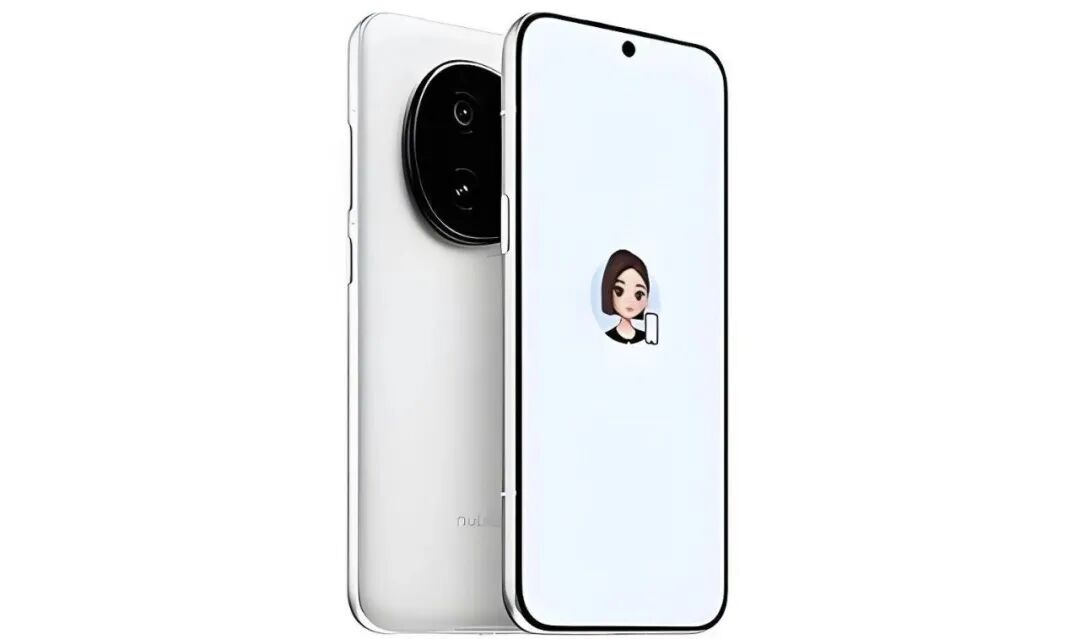
Image source: Internet
Nevertheless, numerous issues arose. One significant problem was inefficiency. The AI had to continuously take screenshots, upload them for model recognition, interpret the page information, and then continue swiping and repeating the process until the search was complete.
A more formidable challenge stemmed from the ecosystem. The GUI approach bypassed traditional app interaction workflows, infringing upon the application platforms' control over interaction entry points and user data.
As a ZTE staff member pointed out, internet companies do not oppose the development direction of AI mobile phones but are reluctant to relinquish control over their entry points.
Moreover, GUI technology necessitates extensive system-level accessibility permissions and constant screenshots to read the screen, potentially exposing users' private chats, financial data, and other sensitive information to risks.
Consequently, the second-generation Doubao mobile phone (Nubia NaviX Ultra), unveiled at the World Artificial Intelligence Conference in July 2026, transitioned from GUI to MCP (Model Context Protocol) and A2A (Agent-to-Agent) protocols to connect with apps from Alibaba, Tencent, and others.
MCP equips the AI with a unified interface, enabling apps to selectively or fully expose their capabilities and information in accordance with standardized protocols.
A2A facilitates direct collaboration between different agents. The mobile phone system's agent can send instructions to an app's internal agent, which then returns the results directly.
The new product no longer relies on reading the screen or simulating clicks for leading apps like WeChat, Taobao, and Alipay. Instead, the Doubao mobile phone can only integrate with apps that voluntarily provide MCP services and grant the corresponding data and operational permissions.
The stockpile for the new generation increased from 30,000 to several hundred thousand units.
02 A Third Path: Reconstruction from the Ground Up
While Doubao adjusted its approach, another company opted for a different path.
On July 13, 2026, Jieyue Xingchen launched its AI terminal brand STEPX, introducing the agent-native operating system Step AOS, a new generation personal agent named Jieyue Amoo, and a large model-native agent mobile phone, STEPX Neo.
This marked the first time a domestic company achieved a fully integrated AI ecosystem spanning foundation models, systems, and hardware.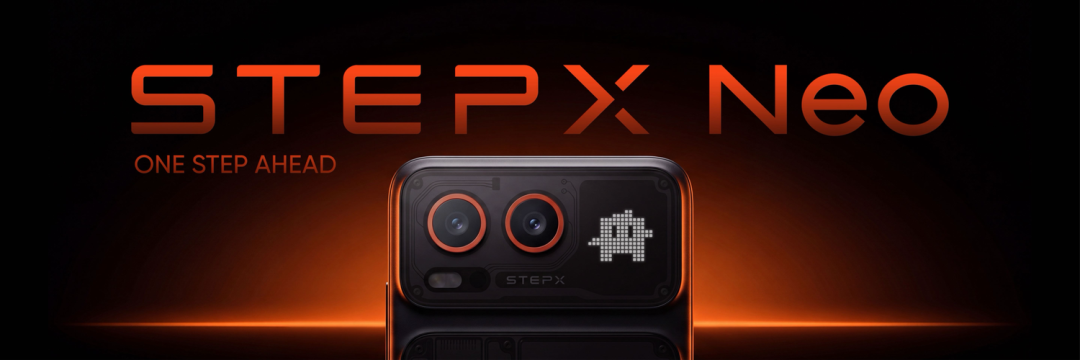
Image source: Internet
Step AOS reconstructed the traditional operating system from the ground up, transforming hardware capabilities and system resources into interfaces that agents could call upon.
Users only needed to express their intentions, and the agent could independently plan and execute the entire workflow.
The STEPX Neo passed the inaugural "Artificial Intelligence Terminal Intelligence Grading" test, earning the highest current certification level, L3.
In terms of technical implementation, STEPX has formed partnerships with platforms such as Ctrip, Alipay, Didi, Meituan, and WPS, covering travel, lifestyle, office, and content creation scenarios.
03 Unresolved Challenges
Despite having a clear technical direction, AI agent mobile phones still face significant hurdles before they can achieve mass adoption.
Firstly, after abandoning the GUI approach, the protocol-based approach heavily relies on the willingness of super apps to open their interfaces. While dozens of apps within the ByteDance ecosystem now support the new protocol, details about which super apps outside ByteDance have opened interfaces—and what capabilities they have exposed—for the second-generation Doubao mobile phone remain undisclosed.
Secondly, security and liability boundaries remain unclear. When AI automatically performs cross-app operations on behalf of users, questions arise about who bears responsibility for errors or unauthorized payments—the user, mobile phone manufacturer, model developer, or app provider. The industry currently lacks unified standards and norms.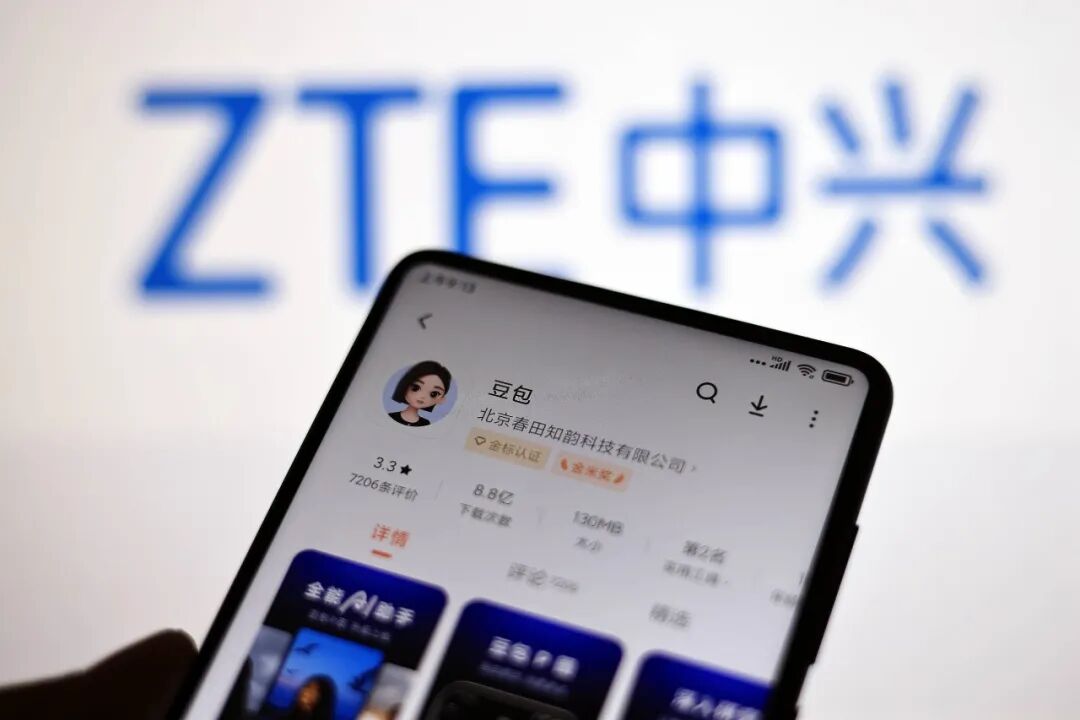
Image source: Internet
In May 2026, the Ministry of Industry and Information Technology and other departments jointly released the national standard "Artificial Intelligence Terminal Intelligence Grading" (GB/Z 177—2026), which categorizes terminal intelligence into levels L1 (responsive), L2 (tool-based), L3 (assistive), and L4 (collaborative).
L3 terminals can fully understand user instructions and intentions, proactively clarify intentions, decompose tasks, and automatically invoke tools.
In July 2026, the China Academy of Information and Communications Technology released the first batch of test results, with 66 products from 17 companies, including Huawei, Lenovo, and Geely, receiving L3 certification.
However, classifications for L4 (collaborative) and higher levels will be clarified in subsequent revisions.
AI agent mobile phones envision a future where mobile phones handle tasks on behalf of users.
However, transitioning from a technical demonstration to widespread adoption requires overcoming application ecosystem barriers, clarifying security boundaries, and refining standard systems.
#ArtificialIntelligence #DoubaoMobilePhone
-
![]()
The Dazzling Yet Impractical Internet-Famous Smart Driving Features
-
![]()
The Prequel of AI's Entry into Factories: Why Did the Previous Generation of Industrial Internet Platforms Falter?
-
![]()
Field Test of 'Doubao Work': Hiring a Diligent AI Worker for Just 68 Yuan
-
![]()
Why Did the Doubao Mobile Phone Face a Ban Shortly After Its Release?
-
[In-Depth] Breaking Overseas Technological Monopoly: Horizontally Opposed Engine Ushers in Era of Independent Chinese Mass Production
-
![]()
Mercedes-Benz GLE Now Boasts a 'Full-Power' Six-Cylinder Engine! Netizens Wonder: What Took Them So Long?
-
![]()
Global and Chinese Market Research Report on Autonomous Logistics Delivery Vehicles
-
![]()
Qianwen App Faces Financial Struggles Amidst Competition with Qianwen Office—Wu Jia Under Increasing Pressure