Mercedes-Benz GLE Now Boasts a 'Full-Power' Six-Cylinder Engine! Netizens Wonder: What Took Them So Long?
 08/26 2026
 453
453
As an emblem of German luxury automobiles, the imported Mercedes-Benz GLE has consistently shone as a star in China's luxury SUV market, epitomizing the essence of 'old money' elegance.
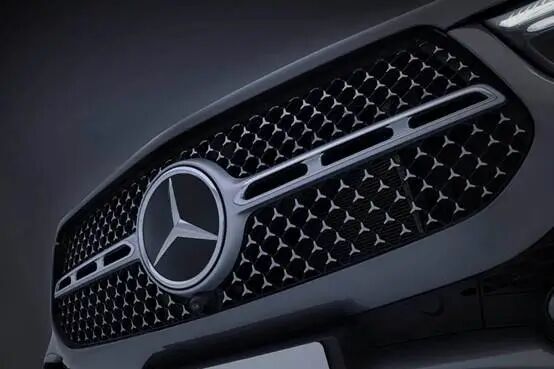
However, from the 2021 model year to the 2025 iteration, Mercedes-Benz has persistently supplied China with downgraded variants. Providing a specially tailored low-power version to frustrate users is one aspect, but more significantly, the M256 engine employed in the '450' series is a full-fledged 3.0T L6 engine in Europe, the Americas, Japan, and Korea. In stark contrast, only in mainland China has the engine's displacement been 'downgraded' to 2.5L. 
Despite this, over the past five years, the Mercedes-Benz GLE has still managed to accumulate 200,000 sales in China, consistently leading the imported luxury mid-to-large SUV segment until the domestic production of the BMW X5 and the emergence of Chinese-style 8/9 series SUVs led to a decline in its popularity. ● Domestic Production of Mercedes-Benz GLE on the Horizon, Full-Power M265 Makes a Comeback. Recent reports indicate that Beijing Mercedes-Benz plans to launch the GLE L by the end of this year. The domestically produced version will not only feature an extended length exceeding 5 meters but, more crucially, the M256 engine will no longer be a specially supplied downgraded version; instead, it will be a pure 3.0T L6 'full-power' iteration. 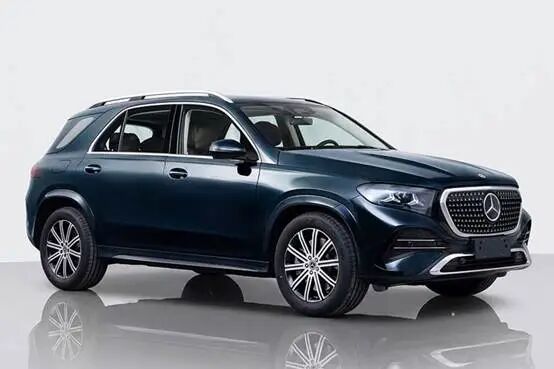
Mercedes-Benz GLE L Declaration Image. In reality, this practice of 'displacement reduction' is not novel for Mercedes-Benz. Prior to the 2026 model, the Mercedes-Benz C-Class utilized a domestically exclusive 1.5L displacement M254 engine across its entire lineup. More egregiously, even the C-Class sedan, the Mercedes-Benz E260L, was equipped with this 'downgraded' engine. In contrast, competitors like the BMW 3/5 Series and Audi A4/A6 were comparatively straightforward, only daring to employ low-power versions to mislead users. 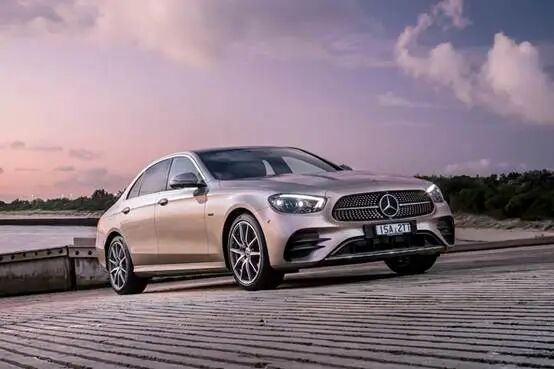
Mercedes-Benz E-Class Once Fitted with a 1.5T Engine. Of course, Chinese new energy vehicles have now firmly established themselves in the price range above 300,000 yuan. Consequently, the new C-Class and E-Class have reverted to the 2.0L version of the M254. However, although the once-arrogant Mercedes-Benz is finally willing to treat the Chinese market with equal respect, this is no longer sufficient to impress Chinese consumers.
● What Was the Purpose of the Exclusive Downgraded Engine?
From a development and production standpoint, creating a displacement-reduced version specifically for the Chinese market only incurs additional costs and does not result in savings. So, why did Mercedes-Benz engage in such a vexing practice? The answer lies in the tax policies governing imported vehicles. 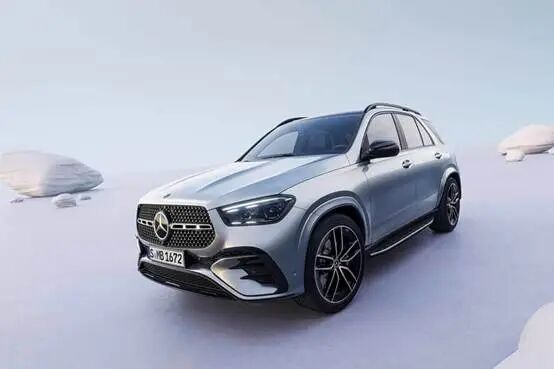
Domestically Exclusive GLE 450. China's passenger vehicle consumption tax is structured based on displacement: for displacements between 2.0-2.5L, the tax is 9%, while for 2.5-3.0L, it increases to 12%. The GLE450 has a suggested retail price in the 800,000 yuan range. Reducing the displacement from 2999cc to below the consumption tax threshold lowers the tax by 3 percentage points. When combined with the tax base for the import link (import-related taxes), the vehicle tax per unit decreases by approximately 20,000-35,000 yuan. From the manufacturer's perspective, with similar pricing policies, its profitability compared to rivals like the BMW X5 (B58) and Audi Q7 (EA839) will significantly improve. 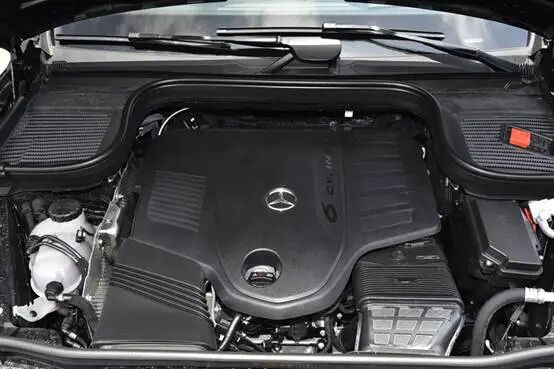
Domestically Exclusive M256 2.5L. Furthermore, from the user's standpoint, opting for a Mercedes-Benz GLE with the M256 'downgraded' engine also places it in a lower vehicle and vessel tax bracket, reducing tax expenses by about half compared to rivals like the BMW X5 and Audi Q7, thus making it more appealing to consumers.
● Reverting to Full-Power M256: A Change in Strategy?
So, why did Mercedes-Benz dare to supply downgraded models when formidable rivals like BMW and Audi were in the market? And why is it now reverting to the full-power version? Is it a change in strategy? 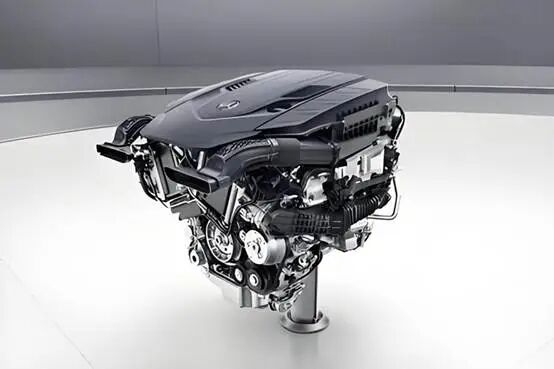
Full-Power M256 3.0L. If we rewind to around 2020 and compare the Mercedes-Benz M256, BMW B58, and Audi EA839, it becomes evident that Mercedes' 3.0T L6 engine was technically superior to its peers, particularly with its 48V mild hybrid system based on a P1 motor and electric turbo, which delivered exceptional low-speed response, vehicle energy efficiency, and operational quality. 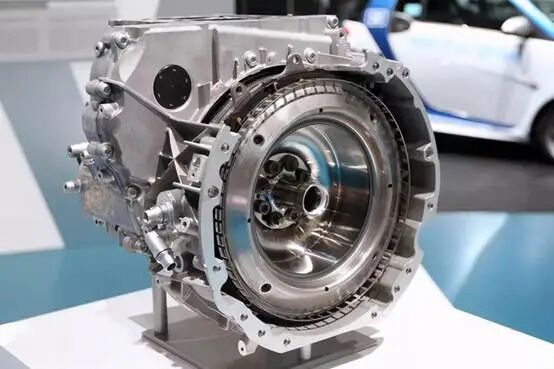
P1 ISG Motor. It was precisely this outstanding foundation that enabled the M256, even after displacement reduction, to still deliver a robust 270kW/500Nm with the support of dual turbochargers (exhaust + electric). Clearly, its competitive strength was the core factor that emboldened Mercedes-Benz to reduce the displacement. 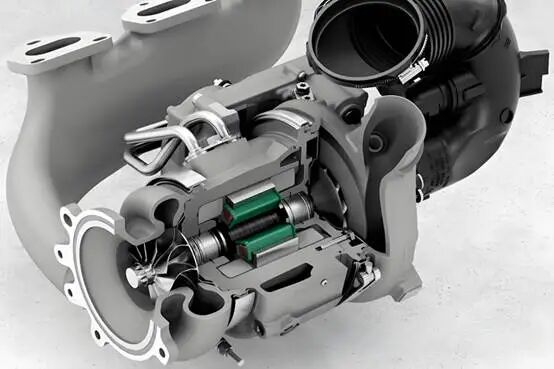
Electrically Driven Turbo. According to MIIT declaration information, the upcoming domestically produced GLE L, equipped with the M256 3.0T L6 dual-turbocharged engine, will further boost its maximum power to 280kW. Additionally, since the piston stroke is fully utilized compared to the 2.5L version, its torque platform extends to 1600-4500rpm, meaning its low-end torque and high-end power delivery will be further enhanced. The reason Mercedes-Benz is willing to sacrifice profit margins and equip the GLE L with the full-power M256 is certainly not due to a change in strategy. 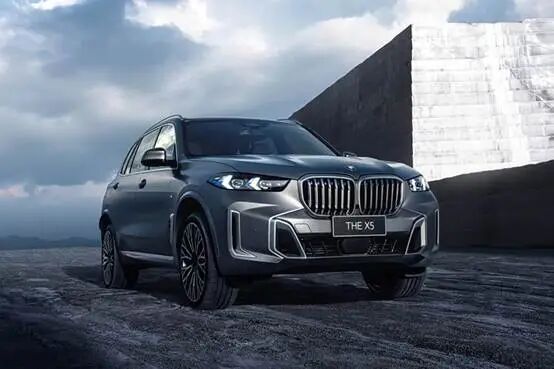
Domestically Produced BMW X5 L. Firstly, in terms of strategic planning, the BMW X5 took the lead in local production, not only becoming more price-competitive but also offering greater profit margins than the import-dependent GLE that relied on policy loopholes. This has indeed exerted significant pressure on Mercedes-Benz in recent years. 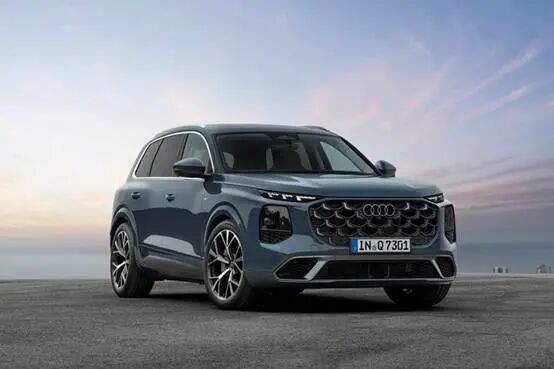
All-New Audi Q7. Secondly, competitors' technological capabilities have improved. The latest Audi Q7 has started using a twin-turbocharged version of the EA839, even enhanced with an MHEV PLUS mild hybrid system (two mild hybrid motors), making it more technologically advanced than the M256. Mercedes' former core competitiveness no longer exists. Finally, and most crucially, the luxury car market is no longer dominated solely by the German BBA trio. Domestic '8/9 series' products have pushed the benchmarks for flagship SUVs to new heights. If the domestically produced Mercedes-Benz GLE L continues with a 'token upgrade' mentality, it may not even achieve success in another two years.
-
![]()
The Dazzling Yet Impractical Internet-Famous Smart Driving Features
-
![]()
The Prequel of AI's Entry into Factories: Why Did the Previous Generation of Industrial Internet Platforms Falter?
-
![]()
Field Test of 'Doubao Work': Hiring a Diligent AI Worker for Just 68 Yuan
-
![]()
Why Did the Doubao Mobile Phone Face a Ban Shortly After Its Release?
-
[In-Depth] Breaking Overseas Technological Monopoly: Horizontally Opposed Engine Ushers in Era of Independent Chinese Mass Production
-
![]()
Mercedes-Benz GLE Now Boasts a 'Full-Power' Six-Cylinder Engine! Netizens Wonder: What Took Them So Long?
-
![]()
Global and Chinese Market Research Report on Autonomous Logistics Delivery Vehicles
-
![]()
Qianwen App Faces Financial Struggles Amidst Competition with Qianwen Office—Wu Jia Under Increasing Pressure