Is There No Link Between Traffic and Sales? Can Executives' Personal IPs Still Have an Impact?
 04/01 2026
 557
557
Lead
Introduction
The auto industry's influencer experiment is now showing its results.
Some time ago, at Xiaomi's new product launch event, Lei Jun stepped aside from the center stage, allowing Shu Qi and Su Bingtian to take the spotlight. The presence of Wang Chuanfu, Li Xiang, He Xiaopeng, and other auto industry leaders in the front row was interpreted by the media as a symbolic turning point: Lei Jun, under the spotlight, "held back a bit" and was no longer prepared to "carry the entire load alone."
Meanwhile, Wang Hao, the chairman of BAIC Motor, once dubbed the most receptive chairman on the internet, abruptly left his post after just one year. Even Yin Tongyue, the "gray-haired young man" and chairman of Chery Automobile, when asked if he intended to cultivate a personal IP, responded, "I detest the term IP the most; I'm too old for that."
Consequently, these two cases are seen within the industry as evidence that relying on traffic and personal IPs as an influencer strategy cannot rescue established automobile companies. Nevertheless, some remain undeterred on this path. Wei Jianjun, the chairman of Great Wall Motors, has frequently voiced his opinions on social media platforms over the past two years and recently shared a meal of beef noodles and discussed rescue equipment with users at Harbin's Ice and Snow World.
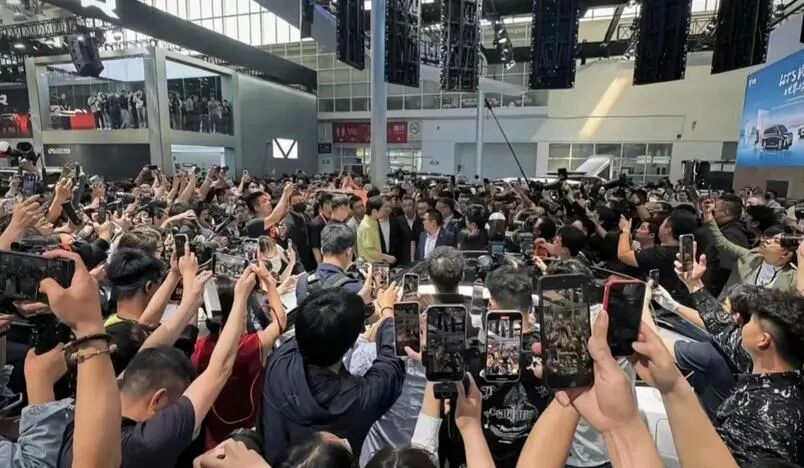
In fact, looking back at the 2024 Beijing Auto Show, the traffic frenzy surrounding Lei Jun and Zhou Hongyi plunged the entire industry into collective anxiety, as if not becoming an influencer meant being irrelevant. However, just two years later, as competition in the auto market intensifies, the popularity of personal accounts or personal IPs of automobile company executives has begun to wane.
Some media outlets even claim that in 2026, auto industry leaders have finally learned to "keep their mouths shut." In reality, discussions about executives' personal IPs have been plagued by several core cognitive flaws. People have observed executives spending significant time memorizing lines and rehearsing for videos, feeling that it is a waste of time and unprofessional, ultimately failing to boost sales.
01 Not All Traffic Leads to Celebration
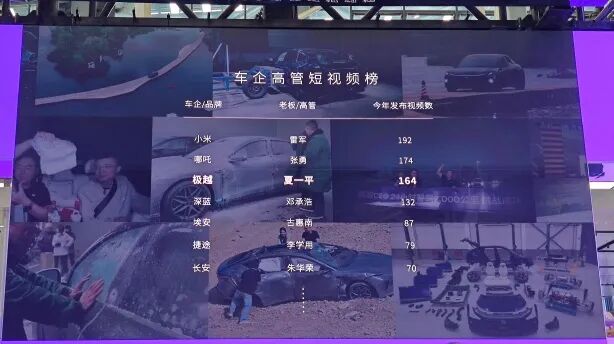
According to incomplete statistics, as of March 2026, over a hundred executives from mainstream domestic automobile companies have opened verified Weibo and video accounts. However, the harsh reality is that more than half of these accounts have reduced their update frequency to less than once a month, even becoming "zombie accounts."
The executive traffic dream that began in 2024 rapidly cooled after a year of frenzy. Lu Fang, CEO of VOYAH, once bluntly expressed his desire to become an influencer but also keenly pointed out that "the durability of traffic in driving sales remains to be tested." And as it turns out, his caution was well-founded.
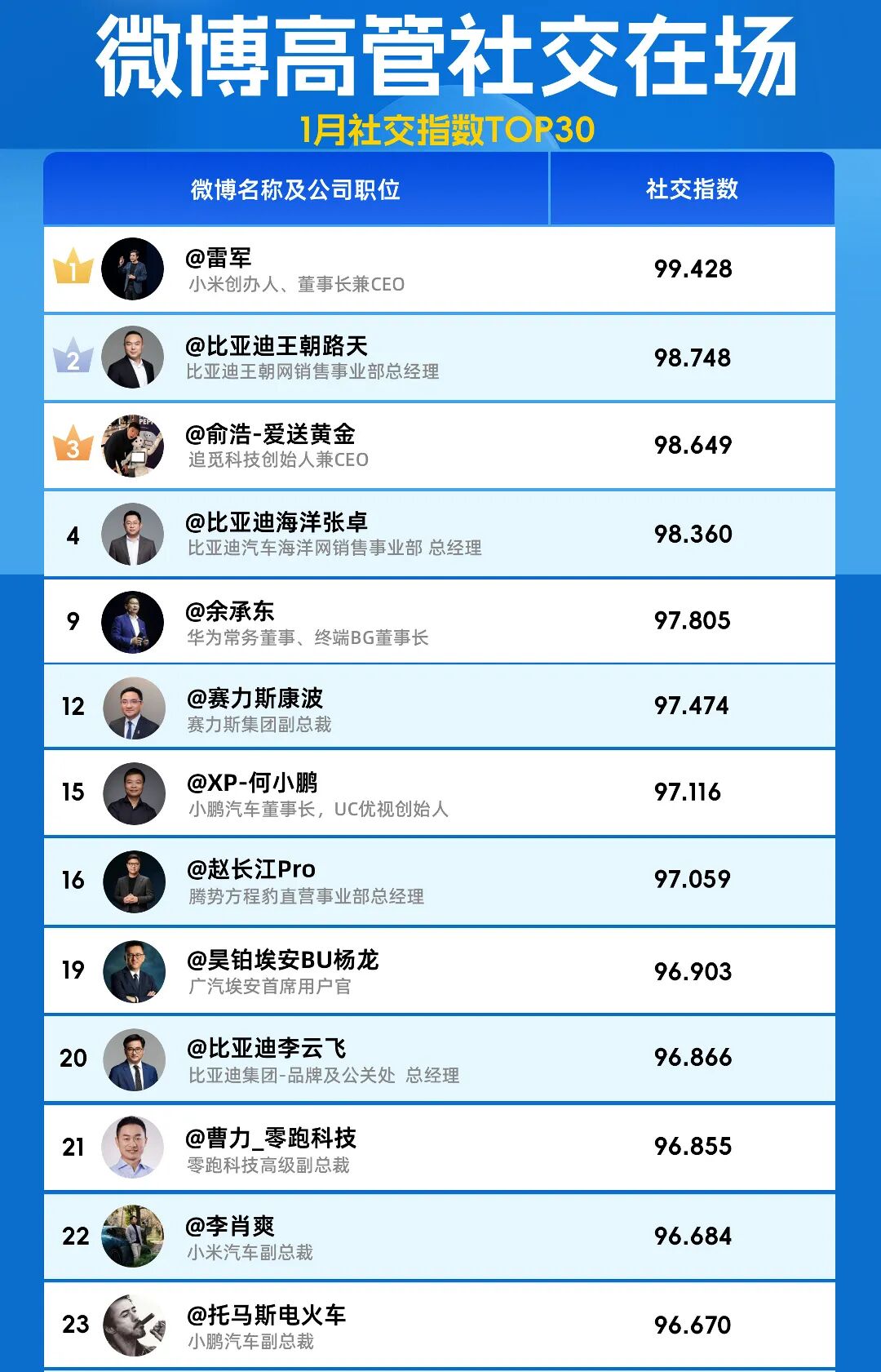
Many executives' accounts are trapped in self-indulgent celebrations. Whether it's the comments under their posted content or the viewership data in their livestreams, the high levels of interaction often mask a false prosperity driven by internal mobilization. Because the lively traffic has not effectively translated into market sales. Take NIO, for example; under Zhou Hongyi's influence, it gained immense topic heat but ultimately faded into obscurity.
Some active accounts also exhibit polarization. One category consists of top-tier evergreens represented by Lei Jun and Li Bin, who not only consistently produce content but also continuously improve the depth of their content and the quality of interaction. The other category includes former BAIC chairman Wang Hao, who, although once garnered praise for his receptive persona, ultimately left the stage in disappointment.
This clearly indicates two conclusions: first, personal IPs are not a panacea; detached from the company's fundamentals, even the most vivid personas are merely fleeting. Second, personal IPs should grow alongside the automobile company; sudden appearances are futile. After all, without internet sensibility and brand reputation, it's like building a castle in the air without a foundation.
Of course, this is just a brief interlude in the development of China's auto market. It is believed that within automobile companies, there is also recognition that when sales decline or new products fail to gain traction, the first reaction is to have the boss step forward, attempting to prove that the company is keeping up with the times through a livestream or a short video.
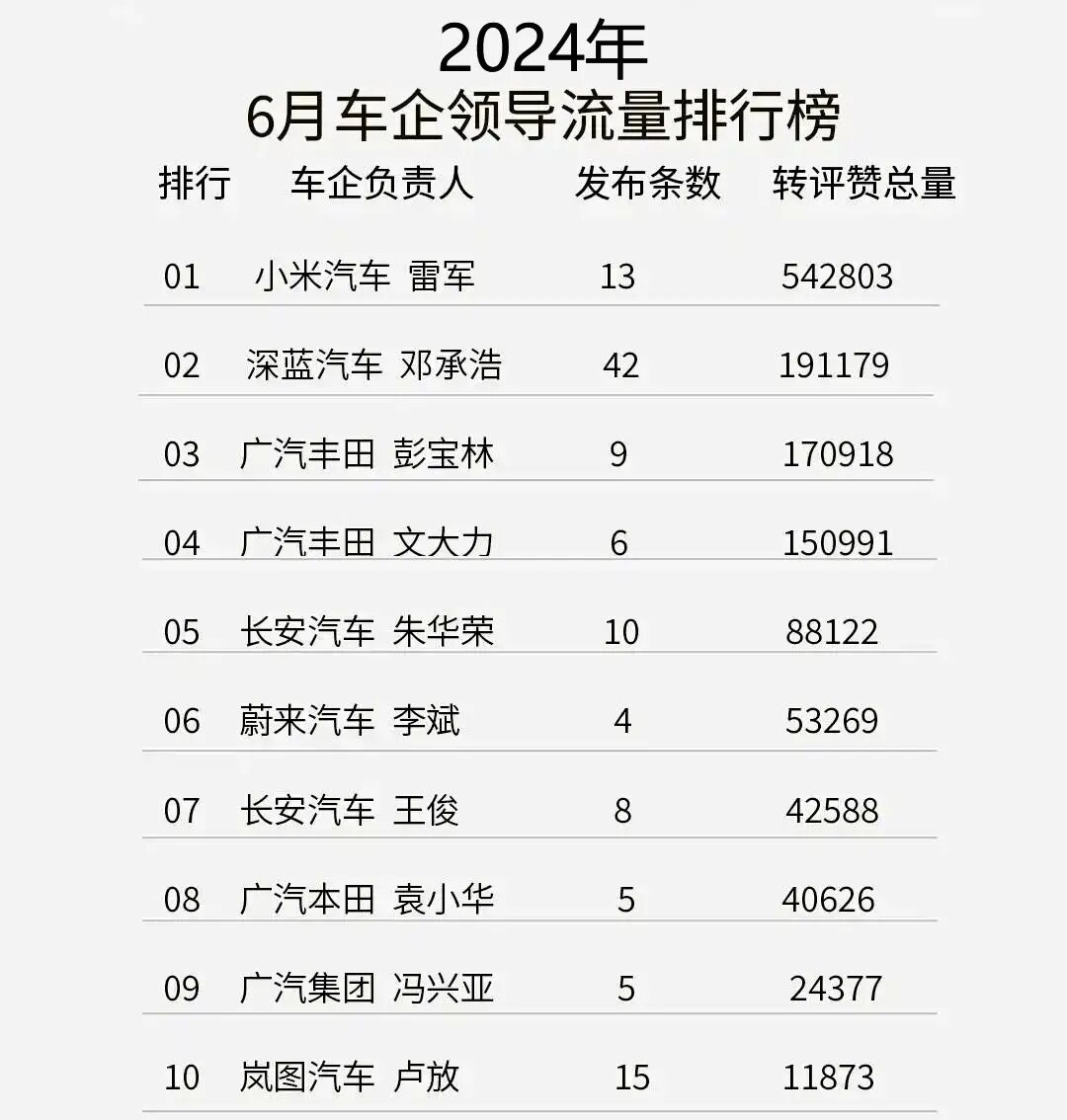
However, the ultimate result proves that suddenly launched executive accounts do not win over the market. Lei Jun's success lies in his birth in the internet era; Xiaomi Automobile, from its inception, was betting its reputation. User research shows that 72% of SU7 buyers placed orders due to their trust in Lei Jun personally.
This trust was not established through a single product launch but was a natural continuation of the persona Lei Jun had built over more than a decade in the mobile phone industry. Similarly, Li Bin of NIO transformed from "the most pitiful person" to "Brother Bin" through the painstaking effort of responding to user complaints at 3 a.m. on the NIO App, accompanied by years of consistent presence.
In contrast, some traditional automobile companies, under the pressure of industry transformation, hastily pushed their leaders to the forefront, failing to establish deep emotional connections and instead prone to public relations disasters due to inconsistencies or inadequate preparation. The most typical example is when a series of auto company bosses imitated Lei Jun by opening car doors for the first batch of owners, an act that indeed did not resonate well with internet users.
In other words, cultivating a personal IP requires time, sincerity, and seamless integration with a company's core business, rather than hasty, last-minute efforts. Therefore, starting in 2025, many executives have made successive statements about embracing traffic with values, emphasizing quality priority and sustainable development.
02 Executive Accounts Are Not Promotional Platforms
If the core issue discussed earlier lies in the relationship between individuals and brands, then a deeper layer concerns the connection between accounts and users. Many automobile companies still do not understand the difference between executives' personal accounts and corporate official accounts. They treat personal accounts as second official microblogs, filling them with press releases, posters, and product specifications, while either closing the comment sections or flooding them with mechanical responses from fake accounts.
Such personal accounts not only fail to bridge the gap with users but also expose the company's rigidity. Personal accounts should not become promotional channels for automobile companies; instead, they need interaction—this is an ironclad rule. Because in the internet context, users yearn for dialogue with real people, not with organizations.
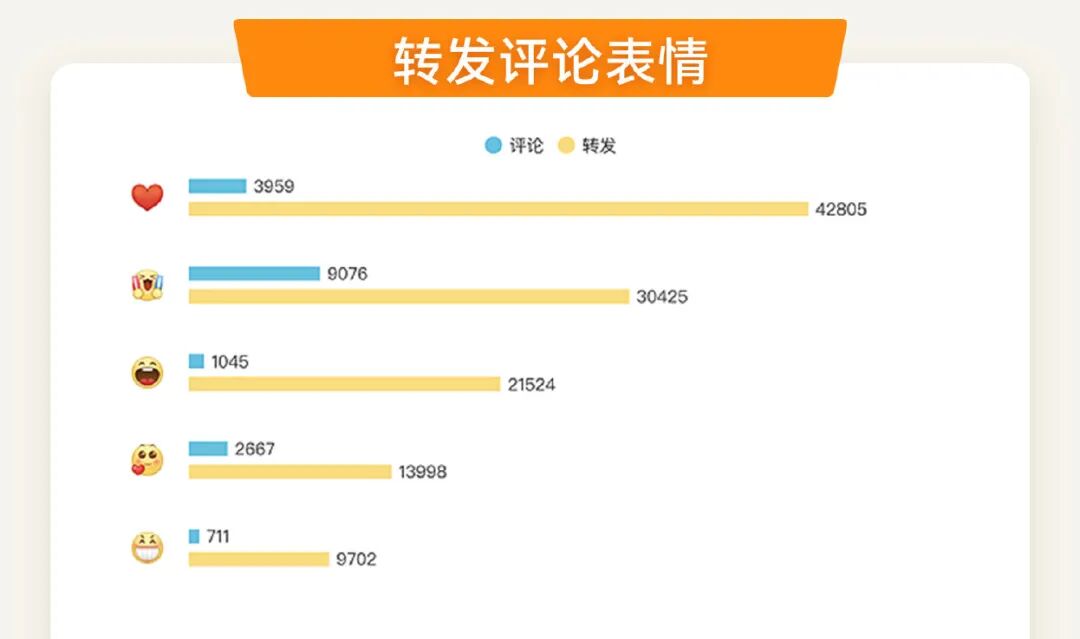
In the operation of Li Bin's personal account at NIO, when a user complained about the algorithm logic of NOP+ at 2 a.m., Li Bin responded at 3 a.m.: "Noted; I'll review it with the intelligent driving team first thing tomorrow morning." When a northwest owner complained about the lack of battery swap stations, he directly @'ed executives: "Check if next year's Power Up Plan can prioritize this route."
This high-frequency interaction fosters a sense of closeness more effective than any PR rhetoric. Because users know they are dealing with a flawed but communicative real person, not a symbol packaged by a PR team. Perhaps realizing this issue, Wei Jianjun actively sought advice from netizens in a video: "I want to hear the opinions of netizens and users on how to proceed."
Of course, and most importantly, even if some executives are very active on social media and frequently interact with netizens, examining their account's post count and influence alongside the brand's sales data reveals that their activity has not brought about sales growth. To put it bluntly, this seemingly diligent effort is also in vain.
Because, in the commercial world, one must still return to the essence of commercial logic. What truly determines sales are brand, marketing, product, price, channels, and so on. When a brand cannot reach the front lines and a product cannot support the brand, no amount of enthusiastic promotion by the boss can secure orders.
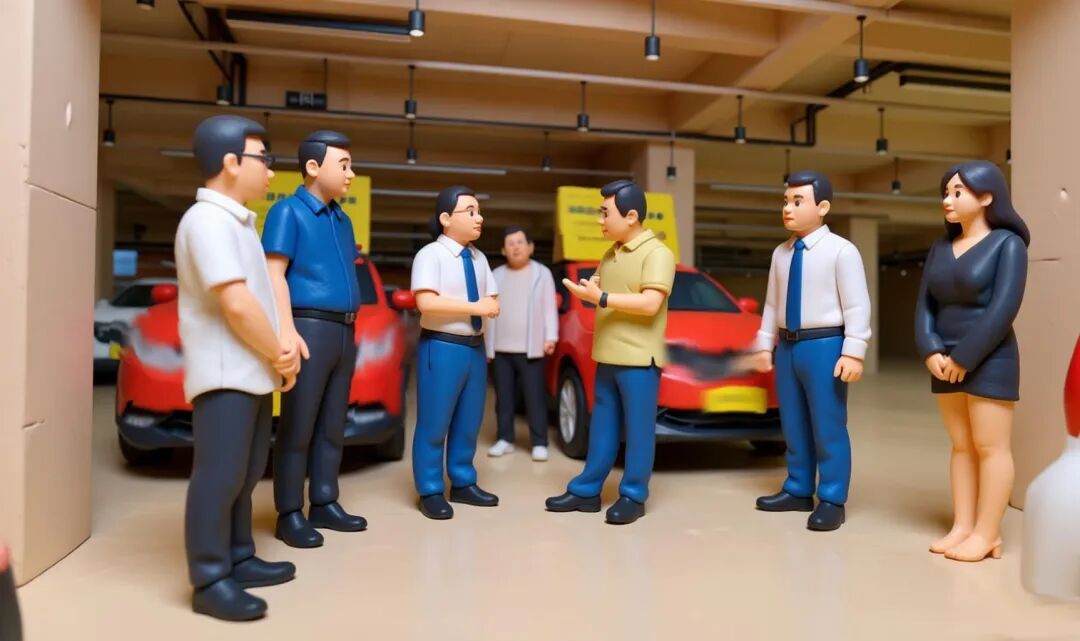
An undeniable fact is that compared to executives conducting superficial research at stores, voices on social media are more authentic and effective. Therefore, for automobile companies, the core metric for measuring the value of executives' IPs should not be impressive data but whether they have sincerely considered user responses and suggestions.
This actually highlights another industry pain point: some automobile companies are inherently prone to criticism and, faced with overwhelming negativity, many choose to close comment sections for self-protection. If so, why bother? However, regarding the so-called "criticism-prone" nature, Wei Jianjun offered another solution: dissolve negativity with sincerity.
Therefore, the issue with executive accounts ultimately circles back to the initial question: have they sincerely managed their social media platforms? Users can see this. A truly user-centric automobile company does not rely on slogans but on numerous executives genuinely leading by example, spending time and effort to approach consumers.
In any case, at present, the personal IP experiments of Chinese automobile company executives have completed a full cycle. It is not difficult to find that personal IPs are not the goal but a means; they are not a lifesaver but an embellishment. After all, users may follow you for a moment, but only when it comes to making a payment will they vote with their wallets for true value.
Editor-in-Chief: Cao Jiadong Editor: He Zengrong
THE END
-
![]()
The Allure of 'Acquisition Spree': Li Shufu's Left Turn, Xu Jiayin's Right
-
![]()
Strategic Transformation Yields Results: Phoenix Optics Reports 10.9% YoY Rise in Core Net Profit for H1 2026
-
![]()
Three Key Growth Trajectories Synergize! Crystal-Optech Reports 3.478 Billion Yuan in Revenue for H1 2026
-
![]()
Semi-Annual Report Sparks XPENG Motors Buzz
-
![]()
1.6 Billion Big Order Secured! SeeYA Technology's Revenue Soars by 287.87% in the First Half of the Year
-
![]()
Baidu's Profits Plunge by 68%: Unraveling the Mystery Behind the Numbers
-
![]()
Baidu’s Profits Tumble by 68%! Where Has All the Money Gone?
-
![]()
Hynix’s Taobao Store Shuts Down Abruptly: What Should Customers Do About Warranty Services for Memory Modules?