How Far Has the Commercialization of Autonomous Driving Come? Pony.ai Answers with 'Profitability in Two Cities'
 04/01 2026
 594
594

Let's talk about Pony.ai today.
On March 26, Pony.ai, a leading autonomous driving company, released its financial results for the fourth quarter and full year of 2025.
After achieving multiple key commercialization milestones, Pony.ai is accelerating from the 'shallow waters' of technical validation to the 'deep waters' of large-scale commercial operations.
Core data confirms this transformation: In 2025, the Robotaxi business grew by 129% year-on-year.
Registered users surpassed one million, nearly tripling compared to the same period last year.
Passenger fare revenue, reflecting genuine paid demand, surged nearly 400% annually. Robotaxi achieved per-vehicle profitability in two cities. With over $1.5 billion in cash reserves, Pony.ai is well-armed for the next phase of global expansion.
However, what truly excites the market is not just the financial figures but Pony.ai's clear and aggressive expansion blueprint for 2026.
01 A 'Tale of Two Cities' in Commercialization
As Pony.ai's founder and CEO, James Peng, said, '2025 marked a year when Pony.ai completed key commercial validation.' The company made significant progress in revenue growth, fleet expansion, user base growth, and unit economic model optimization.
In 2025, Pony.ai's annual Robotaxi business revenue reached 116 million yuan, up 129% year-on-year, with passenger fare revenue surging nearly 400% annually.
Fourth-quarter Robotaxi business revenue hit 46.6 million yuan, accounting for nearly 40% of the annual total, with passenger fare revenue growing over 500% year-on-year.
The seventh-generation Robotaxi model was launched commercially in November 2025, achieving per-vehicle operational profitability in Guangzhou the same month.
In the first quarter of 2026, Shenzhen's Robotaxi operations repeatedly hit new highs.
From January 1 to February 16, 2026, paid orders surpassed the total for all of 2025.
Based on the full-month average in February, per-vehicle operational profitability was also achieved.
(Supplementary data: On March 22, the seventh-generation Robotaxi in Shenzhen set a record high with an average daily net revenue of 394 yuan per vehicle and 25 orders per vehicle.)
In other words, Pony.ai has now achieved per-vehicle profitability (UE) in both Guangzhou and Shenzhen.
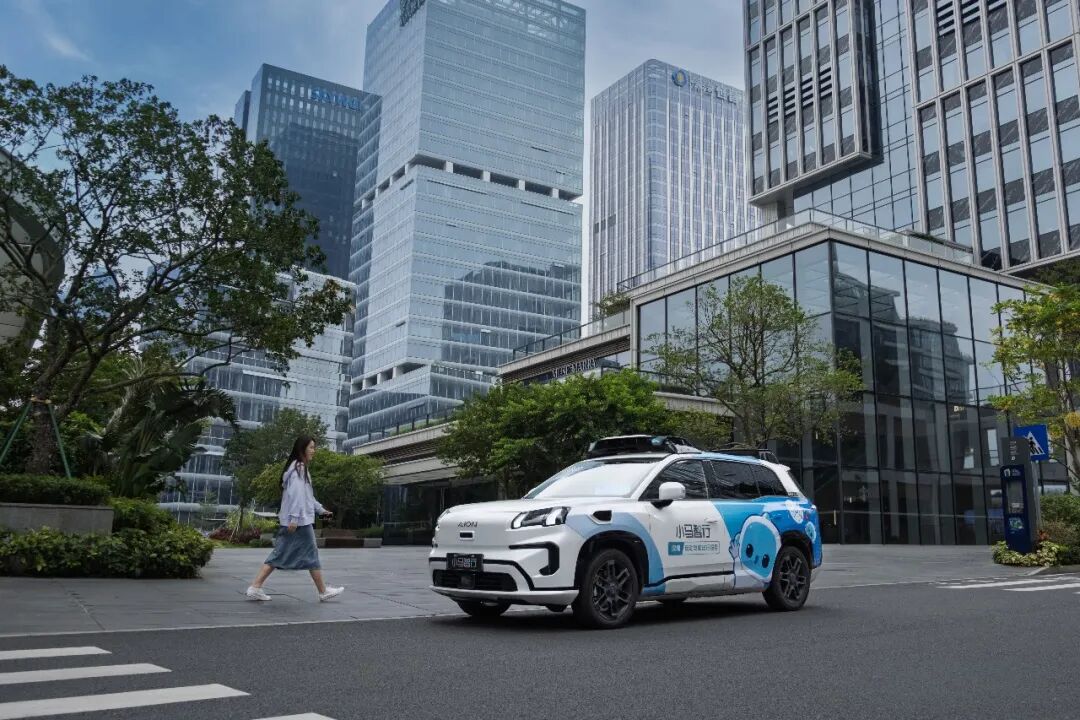
For the Robotaxi industry, 'per-vehicle profitability' is a watershed metric. It signifies Pony.ai's business model has shifted from 'storytelling' to 'financial viability.'
Behind this success lies a multi-layered positive cycle of technology, operations, and user experience.
Pony.ai's founder and CEO, James Peng, pointed out at the earnings call that the company did not rely on price wars.
Instead, it built user loyalty by enhancing the user experience (e.g., smoother driving, more convenient pick-up/drop-off points, and the ability to handle complex road conditions).
As vehicle density increases and waiting times shorten, the user experience further improves, driving demand growth and creating network effects.
The UE become a full-time employee (achievement of per-vehicle profitability) in Shenzhen and Guangzhou proves that this 'technology-operations-users' closed-loop model can be replicated across cities.
This also provides a solid template for Pony.ai's subsequent large-scale expansion.
In 2026, Pony.ai aims to:
1. Expand its Robotaxi fleet to over 3,000 vehicles.
2. Deploy Robotaxi services in more than 20 cities globally (nearly half overseas), establishing a stronger first-mover advantage.
3. Triple its Robotaxi revenue compared to 2025.
So, how will it achieve these goals?
02 Continuous Fleet Expansion
Let's start with fleet size.
In reaching the 3,000-vehicle target, capital efficiency is key.
Pony.ai's solution is the 'co-built fleet model.'
Through this model, partners finance vehicle purchases and cover some operational costs, while Pony.ai provides autonomous driving technology.
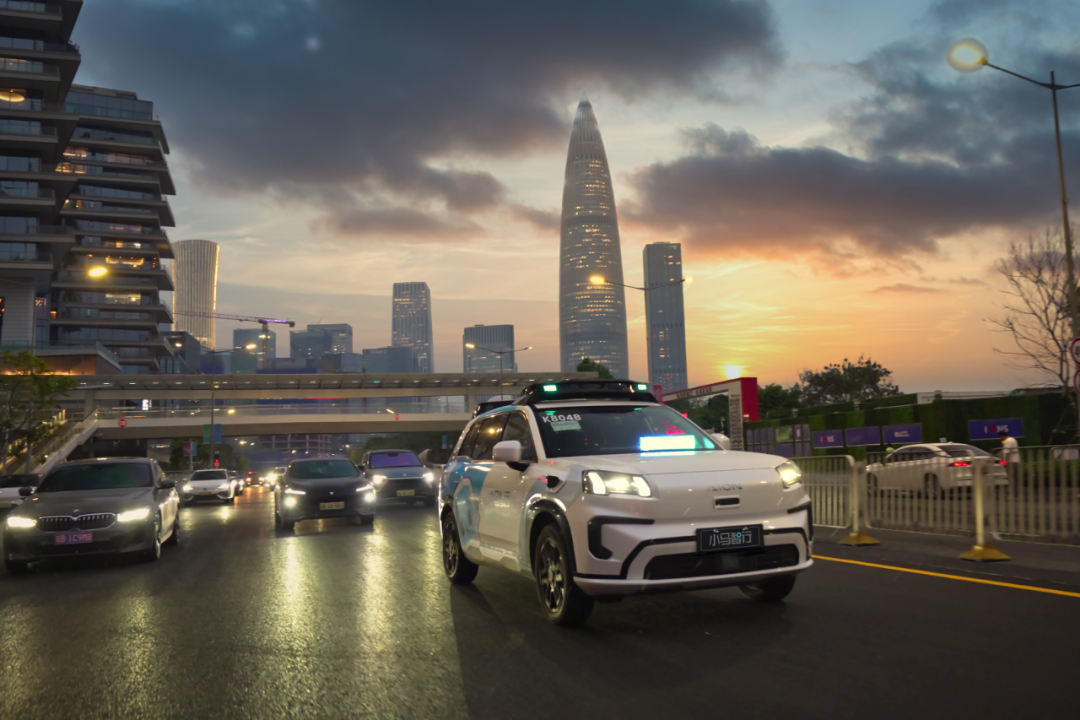
The benefit is that partners can tap into the Robotaxi value chain and share in the future mobility dividend.
Pony.ai can also rapidly expand its fleet with a lighter asset model, reducing its own capital expenditures.
A typical example is Toyota. Not only is Toyota Pony.ai's largest strategic shareholder, but it is also the first practitioner of the co-built fleet model.
The seventh-generation Toyota bZ4X Robotaxi, co-produced by Pony.ai, Toyota China, and GAC Toyota, began mass production in February this year, with 1,000 units set to join the fleet this year.
Meanwhile, Pony.ai is collaborating with BAIC and GAC to further reduce vehicle costs by leveraging OEMs' mature supply chains and after-sales networks, with plans to co-build fleets overseas.
Pony.ai has already partnered with Toyota, OnTime, Verne, and others under the co-built fleet model. 'We expect more partners to join this year.'
This model not only accelerates expansion but also opens up new revenue streams for Pony.ai.
Sustained income from revenue sharing or 'AI virtual driver' technology licensing fees, combined with self-operated passenger fare revenue, will drive Robotaxi revenue to more than triple in 2026 compared to 2025.
To reach a broader user base, Pony.ai has also partnered with Tencent to integrate with WeChat's mobility services platform, enabling more users to conveniently hail Pony.ai's autonomous rides.
As of now, Pony.ai's Robotaxi fleet exceeds 1,400 vehicles.
The company expects its fleet to surpass 3,000 vehicles by the end of 2026.
However, it's worth noting that this does not mean all these vehicles will be under the co-built fleet model.
Currently, Pony.ai adopts a 'dual-wheel drive' approach, combining 'co-built fleets' with 'self-owned vehicle operations' to expand its fleet.
During its Hong Kong IPO, Pony.ai disclosed that its self-owned Robotaxi fleet exceeded 720 vehicles.
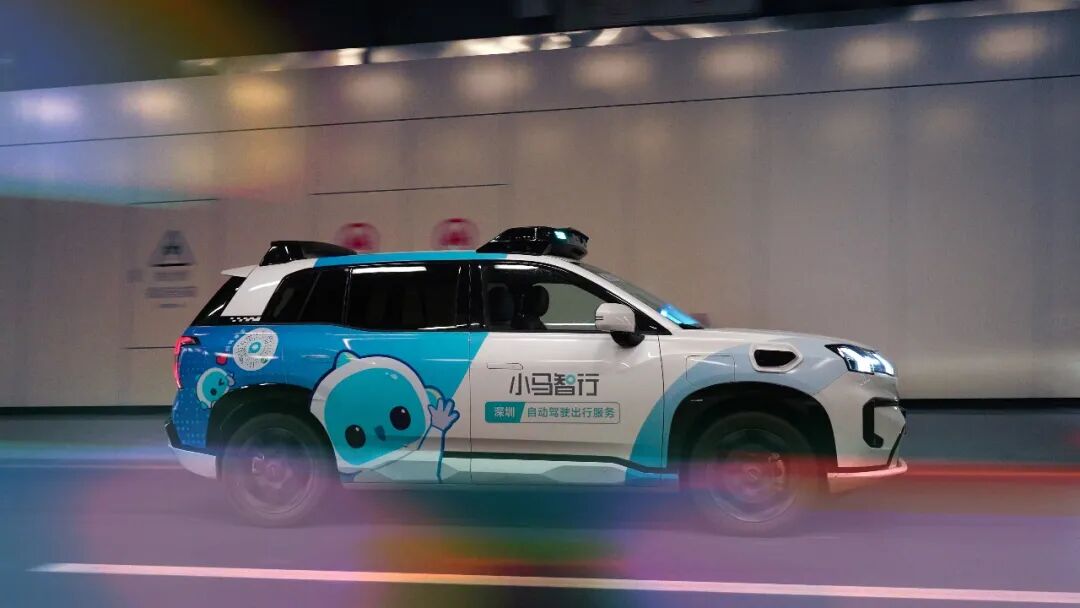
With more vehicles entering operation and fleet density increasing, positive network effects will become more pronounced.
Shorter waiting times and higher vehicle utilization will lead to growth in per-vehicle orders and revenue, further enhancing the overall user experience and demand.
The entire flywheel will spin faster, further optimizing Pony.ai's revenue mix and achieving per-vehicle profitability in more cities.
Ultimately, this will enable Pony.ai to achieve quarterly and even annual profitability through Robotaxi operations.
(Note: In Q4 2025, Pony.ai achieved single-quarter profitability of 528 million yuan for the first time. However, it's important to note that this was primarily driven by fair value changes (e.g., investment in Moore Threads), with the core business not yet achieving operational profitability.)
03 Continuous Increase in Deployed Cities
Building on its successfully validated model in China's first-tier cities, Pony.ai officially launched its 'China + Overseas' dual-engine expansion strategy in 2026.
In the domestic market, Pony.ai adopts a 'deep cultivation + expansion' strategy.
On one hand, it continues to penetrate deeper into core urban areas of already deployed cities like Guangzhou and Shenzhen (e.g., Nanshan and Bao'an districts in Shenzhen, Guangzhou University Town).
On the other hand, it rapidly enters new first-tier cities like Hangzhou and Changsha, with plans to cover more cities in the Guangdong-Hong Kong-Macao Greater Bay Area.
Overseas, Pony.ai is moving just as swiftly.
It recently partnered with Uber and Verne to enter Croatia, planning to launch Europe's first commercial Robotaxi service.
It launched paid services in Doha, Qatar, and is advancing fully driverless testing in Dubai.

These moves demonstrate that Pony.ai is attempting to replicate its technologically refined capabilities from China's complex urban environments (e.g., urban villages, rush hours, extreme weather) as a 'standardized solution' exportable to Europe, the Middle East, East Asia, and Southeast Asia.
This marks a transition from local dominance to global leadership.
'Given that current pricing in China is lower than overseas and already yields positive UE with continuous optimization, we expect overseas market profitability to be even more attractive.'
04 L4 Trucks and Licensing Business
The Robotruck business demonstrated steady growth in 2025, with annual revenue reaching 284 million yuan.
More strategically significant, however, was Pony.ai's launch of the fourth-generation autonomous heavy-duty truck in November 2025, which achieved a 70% cost reduction in the autonomous driving suite compared to the previous generation.
This reduction signifies that Robotruck's large-scale operations are shifting from 'technologically feasible' to 'economically viable.'
At the scenario application level, Pony.ai has begun deploying fully driverless operations in higher-value commercial scenarios.
Currently, it has deployed fully driverless heavy-duty trucks at Jiangmen Port in Guangdong and successfully completed tests of 1+N fully driverless convoys under extreme weather conditions.
This not only proves technological capability but also serves as a starting point for scalable replication (large-scale replication) in high-frequency, high-value scenarios like ports and mining areas.
Pony.ai stated that the fourth-generation Robotruck is scheduled to begin mass production deployment in 2026, with revenue growth expected to accelerate further in the second half of the year.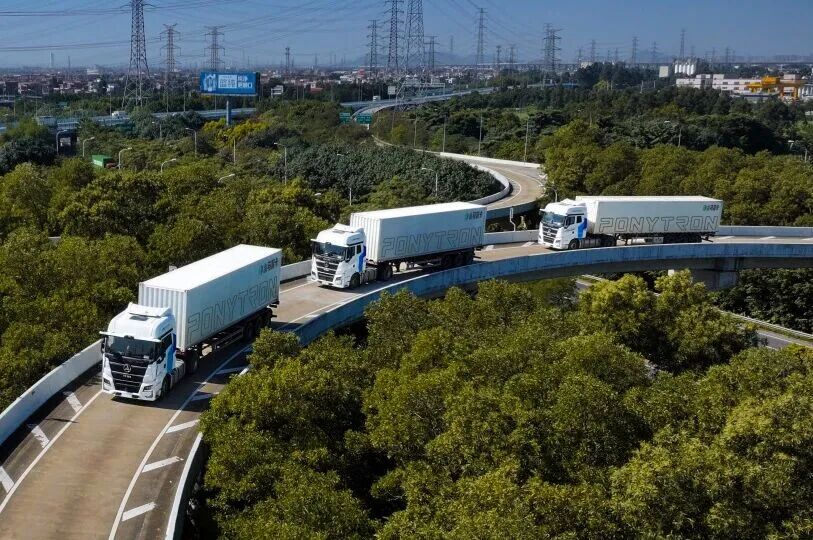
Technology licensing and application services generated 229 million yuan in revenue in 2025, up 19.7% year-on-year.
The growth engine for this segment is the Autonomous Driving Domain Controller (ADC) — ADC shipments surged sixfold year-on-year in 2025. Even more notable is the diversification of the customer base.
ADC demand has expanded from autonomous driving to low-speed delivery vehicles, autonomous sweeping vehicles, logistics robots, and even humanoid robots.
This provides Pony.ai with a more scalable revenue stream.
Speaking of finances,
As of the end of 2025, Pony.ai held over $1.5 billion in cash reserves, providing strong financial support for its R&D investment and market expansion in the coming years.
CFO Lawrence Wang stated that in 2026, the company will strategically increase investments, focusing on business expansion, AI talent acquisition, and infrastructure upgrades.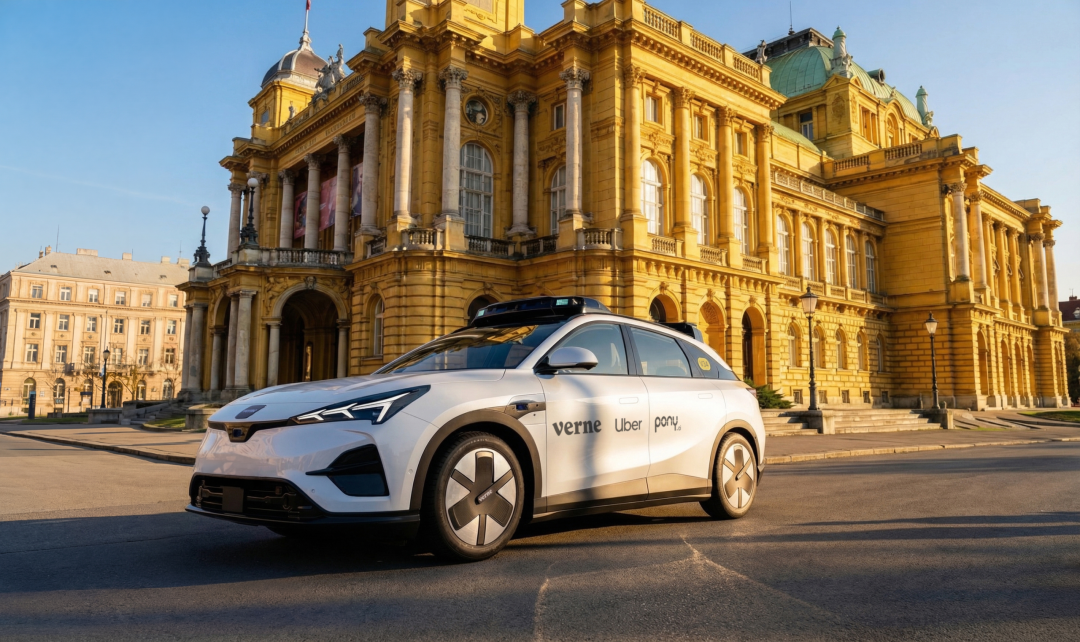
'We are confident that these increased investments will accelerate large-scale commercialization and drive faster revenue growth in 2026.
The industry is still in a critical phase of capturing market share and strengthening technological and operational barriers.
With sufficient cash reserves, cost optimizations, and superior technology, we are confident in achieving sustained revenue growth and driving continuous improvements in long-term profitability.'
05 Full Speed Ahead
Behind the numbers—3,000 vehicles, 20 cities, and tripled revenue—lies Pony.ai's resolute transformation from a technology R&D company to a global mobility services platform.
In the long marathon of autonomous driving, Pony.ai has passed the most arduous phase of 'proving feasibility.'
Now, it is accelerating into the 'scale + profitability' sprint phase that will determine its final standing.
As James Peng said, the Robotaxi industry has entered a phase of policy tailwinds and market inflection points, and Pony.ai is clearly ready to go full speed ahead.
The end.
-
![]()
The Allure of 'Acquisition Spree': Li Shufu's Left Turn, Xu Jiayin's Right
-
![]()
Strategic Transformation Yields Results: Phoenix Optics Reports 10.9% YoY Rise in Core Net Profit for H1 2026
-
![]()
Three Key Growth Trajectories Synergize! Crystal-Optech Reports 3.478 Billion Yuan in Revenue for H1 2026
-
![]()
Semi-Annual Report Sparks XPENG Motors Buzz
-
![]()
1.6 Billion Big Order Secured! SeeYA Technology's Revenue Soars by 287.87% in the First Half of the Year
-
![]()
Baidu's Profits Plunge by 68%: Unraveling the Mystery Behind the Numbers
-
![]()
Baidu’s Profits Tumble by 68%! Where Has All the Money Gone?
-
![]()
Hynix’s Taobao Store Shuts Down Abruptly: What Should Customers Do About Warranty Services for Memory Modules?