Hundreds of Luobo Kuaipao Robotaxis in Wuhan Come to a Halt! Does the Demise of Robotaxi's 'Safety Myth' Raise Alarms for Humanity?
 04/01 2026
 686
686
The breakdown of Luobo Kuaipao in Wuhan was no mere coincidence.
A system malfunction laid bare the Achilles' heel of large-scale autonomous driving deployment.
On the evening of March 31, near the Yangsigang Yangtze River Bridge on Wuhan's Second Ring Road, numerous Luobo Kuaipao Robotaxis suddenly ground to a halt while in motion. Vehicles with hazard lights flashing obstructed the leftmost lane. A traffic police officer at the scene reported, "The Luobo Kuaipao system malfunctioned—it's an issue with the company. Around 80 to 100 vehicles were affected. Passengers can open the doors by pressing a button, but they cannot exit onto the ring road. We rescued many people today."
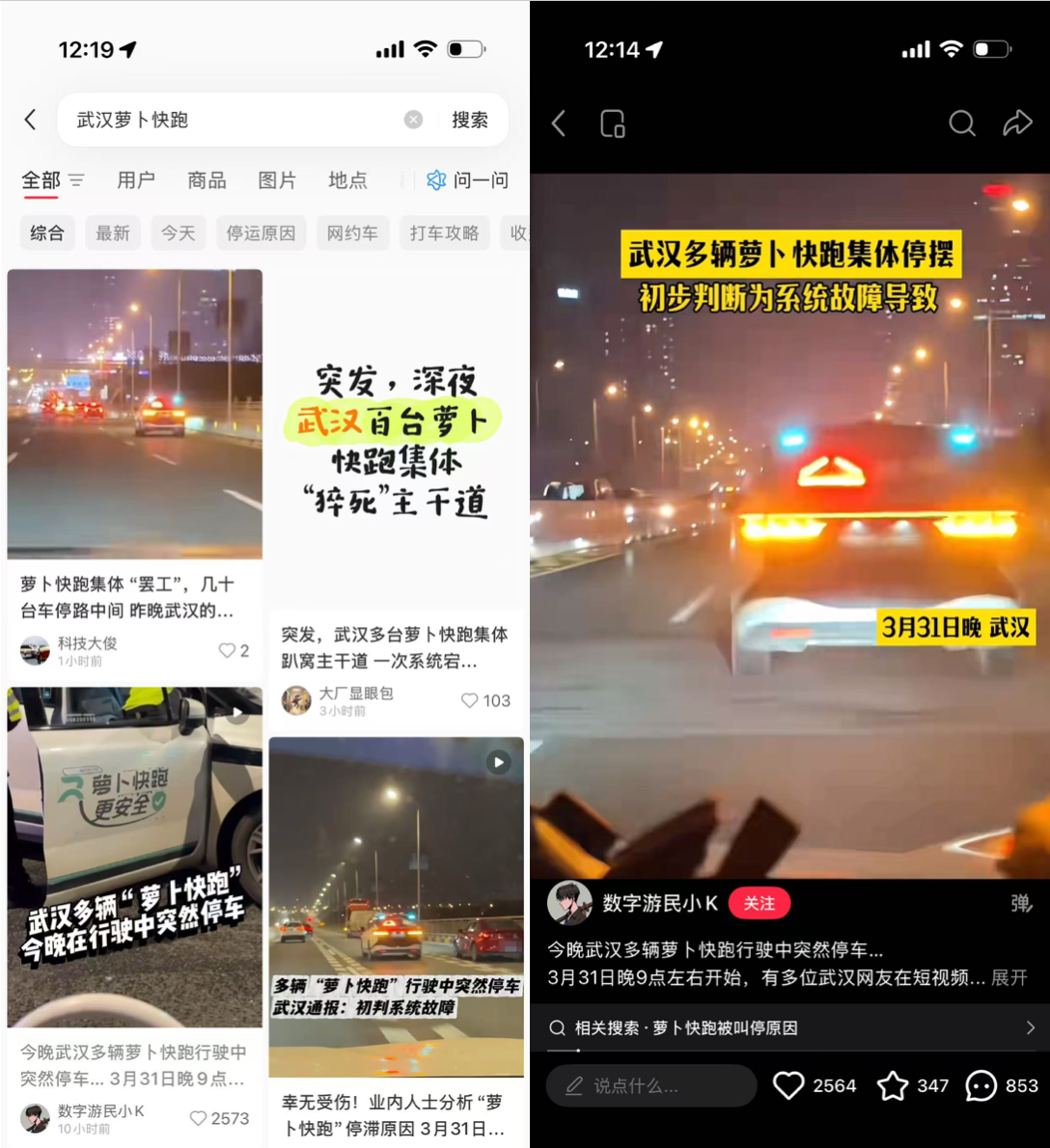
(Image credit: Xiaohongshu)
The Wuhan traffic police reported that the incident was "preliminarily judged to be caused by a system failure," but this casual explanation cannot mask deeper concerns: When Baidu Apollo, the leading Robotaxi player renowned for its 'robust technology,' showcases a spectacle of 100 vehicles stalling simultaneously in real urban traffic, can we still placate ourselves with the notion of 'sporadic failures'?
In the same month as Baidu's Luobo Kuaipao incident in Wuhan, the domestic Robotaxi sector was embroiled in a 'Five Tigers' rivalry, with RoboTaxi racing toward widespread adoption.
XPENG Motors announced the establishment of an independent Robotaxi business unit, planning passenger demonstration operations in the latter half of 2026. The jointly developed Robotaxi by Didi and GAC has commenced commercial operations in Guangzhou's Nansha District and Shanghai's Jiading District, with ambitious plans to deploy 100,000 vehicles by the end of 2027. WeRide reported revenue of RMB 685 million in its 2025 financial report, with Robotaxi income surging by 209.6% year-on-year. Pony.ai achieved profitability for the first time in the fourth quarter of the previous year, attaining positive per-vehicle operational profitability in Guangzhou. Baidu Apollo's Luobo Kuaipao dominated in scale: 3.1 million orders in the third quarter of 2025, up 212% year-on-year, with over 1,000 Robotaxis deployed globally.
Behind this seemingly thriving commercialization race lies a question that everyone collectively avoids: When the focus is on 'scale,' 'orders,' and 'revenue,' who bears the responsibility for ensuring 'safety'?
From San Francisco to Wuhan: Robotaxi Stallings Occur Repeatedly
The Wuhan incident is not an isolated case. Across the Pacific, mass failures of Robotaxis are not uncommon.
On December 20, 2025, a widespread power outage in San Francisco caused numerous Waymo vehicles to stall after failing to recognize inactive traffic signals, activating hazard lights and obstructing emergency lanes. Earlier, in April 2023, five Waymo autonomous taxis stalled on downtown San Francisco streets due to dense fog.
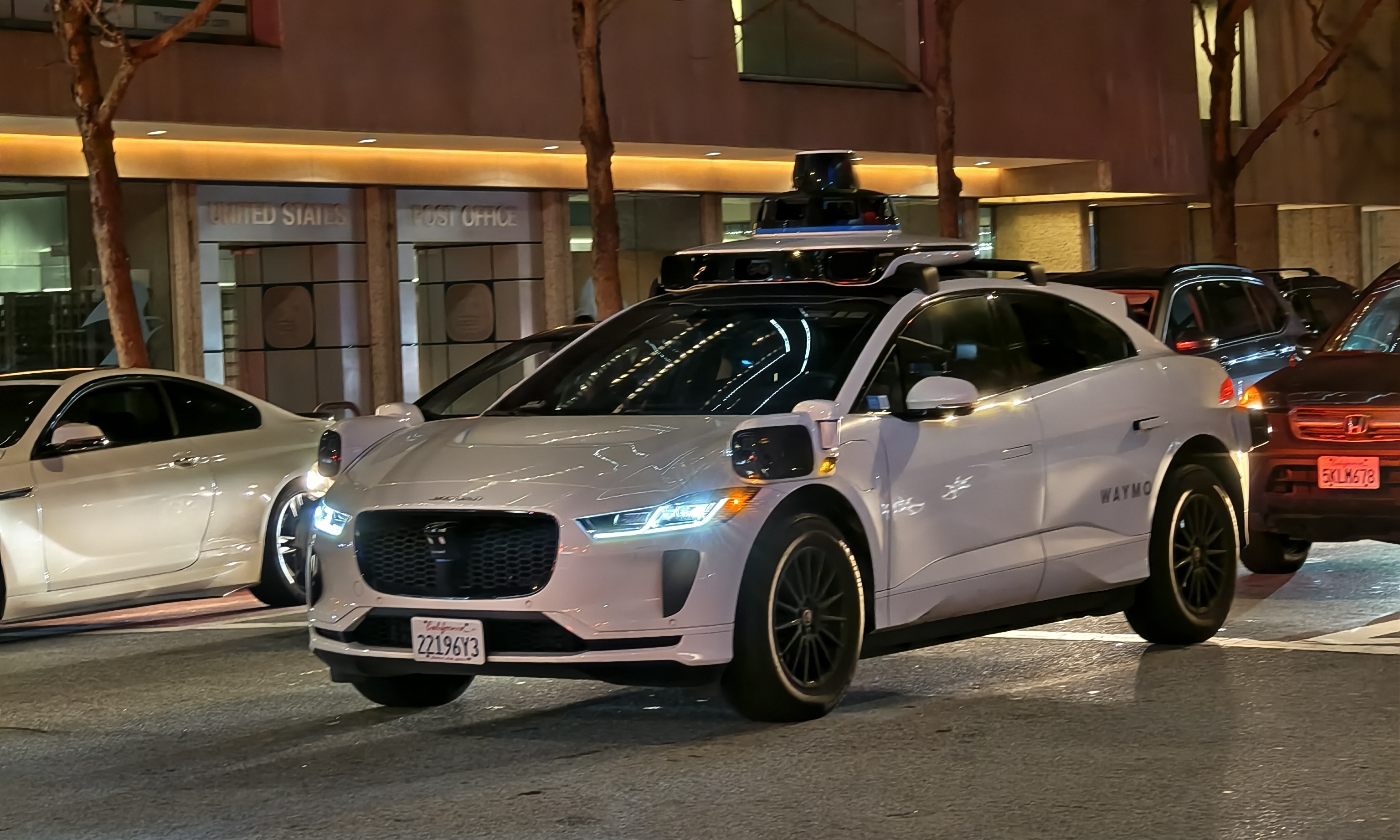
(Image credit: Dianchetong)
In February of this year, during heavy rain in Los Angeles, two Waymo vehicles stalled in floodwaters, sparking online jokes about 'Waymo water than I was expecting.'
These incidents demonstrate that Robotaxi 'mass stallings' have become a cross-regional, cross-platform, and cross-technological-route phenomenon.
Technological Route Debate: Is End-to-End Safer Than Rule-Based AI?
The San Francisco outage-induced Waymo stallings sparked a major debate over technological routes.
Tesla CEO Elon Musk quickly mocked on X: 'Tesla Robotaxi unaffected by San Francisco outage.' The underlying message: Waymo's reliance on high-definition maps and manual rules is inferior, while Tesla's end-to-end neural network architecture (FSD) represents the future.
Horizon Robotics founder and CEO Yu Kai joined the fray, stating, "Tesla is AI-based, while Waymo still relies on manual rules and infrastructure—just taking a shortcut in some areas."
This debate pits two technological routes against each other.
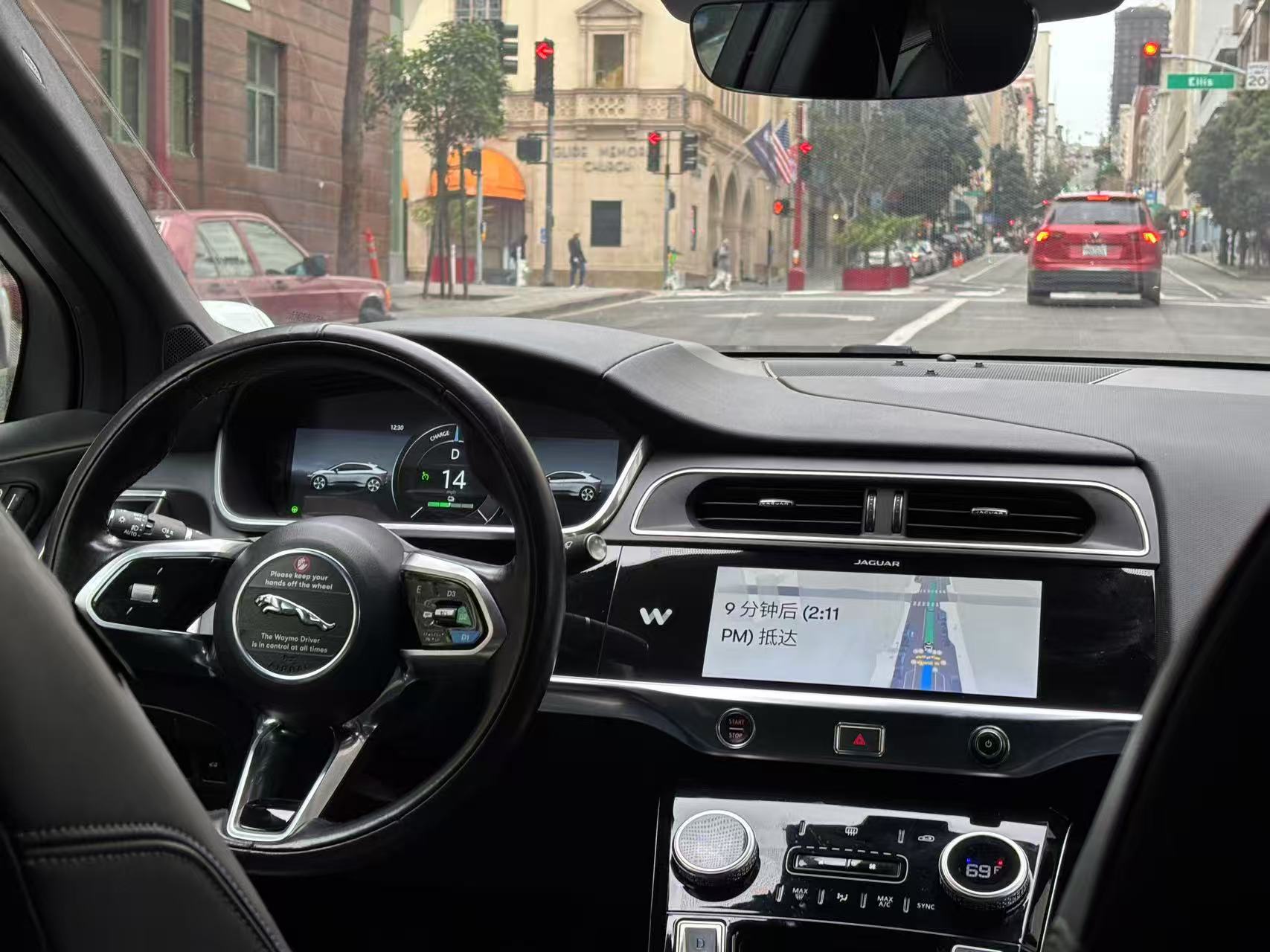
One camp, led by Waymo and Baidu ('Rule-Based AI'), achieves autonomous driving through high-definition maps, dozens of sensors, and pre-programmed rules. This system's strength lies in predictability—as long as scenarios are predefined, performance is reliable. Its fatal flaw is 'fragility': poor weather or power outages disabling traffic lights render vehicles unable to make decisions.
(Image credit: Dianchetong)
The other camp, represented by Tesla, XPENG, and Horizon ('End-to-End'), employs end-to-end neural networks trained on massive real-world driving data to enable AI to think like humans. This system excels in generalization, handling undefined emergency scenarios.
Before AI achieves L3/L4 autonomy, high-definition maps paired with rule-based algorithms remain the safest choice. After all, Baidu and Google own Baidu Maps and Google Maps, respectively, with mapping qualifications and extensive road data, favoring this approach.
High-definition maps with rule-based algorithms can address autonomous driving challenges but require rapid map updates from Robotaxi firms. Baidu and Google must continuously conduct mapping and data collection to prevent Robotaxis from feeling 'lost' on unfamiliar roads.
From 'Stallings' to 'Weapons': What Other Safety Risks Do RoboTaxis Pose?
If 'system failures causing stallings' are merely technical issues, deeper safety threats may far exceed our imagination.
In *The Fate of the Furious* (2017), the villain Cipher remotely controls thousands of autonomous cars in New York, turning them into 'zombies' that plummet from parking garages, race through streets, and ambush the Russian Defense Minister's convoy. Back then, it was science fiction—but today, it's inching toward reality.
Domestic cybersecurity researchers warn: Autonomous vehicles' 'sensory systems' are highly vulnerable—lidar can be deceived by fake laser signals, cameras misled by special patterns, V2V communication intercepted/tampered with, and OTA update channels injected with malicious code. In 2024, a research team successfully lowered a test vehicle's 'pedestrian avoidance' priority by tampering with OTA updates.
This means future RoboTaxi safety threats include at least two layers:
Layer 1: 'Single-Vehicle Attacks'—hackers remotely hijack a Robotaxi, turning it into a weapon targeting specific individuals or buildings. Imagine a self-driving car loaded with explosives silently heading toward its target.
Layer 2: 'Group Attacks'—attackers simultaneously hijack hundreds of Robotaxis, blocking major urban arteries, surrounding critical facilities, or obstructing emergency lanes. As one netizen commented, "To paralyze a city, you once needed to bomb bridges; future attacks just require hundreds of Robotaxis."
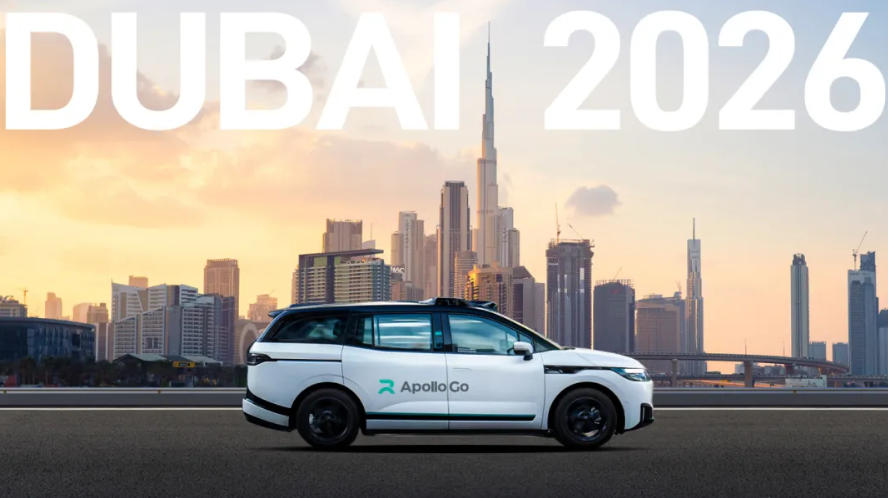
This is no exaggeration. As Robotaxis become urban infrastructure, their 'attack surface' grows exponentially. Each vehicle is a potential 'attack entry point,' and a compromised central dispatch platform could instantly strangle a city's transportation lifeline.
(Image credit: Baidu Apollo)
Even without hacker attacks, cloud data fluctuations can impact driving safety. High-definition map-based systems rely on vehicle-road-cloud coordination. If cloud computing power, data synchronization, or network communication falter, vehicles cannot upload road conditions or driving states, and maps fail to update, leading to misjudgments.
The optimal solution is combining high-definition maps with end-to-end models. While end-to-end models autonomously learn perception, prediction, and planning, high-definition maps provide static information to enhance decision reliability, offsetting the robustness gaps of pure end-to-end solutions in complex scenarios, achieving 'algorithmic autonomy + map safety backup' dual advantages.
Robotaxis Need More Safety Redundancy
Future intelligent driving system failures and Robotaxi traffic disruptions are likely to recur—these are growing pains in autonomous driving and Robotaxi development.
After the San Francisco outage, Waymo was forced to suspend citywide services. Post-Wuhan incident, Luobo Kuaipao faces a similar trust crisis. This is not the end but a warning: As Robotaxis transition from 'toys' to 'tools' and from 'experiences' to 'infrastructure,' safety must not be a sacrificial variable.
Robotaxi firms must proactively ensure passenger safety. During the Luobo Kuaipao stallings, multiple vehicles stopped on a busy ring road, creating extreme rear-end collision risks and endangering passengers.
Before L3/L4 autonomy matures, Robotaxi firms need stronger safety redundancy, such as cloud safety operators and regional safety personnel. Cloud operators remotely control stalled vehicles, while regional personnel handle on-site resolutions when cloud control fails.
Guangzhou alone hosts five major Robotaxi firms—XPENG, WeRide, Pony.ai, Baidu Apollo, and Didi—with nationwide competitors like Caocao Chuxing and Hello Robotaxi. The upcoming competition will be no less fierce than the ride-hailing industry. Only Robotaxi firms that provide safety guarantees and attentive services during this industry infancy can win long-term consumer trust.
Luobo Kuaipao, Waymo, Robotaxi, Tesla, autonomous driving
Source: Leikeji
Images in this article are from 123RF's licensed library
-
![]()
The Allure of 'Acquisition Spree': Li Shufu's Left Turn, Xu Jiayin's Right
-
![]()
Strategic Transformation Yields Results: Phoenix Optics Reports 10.9% YoY Rise in Core Net Profit for H1 2026
-
![]()
Three Key Growth Trajectories Synergize! Crystal-Optech Reports 3.478 Billion Yuan in Revenue for H1 2026
-
![]()
Semi-Annual Report Sparks XPENG Motors Buzz
-
![]()
1.6 Billion Big Order Secured! SeeYA Technology's Revenue Soars by 287.87% in the First Half of the Year
-
![]()
Baidu's Profits Plunge by 68%: Unraveling the Mystery Behind the Numbers
-
![]()
Baidu’s Profits Tumble by 68%! Where Has All the Money Gone?
-
![]()
Hynix’s Taobao Store Shuts Down Abruptly: What Should Customers Do About Warranty Services for Memory Modules?