Decoding GAC Group's Financial Report: Growing Pains as Catalysts for Transformation
 04/02 2026
 658
658
Introduction
GAC Group's annual loss does not merely reflect operational failure but rather represents an inevitable period of growing pains during the transition from a traditional automaker to a new energy intelligent vehicle manufacturer. The short-term performance decline is a necessary cost for long-term structural optimization, technological accumulation, and market breakthroughs.
Recently, GAC Group officially released its 2025 annual results. As one of China's leading automotive groups, this annual report has drawn significant attention—it not only serves as a microcosm of traditional automakers' deep transformation amid electrification and intelligence trends but also reflects the diverse survival strategies amid intensifying industry competition.
Data shows that GAC Group's full-year revenue and profit both declined, marking its first annual loss since the 2005 share reform. However, key areas such as new energy transition, overseas expansion, and internal reforms also exhibited numerous positive signals.
In 2025, GAC Group found itself in a profound period of transformation, facing both challenges and opportunities. At a critical juncture where the automotive industry shifts from fuel to intelligent electric vehicles and from product competition to ecosystem competition, GAC's 2025 was a year of confronting challenges and laying solid foundations for long-term development. Every data point in the financial report became a crucial footnote for navigating industry cycles.
Industry Growing Pains Intensify
2025 proved to be an exceptionally challenging year for GAC Group. Affected by multiple factors, including prolonged price wars in China's new energy industry, reshaped competitive landscapes among joint-venture brands, and rapid industrial ecosystem restructuring, the Group's operating performance declined significantly. Several core financial indicators abandoned past growth trajectories, marking the first annual loss since the share reform.
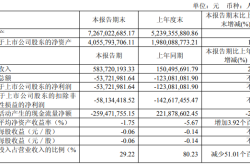
In terms of core financial data, GAC Group achieved a total operating revenue of RMB 96.542 billion in 2025, down 10.43% year-on-year from 2024, with revenue falling below the RMB 100 billion threshold for the first time in recent years. Vehicle manufacturing, its core business, generated RMB 69.010 billion in revenue, accounting for 71.5% of total revenue. However, it saw a sharp 12.57% year-on-year decline, with the gross margin turning negative to -7.35%, becoming the primary drag on overall performance. The Group's overall gross profit shifted from RMB 2.438 billion in the previous year to a gross loss of RMB 5.425 billion, with a comprehensive gross margin of -2.8%, a 6.65 percentage point year-on-year decrease. Revenue from trade services, finance, and other businesses also faced pressure, while components manufacturing emerged as one of the few business units maintaining positive growth throughout the year.
Profit performance was even more severe. In 2025, GAC Group's net profit attributable to shareholders of the listed company was -RMB 8.784 billion. Quarterly performance showed a net loss attributable to the parent company of RMB 732 million in Q1, widening to RMB 2.538 billion in H1, reaching RMB 4.312 billion in the first three quarters, and hitting RMB 4.472 billion in Q4 alone.
In terms of sales volume, GAC Group produced and sold 1.7444 million and 1.7215 million vehicles, respectively, with terminal sales reaching 1.8135 million units. By brand, the Group's two major joint-venture brands and its self-owned brand showed divergent trends: GAC Toyota achieved positive sales growth, selling 756,000 units (+2.44% YoY), with sales of energy-saving and new energy models surging by 27.3% YoY to account for 62.2% of its total. The locally developed BZ3X model sold 83,000 units, topping the sales charts among joint-venture pure electric vehicles.
Conversely, GAC Honda, affected by growing pains in new energy transition and product iteration rhythms, sold 351,900 units, with its new energy model P7 selling only 4,972 units throughout the year. Meanwhile, the self-owned brand segment faced overall pressure, selling 609,200 units.
Regarding the performance decline and first annual loss, GAC Group provided clear explanations in its financial report: first, sales fell short of expectations, with overall annual sales declining and the self-owned brand's new energy products undergoing structural adjustments, failing to fully realize scale effects; second, asset impairment provisions surged, with over RMB 3 billion in write-downs for inventories, intangible assets, property, plant, and equipment. GAC Honda alone recorded approximately RMB 700 million in impairment provisions due to production line optimizations and personnel adjustments, further reducing investment income; third, market competition intensified, with prolonged industry price wars prompting the Group to increase sales investments, with selling expenses reaching RMB 5.891 billion (+8.75% YoY), while discounts and concessions further compressed profit margins; fourth, transition costs remained high, with sustained increases in R&D investments for electrification and intelligence. In 2025, R&D spending exceeded RMB 7.7 billion, accounting for 7.98% of operating revenue. New products and platforms remained in the investment phase, yet to fully deliver returns.
Accelerating Transformation to Break Through
Despite operating pressures, GAC Group did not halt its transformation in 2025. Instead, it accelerated efforts in product structure, internal reforms, and international expansion, becoming the brightest spot in the financial report.
GAC Group's new energy transition showed initial success. In 2025, sales of energy-saving and new energy vehicles reached 888,000 units, accounting for over 50% (51.60%) of total sales for the first time, up nearly 6 percentage points from 2024, marking GAC's official departure from an era dominated by traditional fuel vehicles.
Specifically, sales of new energy vehicles, including battery electric vehicles (BEVs) and plug-in hybrid electric vehicles (PHEVs), reached 433,600 units (-4.64% YoY), accounting for approximately 25.19%, up about 2.5 percentage points from the previous year. Sales of energy-saving models, including hybrid electric vehicles (HEVs) and energy-efficient fuel vehicles, reached 455,000 units, accounting for 26.4%, achieving counter-trend growth.
In terms of technological R&D, as of the end of 2025, GAC Group's cumulative self-developed R&D investment exceeded RMB 62 billion, with patent applications surpassing 24,900, nearly half of which were invention patents covering batteries, electric drives, electronic controls, intelligent cockpits, autonomous driving, and other fields.
GAC Trumpchi adopted a dual-wheel-drive strategy of self-research and collaboration, launching the Xiangwang series in partnership with Huawei to improve (wán shàn, improve) its HEV and BEV product matrices. Aion BU, leveraging core technologies such as the Magazine Battery and Starlink Electronic/Electrical Architecture, introduced multiple new energy models across different market segments. Among joint-venture brands, GAC Toyota and GAC Honda accelerated the introduction of new energy products, optimized production line layouts, and drove the electrification transformation of joint-venture brands.
As widely known, GAC Group launched a three-year Panyu Initiative systemic reform at the end of 2024. As the inaugural year of reform in 2025, it was crucial for laying foundations. Through organizational restructuring, business process optimization, simplified decision-making mechanisms, and resource reallocation, the Group transitioned from a strategic control model to an operational control model, significantly enhancing internal operational efficiency. After the reform, demand decision-making efficiency improved by 85%, product planning efficiency by 30%, the standard new vehicle development cycle was compressed to 18-21 months, R&D costs reduced by over 10%, and overall business efficiency increased by approximately 50%.
In December 2025, GAC Group initiated pilot reforms for self-owned brand business units (BUs). By March 2026, it completed the establishment of three major BUs: Trumpchi BU, Aion BU, and Powertrain BU. Each BU gained high operational autonomy, breaking brand barriers and enabling resource sharing and channel synergy.
The reform's effects were immediate. In March 2026, Aion BU's terminal sales reached 38,268 units (+12.28% YoY, +231.38% MoM), with first-quarter sales totaling 75,389 units (+8.72% YoY), achieving a strong start to the year. Additionally, the Group advanced supply chain optimization, cost control, and personnel restructuring to address market pressures and lay foundations for subsequent profit recovery.
Overseas markets also emerged as a new growth engine. Facing intensifying domestic competition, GAC Group prioritized internationalization as a key strategic direction, achieving leapfrog development in overseas business in 2025. Full-year terminal sales of self-owned brands overseas reached nearly 130,000 units (+48% YoY), with overseas revenue hitting RMB 17.022 billion (+44.99% YoY), increasing its share of total revenue from 10.89% in 2024 to 17.63%. By the end of 2025, the Group's business had expanded to 87 countries and regions globally, with 630 overseas sales outlets established. In 2025, it newly entered 16 markets, including Brazil, Poland, and Australia, and set up five overseas KD factories covering Southeast Asia, the Middle East, Latin America, and Europe. It also established Thailand's first self-operated battery service center, upgrading from product exports to ecosystem localization. According to plans, GAC Group aims to challenge 250,000 overseas sales of self-owned brands in 2026, a 92.3% increase from 2025, further expanding its global market share.
Noticeable Gains in 2026
Looking back at 2025, in the view of
Notably, despite the annual sales decline, GAC Group's sales achieved three consecutive quarters of sequential positive growth starting from Q2 2025, with Q2-Q4 sequential growth rates of 3.54%, 11.49%, and 25.56%, respectively. Second-half sales surged nearly 30% sequentially from the first half.
This momentum continued into 2026. In January-February, the Group's cumulative sales reached 203,000 units (+3% YoY). In March, besides Aion BU's strong performance, GAC Toyota's sales reached 66,127 units, with first-quarter cumulative sales hitting 171,584 units, achieving both monthly and quarterly YoY growth. Sustained sales recovery indicates initial success in the Group's product structure adjustments and market strategy optimizations, with terminal demand gradually rebounding.
As the Panyu Initiative reforms deepen, internal efficiency improvements and cost control efforts take effect, coupled with the gradual realization of scale effects in new energy products, the Group's profitability is expected to gradually recover in 2026. Reports indicate that GAC Group still held over RMB 55 billion in undistributed profit reserves as of the end of 2025, with cash and cash equivalents of approximately RMB 32.151 billion, maintaining financial resilience. Growth in components and overseas businesses will further offset pressures from the vehicle manufacturing segment.
In 2026, GAC Group will launch multiple heavyweight new energy models covering compact, mid-to-large, and premium segments, such as the Aion N60, Hyper Hyper (Hào Bó) A800, and Trumpchi's accelerated iterations of HEV and BEV products. Joint-venture brands GAC Toyota and GAC Honda will introduce new energy models like the BZ7 and Qijing series, with the premium intelligent new energy brand Qijing fully equipped with Huawei's cutting-edge intelligent technologies, becoming a key asset in GAC's transformation. As the product lineup enriches, the sales share of new energy models is expected to further rise, driving overall revenue and profit growth.
In essence, GAC Group in 2025 serves as a typical case study of Traditional Chinese car companies (zhōng guó chuán tǒng qì chē qǐ, Chinese traditional automakers)' transformation. On one hand, industry upheavals brought short-term growing pains, with revenue declines, first-time losses, and significant operational pressures. On the other hand, long-term transformation drivers include new energy vehicles accounting for over half of sales, reform-driven efficiency gains, and explosive growth in overseas business, accelerating the shift in growth momentum.
No transformation is smooth sailing, nor are breakthroughs achieved overnight. For GAC, the RMB 8.784 billion loss represents tuition fees on its transformation journey and temper (mó lì, tempering) before emerging stronger. With reform dividends continuously released, product structures continuously optimized, and overseas markets continuously expanded, 2026 is poised to be a critical year for GAC Group to emerge from growing pains and stabilize its recovery.
-
![]()
The Allure of 'Acquisition Spree': Li Shufu's Left Turn, Xu Jiayin's Right
-
![]()
Strategic Transformation Yields Results: Phoenix Optics Reports 10.9% YoY Rise in Core Net Profit for H1 2026
-
![]()
Three Key Growth Trajectories Synergize! Crystal-Optech Reports 3.478 Billion Yuan in Revenue for H1 2026
-
![]()
Semi-Annual Report Sparks XPENG Motors Buzz
-
![]()
1.6 Billion Big Order Secured! SeeYA Technology's Revenue Soars by 287.87% in the First Half of the Year
-
![]()
Baidu's Profits Plunge by 68%: Unraveling the Mystery Behind the Numbers
-
![]()
Baidu’s Profits Tumble by 68%! Where Has All the Money Gone?
-
![]()
Hynix’s Taobao Store Shuts Down Abruptly: What Should Customers Do About Warranty Services for Memory Modules?