Delivering to Factories and Stores! Stellantis, Which Suffered a Staggering €22.3 Billion Loss Last Year, Sees Leapmotor as Its Rescuer
 04/03 2026
 623
623
Leapmotor appears to be on the verge of a remarkable success without even trying.
While finding a wallet isn't uncommon, stumbling upon a factory is virtually unheard of.
According to Bloomberg, global automotive giant Stellantis is in talks with Chinese new energy vehicle brand Leapmotor to convert an idle vehicle assembly plant in Brampton, Ontario, Canada, into a production hub for pure electric vehicles. This move will facilitate localized production of Leapmotor models for the North American market.

(Image Source: Leapmotor)
Currently, Chinese automakers primarily rely on exports for overseas sales. Shipping a vehicle from China to Europe incurs costs exceeding RMB 10,000.
Wei Jianjun, Chairman of Great Wall Motors, emphasized that Chinese automakers should extend their supply chains and culture overseas, contributing to local industrial development, economic growth, employment, and consumption. Establishing factories abroad involves site selection, construction, equipment import, worker recruitment, supplier coordination, and more.
As a new energy brand that has just achieved full-year profitability, Leapmotor faces significant challenges in completing these preparatory tasks. Stellantis' handover of the factory to Leapmotor will substantially reduce the latter's costs for entering overseas markets. Transferring the Brampton plant to Leapmotor also alleviates a burden for Stellantis.
Stellantis Seeks Leapmotor's Assistance as Its Four Core Brands Falter
Formed through the merger of Peugeot Citroën and Fiat Chrysler, Stellantis owns 14 renowned brands, including Jeep, Maserati, Peugeot, Citroën, Fiat, and Opel, with total sales reaching 7.8 million units (including sub-brands) in 2025. However, despite its massive scale, Stellantis is grappling with the dual challenges of declining relevance of fuel-powered vehicles (internal combustion engine vehicles) and a failed electrification transformation.
Financial reports indicate that Stellantis incurred a net loss of €22.3 billion (approximately RMB 177.2 billion) in 2025, marking its first full-year loss since the 2021 merger.
Maserati, Stellantis' luxury sub-brand, sold only 11,127 units globally in 2025, a 58% plunge from 2023 and far below its 2017 peak of 49,000 units. Recently, rumors circulated in China that Xiaomi planned to acquire Maserati, though Stellantis officially denied them.
Brands like Jeep, Peugeot, Citroën, and Fiat, while faring slightly better than Maserati, struggle to maintain their foothold in Europe amid aggressive attacks from Chinese automakers. Blogger @Sun Shaojun09 remarked, "Stellantis has volume but lacks quality. Its 14 brands appear haggard, incapable of completing the new energy transition—essentially a gathering of beggars."
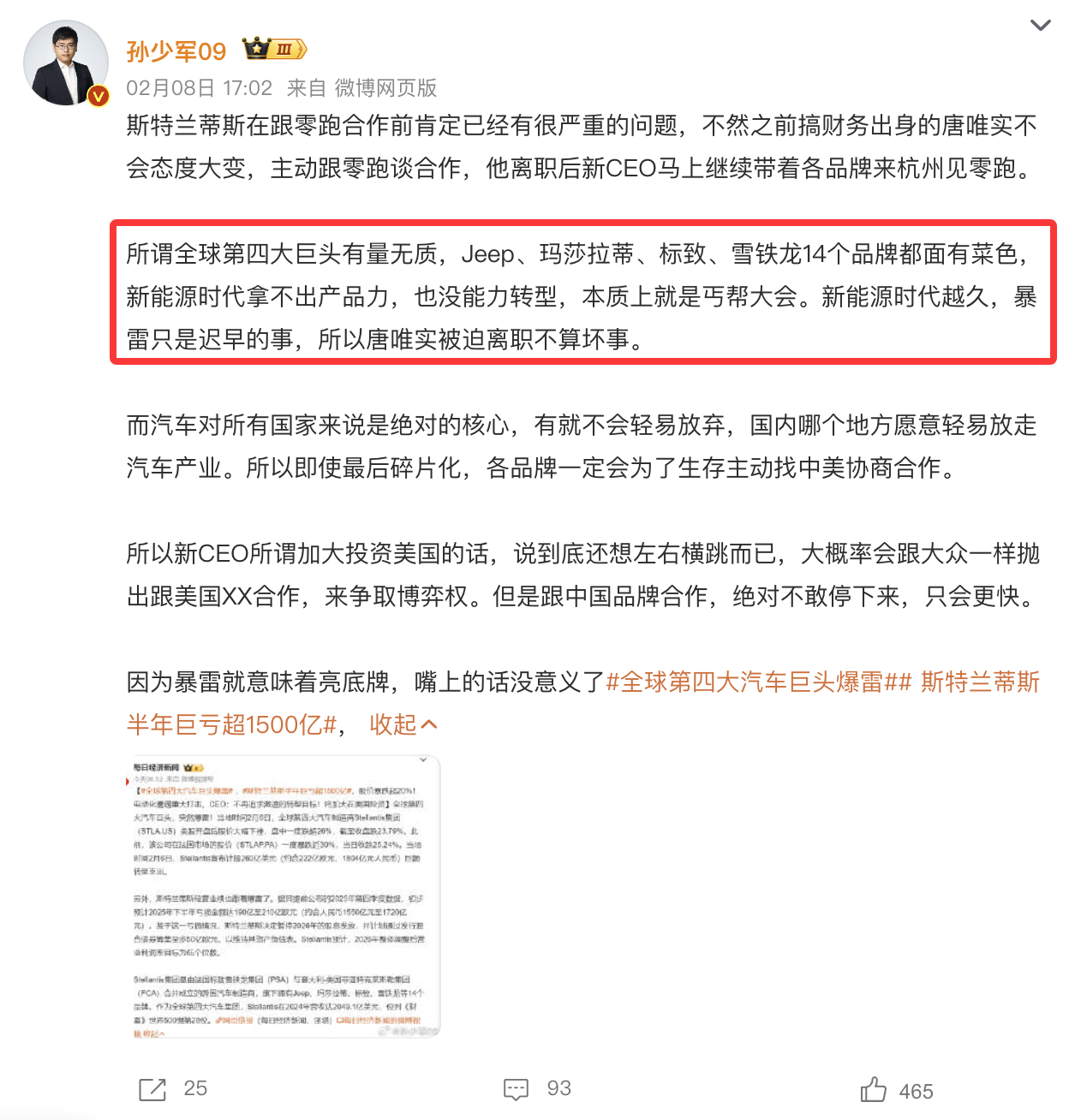
(Image Source: Weibo Screenshot)
Stellantis' Brampton plant in Canada closed for renovations in 2024, initially slated to resume production of the Jeep Compass in 2025. However, after the U.S. imposed tariffs on Canadian goods, Stellantis suspended renovations and shifted capacity to Illinois, U.S.
The Canadian government stated that Stellantis, which had received local financial support and promised to maintain production in Canada, breached its agreement by relocating capacity. Ottawa even threatened to reclaim subsidies and take legal action, with both sides entering dispute resolution in November 2025.
Stellantis, already reeling from massive losses, now faces legal repercussions in Canada due to the factory relocation and urgently seeks to resolve this "hot potato."
Recognizing its product weaknesses and struggles in electrification, Stellantis has actively sought partnerships with Chinese automakers. Bloomberg previously reported that Xiaomi and XPENG were negotiating with Stellantis to leverage its European influence and dealerships for local vehicle sales.
Among Chinese automakers, Leapmotor has the deepest collaboration with Stellantis. In 2023, Stellantis acquired a 20% stake in Leapmotor for €1.5 billion (approximately RMB 11.9 billion), becoming its largest external shareholder. In 2024, the two established Leapmotor International as a joint venture, with Stellantis holding 51% and controlling global production and sales outside Greater China.
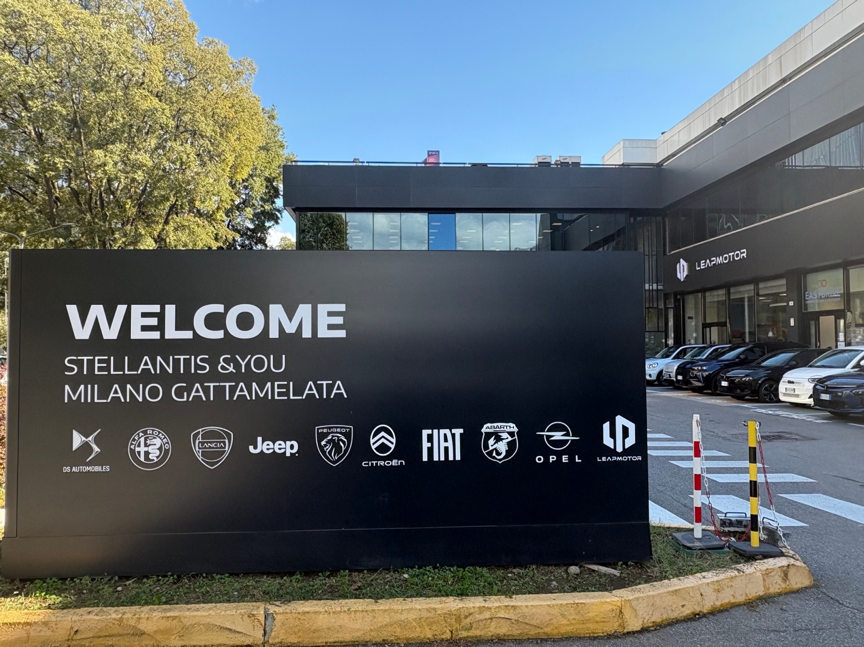
(Image Source: Leapmotor)
Despite its massive scale and renowned brands, Stellantis is trapped in a quagmire of weak electrification, huge losses, and overseas factory disputes.
Dianchetong (ID: dianchetong233) believes that if Leapmotor takes over Stellantis' Brampton plant, it will revitalize idle capacity and resolve legal risks for Stellantis. For Leapmotor, aiming to expand in North America, the Brampton plant offers a rare opportunity.
Is Leapmotor Truly the Chosen One?
For Leapmotor, acquiring Stellantis' Canadian factory is a critical step to breaking through trade barriers, seizing the North American market, and achieving globalization. It is also the optimal path to meet its 2026 sales target and enhance brand competitiveness.
With domestic competition intensifying and overseas expansion becoming imperative for new energy brands, this partnership means far more to Leapmotor than "just another factory."
In 2025, Leapmotor delivered 597,000 vehicles and achieved full-year profitability for the first time. During its March 2026 earnings call, Li Tengfei, Vice President and CFO of Leapmotor, stated, "Our 2026 sales target is 1 million units, with a net profit target of RMB 5 billion."
(Image Source: Leapmotor)
In Q1 2026, Leapmotor delivered approximately 110,000 vehicles, leaving around 890,000 units to reach its annual target. Over the next nine months, Leapmotor must average nearly 100,000 monthly sales, nearly doubling its March volume—a daunting challenge.
Dianchetong (ID: dianchetong233) believes that while Leapmotor's cost-effectiveness appeals to consumers, achieving this target through domestic sales alone is nearly impossible. Leapmotor must expand globally to boost overseas sales and reach its annual goal.
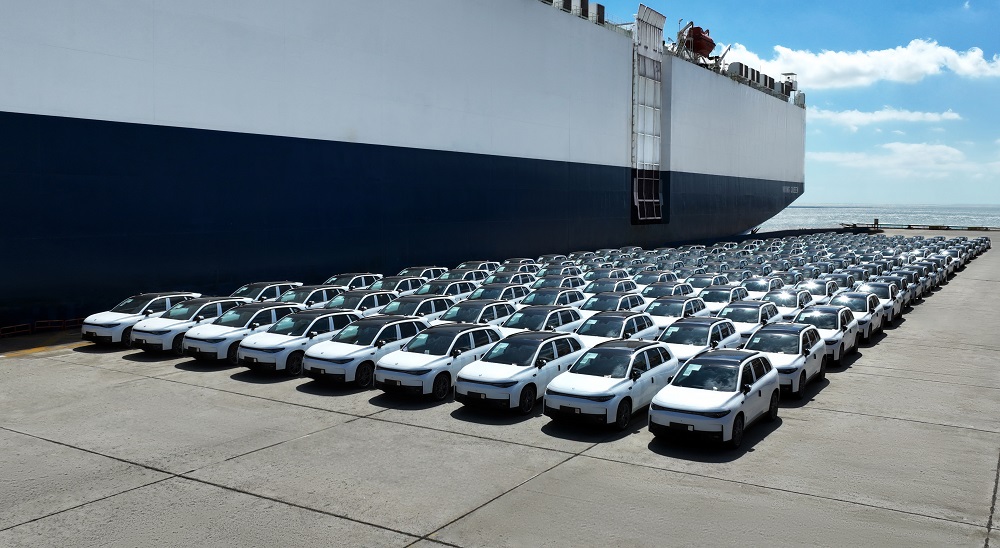
In 2025, Leapmotor topped China's new energy brand export rankings with 67,000 units. Its overseas sales reached 24,000 units in January-February 2026, a solid performance. By late 2025, Leapmotor had entered about 40 international markets, operating 900 outlets combining sales and services, with Europe as its core battleground.
Compared to other new energy brands, Leapmotor excels overseas. However, against established domestic automakers like BYD, which delivered 120,000 overseas units in March, Leapmotor has ample room for improvement. At this juncture, Leapmotor needs Stellantis' partnership and more overseas factories.
(Image Source: Leapmotor)
Chinese automakers' overseas localized production currently follows three models:
1. Building factories and sales channels independently, retaining all profits.
2. Acquiring overseas brands or factories for asset-light penetration.
3. Partnering with overseas automakers for technology and capacity sharing.
BYD, pursuing the first model, has built factories in Hungary, Thailand, and Mexico, each requiring billions in investment and 2-3 years of construction. Geely expanded rapidly through Proton and Volvo but spent $1.8 billion (2010 prices) to acquire Volvo alone.
Leapmotor chose the third model, leveraging Stellantis' sales networks and factory resources in select regions for a "technology export + capacity sharing + channel reuse" trifecta.
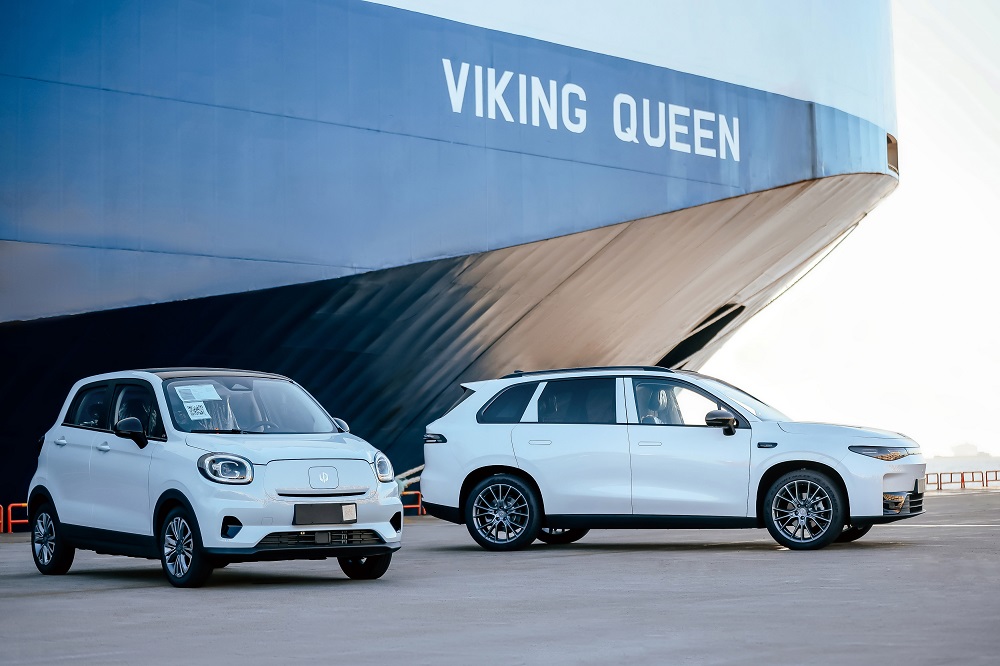
In the UK, for example, Leapmotor sells the T03 and C10 models at 44 Stellantis dealerships. It also plans to localize production at Stellantis' Zaragoza plant in Spain this year.
Acquiring Stellantis' Canadian factory benefits Leapmotor in three dimensions: cost, efficiency, and market.
Cost Advantages: Leapmotor avoids building a factory from scratch, revitalizing existing capacity and saving billions in construction costs and 2-3 years of lead time. Leveraging Stellantis' local supply chains and union resources, Leapmotor reduces production, logistics, and labor costs while complying with Canadian procurement rules to avoid policy risks.
(Image Source: Leapmotor)
Efficiency Gains: The Brampton plant, with mature vehicle assembly capabilities, enables rapid mass production of Leapmotor models, with production slated to start by late 2026. This covers the U.S. and Canadian markets two years ahead of building a new factory.
Market Penetration: As a NAFTA member, Canada allows duty-free or low-duty exports (depending on USMCA compliance) to the U.S., breaking trade barriers.
Dianchetong (ID: dianchetong233) believes acquiring Stellantis' Canadian factory is pivotal for Leapmotor's global breakthrough and annual sales target.
With intensifying domestic competition, relying solely on local sales can no longer sustain high growth. Accelerating overseas expansion is essential. While Leapmotor has a foothold overseas, it needs more efficient capacity and stronger channel support to narrow the gap with leading automakers.
Unlike BYD's capital-intensive factory-building or Geely's reliance on overseas brands, Leapmotor partners with Stellantis for a lightweight approach of technology export, capacity sharing, and channel reuse.
The Canadian factory offers significant cost, efficiency, and market advantages for Leapmotor, eliminating massive construction investments and lengthy timelines while enabling rapid mass production. Leveraging NAFTA, it also breaks into the U.S. and Canadian markets.
This partnership transcends capacity collaboration, marking Leapmotor's strategic shift from export trade to localized manufacturing.
A Win-Win: Stellantis Gains Profits, Leapmotor Secures the Future
Stellantis' collaboration with Leapmotor on the Canadian factory is not mere capacity leasing but a profound win-win: Stellantis rescues itself from crisis, while Leapmotor ascends to new heights. The partnership forms a closed loop in capital, technology, market, and profits.
As Leapmotor's largest external shareholder with a 20% stake, Stellantis earns dividends, carbon credit transfers, and technological feedback from Leapmotor to drive its electrification.
(Image Source: Leapmotor)
For Leapmotor, this partnership achieves maximum globalization at minimal cost. Stellantis' capacity, sales channels, and brand influence bolster Leapmotor's global expansion.
Stellantis' negotiations with Leapmotor for a Canadian factory reflect the broader electrification transformation in the global auto industry.
In Dianchetong's (ID: dianchetong233) view, traditional overseas automakers possess capacity, channels, and brands but lack core electrification technologies, trapping them in transformation limbo. Chinese new energy brands offer technology, efficiency, and cost-effectiveness but lack global capacity and channels, hindering overseas expansion.
Stellantis exchanges idle factories and global resources for an electrified future and profit-sharing. Leapmotor gains North American market access and a globalization springboard through technology and models. This is not mere commerce but a symbiotic relationship between traditional giants and Chinese newcomers.
Their partnership perfectly addresses each other's weaknesses, setting a replicable model for other domestic and foreign automakers.
As negotiations progress, the Brampton plant is expected to start producing Leapmotor models by late 2026. Leapmotor will become the first Chinese new energy brand to localize production in North America, officially launching its North American market offensive.
Stellantis, leveraging Leapmotor's technology, will exit losses and return to growth.
(Cover Image Source: Leapmotor)
Leapmotor, Stellantis, Xiaomi, BYD, Geely
Source: Leitech
Images courtesy of 123RF Royalty-Free Library
-
![]()
The Allure of 'Acquisition Spree': Li Shufu's Left Turn, Xu Jiayin's Right
-
![]()
Strategic Transformation Yields Results: Phoenix Optics Reports 10.9% YoY Rise in Core Net Profit for H1 2026
-
![]()
Three Key Growth Trajectories Synergize! Crystal-Optech Reports 3.478 Billion Yuan in Revenue for H1 2026
-
![]()
Semi-Annual Report Sparks XPENG Motors Buzz
-
![]()
1.6 Billion Big Order Secured! SeeYA Technology's Revenue Soars by 287.87% in the First Half of the Year
-
![]()
Baidu's Profits Plunge by 68%: Unraveling the Mystery Behind the Numbers
-
![]()
Baidu’s Profits Tumble by 68%! Where Has All the Money Gone?
-
![]()
Hynix’s Taobao Store Shuts Down Abruptly: What Should Customers Do About Warranty Services for Memory Modules?