Another New Entrant Falls: Is Cross-Industry Car Manufacturing Truly Unviable?
 04/03 2026
 535
535
A Grand Entry, A Quiet Exit.
The cross-industry automotive brand AFEELA, once hailed as the vanguard of Japanese electric vehicles, abruptly announced on March 25 that it would discontinue its project. This move sent shockwaves through the industry, particularly given that AFEELA was backed by two Japanese behemoths: Sony and Honda.
Sony Honda Mobility attributed the project's cessation to dwindling EV demand in the U.S. market and strategic realignments by Honda, the contract manufacturer.
While the announcement did not explicitly outline the joint venture's future, Honda's strategic withdrawal signals that a formal separation is on the horizon.
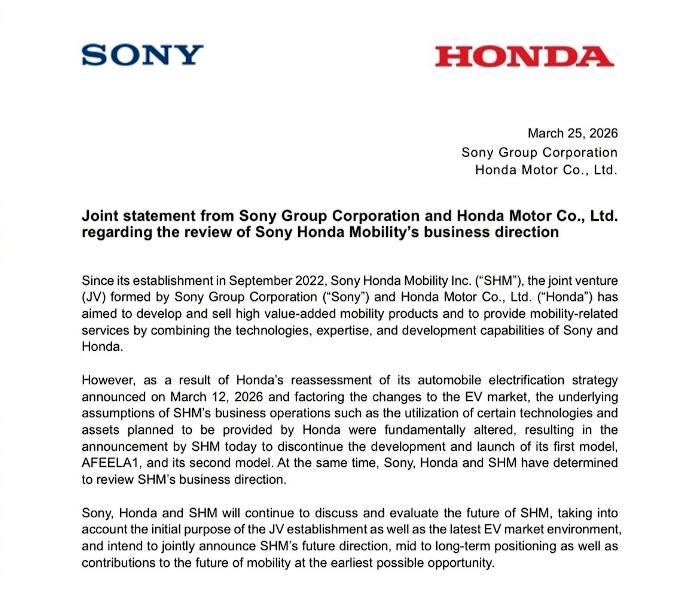
This high-stakes cross-industry collaboration, spanning three and a half years, came to an abrupt end. The only silver lining is that pre-order deposits will be refunded, offering a modicum of solace compared to startups that vanish without a trace.
However, the real casualty appears to be Sony, which was drawn into cross-industry car manufacturing by Honda.
"A Brand-New Mobility Experience"
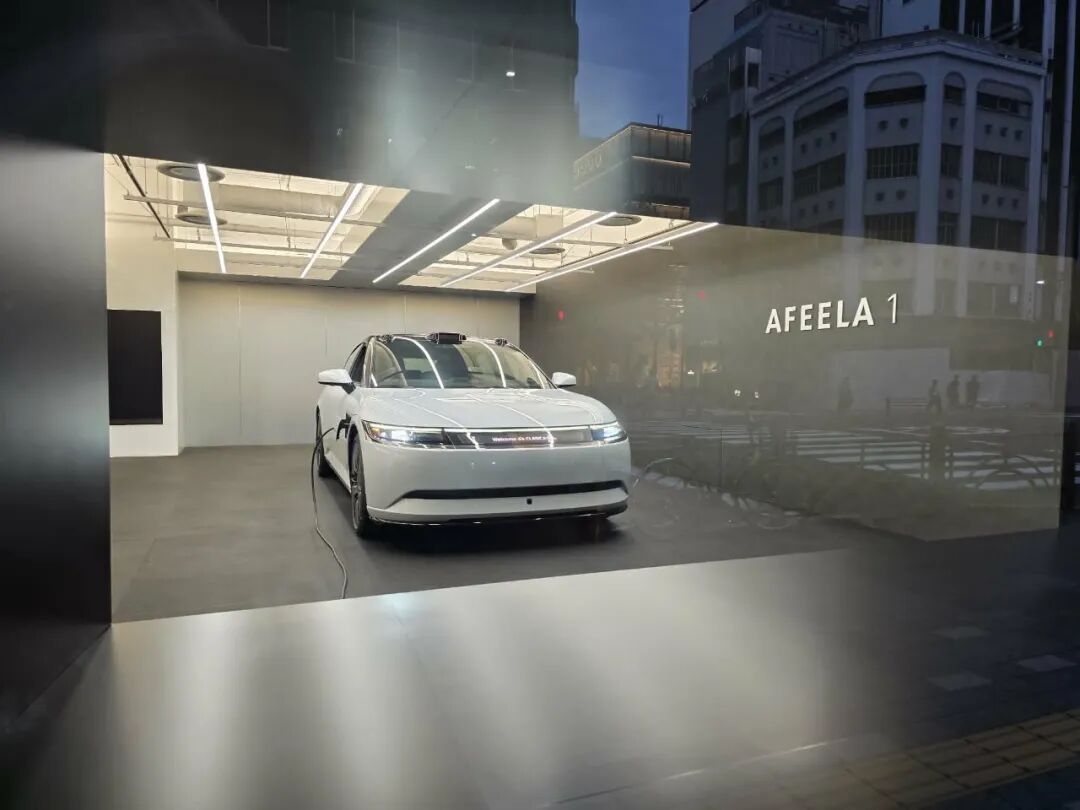
The Sony-Honda partnership traces its roots back to January 2023, when the AFEELA electric vehicle brand was unveiled at the annual CES event. From its inception, it was clear that this new Japanese brand aimed to redefine mobility, a vision repeatedly emphasized by AFEELA.
The collaboration officially commenced in March 2022, when the two companies signed an agreement to co-develop "high-value-added" electric vehicles through a joint venture. In September of the same year, Sony and Honda each invested ¥5 billion to establish Sony Honda Mobility, abbreviated as SHM.
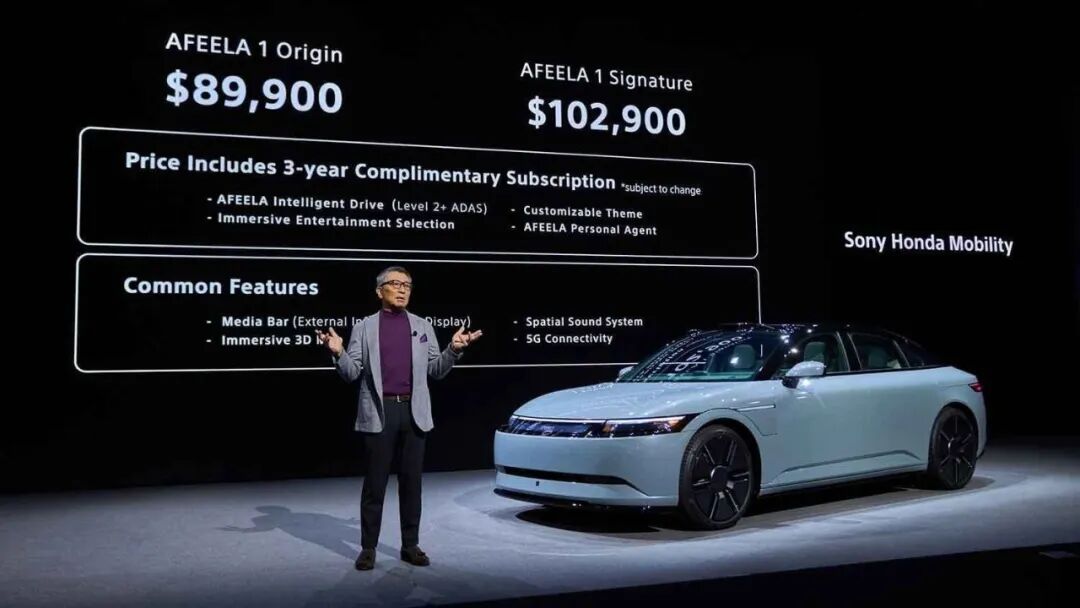
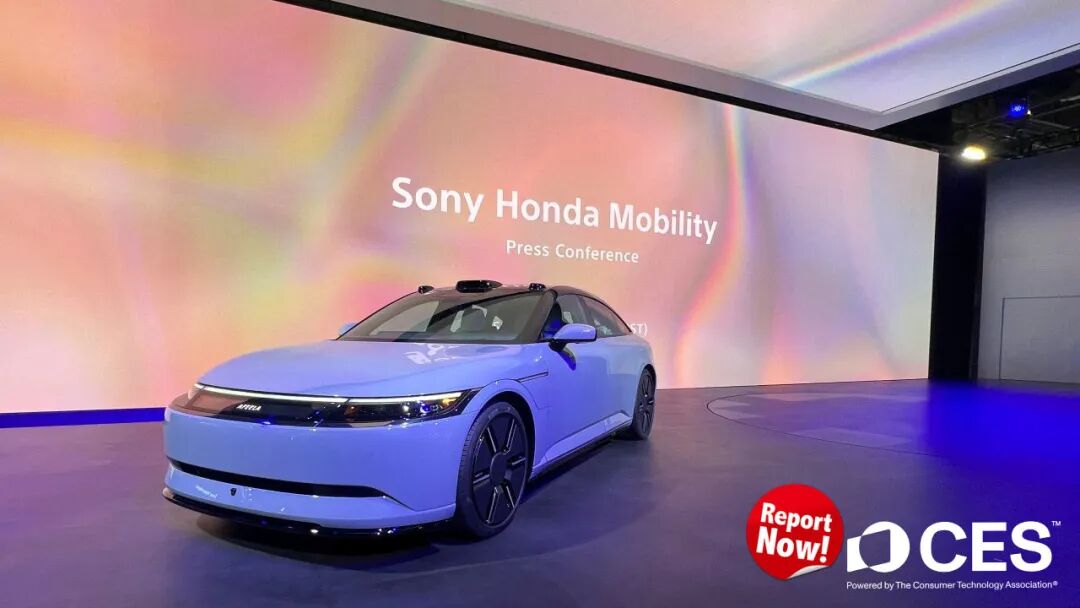
Sony and Honda poured significant resources into the new brand, adopting a "three-year polishing" approach to craft this future-oriented vehicle with meticulous attention to detail. It wasn't until CES 2025 that the first model, AFEELA 1, made its official debut, transitioning from a concept car to a mass-produced reality.
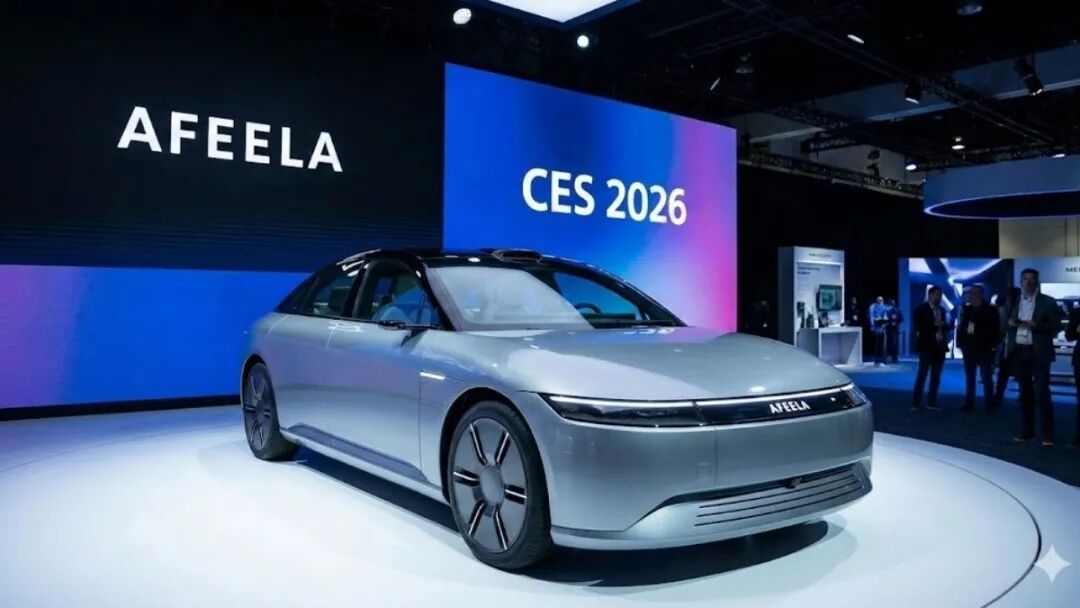
The vehicle boasted Sony's premier panoramic sound system, delivering a cinematic audio-visual experience, complemented by an exaggerated panoramic screen that truly embodied Sony's innovative spirit.
When compared to mainstream U.S. market offerings from Tesla, Ford, or General Motors, these features imbued AFEELA 1 with a distinct newcomer's flair. However, given its price point, attracting ordinary consumers seemed to require a significant leap of faith.
In terms of advanced driving assistance, the AFEELA 1 claimed to achieve L4-level autonomous driving hardware capability through pre-installed components, with full functionality to be unlocked via OTA updates in the future. Currently, it supports L2-level advanced driving assistance systems.
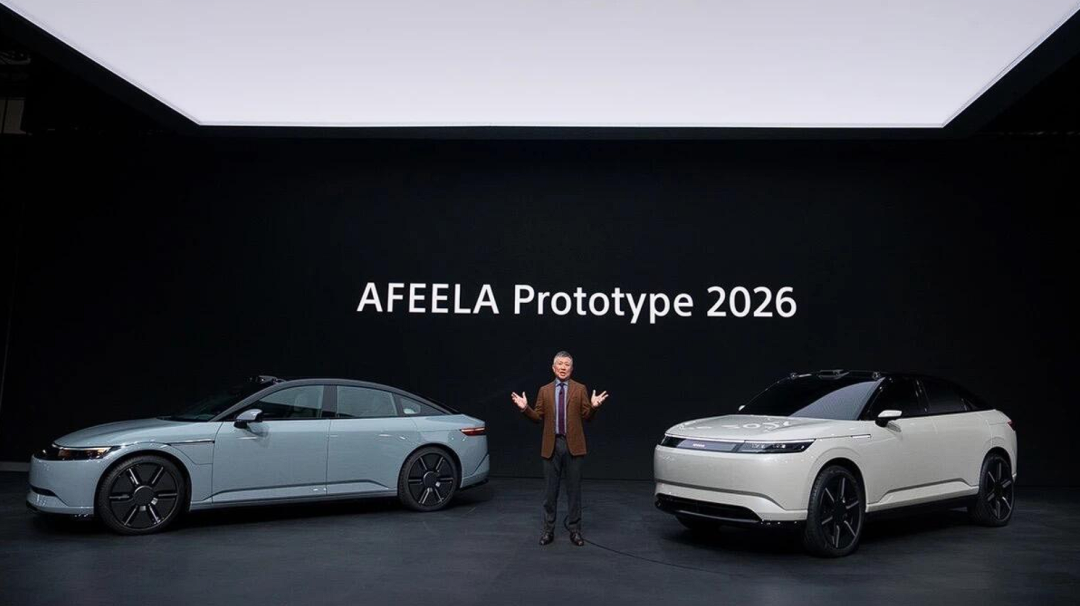
Of course, these cutting-edge features came at a premium. An additional $20,000 was required to experience the fully-featured AFEELA 1, which included not just software but also upgraded sensors, including 40 units such as LiDAR.
According to the plan announced at CES 2025, deliveries were slated to begin in June of that year. However, rumors of delays surfaced early in the year, with reports indicating that Honda's Sayama Factory, responsible for producing the AFEELA 1, would shift production capacity to the more popular CR-V hybrid model, with initial production capped at just 5,000 units—far below Sony's expected 20,000 units.
But now, such concerns are moot.
A Fragile Alliance
The AFEELA project's demise was directly triggered by Honda's announcement of adjustments to its electrification strategy, but the root cause lies in Honda's first annual loss in its 63-year history, with estimated losses for the 2025 fiscal year reaching ¥420 billion to ¥690 billion (approximately RMB 18.2 billion to 30 billion).
These losses stemmed from a global sales decline, with core markets like North America dropping over 5%, Asia nearly 20%, and China experiencing a nearly 25% sales plunge.
The North American market's decline was partly attributable to tariff impacts and partly because investments in EV projects were unlikely to yield short-term returns.
According to SHM's data, cumulative losses over two years reached ¥72.5 billion, and this was just for Honda's investment in a pure EV project. Honda's own electrified products were also struggling to break even.
The direct reason was the low electrification penetration rate in the North American market, with only 10% of vehicles being pure EVs in 2025, and the rate dropping to 2.1% in January of that year.
Beyond Honda's challenges, Sony faced its own set of issues. On one hand, the collaboration was entirely "asset-light," with production fully dependent on Honda, leaving Sony with little control over the project's progress.
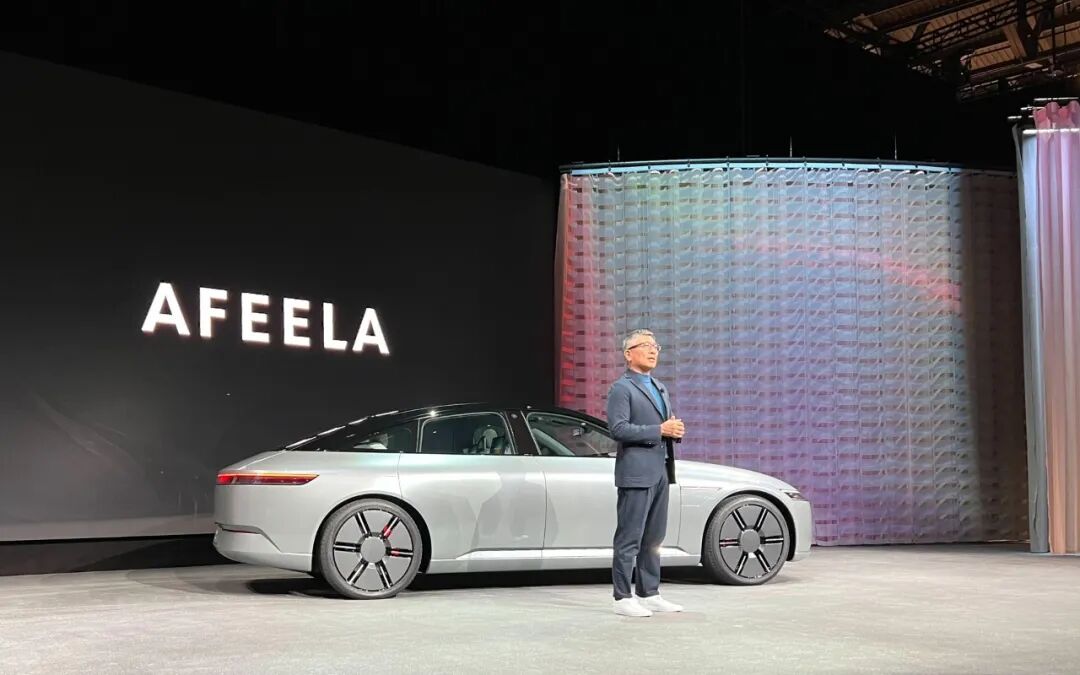
On the other hand, the so-called technological empowerment failed to deliver significant results. At the launch event, Sony President Kenichiro Yoshida claimed, "Chinese electric vehicles lack technical sophistication; they only focus on flashy large screens," sparking controversy. Many expected Sony to unveil groundbreaking technology.
In reality, the only Sony-specific feature was the ability to play games in the car—a rather niche function. In the North American market, users currently prioritize range and charging experience over in-car entertainment like gaming.
Now, with the termination of AFEELA 1, Sony will never have the chance to prove its cutting-edge technology.
More importantly, Sony and Honda struggled to achieve technical alignment in the AFEELA 1 project. For instance, in autonomous driving, Sony proposed deploying an end-to-end AI model directly, while Honda insisted on starting with a conservative ADAS system.
Ultimately, under development timeline constraints, both sides compromised, opting to use Honda's L2 system first and upgrade to Sony's end-to-end solution via OTA later. However, issues like compatibility and data migration between the two systems remained unresolved.
This technical and operational tug-of-war delayed the mass production of AFEELA 1, originally planned for late 2025, leaving it stuck at the trial production stage when the project was halted.
While the immediate issue was the inability to sell the product, the root cause lay in the foundational flaws of the Sony-Honda collaboration. With a 50-50 joint venture structure, every decision became mired in endless discussions. For example, the pricing strategy for AFEELA 1 took three months to finalize, while selecting U.S. market sales channels took four months.
This exposed broader issues faced by Japanese automakers in electrification and intelligence. On one hand, they sought technological complementarity through partnerships with tech companies; on the other hand, they insisted on maintaining traditional control, leading to inefficient technology integration due to power struggles.
This was particularly evident in technology choices. Traditional automakers like Honda prioritized stability and reliability, while tech companies like Sony focused on innovation speed and user experience. Although Sony is already considered conservative among global tech firms, it was still seen as radical compared to Japanese automakers.
The termination of the Sony-Honda AFEELA project is not just a failure of a joint venture but a microcosm of the struggles faced by traditional Japanese automakers in the electrification transformation. Even a union of giants like Sony and Honda ended amicably, without even achieving mass production.
Note: Some images are sourced from the internet. If there is any infringement, please contact us for removal.
-END-
-
![]()
The Allure of 'Acquisition Spree': Li Shufu's Left Turn, Xu Jiayin's Right
-
![]()
Strategic Transformation Yields Results: Phoenix Optics Reports 10.9% YoY Rise in Core Net Profit for H1 2026
-
![]()
Three Key Growth Trajectories Synergize! Crystal-Optech Reports 3.478 Billion Yuan in Revenue for H1 2026
-
![]()
Semi-Annual Report Sparks XPENG Motors Buzz
-
![]()
1.6 Billion Big Order Secured! SeeYA Technology's Revenue Soars by 287.87% in the First Half of the Year
-
![]()
Baidu's Profits Plunge by 68%: Unraveling the Mystery Behind the Numbers
-
![]()
Baidu’s Profits Tumble by 68%! Where Has All the Money Gone?
-
![]()
Hynix’s Taobao Store Shuts Down Abruptly: What Should Customers Do About Warranty Services for Memory Modules?