"Mass Production in Approximately 18 Months": Dreame Technology Faces Time Constraints in Car Manufacturing
 06/03 2026
 586
586
Yu Hao Must Overcome the Challenge of "Being Selected"
Recently, Yu Hao, the founder and CEO of Dreame Technology, unveiled the timeline for its car manufacturing endeavors. Dreame Automobile is slated to commence mass production in about 18 months, with a strategic focus on overseas markets.
What Does 18 Months Entail?

The automotive market is widely acknowledged to have entered an era where systemic capabilities are paramount to success. From price wars and the race to create popular models to competing on technological advancements and matrix operations, every move carries significant consequences.
A slight delay or miscalculation could mean missing out on the next round of competition. The industry predicts that by 2026, 5-8 lower-tier automotive companies will exit the market. Zhao Fei, President of Changan Automobile, bluntly stated, "The industry's elimination phase is intensifying, and competition will only become more ruthless."
Eighteen months is a considerable span, during which uncertainty looms large.
"We Are Not the Next LeEco"
On August 28th of the previous year, Yu Hao announced that Dreame Technology was officially venturing into the new energy vehicle sector.
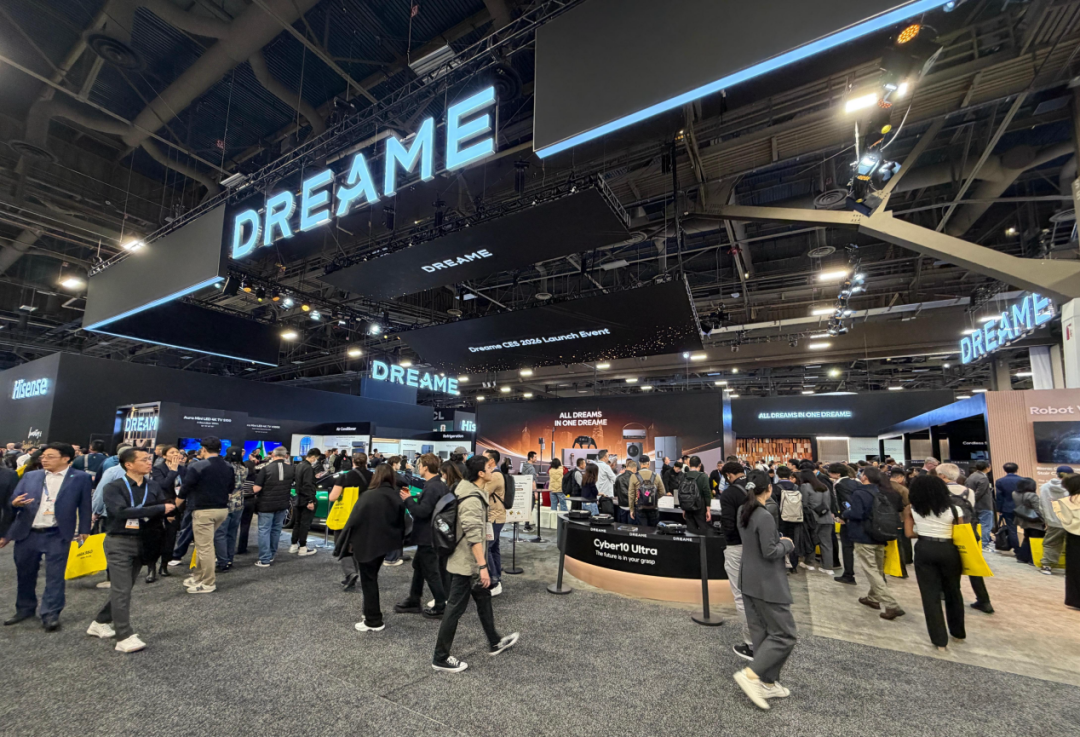
Since then, all actions have been closely tied to "speed." In September, they visited Germany to select a site for factory construction, claiming a planned area 1.2 times that of Tesla's Berlin factory. By the end of December, multiple subsidiaries were established under the "Starry Sky Project," and it was announced that the first model would be unveiled at CES 2026.
Despite Dreame's "rapid advancement" in car manufacturing, it denies being hasty. Ma Junye, President of Dreame's Starry Sky Project, revealed that as early as 2021-2022, Dreame had been covertly preparing for car manufacturing, nearly in perfect alignment with the launch of Xiaomi's automotive project.
Currently, Xiaomi has already achieved explosive sales with two models, while Dreame's mass production is still anticipated a year later. For Dreame, time is of the essence.
Unlike Xiaomi's asset-heavy closed-loop model of full-stack self-development, self-built factories, and own-brand operations, Dreame has opted to completely avoid the asset-heavy approach of wholly-owned factory construction. Instead, it is collaborating with established automotive OEMs for joint research and development and contract manufacturing.
In other words, it aims to emulate the "Huawei Model." Ma Junye repeatedly emphasized that Dreame is more akin to a "Huawei-like model," leveraging Dreame's technology and channels to collaborate with automotive companies in car manufacturing.
It is reported that Dreame insists on self-development in core technology areas such as full-line control intelligent chassis, in-vehicle motors, solid-state power batteries, and intelligent cockpits. It has even independently planned and developed cockpit and intelligent driving computing chips. Ma Junye stated, "All technologies related to electrification are self-developed." Currently, the research and development team exceeds a thousand people, with R&D personnel accounting for about 70%.
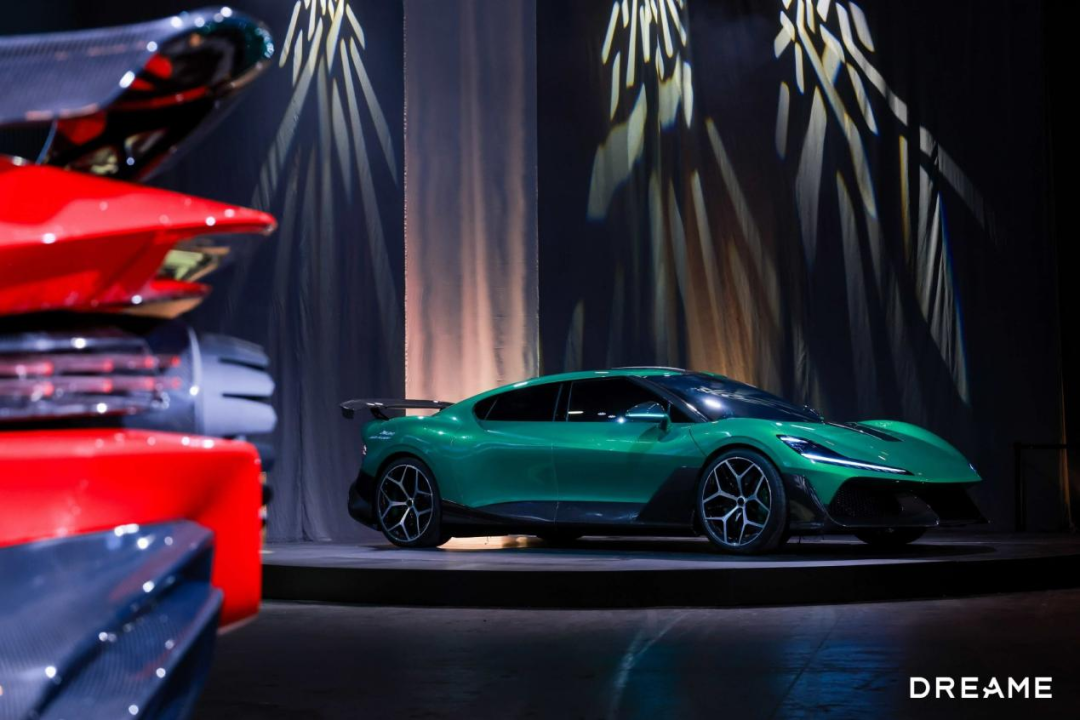
Dreame's approach to car manufacturing has always been relatively "audacious." After all, when announcing its car manufacturing plans, it claimed that its first ultra-luxury pure electric product would rival the Bugatti Veyron, aiming to be "the fastest car in the world."
The core issue with Dreame's car manufacturing is not its lateness but why automakers would opt for Dreame's technology amidst numerous alternatives. Yu Hao must address this challenge of "being selected."
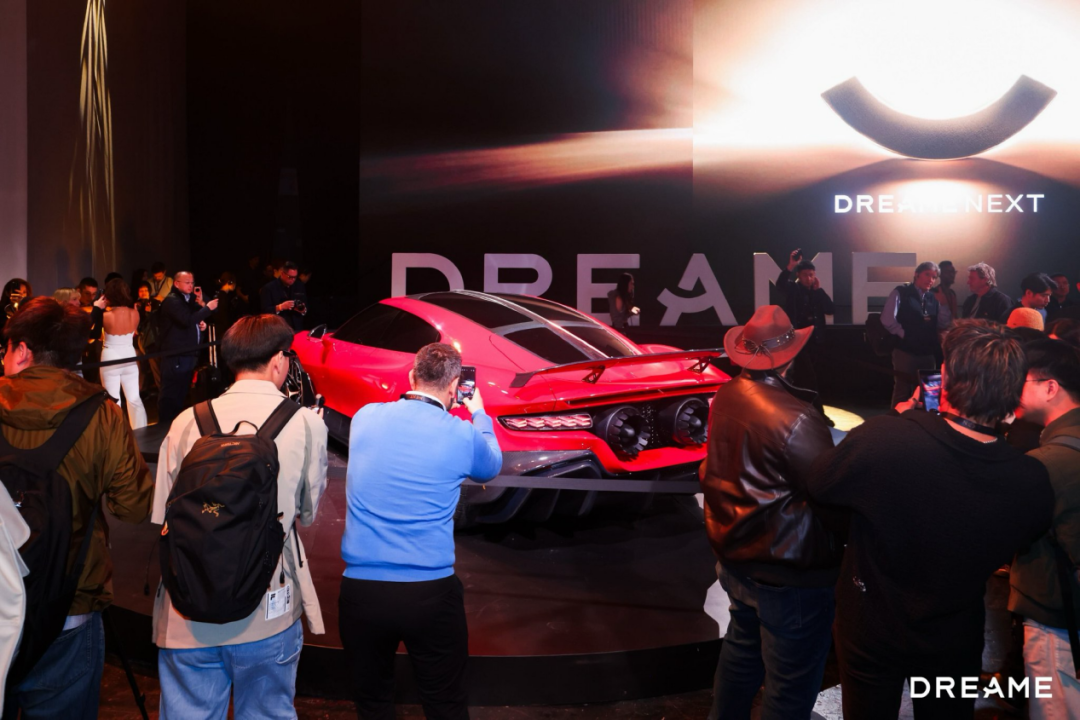
Since officially announcing its car manufacturing plans, attention and controversy surrounding Dreame's foray into car manufacturing have persisted. From robotic vacuum cleaners to "rocket cars," Dreame's moves have been "eclectic."
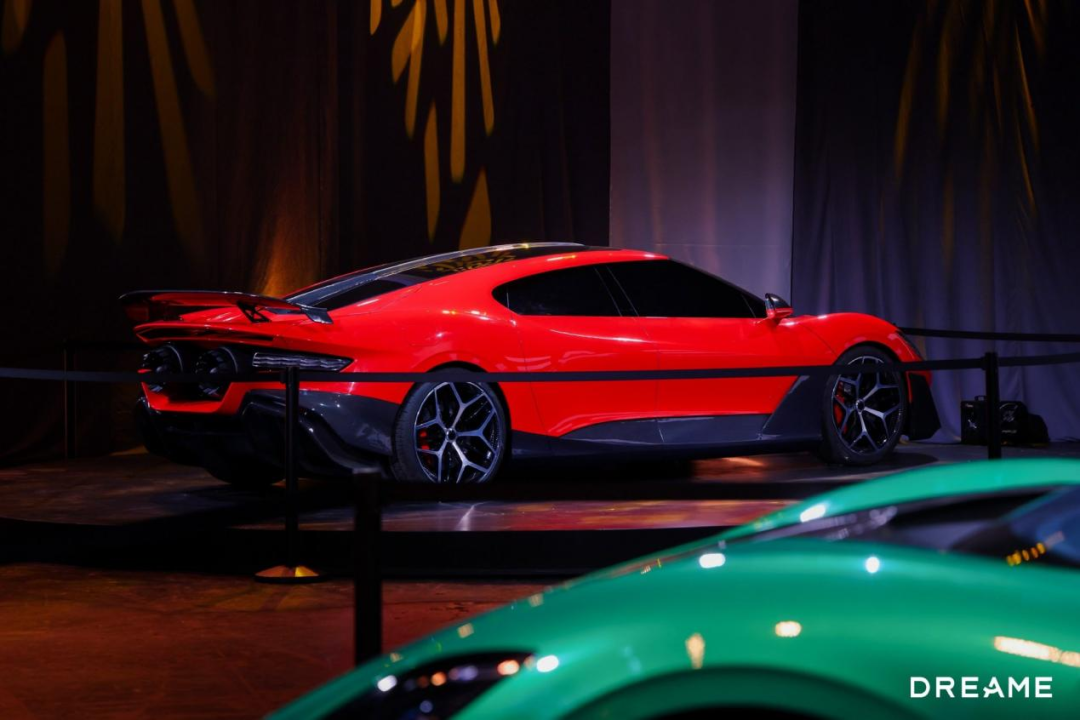
On April 27th, at the Silicon Valley launch event, Dreame showcased products from the Dreame Starry Sky Project, spanning categories such as intelligent vehicles and smart home appliances. It also unveiled the new product, the "rocket car" Nebula NEXT 01 JET Edition.
Yu Hao also stated that Dreame plans to build the first rocket car in human history with a 0-100 km/h acceleration time of less than 1 second. "Elon Musk once said he wanted to build a rocket car, but he didn't achieve it. We will."
With such ambitious plans, the capital chain becomes a critical test. Previously, Yu Hao stated on WeChat Moments, "Starting from the end of next year, multiple businesses under the Dreame ecosystem will conduct batch IPOs on global exchanges." The plan is to independently finance and spin off these businesses for listing, reminiscent of LeEco's capital operation path.
However, Ma Junye denied this in Silicon Valley and specifically stated, "We are not the next LeEco."
The Real Challenge Lies Beyond "Resembling Huawei"
Questions and speculations about Dreame's car manufacturing will persist until mass production is achieved.
Ma Junye is aware of this. Therefore, he previously spent over an hour collectively addressing various external doubts about Dreame's car manufacturing, including its technology route, cooperation model, fundraising, and market pricing.
Firstly, in terms of internal division of labor, Yu Hao, who is also involved in short video production and live streaming, is deeply engaged in car manufacturing. Yu Hao is intimately involved in the ID styling design and product definition direction of the entire vehicle, engaging in high-frequency communication almost daily. Ma Junye and the engineering team are responsible for leading specific technology research and development and project implementation.
However, regarding external concerns about the "capital chain," Ma Junye did not disclose specific figures. "I can only say that we have reserved sufficient funds to pursue this." He emphasized that the automotive business is the most crucial new business within the Dreame Group, and the group level has provided ample funds and resource allocation.
Yu Hao has stated internally, "Automobiles are the most important strategic direction. We must succeed." For this new car manufacturing business, Yu Hao also has a plan. Dreame has a set of "N+1" product methodology.
According to Yu Hao, "If the global top products are currently at the N level, then we must achieve N+1, surpassing the most advanced products and setting higher overseas prices."
Highlight: higher overseas prices. According to Dreame's plan, the price of mass-produced high-end models will be set at over a million yuan. In terms of volume markets, Ma Junye stated that Dreame's direction is clear: "We will definitely not make cars priced below 200,000 yuan."
The rationale behind this decision, as calculated by Ma Junye, is as follows.
In the current domestic market, many cost-effective models are trapped in a dilemma of exchanging losses for sales volume, with some automotive companies' gross profit per vehicle even falling to -31%. Dreame's premise for car manufacturing is that "the business value must achieve a closed loop." Only by obtaining reasonable gross profit per vehicle through high-value products and ensuring positive operating cash flow can the automotive business maintain healthy operations.
So, what supports such a high-premium pricing logic? Ma Junye believes that Dreame's global strategy can underpin the underlying logic of Dreame's car manufacturing with a million-yuan premium.
It is reported that Dreame's mass-produced models will officially go on sale in 2027, with the first batch being pure electric coupes, followed by the launch of SUV products from the same series within a few months. However, products priced at a million yuan will prioritize overseas markets as a strategy. Currently, to ensure smooth entry into the Australian market in 2027, Dreame has initiated the evaluation and negotiation of overseas production channels.
Dreame believes that previous Chinese automotive companies' overseas expansion has focused more on cost-effectiveness and mid-range markets, with no breakthroughs in the ultra-luxury segment, leaving room for Dreame to engage in "disruptive competition."
However, as is widely known, car manufacturing is an extremely capital-intensive endeavor. The real test comes after mass production.
"The automotive industry is triple-intensive in terms of capital, technology, and supply chain. Car manufacturing requires at least 20-30 billion yuan in startup funds and a 5-8 year period of losses. A car has tens of thousands of components, involving complex system integration, automotive-grade certification, and safety regulations."
NIO, XPeng, and Li Auto incurred billions or even tens of billions of yuan in losses during the initial stages of mass production and only achieved profitability after a decade. In 2025, Dreame Technology's revenue exceeded 40 billion yuan, but for the cash-burning car manufacturing track, even more abundant financial reserves are needed.
The real test for Dreame's car manufacturing will commence in approximately 18 months.
Note: Some images are sourced from the internet. If there is any infringement, please contact us for removal.
-END-

Platforms We Are On
Toutiao | Yidian Zixun | Sina KanDian | Chejiahao
Sina Weibo | Qiche Toutiao | Qishi Media | Sohu Account
Bilibili | Cheyou Toutiao | Migu Video
Shangye Xinzhi | Laohu Caijing | Yiche Hao | NetEase Hao
Dafeng Hao | Qutoutiao | Aika Hao | Gelonghui
Youku Video | Xueqiu | Douyin | iQiyi
-
![]()
Doubao Work Unveiled! Domestic AI Leaders Fully Commit to the 'Work' Sector
-
![]()
Who’s Sounding the Alarm on ‘Rushed Vehicles’?
-
![]()
Over 5.3 Billion Yuan in Losses Over Three and a Half Years! Can Yonyou Reverse Its Fortunes Through Streamlining and AI Transformation?
-
![]()
Baidu AI Adopts Free Model: A Strategic Maneuver in Traffic and Monetization
-
![]()
Silicon-Based OLED Pioneer Unveils Financial Results: H1 Shipments Outpace Entire 2025 Volume
-
![]()
AI's First "Lost Summer"
-
![]()
Zeiss Makes Another €2.2 Million Bet: Will Eye Tracking Be the Next Big Thing in the Smart Glasses Industry?
-
![]()
RUNTO Ranking | Global Top TV ODM Factories' Shipment Figures for July 2026