Established for Just Six Months, This Optical Enterprise Secures Tens of Millions in Funding: What’s Its Secret?
 02/10 2026
 691
691
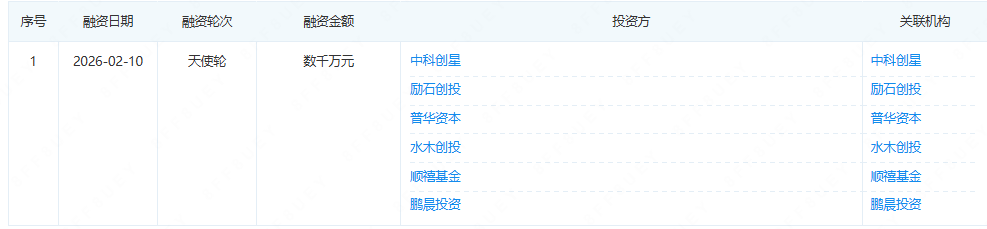
On February 10, Beijing Lingxi Photonics Technology Co., Ltd. successfully raised tens of millions of yuan in an angel round of funding. This round was co-invested by six well-known institutions: Shunxi Fund, Puhua Capital, Tsinghua Capital, Pengchen Capital, CAS Star, and Lishi Venture Capital. These investors represent a mix of state-owned and market-oriented diversified investment entities.
The funds will primarily support the R&D of 3.2T/6.4T optical engine prototypes and early-stage team expansion, accelerating the industrialization of its high-performance optical interconnect technology.
So, what kind of company is Lingxi Photonics? How did it manage to secure tens of millions in investment from six major institutions? What are its background and competitive strengths?
Founded in September 2025, Lingxi Photonics was incubated with the support of the Xi'an Institute of Optics and Precision Mechanics, Chinese Academy of Sciences (CAS). Its founder, Dr. Wang Binhao, holds a Ph.D. from Texas A&M University in the United States. He previously worked as a research scientist at Hewlett-Packard Labs in the U.S. and is now a researcher and doctoral supervisor at the Xi'an Institute of Optics and Precision Mechanics, CAS. The core team consists of seasoned scientists from the same institute, top-tier domestic and international research institutions, and global tech enterprises, all possessing deep technical expertise and a vision for industrialization.
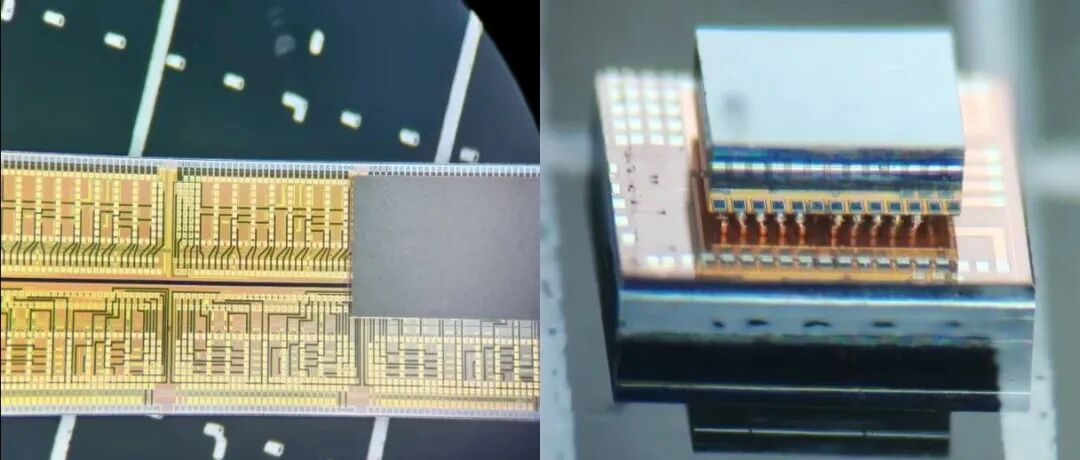
The company specializes in the collaborative development of silicon photonics chips based on micro-ring modulators and CMOS analog electronic chips. By leveraging advanced packaging technologies, it creates high-performance optical engines, dedicated to providing high-bandwidth, low-power optical interconnect solutions for AI computing clusters.
Its technological approach offers significant differentiation: the micro-ring modulator is just one-thousandth the size of traditional solutions, excelling in bandwidth density, power consumption, and wavelength division multiplexing compatibility. This makes it particularly well-suited for high-density packaging scenarios. Moreover, the company adheres to a fully autonomous development strategy across the entire chain. Optical chips rely on mature silicon photonics processes, while electronic chips are primarily analog circuits, eliminating the need for advanced processes below 7nm. Currently, domestic foundries are capable of mass production, ensuring strong supply chain autonomy.
In terms of business strategy, Lingxi Photonics adopts a "dual-track parallel" approach. On one hand, it is advancing multi-channel parallel solutions for switching chips, with a prototype demo expected in the second half of 2026. On the other hand, it is developing wavelength division multiplexing solutions for GPUs/NPUs, targeting prototype completion by 2027. This strategy balances near-term commercialization with long-term technological leadership.
Against the backdrop of an explosion in AI computing demand, optical interconnects have become a critical support for computing clusters. Lingxi Photonics, with its full-stack technological capabilities and clear industrialization path, has already engaged in early-stage technical collaborations with several domestic leading switching chip manufacturers, AI chip companies, and internet firms, demonstrating strong potential for technological implementation.
Lingxi Photonics' rapid acquisition of favor from multiple frontline investment institutions not only reflects market recognition of its technological strength and team but also underscores the pivotal value of the optical interconnect sector in the AI computing era. Its high-density, low-power optical engine solution, centered on silicon photonics and micro-ring modulation technology, is poised to break overseas manufacturers' technological monopoly in high-end optical interconnects, driving the localization of domestic CPO and OIO optical interconnect devices.
In the long run, the rise of such hard-tech innovation enterprises originating from research institutes will further stimulate technological iteration and industrial collaboration in domestic optical chips, semiconductor packaging, and other sectors. This will propel the entire optoelectronic industry chain towards high-end advancement, establishing a solid technological foundation and industrial ecosystem for China's global competitiveness in computing infrastructure.
-
![]()
Alibaba's AI Offensive: Over Half of Investment Allocated, Time to Reap Returns
-
![]()
Alibaba’s AI Push: Over Half of Investments Made, Time to Harvest Returns
-
![]()
Chinese Enterprises Going Global 3.0: From World Factory to AI Infrastructure Builder
-
![]()
Honor RobotPhone Review: Half Movie Camera, Half Robot
-
![]()
AI-Driven Cheating Surges in Universities! Online Exams Reduced to Mere Formalities, Degree Credibility on the Line
-
Insta360’s Decade in Panoramic Imaging: Making Cameras ‘Invisible’ and Returning Creation to the Masses
-
![]()
Foreign Media Claims Apple is Concentrating Resources on AI Development: Vision Pro and Siri Teams Lay Off 200 People
-
Big News! Huaneng and Huawei Hold Talks in Shenzhen with Ren Zhengfei in Attendance; Huawei Emerging as the 'Second Brain' of China's Energy System